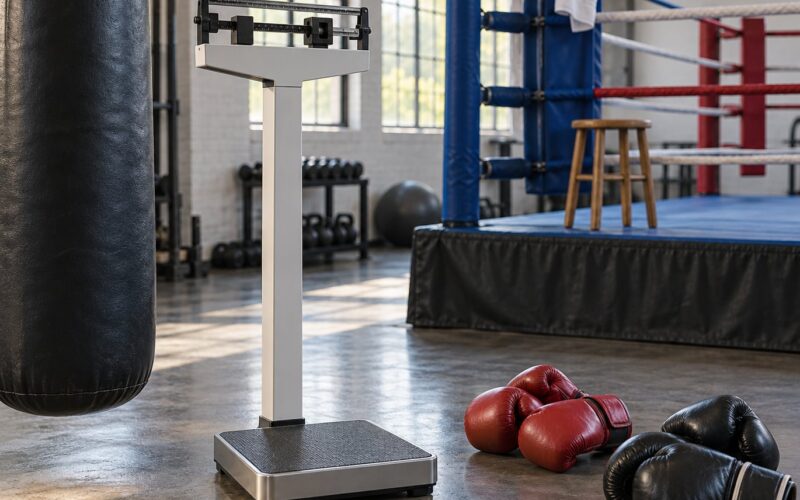
Super middleweight is a professional boxing weight class contested between middleweight and light heavyweight, in which a boxer can weigh up to 168 pounds, or 76 kilograms. The IBF created it in 1984, and the World Boxing Association, World Boxing Council and World Boxing Organization followed over the next several years.
That is the short answer, but it leaves out the part that actually matters. Nobody invented the class because a promoter liked the look of it. It existed because a whole generation of fighters had a physical problem that the existing divisions could not solve, and once the IBF solved it, the deep fields, the rivalries and the television money followed on their own.
The question of how super middleweight became a major division is really a chain of four links. The physical gap came first, the sanctioning bodies followed, then a run of champions who gave the class a memory, and finally the tournaments that made 168 pounds worth building a career around.
The history of the super middleweight division is also messier than most timelines suggest. Fighters claim the class began in 1967, and some date it to 1984. Both are true, and I will come back to why.
Table of Contents
- What Is the Super Middleweight Division?
- Why Boxing Needed a Division Between Middleweight and Light Heavyweight
- How Super Middleweight Became a Major Division: Key Turning Points
- Major Tournaments Turned Super Middleweight Into a Major Stage
- How Super Middleweight Became a Major Division on a Global Scale
- What Style of Boxing Does Super Middleweight Produce?
- Why It Counts as a Major Division Today
- Challenges and Inconsistencies the Division Still Faces
- Frequently Asked Questions
- Conclusion: What Established Super Middleweight’s Importance?
What Is the Super Middleweight Division?
Super middleweight sits one class above middleweight and one below light heavyweight. A middleweight can weigh no more than 160 pounds, or 73 kilograms. A light heavyweight can weigh no more than 175 pounds, or 79 kilograms. Super middleweight fills the space between them with a ceiling of 168 pounds.
The class has a second name. In the United States it is frequently called light cruiserweight, a term that most fighters never use about themselves and that you will still hear in older writing. Elsewhere the alias is less common, and light cruiserweight appears in kickboxing and mixed martial arts too, where the weight band is similar but not identical.
That band is not a technicality. Fifteen pounds is enough to change how a boxer looks in the ring, how much they weigh in the gym between fights, and how much they have to cut to make weight on a Friday.
A typical boxing weight ladder reads like this:
| Division | Weight limit | Kilograms |
|---|---|---|
| Junior middleweight | 154 lb | 70 kg |
| Middleweight | 160 lb | 73 kg |
| Super middleweight | 168 lb | 76 kg |
| Light heavyweight | 175 lb | 79 kg |
Today the four major sanctioning bodies all recognise 168 pounds, and most rankings treat it as one of the sport’s core divisions rather than an optional extra.
Why Boxing Needed a Division Between Middleweight and Light Heavyweight
Start with the physical reality. A 175-pound champion in the 1980s typically walked around at 185 to 190 pounds between fights. Staying under the limit meant giving up roughly ten to fifteen pounds of muscle every time, then replenishing it as fast as possible after the weigh-in ended.
Cutting that much leaves a visible mark. Fighters arrive for the first rounds noticeably thinner than their off-season shape, and the recovery window is measured in days rather than weeks. For a boxer with a long, natural light heavyweight frame, the cut was especially severe, because there was more to lose.
The alternative was to fight at 160 and try to be smaller than his body was built. That produced a different set of problems. A tall boxer at 160 often looked flat and out of place, and critics argued that fighters at the top of the class were carrying less power than their size suggested.
So the choice was bad in both directions. Take fifteen pounds off unnecessarily, or take a natural middleweight and try to squeeze him into a class too small for him. A class with a 168-pound ceiling offered a third option: compete near the middle of the span between the two traditional limits, with less to cut and less size to give up.
This is the structural reason super middleweight exists, and it is the part most histories skip. The weight cut was not a detail attached to the division. It was the reason for the division.
Boxers still talk about the class as the junkyard dog of the divisions, and the nickname comes from this same territory. It sits between two recognised classes, it borrows from both, and for a long time it was treated as the leftover option by everyone else. Fighters pushed back against the label for decades, and the phrase has largely faded from newer writing.
How Super Middleweight Became a Major Division: Key Turning Points
When you ask who created the super middleweight division, the honest answer has three parts, and they pull in different directions.
The IBF gave the class its permanent home. The International Boxing Federation, then a young body formed out of the United States Boxing Association and its USBA-International successor, created the 168-pound title in 1984. A newcomer body needed a reason to matter, and a new weight class was the clearest one available.
The first champion was Murray Sutherland, a Scottish machinist who had spent his career as a light heavyweight and found the cut punishing. He beat Ernie Singletary at Harrah’s Marina in Atlantic City on March 28, 1984. Sutherland has said in interviews that winning the first 168-pound title left him oddly flat, because almost nobody at the time regarded it as real.
That dismissal was the central problem of the class’s first decade. Established fighters and many fans treated the new titles as paper titles, and champions from the IBF, WBA and WBC bands were dismissed in conversations with fans as though the belts were less real simply because the limit was new. It took roughly a decade for the class to shed that label.
Earlier claimants complicate the timeline further. Don Fullmer fought at 168 pounds in 1967, Billy Douglas did the same in 1974, and Jerry Halstead won a 168-pound title in 1982 from the World Athletic Association. So when you ask when was the super middleweight division created, the accurate answer is that the weight band was used long before 1984, but 1984 is when a major sanctioning body made it permanent.
| Date | Event | Body |
|---|---|---|
| 1967 | Don Fullmer fights at 168 pounds against Joe Hopkins | Early claim |
| 1974 | Billy Douglas contests 168-pound contests | Early claim |
| 1982 | Jerry Halstead wins a 168-pound title | World Athletic Association |
| 1984 | Murray Sutherland beats Ernie Singletary to win the first IBF title | IBF |
| 1987 | Chong-Pal Park becomes the first WBA super middleweight champion | WBA |
| 1988 | Sugar Ray Leonard defeats Donny Lalonde for the WBC title | WBC |
| Later decades | The WBO adds the division, completing the four-belt field | WBO |
The adoption order matters more than it looks. Each new body widened the pool of available opponents and made it easier for a champion to find a defense. Once all four recognised the class, 168 pounds stopped being a niche and became a place with a career in it.
Early Champions Gave the Division Identity
The first titleholders did something the weight band alone could not: they made 168 pounds worth watching. Sugar Ray Leonard’s 1988 win over Donny Lalonde carried real name value at the moment of the win, and it gave the new class a champion the boxing world already recognised.
Chong-Pal Park had the opposite kind of value. He took the WBA title and then defended it in South Korea, in front of a home crowd that had never seen a world championship fight of that kind there. Titles defended in unfamiliar rooms is how a division proves it travels, and Park did that early.
Sutherland completes the trio, and his story is the one that explains the awkward early years. He was a real champion of the division with its own rules and its own standards, competing in a period when his achievement was routinely dismissed as an accident of geography and politics. It took fighters such as Nigel Benn, Chris Eubank and Michael Watson in the 1990s to make the limit feel legitimate rather than provisional.
Major Tournaments Turned Super Middleweight Into a Major Stage
Tournaments did something individual fights could not. They forced the best available fighters into the same bracket, which meant the winner had beaten a field rather than collected belt-shaped invitations, and they gave casual viewers a reason to care about a fight between two names they had not tracked.
The Showtime Super Six World Boxing Classic in the mid-2010s is the clearest example of that in the division’s history. It gathered the leading super middleweights of the era into one elimination tournament with broadcaster promotion behind it, and the names involved are the argument for why it worked.
Andre Ward, Carl Froch, George Groves and Jermain Taylor were drawn into that bracket, and Canelo Alvarez was the one who stayed the distance and took the tournament. Names such as Joe Calzaghe and Mikkel Kessler turned the class down, which is itself a measure of how much attention the division was attracting by the mid-2010s.
Later, the World Boxing Super Series extended that logic to a wider audience. George Groves, then a super middleweight champion, was the first fighter to enter the eight-man competition, and when a world champion signs up for something like that, 168 pounds stops being an enthusiast’s division and becomes part of the mainstream fight-night conversation.
The weight class was also written into the record books as the setting for the first undisputed super middleweight championship, which shaped how the division was talked about for years afterward.
How Super Middleweight Became a Major Division on a Global Scale
A division becomes major when fighters from more than one country treat it as the best place for their career. Super middleweight reached that point through a base that was not American.
Britain and Ireland supplied the competitive core of the 1990s. Nigel Benn, Chris Eubank, Michael Watson, Steve Collins and Joe Calzaghe built rivalries across two countries inside a division that had barely existed a decade earlier. Their fights were popular because the rivalry was real, and the division grew because the atmosphere moved with it.
Calzaghe’s title run is the clearest single example of how far the class had travelled. He logged 21 defenses across two reigns, and a share of those opponents were men who had campaigned at the surrounding weights rather than at 168. The complaint is a familiar one among fight fans, and it also shows how completely the division had come to be discussed as a place where a champion belongs.
Elsewhere, Central American and Mexican titleholders, and fighters from Eastern Europe, Germany, Denmark and the Caribbean added to the pool. Every new region with a credible 168-pound contender widened the matchmaking options for everyone else in the class.
That is the global pattern worth noticing. The division did not become major because one country promoted it better. It became major because, one adopted title at a time, the possible fights stopped running out.
What Style of Boxing Does Super Middleweight Produce?
Allowing a 168-pound ceiling means a boxer can be taller than a middleweight without being stretched, and punch like a light heavyweight without being depleted. That combination produces a distinct range of styles rather than a single house style.
Body punchers flourish here, because a taller opponent with longer limbs tends to leave space under the ribs. Several of the division’s most feared punchers have made the body the main event.
Pressure fighters also find the class comfortable. Inside fighting rewards the natural light heavyweight build, since a boxer with more mass to work with can hurt a man who came up in weight.
Counterpunchers get a different benefit. At 168 pounds a boxer often has the reach of a light heavyweight against opponents who carry middleweight-level speed, which makes the counter look enormous when it lands.
Finally, taller boxermakers thrive. The division produces longer athletes who move well enough to keep opponents out of range, and they are the reason the class has a distinct look in the ring as well as on the scale.
None of that makes style the definition of the division’s importance. Its status comes from competition, not aesthetics. Style is simply the shape the sport takes when the weights are arranged this way.
Why It Counts as a Major Division Today
Three practical markers put super middleweight alongside the sport’s core classes. It appears in every major world ranking. It carries world titles in all four recognised sanctioning bodies, plus The Ring in its own listings. And it regularly supplies the names on the biggest fight cards of the year.
The competitive depth is the harder measure. Canelo Alvarez, Andre Ward, Carl Froch, George Groves and Joe Calzaghe are not occasional visitors to the weight class. They are its defining figures, and any ranking of the division’s history has to account for them.
Recognition is not identical everywhere, which is normal for boxing, but nobody seriously argues the class is optional any more. The undisputed result of 2021 settled that argument for good.
Challenges and Inconsistencies the Division Still Faces
Nothing about the division’s current position is as settled as its reputation suggests, and several problems have followed it since 1984.
Title activity is irregular. Champions in the 160 to 168 range have historically taken fights at other weights rather than risk a defense, so belts have been vacated, handed to temporary holders and reinstated in ways that confuse newcomers. A reader trying to work out who holds what can spend weeks getting an answer.
Matchmaking is the underlying cause. When a champion moves up, the division loses its best-known fighter at the exact moment the challenger needs the attention. Alvarez’s weight movements reshaped the division’s competitive order more than once.
Recognition still varies between bodies and regions, and the boundaries drift. Fighters at the top of the class increasingly weigh in nearer 170, which pushes the class toward light heavyweight and undercuts the original argument for a limit between 160 and 175.
Aging champions are another factor. A 168-pound title demands an unusually long career at a demanding weight, and divisions with aging champions are harder to sell than divisions with new ones.
So the division’s strengths and weaknesses come from the same source. What makes 168 pounds a good place to fight is exactly what makes it awkward to administer.

Frequently Asked Questions
When was the super middleweight division created?
The IBF created the 168-pound title in 1984, and the first champion was Murray Sutherland, who beat Ernie Singletary at Harrah’s Marina in Atlantic City on March 28, 1984. Fighters had contested 168-pound fights before that, including Don Fullmer in 1967, but 1984 is the date boxing historians treat as the founding year because a major sanctioning body made the limit permanent.
Why is 168 pounds called super middleweight?
Boxing names divisions by adding a prefix to the class below. Middleweight allows 160 pounds, so a class above it needed a name, and super middleweight was chosen for the band running to 168 pounds. In American usage the same class is often called light cruiserweight, which describes the same position in the ladder between middleweight and light heavyweight.
Who were the division’s most influential early champions?
Three names usually lead the list. Murray Sutherland won the first IBF title in 1984 and carried the awkward first years of the class. Chong-Pal Park became the first WBA super middleweight champion in 1987 and defended the title in South Korea. Sugar Ray Leonard won the WBC title in 1988 and brought immediate name recognition to a division that had been dismissed as a paper class.
How is super middleweight different from middleweight and light heavyweight?
Middleweight allows 160 pounds and light heavyweight allows 175 pounds. Super middleweight sits between them with a ceiling of 168 pounds, or 76 kilograms. The gap exists because fighters with natural light heavyweight size found it punishing to drain fifteen pounds to make 175, while 160 left them too small to compete comfortably. Super middleweight gives them a limit closer to their natural size.
Is super middleweight considered a major division today?
Yes, by most measures used to rank divisions. It appears in every major world ranking, carries recognised titles in all four sanctioning bodies plus The Ring, and supplies fighters on the biggest cards of the year. Recognition varies between bodies and regions, and title activity is less consistent than in the lower weights, but the class is no longer treated as an optional extra.
Conclusion: What Established Super Middleweight’s Importance?
No single event made super middleweight a major division. A physical problem created it, a young sanctioning body institutionalised it, three bodies followed, and roughly a decade of dismissive coverage had to be fought through before champions like Benn, Eubank, Watson and Calzaghe made the weight class feel earned rather than invented.
After that came the tournaments, the rivalries and the 2021 undisputed result that turned four separate titles into one achievement. Each step supplied something the last one could not: a reason for the class, then a champion for it, then a stage for it.
If you are new to the division, start with the 1990s and the Benn and Eubank rivalry. Watch one full fight rather than highlights, and then read the 2021 undisputed result back to back with a 1984 title fight. The distance between those two nights is the whole answer to how super middleweight became a major division.