Updated: October 2026
A boxer running two sessions a day eats five or six small meals spread across a twelve-hour window, built mostly on complex carbohydrates, with protein landing somewhere between 1.4 and 2.2 grams per kilogram of bodyweight and fats making up the balance. Total intake usually sits between 2,500 and 4,000 calories a day, and where a fighter lands inside that range depends on weight class, sex and how much training is on the schedule. No two fighters eat the same thing, and any menu handed to you as universal is somebody else’s plan, not yours.
Worth clearing up once: some searches for this question are about the boxer breed, not the sport. Chocolate, grapes and onions are the foods vets routinely flag for dogs, and your vet is the right person to ask about the rest. Everything below is about human fighters.
Table of Contents
- What a Boxer Eats in a Day: A Typical Training Day, Hour by Hour
- How Much Food Does a Boxer Need to Eat?
- Why Do Boxers Prioritize Carbohydrates?
- How Do Boxers Balance Protein and Recovery?
- What Does a Boxer Eat Before and After Training?
- How Does a Boxer’s Diet Change During Fight Camp?
- What Should a Boxer Drink During a Day?
- What Does a Boxer Eat to Cut or Make Weight?
- Frequently Asked Questions
- Conclusion: Start With a Sustainable Boxing Plate
What a Boxer Eats in a Day: A Typical Training Day, Hour by Hour
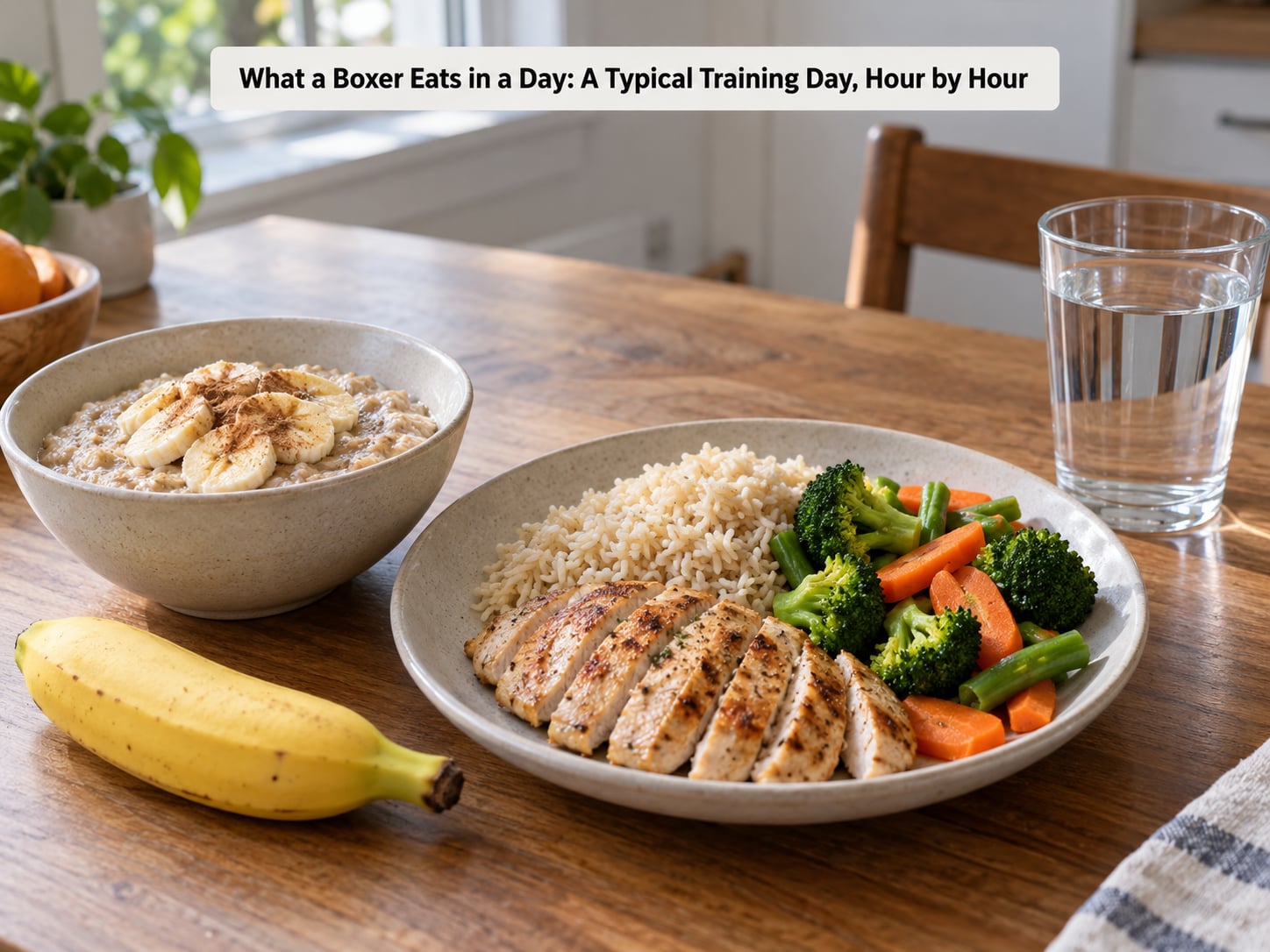
The day below belongs to a middleweight who runs two sessions and lifts three times a week. Times shift with the fighter’s schedule, but the shape stays the same: eat something every two to three hours, put most of the food around training, and never go more than a few hours without carbohydrate.
| Time | Meal | Typical portion | Why it’s there |
|---|---|---|---|
| 6:30 a.m. | Wake, water plus a pinch of salt | 500 ml | Replaces overnight sweat loss before anything else hits the stomach |
| 7:00 a.m. | Breakfast | 100 g oats cooked in milk, 2 eggs, a banana, a spoon of peanut butter | Slow carbohydrate plus protein to start glycogen replenishment |
| 10:00 a.m. | Recovery meal after the morning session | Rice and chicken with olive oil, a piece of fruit | Refills glycogen within the hour and covers a workout that just drained it |
| 12:30 p.m. | Lunch | 200 g pasta or rice, 180 g lean protein, a large salad or cooked vegetables | The biggest meal of the day, placed before the afternoon session |
| 3:30 p.m. | Pre-session snack | Bagel or rice cakes with honey, or a banana and a handful of nuts | Liquid and light carbohydrate, eaten 60 to 90 minutes out |
| 6:30 p.m. | Dinner after the second session | Potato or rice, salmon or beef, vegetables, olive oil | Largest recovery meal of the day, plus rehydration with electrolytes |
| 8:30 p.m. | Evening snack before bed | Cottage cheese or Greek yogurt, fruit, small handful of seeds | Slow protein, low fibre, avoids waking up hungry at 3 a.m. |
That pattern totals roughly 3,000 calories for a 75 kg fighter. A heavyweight on the same schedule would add food rather than add meals, and someone training three evenings a week would drop to three or four meals and roughly 2,300 calories. The clock is the least important part of the plan; the intervals are what matter.
How Much Food Does a Boxer Need to Eat?
The honest answer to how much a boxer should eat in a day is: enough to hold bodyweight steady while training hard, adjusted in whichever direction your sport demands. Five variables set that number, and none of them can be guessed from the outside.
- Body size. A 75 kg fighter burns far more than a 57 kg fighter on the same training day, mostly because there is more tissue to maintain and move.
- Weight class. Heavyweights routinely run on noticeably more food, while fighters cutting to a limit have to fit their fuel into a shrinking budget.
- Training volume. Two sessions and five lifts is a different physiological job from one session and a walk.
- Sex and age. Women generally need less energy for the same work, and fighters in their thirties and forties recover more slowly than they did at twenty.
- Direction of travel. Gaining, maintaining and cutting are three different jobs, and eating for one while doing another is why so many camps go wrong.
The split most camps work toward, and the one the big AI answers on this topic also quote, is 50 to 60 percent of calories from carbohydrate, 20 to 30 percent from protein, and 15 to 20 percent from fat. In practical food terms that means oats, rice, potatoes, pasta and fruit for carbs; chicken, fish, eggs, lean beef, yogurt or legumes for protein; olive oil, avocado, nuts and seeds for fat.
| Approximate bodyweight | Protein per day | Carbohydrate per day | Typical calorie range |
|---|---|---|---|
| 57 kg | 80 to 125 g | 250 to 350 g | 2,000 to 2,600 |
| 64 kg | 90 to 140 g | 300 to 450 g | 2,400 to 3,000 |
| 75 kg | 105 to 165 g | 400 to 550 g | 2,800 to 3,500 |
| 91 kg | 130 to 200 g | 450 to 650 g | 3,200 to 4,000 |
| 100 kg and up | 140 to 220 g | 500 to 750 g | 3,500 to 4,500 |
These are planning estimates, not prescriptions. One thing worth knowing from the boxing forums: the most useful rule amateurs actually use is about one gram of protein per pound of bodyweight, which is cruder than the 1.4 to 2.2 g/kg figure but lands in a workable place for most people. Take the table to a registered dietitian for anything more precise, especially around a weigh-in.
Why Do Boxers Prioritize Carbohydrates?
Boxing is an endurance sport played at high intensity. A fighter needs to produce hard efforts across twelve rounds with almost no rest, and carbohydrate is the only fuel that does that job quickly. Muscle and liver glycogen, the stored form of carbohydrate, is what a sprinter burns in the first minute and what keeps a boxer functional in round ten.
Run glycogen low and the falloff is obvious to everyone watching. The legs get heavy, punch output drops, and decisions get made with a hazy head. Fighters describe it as having no bottom in the tank, and they can feel it before the judges can.
Carbohydrate also means the recovery meal matters. The liver and muscles take up glucose most efficiently right after training, which is why the meal an hour after the session is the one with the biggest effect on tomorrow’s output. Simple sugar earns its bad reputation from fizzy drinks and candy bars, not from a banana before evening pad work or a bagel with honey at three in the afternoon.
How Do Boxers Balance Protein and Recovery?
Protein’s job is repair. It breaks down muscle that got damaged in the ring, rebuilds enzymes and structural protein, and keeps a fighter full enough to actually hit their calorie numbers. The 1.4 to 2.2 g per kg range matters most for a heavier fighter in a hard camp, where recovery between sessions is the binding constraint.
Spreading it out works better than loading it once. Muscle protein synthesis responds to a meaningful dose, roughly 0.3 g per kg, so five smaller feeds across the day beat two enormous ones even when the daily total is identical. That is one of the few places where a genuinely useful rule exists: four or five protein feeds, not one enormous dinner.
The food list is unremarkable because it should be. Eggs, chicken thighs, salmon, lean beef, Greek yogurt, cottage cheese, milk, lentils, tofu and peanut butter cover it, and most camps rotate three or four of them rather than shopping for twenty. Boxing forums name the budget version constantly, because that is what actually ends up in the fridge: tinned tuna, eggs, rice, chicken thighs and peanut butter. It works, and it costs a fraction of what prepped protein boxes do.
What Does a Boxer Eat Before and After Training?
Food around sessions is the part of boxing nutrition people get most precise about, and usually most wrong about. The rule is simple: what you ate at lunch matters more than what you ate forty minutes before the bell.
What to eat before a session
Aim for a meal one to three hours out that is mostly carbohydrate with modest protein and almost no fat. Fat slows gastric emptying, and slow is exactly what you do not want while throwing punches. A bowl of oats with a banana works; a large plate of fried eggs and bacon does not.
For afternoon sessions, the morning or midday meal is the real pre-session fuel. The snack thirty to ninety minutes before pad work is a top-up, not the main event, and it should be something a fighter can digest while nervous.
The first sixty minutes after training
Muscle protein synthesis peaks after a session, so a fast, balanced recovery snack matters more here than it would on a rest day: a whey shake with a banana, or yogurt and fruit. That is about twenty-five to thirty grams of protein with carbohydrate alongside it, nothing exotic.
Drink here too. A session in warm conditions can cost a litre or more of fluid, and losing it slowly through the afternoon is how a fighter ends up with a headache and no explanation. Most camps drink an electrolyte mix at this point rather than plain water.
What to eat after a session
Within two hours, get a full plate in: carbohydrate to refill glycogen and protein to start repair. Rice with chicken and vegetables is the default for a reason, and it works. A shake is a fine stopgap, not a substitute for eating when there is time to eat.
Eating between two sessions
On a double day there is a gap, usually two to three hours. That gap is for carbohydrate, a banana and a handful of nuts or a couple of rice cakes, plus fluid. It is not the moment for a big greasy meal; nobody wants to move in the afternoon after one.
How Does a Boxer’s Diet Change During Fight Camp?
A boxer’s diet changes four times across a fight cycle, and confusing the phases is how fighters end up with poor gym output and still make weight.
Ordinary training weeks look like the day above. Carbs high, protein steady, calories matched to the work. Nothing changes and nothing needs to.
Weight-making phase is where calories come down, generally in the final two to three weeks and by a modest amount. Protein stays high because it protects lean tissue during a deficit, and vegetables go up so the plate still fills. Training volume usually drops at the same time so the fighter is not trying to cut weight and improve at once.
Fight week reverses part of that. Carbohydrate goes up in the last few days to top off muscle glycogen, because a full tank of glycogen is worth several tenths of a kilo on the scale and considerably more inside the ring. Fluid is managed by a professional who is measuring it, not guessed at.
After the fight is a two-to-three day rebuild. Refill glycogen, replace what sweat took out, keep protein high. Appetite often crashes once the adrenaline goes, so fighters are told to keep eating on schedule rather than waiting to feel hungry.
What Should a Boxer Drink During a Day?
Eight cups, about 64 ounces or two litres, is the bare floor most sources quote for a training day. For a boxer running two sessions in warm conditions, that is not enough. Losing one to two percent of body mass as sweat already measurably hurts output, and two sessions in summer can clear that in an afternoon.
Water handles most days. It becomes insufficient in three situations: sessions longer than about an hour, hot or humid rooms, and any day with a second session. Then add electrolytes, mainly sodium with some potassium and magnesium, through a sports drink or a powder mixed into water.
During rounds, water between rounds is usually the right call, and small sips beat large ones. Corner drinks should be used deliberately by the coach, who knows whether a fighter is fighting a northpaw southpaw mismatch and has no use for a stomach full of litres.
Thirst is a decent guide on an ordinary day and a poor one in heat or long sessions, because by the time you feel properly thirsty you are already behind. Urine colour is a rough free check: pale straw is roughly where a fighter wants it. Persistent headaches, nausea, dizziness or confusion during a session are not things to train through. Stop and get medical advice, because over-drinking without sodium is its own problem and it turns serious fast.
What Does a Boxer Eat to Cut or Make Weight?
Weight classes exist because the sport wants matched opponents, and the whole weight-cut conversation starts with two numbers that are not the same: scale weight, the number on the scale at the weigh-in, and walking-around weight, what the fighter actually carries in the gym. The gap between them is usually no more than two to three kilos, and holding a bigger gap is a safety decision, not a toughness one.
The safe route is slow and boring. Train close to fight weight in camp, then trim calories modestly in the last two to three weeks while holding protein high and lowering training volume. That costs some conditioning but no more than that. On some fight weeks a short fluid reduction in the final twelve to twenty-four hours is used, and that one belongs to a professional who is measuring body mass and watching how the fighter responds.
What does not belong: crash diets, laxatives, diuretics, sauna suits, fasting, or eating almost nothing to make a limit. The forum advice on this is unusually consistent, and so is the medical one. Most of those methods remove water and gut contents rather than tissue, which means you weigh in fine and fight at the wrong weight, get depleted, and risk cramping, impaired judgement and, in the serious cases, hospital care. Anyone planning a first cut should have a registered dietitian or doctor involved before the camp starts, not the week before the weigh-in.
Frequently Asked Questions
Do boxers eat differently on training days and rest days?
Yes, and the difference is bigger than most people expect. On a double-session day intake can run 500 to 1,000 calories above a rest day because of glycogen replacement and sweat losses. On rest days fighters trim the carbohydrate portion first, since that is the easiest thing to cut, and hold protein and fluids steady. Adjust by hunger, your bodyweight trend across the week and how the gym session actually went, rather than by a fixed number.
How many meals should a boxer eat in a day?
Five or six meals, roughly two to three hours apart, is the pattern most camps settle on. Small frequent meals keep glycogen topped up and digestion comfortable between sessions. Fewer meals can hit the same total, but a fighter trying to force 3,000 calories into two sittings usually ends up with stomach problems on fight night.
Do professional boxers avoid carbs to stay lean?
No. Carbohydrate is the fuel a boxer runs on, and cutting it hard shows up as dead legs partway through a round. Fighters who need to lose weight reduce total calories and the carbohydrate portion modestly, then raise protein and vegetable volume so sessions still feel sharp. Low-carbohydrate approaches borrowed from non-sport diets do not suit repeated-round work.
What supplements do boxers use for recovery?
Three things have reasonable evidence behind them: a protein powder for hitting daily protein targets quickly, creatine monohydrate for strength and power work, and an electrolyte mix for long or hot sessions. Vitamin D and iron are worth testing rather than assuming. Everything beyond that is usually marketing, and a registered dietitian is the right person to sort it out.
How do boxers make weight safely?
The safest route is slow. Hold a slightly higher bodyweight through camp, then trim calories modestly in the final two to three weeks while keeping protein high and dropping training volume. A brief fluid reduction in the last twelve to twenty-four hours may be used under supervision. Sauna suits, laxatives, diuretics and fasting are dehydration, not fat loss, and they cost you rounds.
What should a boxer eat after a fight?
Within an hour of the last bell, get carbohydrate and protein together: rice, pasta or bread with chicken, eggs or fish, plus fluids with electrolytes. Over the next two days keep calories high and protein steady, because appetite often crashes once the adrenaline fades. Train light until the soreness settles, and let someone who is a registered dietitian review it if recovery drags on.
Conclusion: Start With a Sustainable Boxing Plate
The version of this that holds up in practice is boring: regular meals every two to three hours, most of the calories from carbohydrate, a decent portion of protein at every sitting, vegetables on the plate, and fluids moving all day. Fix those five things before chasing anything from a supplement shelf.
Then pay attention to two signals rather than a spreadsheet. How you feel in round four of a hard session tells you whether the fuel is right, and your bodyweight trend across a fortnight tells you whether the numbers need moving. For anything more precise than that, including a first weight cut, a registered dietitian or a doctor working with your coach will get you further than any online plan, because they can adjust it week to week instead of once a year.