An out boxer is a fighter who does almost everything at long range: holds the opponent away with the jab, circles to stay outside their punching range, makes punches miss, answers the miss with a counter, and takes the fight to the cards. They win by being difficult to hit and hard to catch, not by standing still and trading.
That description is doing a lot of work, because “out boxer” is a style label rather than a punch or a single skill. Fighters who earn it do a whole set of small jobs over and over, and those jobs add up. Understanding what an out boxer does is the fastest way to read a fight while you are watching it.
Table of Contents
- What an Out Boxer Does in Boxing
- How Out Boxers Control Distance and Ring Position
- The Main Tools of an Out Boxer
- What an Out Boxer Does During a Round
- How Out Boxers Differ From Pressure Boxers
- What an Out Boxer Does When the Fight Changes
- Why the Style Can Work and Where It Breaks Down
- Famous Boxing Examples of Out Boxers
- How to Identify an Out Boxer in a Fight
- Frequently Asked Questions
- Conclusion
What an Out Boxer Does in Boxing
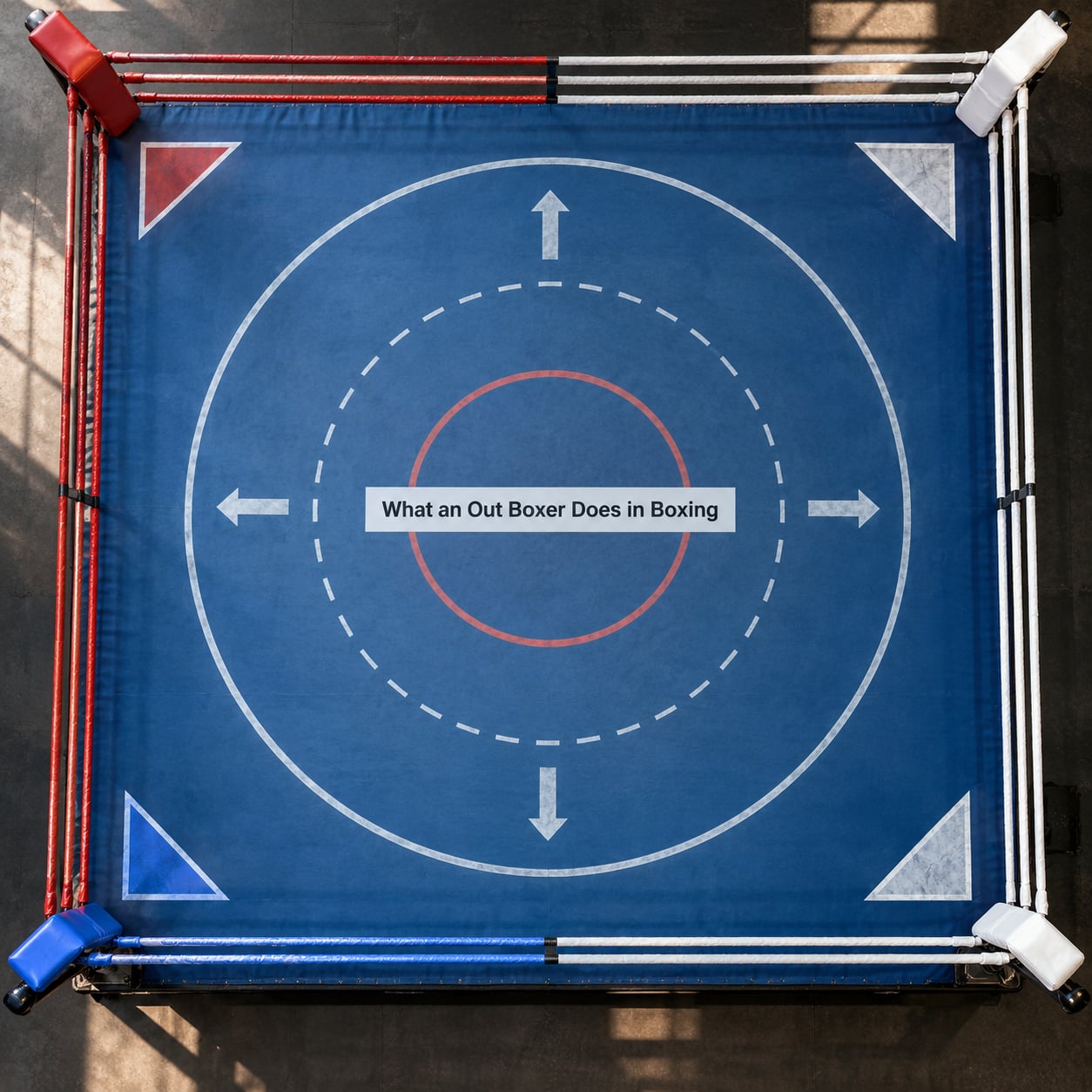
An out boxer, also called an outside fighter, an out-fighter or a pure boxer, is a boxer who fights from outside the opponent’s punching range. They control that distance with footwork and the jab, slip or roll away from anything that gets through, counter off the miss and win by outpointing their opponent over the full fight.
The style has three defining characteristics. Distance comes first, because every other decision depends on how far away the other fighter is. Accuracy comes second, since a jab thrown to control space does not need to hurt, it needs to land. Patience comes third, because the style asks a fighter to win a slow argument rather than one exchange.
Fighters pick it because it multiplies their options. With reach on their side, they can choose to attack, to move or to reset, and an opponent who has to chase them spends energy doing it. A fighter without reach cannot take any of those options away.
It is not a style anyone can simply decide to have on fight night. It shows up in how a person moves when nobody is scoring: the way they step away rather than through punches, the way they lean out before they lean in, the way they can keep their hands busy while doing nothing dangerous. Boxers who grew up tall with a long guard and quick feet tend to drift into it naturally.
How Out Boxers Control Distance and Ring Position
Range is the whole argument. Every style has a band of distance where its punches land, and an out boxer tries to keep the fight just outside the opponent’s band while sitting inside their own. That overlap, where the out boxer is close enough to score and the opponent is too far away to score, is the favourable angle.
The jab is the measuring instrument. It marks the edge of the opponent’s reach, and it tells the out boxer how far forward they can step. A fighter who fires jabs blindly loses that information and ends up punching from where the opponent used to be.
Ring position does the rest. An out boxer on the ropes is a defeated out boxer, so they circle continuously, usually toward the opponent’s lead foot side, which pulls a chasing fighter in a wide arc. Cut off the ring and the chasing fighter stops being the pressure fighter and becomes the one being moved.
Once the ring shrinks, the geometry works against the out boxer’s own plan. Every corner and every step forward favours the pressure fighter, which is why retreating is usually answered with an angle rather than a straight back step.
The Main Tools of an Out Boxer
What an out boxer does with the lead hand
The lead hand does three jobs: it measures distance, it interrupts the opponent’s rhythm and it covers the attacker’s near eye. A jab thrown with intent, snapped back to guard, does all three at once. The punches that score are the ones thrown after the jab has already done its job.
Footwork, angles and pivots
Moving in arcs rather than straight lines is what creates the angle. A pivot of the lead foot turns the opponent’s power and turns the straight punch into a hook. Circle, pivot and slide, and the opponent has to keep changing target while the out boxer keeps landing in the same place.
Slipping, rolling and pivoting away
Outside fighters defend by moving, not by blocking. Slip a straight punch by a few inches, roll a hook underneath it, step off the line entirely against a big hook. Slipping is what makes counters available, because the miss leaves the opponent’s weight committed and their guard open.
Timing and cutting off the ring
An out boxer waits for the moment the opponent commits, then punishes with a cross or a straight right. Between those moments they cut the ring, breathe, and reset the distance. The waiting is not passive. It is the part of the style that decides fights.
What an Out Boxer Does During a Round
A round usually follows a pattern. The out boxer settles the feet, finds the distance with a jab, and starts moving.
Early in the round, the out boxer is measuring. Jabs go out to find the range, feints and shoulder flicks test what the opponent reacts to, and the fighter moves to see whether the opponent chases forward or waits. Very little damage is done here on purpose.
Once the range settles, the probing turns into selecting. The out boxer picks shots: the lead hand lands often, the cross lands when the opponent’s jab does not return, and the fighter attacks in short bursts of one or two punches rather than long combinations. Long combinations need the inside, and the inside is the one place the out boxer does not want to be.
Every time the opponent pushes forward, the defence does the same three things: move the head, step off the line, fire a counter into the space behind the missed punch. Then the out boxer resets and rebuilds the distance from scratch.
Late in a round, the out boxer usually decides something. Against a fighter who has done nothing, they step in and take the round off the cards. Against a fighter who has hurt them early, they leave the outside and go to the body to change the conversation. The out boxer’s best decision is usually knowing which round it is.
How Out Boxers Differ From Pressure Boxers
The pressure fighter walks forward and makes you fight backwards. The out boxer walks backward and makes you follow. Both styles can win, and the honest answer is that the matchup, the footwork and the cardio decide it.
| Category | Out-boxer | Pressure fighter |
|---|---|---|
| Preferred range | Long, just outside the opponent’s reach | Close, chest to chest |
| Main weapon | Jab, cross, counters | Hooks, uppercuts, pressure punches |
| Defensive movement | Slip, roll, pivot, circle away | Shell, dip under, walk forward |
| Ideal build | Height, reach, long limbs | Compact build, strong legs and hips |
| Energy profile | Lower output, efficient bursts | High output, sustained forward work |
| Strongest against | A slow or flat-footed pursuer | A hesitant or passive fighter |
| Weakest against | Pressure with better footwork, or a southpaw they cannot solve | A patient counterpuncher who punishes every step in |
| Typical result | Unanimous decision over many rounds | Knockout or stoppage late in the fight |
The comparison people share most often online is blunt: a swarmer with better footwork beats an out-boxer, an out-boxer with better timing beats a slugger, and a slugger with better defence beats a swarmer. It is a rough rule, not law, but it explains why styles beat styles.
What an Out Boxer Does When the Fight Changes
Against a pressure fighter, the out boxer does not run. They widen the circles, jab on the way out and use angles so the pursuer crosses their feet rather than catching them. If the pressure keeps landing, the out boxer adds a level change and goes to the body, because a body shot stops a forward walk faster than a head shot.
Against a boxer-puncher who wants to trade, the out boxer simply declines the trade. Jabs, reset, jab again. The opponent grows frustrated and starts throwing, which creates the openings.
Against a southpaw, the work is on the lead foot. The jab has to beat the back foot to the body, and the fighter will spend the whole fight landing to the side the southpaw cannot cover as easily.
Against a taller opponent, the plan changes from out-boxing to out-working. Range gets harder to hold, so the out boxer steps in to medium range, works the body and accepts a less comfortable fight than the one they wanted.
Against an opponent who cuts off the ring, there is no pattern to fall back on. The out boxer has to switch styles mid-fight, and that is the moment most styles get tested.
Why the Style Can Work and Where It Breaks Down
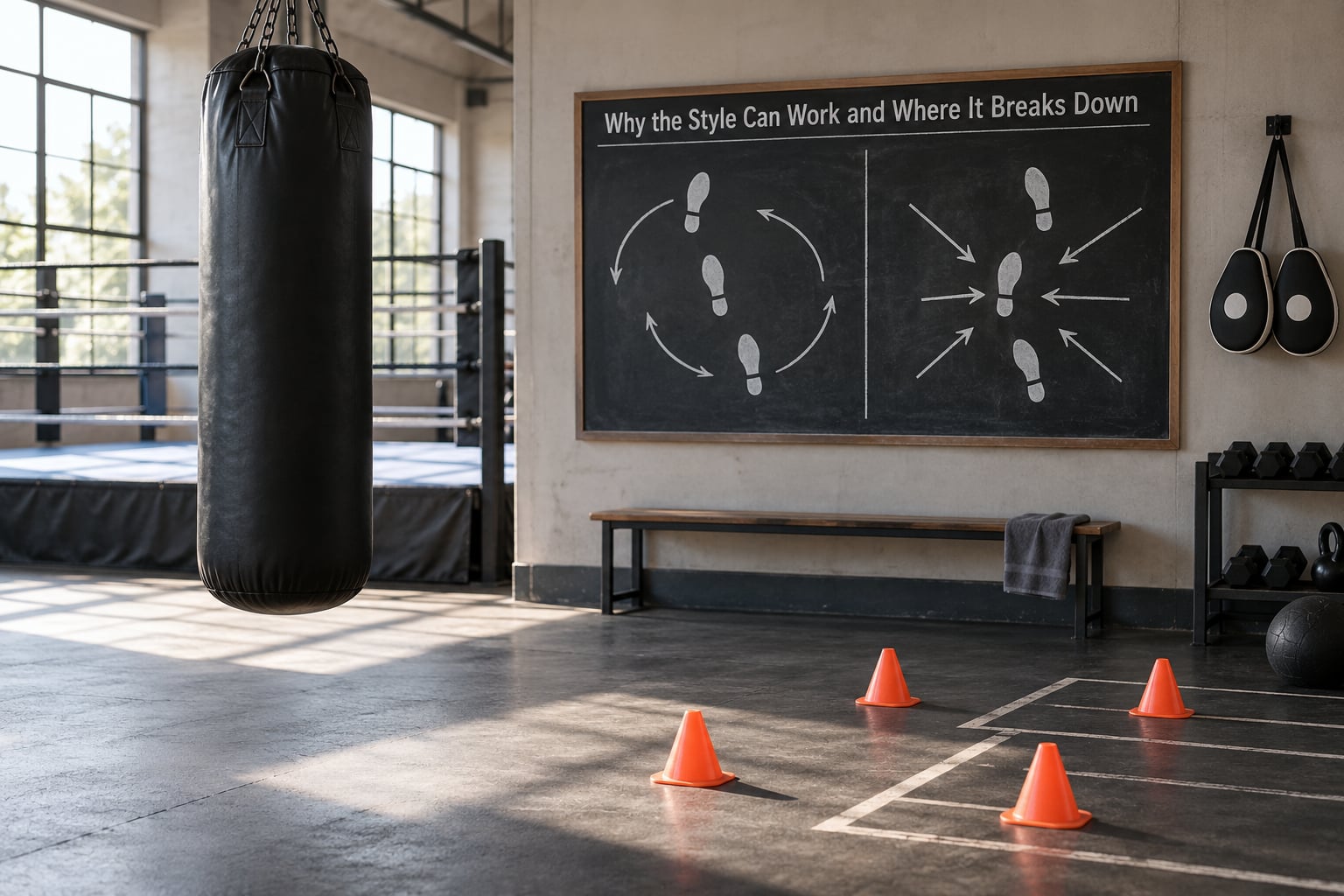
The advantages are real. Out boxing conserves energy, because walking backwards and throwing straight punches costs far less than chasing someone. It punishes opponents who only know how to move forward. And it produces wins that look one-sided on the scorecards even when the fighter looks busy the whole night.
It also produces a specific type of victory. Out-boxers rarely end fights early. Their knockouts tend to come late, when an opponent who has been walking forward for ten rounds finally gets caught, and the majority of their wins are on the cards. If you want highlight reels rather than decisions, this is the wrong style.
The weaknesses follow from the same logic. There is no safety after punching, so a missed punch can be a counter. Chasing a moving opponent punishes cardio hard, and amateurs in particular learn quickly that chasing air is exhausting. The style needs discipline to keep, and the single most common failure in the gym is drifting into a brawl because the discipline has not been built yet.
Hand position is another dividing line. A high guard and a dropped hand both belong to out fighters in some form, but a dropped hand takes away the jab and the cover, so it removes the two tools the style depends on.
Famous Boxing Examples of Out Boxers
The label covers quite different fighters, which is why it is worth looking at versions of the style rather than a single ideal.
Sugar Ray Robinson and Joe Walcott worked almost entirely on the outside in an era dominated by heavy punching. Walcott’s long jab and steady circling forced opponents to walk into punches they did not want to take.
Willie Pep was the same idea at welterweight, using a fast, light jab and constant movement to win rounds rather than fights in the moment. Muhammad Ali took the same principles and turned them into an art by controlling distance from the outside of the range entirely.
Bernard Hopkins fought at medium range with the patience of an outside fighter. Pernell Whitaker, Daniel Zaragoza, Terence Crawford and Vasiliy Lomachenko are the clearest modern versions, with Lomachenko and Crawford both capable of switching styles the moment a plan fails.
Artur Bivol has used long reach and a controlled jab to build one of the longest title reigns of the modern era, mostly by outpointing opponents rather than stopping them. Oleksandr Usyk shows that a fighter can out-box at heavyweight without being the tallest man in the room, and Devin Haney built an early career on lead-hand volume and feet.
How to Identify an Out Boxer in a Fight
Watch the feet for the first ten seconds of round one. A few cues hold up well.
The lead hand will be busy before anything else happens, and most of those lead-hand punches will look unthreatening. Watch whether the opponent moves in wide arcs rather than straight forward. Notice the reset after every exchange, back to the same distance, guard up.
Then listen for what is missing. If you cannot hear hooks landing, or the fight keeps ending before it starts, an out boxer is probably on the other side. Sudden forward bursts after long quiet stretches are the tell that tells.
Frequently Asked Questions
Do you have to be tall to be an out boxer?
No. Height and long reach make the style easier by a few inches, but the real requirements are footwork, a reliable jab and enough patience to keep moving instead of standing and trading. Several heavyweight champions have fought on the outside without being the tallest fighter in the division. If you cannot hold a distance, no amount of reach will fix that.
What punches does an out boxer use most?
The jab, by a distance. It measures the opponent’s reach, interrupts their rhythm and covers the near eye. After the jab, an out boxer reaches for the cross or a straight counter into whatever the miss has opened up. Long combinations of hooks and uppercuts belong to a different style, because those punches only work at close range.
Can an out boxer win by knockout?
Yes, but it is not the plan. Out-boxers land fewer power punches than pressure fighters, so most of their wins come by decision. When a knockout does come, it usually happens late against a fighter who has spent the fight walking forward, or when an out-boxer’s jab and cross find a target at the same moment. The style produces decisions, not highlight reels.
How does an out boxer avoid getting trapped on the ropes?
They never follow the fighter back. An out boxer circles so that a pursuer crosses in front of them rather than pushing them backwards, and pivots on the lead foot so an angle opens every time the opponent commits. When a corner does arrive, the answer is a level change or a level exit, not a head-to-head exchange against a pressure fighter.
Is an out boxer the same as a counterpuncher?
They overlap but they are not the same label. An out-boxer is defined by the range they fight at, while a counterpuncher is defined by the timing of their attacks, waiting for the opponent to miss and then punishing it. A counterpuncher can fight on the inside. Many great out-boxers are counterpunchers, but a counterpuncher is not automatically an out-boxer.
What should I do if my opponent keeps coming forward?
Do not trade punches on their terms and do not run straight backwards, which takes away your angles. Circle in wide arcs, keep jabbing on the way out, and look for a counter every time they step in. If the forward pressure keeps landing, change the level and work to the body, because a body shot interrupts a forward walk faster than a shot to the head.
Conclusion
An out boxer controls range with the jab, moves to stay outside punching distance, makes punches miss, punishes the miss and wins on the cards. That is the whole job, repeated for twelve rounds. Next time you watch a fight, track the lead hand, the feet and the distance between the two fighters, and you will be able to name the style within a round.