
The short answer to how to go pro in boxing: build a solid amateur career first. Learn the fundamentals under a qualified coach, train most days of the week, compete in sanctioned amateur bouts, then apply for a professional licence with your state athletic commission. Most boxers who sign a professional contract have put in several years of gym work before that happens.
Nobody guarantees you’ll get there. Talent helps, but the boxers who actually make the jump are usually the ones still training after the first year when the novelty wears off and nobody’s watching.
The route, stage by stage.
Table of Contents
- How to Go Pro in Boxing: What You Need
- Step-by-Step: How to Go Pro in Boxing
- 1. Build a Safe Technical and Fitness Base
- 2. Train Consistently and Improve With a Coach
- 3. Enter the Right Amateur Competition
- 4. Compete and Build a Credible Record
- 5. Get Evaluated by Boxing Professionals
- 6. Understand the Costs and Lifestyle Commitment
- 7. Secure Opportunities Without Rushing the Transition
- Common Mistakes and How to Fix Them
- Frequently Asked Questions
- Conclusion: Start With a 12-Month Pro Plan
How to Go Pro in Boxing: What You Need
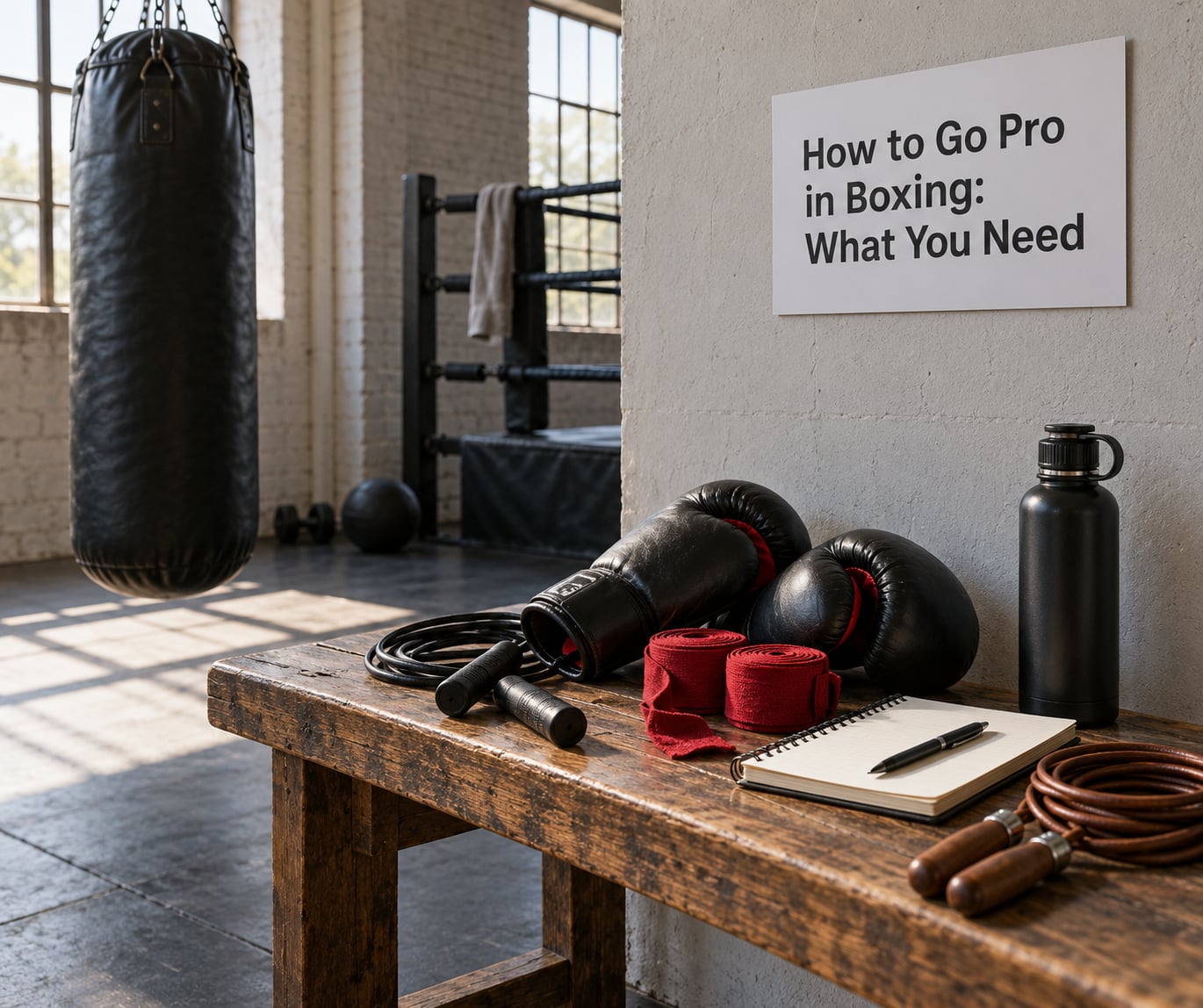
Before any of the steps below, you need a few things in place. Without them, the pathway stalls at every stage.
A qualified coach. This is the single biggest gatekeeper. Someone who has actually prepared fighters for competition, not just someone who enjoys hitting pads on weekends. They’ll tell you honestly whether you’re ready, which is a conversation you want early rather than late.
A safe skill base. Stance, footwork, a high guard, and four punches you can throw without thinking. If your defence falls apart the moment someone presses forward, you’re not ready to be in a ring with anyone who competes.
A conditioning baseline. Fighters in the gym often quote the same benchmarks: able to run a few miles without falling apart, skip rope for half an hour, and put a solid fifteen minutes into a heavy bag. You don’t have to hit them on day one, but you should be able to by the time you’re asking to enter a bout.
Consistent access to training. Serious prospects train six days a week. If your gym is shut on the days you can attend, that limits you more than almost anything else.
Time and money. Fees, wraps, gloves, shoes, entry fees, travel to shows, medicals. Nearly everyone pays for this out of pocket early on, and nearly everyone needs a day job or family support to get through it.
Flexibility outside boxing. School, work, or family schedules will conflict with a training block at some point. The people who make it plan around that conflict rather than pretending it isn’t there.
Talent is not on that list, and that’s deliberate. Talent without a coach, without consistency, and without the ability to keep a job while training is a very common way for a promising beginner to disappear at 21.
Step-by-Step: How to Go Pro in Boxing
The process runs in seven stages. They overlap more than they queue up, and your timeline depends on your skill, your competition results, your age and health, your finances, and honestly a fair amount of luck.
1. Build a Safe Technical and Fitness Base
Your first months are about learning to not get hurt. That means stance and footwork before power, head movement and a high guard before combinations, and fundamentals drilled until your hands know what to do.
Keep it progressive. Hard sparring and maximum-power work belong much later. The experienced boxers on amateur boxing forums keep saying the same thing: conditioning first, then technique, then everything else.
Your benchmark is simple. If you can train a full week and finish it without avoidable pain, groin pulls, or a shoulder that aches for days, you’re doing it right. Sharp pain is a stop signal, and you raise it with your coach or a doctor rather than pushing through.
2. Train Consistently and Improve With a Coach
A realistic week for someone serious looks like this: several technical sessions on pads and bags, dedicated conditioning work, strength training built around boxing movement, and rest. Controlled sparring gets added later, once your coach thinks you can handle it.
Ask a prospective coach specific questions before you sign up. Do their fighters compete? Have any of them gone pro? How much one-on-one time do you actually get? What does the weekly plan look like on paper?
Judge progress by skill, not by a fitness app. Can you hold your guard under pressure? Are your feet moving after you throw? Do you recover when you’re tired? Those questions tell you more than a step count.
3. Enter the Right Amateur Competition
Gym work alone isn’t competition. At some point you need to stand in a ring against someone who also wants to win, and if you’re figuring out how to go pro in boxing, you want that first time to happen under the right conditions.
Look for sanctioned novice or open-class shows at your gym, then local tournaments, then developmental competition. In the US, USA Boxing registration and local club affiliation come first, along with headgear, gloves, a cup, and mouthguards specified by the rules.
Check the weight class and age division rules before you enter anything. Competing above your weight class to chase a trophy usually ends with a loss and a bad night. Appropriate opposition teaches you more than a bad split decision ever will.
4. Compete and Build a Credible Record
Every bout teaches you something about yourself under pressure. Ring craft, composure, how you react when you’re hurt, whether you can work a plan for three rounds instead of swinging wild.
Coaches and promoters read a record carefully. They look at scorecards and margins, not just the win-loss column. They note the quality of opposition, whether you’ve shared the ring with fighters who went on to do something, and how active you’ve been.
Stay in a meaningful age and weight division rather than padding the record with easy bouts. A 20-2 record full of people you were expected to beat tells a promoter very little.
5. Get Evaluated by Boxing Professionals
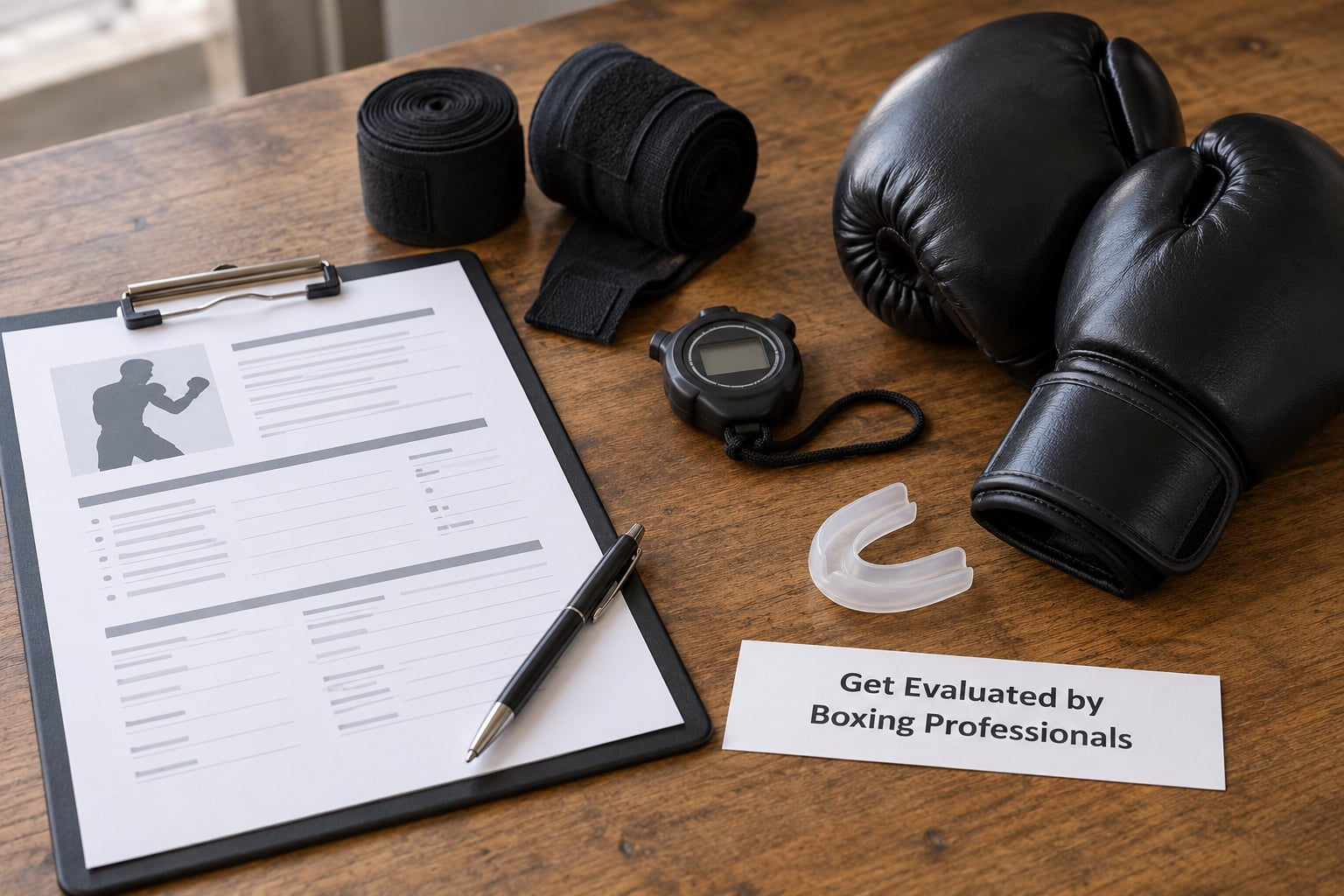
Getting noticed happens through a chain, and the first link is your coach asking for an honest assessment. Where did you fight, how did you handle the better opposition, and how have you developed since your last bout?
Some fighters get evaluated for a professional bout or invited to a promotion’s showcase night. Others put together a fight reel where the rules allow it, plus a proper boxing resume: record, opponent list, dates, weight class, and round-by-round detail.
Representation matters here. Look for someone with verifiable connections to the sport, not someone who promises you a contract. A manager can advocate for you, negotiate, and make introductions, but no manager can guarantee that a promoter will sign you or put you on a card.
6. Understand the Costs and Lifestyle Commitment
Nobody hands you money at the start. The costs arrive first: gym fees, equipment, wraps and shoes that wear out fast, medicals, competition entries, and travel to shows where the purses don’t cover the fuel.
Plenty of careers begin with zero income, or close to it. The honest version is that most boxers need paid employment, family support, or sponsorship to cover the first stretch, and that the schedule makes holding down a full-time job genuinely hard.
Build a simple financial plan before you commit. Know your monthly training cost, your realistic income from competing, and how many months you can cover without support. Then tell the people who will be affected, because a missed shift and a three-a.m. roadwork session don’t coexist quietly.
7. Secure Opportunities Without Rushing the Transition
Bouts come through verified promoters, managers, sanctioned events, and introductions made by people already inside the sport. Your amateur coach is often the best route in, because promoters trust their referrals. Knowing how to go pro in boxing means being patient at this stage rather than taking the first thing offered.
Read any offer carefully. Understand the commission split, the weight limits and whether you must make weight, the notice period on both sides, the medical requirements, and what happens to your rights if you win or lose. Have someone experienced look it over with you before you sign anything.
There’s a difference between a paid opportunity and an expensive way to gain experience. Some early bouts pay nothing and cost you travel and prep. That’s a reasonable trade at 21 if the matchmaking and coaching are sound, and a bad deal at any age if you’re the one funding someone else’s card.
While you look, keep training and keep competing. The boxer who stops showing up while waiting for an offer is the one who never gets it.
Common Mistakes and How to Fix Them
Most wasted careers come down to a handful of repeated mistakes. Here’s what they look like and how to turn them around.
Skipping coaching to save money. Fix: find a coach who charges reasonably and check whether your gym offers supervised sessions with a qualified trainer. Warning sign: you’ve been punching mitts alone for months and can’t say what you’re improving.
Turning pro too early. Fix: let your coach and an independent promoter give the same honest verdict before you apply. Warning sign: you’re excited about the offer more than the matchmaking.
Chasing social media attention. Fix: judge yourself on your last five performances in the ring. Warning sign: the highlight matters more to you than the loss that preceded it.
Training through pain. Fix: separate soreness from sharp pain, and get persistent pain looked at by a doctor. Warning sign: you’re changing your stance to avoid a shoulder or a hip.
Taking unsanctioned fights. Fix: compete under a recognised sanctioning organisation with a medical and a referee. Warning sign: nobody is recording it, licensing it, or covering an ambulance.
Focusing only on wins. Fix: review scorecards and footage, not the result. Warning sign: you’ve stopped watching your own bouts to learn from them.
Signing with anyone who flatters you. Fix: ask to speak to fighters they’ve represented and check whether they actually work in the sport. Warning sign: you can’t name a promoter they’ve spoken to for you.
Starting with no financial or recovery plan. Fix: write down monthly costs, income, and sleep hours before you commit. Warning sign: you plan to fund everything from your first purse.
Frequently Asked Questions
Is 25 too old to go pro in boxing?
Not really. Plenty of fighters have started competing in their twenties, and being older can mean you are more patient, more durable, and clearer about what you want from the sport. The bigger factors are your current skill level, how many years of amateur competition you have ahead of you, and your health. Some commissions set a minimum age for a professional licence, but the upper limit is usually flexible.
How many amateur fights do I need before turning pro?
There is no official number, and no promoter has a quota. What gets noticed is a record with credible opposition, scorecards that show you won rounds rather than just opponents, and a training habit that has not slipped. Some fighters sign with fewer bouts than others and still get opportunities; others collect a long record of easy wins and stay invisible.
How do I get a professional boxing license?
You apply to the state or territorial athletic commission that governs where you train. Expect to provide identification, a birth certificate, proof of age, and a medical clearance covering bloodwork and a neurological assessment. Rules, fees and renewal periods vary by state, so check your commission’s own site and the promoter who would sign you. Your license does not get you fights.
What are the chances of becoming a pro boxer?
Lower than most beginners assume, and no one can give you an honest percentage. Amateur boxing is full of committed, hard-working fighters who never sign a professional contract. What moves the odds is coaching quality, competition against real opposition, consistent training over several years, and a marketable style a promoter can sell. Work on being someone a promoter would pick.
How much do professional boxers make per fight?
It varies enormously and it is not something anyone can predict for you. Early-career purses are often small or nothing at all, and many boxers rely on a day job, support at home, or sponsorship to train. Earnings rise sharply only for fighters who draw crowds and television audiences. Treat every financial promise before a first contract as unproven until money is in your account.
Conclusion: Start With a 12-Month Pro Plan
If you take one thing from this, make the next twelve months simple. Find a qualified coach. Build a safe baseline you can train week after week without injury. Enter one appropriate amateur competition and take it seriously. Then review where you are every three months.
Nobody reaches a professional debut by rushing. It’s years of technical development, honest competition, resilience when you lose, reliable support around you, and enough good decisions that you don’t burn out before the interesting part starts. Put 2026‘s training plan in place now and let the record build itself.