
When a champion moves up a weight class, they usually hand back their belt, walk into a division where every opponent is naturally bigger, and start again from zero. They gain strength, punch resistance and years of career left, and they give up reach, speed and the certainty that won them the last belt.
It is the most debated decision in boxing, and no single answer fits. A pressure fighter with a heavy, compact build can thrive a division higher. A tall counterpuncher who survives on reactions and footwork usually cannot.
The consequences, in order, look like this:
- The title gets vacated, and the division’s sanctioning body orders a new bout, often with an interim champion created.
- The size advantage disappears. Every opponent in the new division is bigger and stronger than anyone the champion was champion over.
- Ranking starts at the bottom. The fighter enters as a challenger, not a champion, and has to earn a shot.
- Recovery and cardio are the first things to go. Twelve rounds against heavier punchers costs more than twelve rounds at the old weight.
- The career can extend. Longevity matters more than dominance, and a well-timed move often buys three or four more good years.
What follows breaks down how the classes work, what changes physically, how fighters prepare, and how you can judge whether a move was brave or premature.
Table of Contents
- What Happens When a Champion Moves Up a Weight Class?
- How Do Weight Classes Work in Professional Boxing?
- What Physical Changes Should a Fighter Expect?
- Why Is Moving Up a Weight Class Risier?
- How Does a Champion Usually Prepare for a Weight Increase?
- What Happens to a Champion’s Style at the New Weight?
- Can a Former Champion Win a Title in a Higher Weight Class?
- How Do Fans and Boxers Judge the Move?
- What Should a Champion Do First Before Moving Up?
- Frequently Asked Questions
- Can a boxing champion move up a weight class and win?
- Which weight class is hardest for a champion to move into?
- Does moving up a weight class make a boxer slower?
- What is the biggest challenge when a champion changes weight divisions?
- Should a champion move up if they are already dominant?
- How long does a boxer need to prepare for a higher weight class?
- The Main Takeaway
What Happens When a Champion Moves Up a Weight Class?

The short version is that the champion trades certainty for opportunity. Everything they were great at was measured against smaller men, and none of it carries over automatically.
A vacated title is the most visible part. In most major sanctioning bodies, a champion who steps up gives up the belt rather than carrying it into the new division, because weight limits do not exist in the lower class a champion holds. The body then orders the ranked contenders to fight, and frequently crowns an interim champion so the division has a belt-holder while a new title fight is arranged.
The knockout effect is bigger than the paperwork. A champion at junior middleweight has spent years learning timing against punchers 20 pounds lighter. Those same instincts are now wrong by a stride, and there is no way to buy them back quickly.
How Do Weight Classes Work in Professional Boxing?
Weight classes exist so that size advantage stops deciding fights before the boxers start working. They date back to the era when titles were contested at agreed weights rather than fixed limits, and the modern limits are a compromise between tradition and safety.
The important detail: a division limit is a ceiling, not a target. Fighters almost never weigh in at the number on the list. The championship limit is the weight they must be under when they step on the scale, and most title fights are staged around that ceiling.
| Division | Championship limit | Notes |
|---|---|---|
| Strawweight | 105 lbs | The floor of the sport, and the hardest division to fill |
| Flyweight | 112 lbs | The same limit across the major bodies |
| Bantamweight | 118 lbs | Super bantamweight sits at 122 |
| Featherweight | 126 lbs | Super featherweight sits at 130 |
| Lightweight | 135 lbs | Super lightweight sits at 140 |
| Welterweight | 147 lbs | Super welterweight sits at 154 |
| Middleweight | 160 lbs | Super middleweight sits at 168 |
| Light heavyweight | 175 lbs | One of the hardest divisions to enter |
| Cruiserweight | 200 lbs | A bridge division, not a minor one |
| Heavyweight | 200 lbs and over | The only division without an upper limit |
Limits vary slightly between sanctioning bodies, and several organizations run their own championship weights within the same named division. In MMA, where a second weight limit is common, the same ceiling rule applies but the cut is far more severe because athletes dehydrate to get under it.
That difference matters when you compare the two sports. In boxing, the weight you fight at is usually close to your natural walking weight. In MMA, fighters routinely arrive 15 to 20 pounds lighter than they walk around, then rehydrate.
What Physical Changes Should a Fighter Expect?
The gains come first. Adding 15 to 25 pounds of muscle raises punching power, structural strength and the ability to absorb a clean shot without blinking. A fighter who spent a career winning rounds on the outside usually needs that frame before they can do anything at the new weight.
The losses arrive with it. Speed and endurance are the first casualties, because moving a heavier body repeatedly for twelve rounds costs more energy than moving a lighter one. Recovery slows, so damage that a fighter shrugged off at 135 shows up at 147 as soreness that lasts a week.
Does Moving Up a Weight Class Make a Boxer Slower?
Some of it, and it depends on how the weight was added. Muscle gained at speed with the new division in mind costs very little in movement. A fighter who steps up without building the frame properly ends up carrying weight he cannot use, and that is where the slowdown shows up first, usually in the first two rounds and in the footwork.
Does 10 Pounds Make a Difference in a Fight?
Yes, ten pounds can decide a fight, especially in the lower divisions. Ten pounds of usable muscle adds reach, punch resistance and stamina at once, and in a sport decided by inches of head movement and one clean shot, that margin is a full round’s worth of difference. Higher up, where fighters already carry more mass, the same ten pounds matters far less.
Why Is Moving Up a Weight Class Risier?
Risk comes from four places at once, and they compound. A stronger opponent punches harder. A stronger opponent takes more punishment before going down, so a champion who relied on breaking opponents with accumulated damage finds that method slow. A stronger opponent means a longer fight, which means more fatigue, which means worse decisions. And a bigger division usually has deeper talent than the one you left.
The matchup problem is the least predictable part. Marvin Hagler defended middleweight against men who had climbed up to challenge him and had already proven themselves at a higher weight, which is not the same test as climbing up himself. Hagler’s frame was never built to move to 175, and boxing writers have said as much for years.
Carlos Monzon is the counterexample people forget. He was a middleweight champion with a style that translated to any weight, and observers have argued for decades that he should have moved up while he still could. He stayed and defended until his thirties, by which point the body had made the decision for him.
There is a second risk that has nothing to do with physics. A champion who vacates and loses gives every opponent on the way up a free excuse, and the losses that follow are treated as evidence the champion picked the wrong fight rather than as evidence the division was full of better fighters.
How Does a Champion Usually Prepare for a Weight Increase?
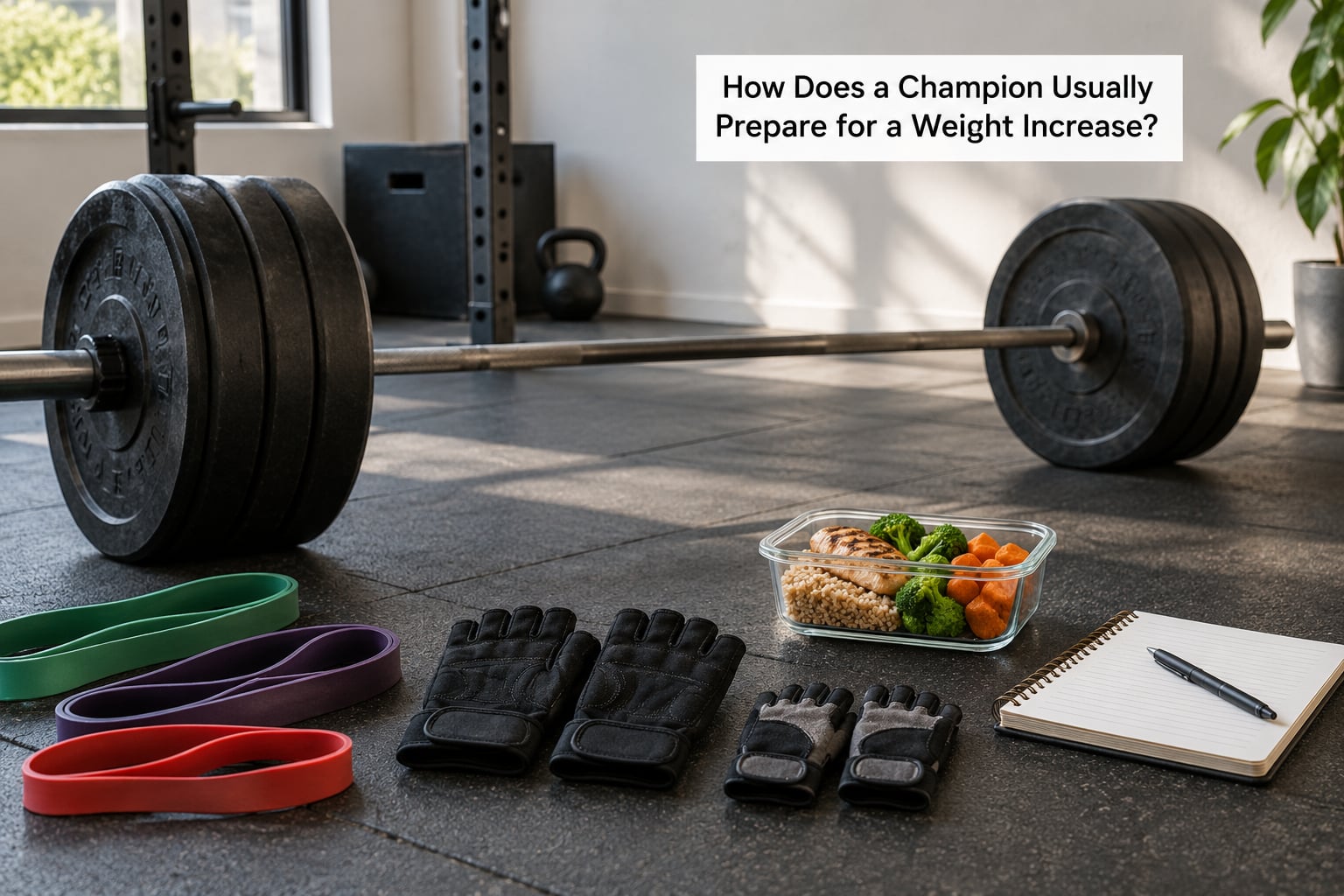
A planned move is slow, and that is the point. The sequence usually runs in this order:
- Announce the decision and vacate the belt, which starts the division’s title fight clock.
- Fill out gradually over four to eight months, adding mass through eating and compound lifts rather than gaining it all in a rush.
- Rebuild conditioning around the new weight, because sprints at 175 are a different sport from sprints at 160.
- Spar at the new size, often with heavier partners, so that contact feels normal before it counts.
- Debuild for a debut against an unranked opponent whose role is to shake off ring rust, not to test the new weight honestly.
- Pursue a ranked opponent, then a title shot once the rankings allow.
An emergency jump looks nothing like that. When a mandatory defence is unattractive or unsafe, a champion can announce a move and take a fight weeks later at a weight the body has not earned. It works more often than it should, because a fighter who no longer needs to make weight tends to show up heavier and fresher.
Nutrition is the quiet variable. Adding mass without a structured plan produces a soft fighter who tires in round four. Fighters who move up well treat eating as training work, with the same discipline they apply to sessions.
What Happens to a Champion’s Style at the New Weight?
Styles bend or break. A pressure fighter who relies on strength can often move up and lean harder on the body, because heavier legs drive a heavier fighter forward and shoulder-to-shoulder exchanges now favour them. That fighter usually needs a better chin and better timing rather than new technique.
A fighter who lives on speed has the harder adaptation. Footwork that was automatic at 135 becomes work at 154, defensive reactions that came from seeing punches early now come from guessing. Some counterpunchers solve it by shortening their stance and becoming a pressure fighter instead, which is a real strategy but takes a year to make work.
How Can a Champion Use Their Old Division Experience as an Advantage?
Old division experience pays off in the small things: recognising which punchers flinch after a clean shot, knowing that a fighter who drops his level is usually setting up something, and understanding how a referee will handle a clinch fight at a pace they have never officiated. Champions who moved up well tended to arrive with a plan for the first two rounds rather than a hope that size does the work.
Can a Former Champion Win a Title in a Higher Weight Class?
It happens, and it is uncommon enough that every instance gets remembered. Winning a vacant lower-level belt is not the same achievement, and the distinction matters when people argue about who has conquered the most divisions.
Roy Jones Jr. is the cleanest example of a champion who genuinely dominated a division and then moved up to be tested rather than to collect hardware. His heavyweight run in his thirties included wins over larger men who had already proved themselves at the top, and boxing writers still treat that period as the standard for a champion who went looking for a real test.
Manny Pacquiao built a career across an unusual span of weights, from junior flyweight up to junior middleweight, and the pattern differed by period: some divisions he entered with a mandatory challenger waiting, some he reached by winning tournaments in unfamiliar territory. That distinction between a title shot and a long climb is the difference between a two-year project and a five-year one.
Matchmaking decides the rest. A promotion with two rival belts will happily stage an eliminator for the winner to face, and that is often the only route in. What separates a successful debut from sustained dominance is far simpler: whether the champion chose opponents at the new weight who were still improving.
How Do Fans and Boxers Judge the Move?
The argument splits into two camps, and both have a real case. One camp says a champion should clean up the division first, take on every mandatory challenger and every ranked contender, and only move up once there is genuinely nothing left. The other says a champion who has removed every available challenge has nothing to prove and no reason to stay.
The debate on this is long and well argued, and one recurring point is that weight hopping has become a way of avoiding good fights as much as seeking them. Because there are so many belts, a fighter can leave a division before the hard matchups come due and pick up a different one against a gatekeeper instead.
Money sits underneath most of the noise. The case is usually made with Michael Spinks, who earned far more from one fight with Larry Holmes than he had from his last light-heavyweight title defence. Once purses at the top end are counted, a move up can look like pure business, and the fighter gets called out for it even when the move is genuinely right.
There is a fairness rule most fans apply without formalising it. A smaller fighter who moves up and loses is usually given credit for the attempt. A fighter who moves up and beats a clearly inferior opponent is not, because the move was meant to test something.
Boxers themselves tend to judge it on timing rather than ambition. Devin Haney vacated both his belts saying he had outgrown the division, and the reaction among fans was mixed precisely because the division had only just moved on his terms. David Benavidez drew the opposite reaction, because he walks around near 180 even when he weighs in far lower, so a move to 175 asks less of his body than the limit suggests.
What Should a Champion Do First Before Moving Up?
Start with an honest inventory of what is left. List the ranked contenders, the mandatory obligations, and the one opponent who would genuinely make you a better fighter. If that list still has names on it, clean up the division first.
Then look at the target division’s top ten. Not the champion, the challengers, because one of them is usually the person who will be standing in front of you. Note how many of them weigh more than you do naturally, not how much they cut.
Talk to the team before talking to the public. A coach, a manager and a nutritionist can see the recovery data and the training log. Fans can see a highlight reel.
Set a timeline and stick to it. A move that takes two years of patient work is a different decision from a move announced six weeks before a fight, and both get called the same thing.
Medical decisions belong with a doctor, and performance decisions belong with a coach. Nothing in this article, and nothing in a comments section, should carry more weight than either.
Frequently Asked Questions
Can a boxing champion move up a weight class and win?
Yes, it happens more often than casual fans expect. Champions who arrive with a plan, take on ranked opponents rather than fillers, and add mass gradually tend to succeed. Roy Jones Jr. is the standard most people measure against. Winning a vacant lower belt is a much smaller accomplishment than winning a major title in the new division, and the difference is usually matchmaking.
Which weight class is hardest for a champion to move into?
Light heavyweight is widely considered the hardest, because fighters arriving from middleweight and super middleweight usually give up a lot of frame while the established names there have already proved themselves against bigger opposition. Super middleweight is close behind, since so many good middleweights are trying to make the same jump at the same time.
Does moving up a weight class make a boxer slower?
Some fighters do lose a step, particularly if the weight was added quickly. Muscle built gradually around the new limit usually costs almost nothing in movement. The bigger losses show up in recovery between rounds and in the back half of a fight, where a heavier body spends more energy doing the same work.
What is the biggest challenge when a champion changes weight divisions?
Unfamiliar opposition, closely. A new division usually has deeper talent than the one you left, and the matchmaking is entirely different. A champion who handled mandatory defences for years has no idea who the dangerous fighters are upstairs, and that ignorance gets discovered in the first fight that matters rather than in a debut.
Should a champion move up if they are already dominant?
Only when there is genuinely nothing left in the division. Cleaning up first, taking on every mandatory challenger, and leaving with a defended record is the harder route and the one that keeps respect. Moving up while opponents remain is where the money argument starts and where the accusation of avoiding fights usually comes from.
How long does a boxer need to prepare for a higher weight class?
Four to eight months is the usual window for a planned move, spent adding mass, rebuilding conditioning, sparring at the new size, then cutting back for a debut. Fighters forced into a fast jump sometimes do it successfully, but they arrive untested against opposition that weighs what they now weigh naturally, which is where the risk sits.
The Main Takeaway
Moving up a weight class trades punch resistance, reach and durability for power, stamina and a few more years of earning. That is the whole deal, and it is a good one when the fighter has cleared out his own division first and a poor one when he leaves challengers behind.
When a champion moves up a weight class, the vacated belt is the smallest part of it. The real question is whether the fighter’s best attributes survive the extra size, and that answer only arrives after twelve rounds against someone who was already built for the weight he is asking to borrow.
Judge the move against the fighter’s division, age, style, health record and long-term goals rather than against the size of the next purse.