To start boxing as an adult, find a local amateur boxing gym, join a beginner class with a certified coach, and train two or three times a week until the work builds your fitness for you. Nobody makes you spar or fight on day one, and you need no fitness level to start.
The question behind almost every search is really one question: am I too old? No. There is no age cutoff for amateur boxing, and the average person in a first beginner class is an adult who has never been in a ring.
What actually slows adults down is not age. It is the three things beginners quietly worry about: getting hit, spending money, and finding time. All three have straightforward answers, and all three get covered below.
This guide covers what you need before your first session, a progressive path from gym search to your first look at sparring, the mistakes that stall beginners, and honest timelines. Updated for October 2026.
Table of Contents
What You Need to Start Boxing as an Adult
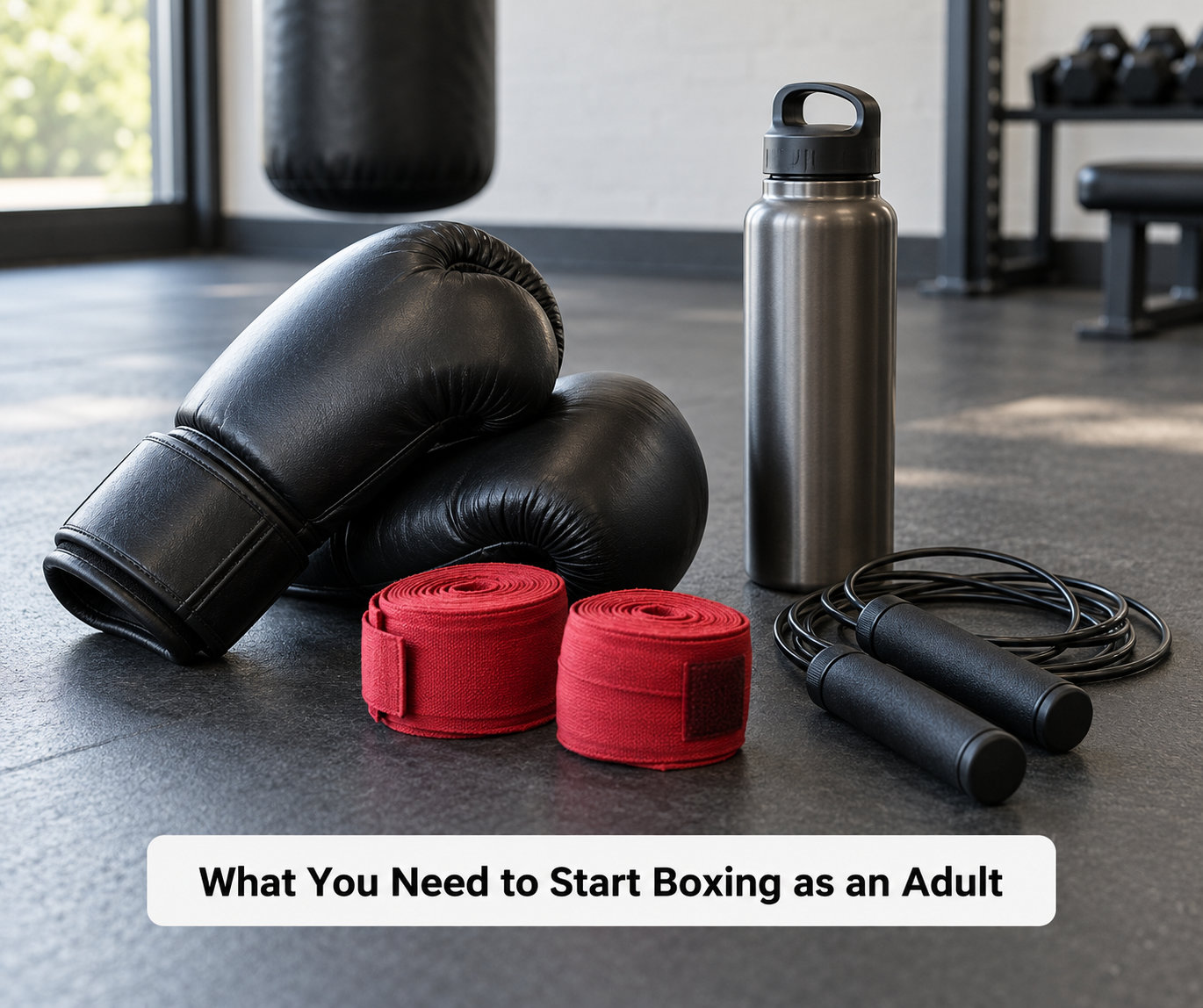
You need four things, and only one of them costs money on day one. That list is a gym that actually teaches boxing, a coach, a small amount of gear, and an honest conversation with yourself about your health.
A gym that teaches boxing, not just kicking
An amateur boxing gym and a boutique fitness studio are different businesses. The studio sells a 45-minute class with music and a sweat towel. The boxing gym has a ring, a row of heavy bags, a coach on the floor and a schedule where the same people show up at 6pm on a Tuesday.
If you want to learn how to start boxing as an adult properly, you want the second one. Fitness boxing teaches you to throw punches to a rhythm. Amateur boxing teaches you where your hands go, how to move, and how to protect yourself, which is a longer and more useful investment.
A coach who corrects you early
Look for someone who teaches classes for beginners and who will physically fix your guard in the first session. A coach with a competition record is nice; a coach who notices your elbow is out is better.
Affiliation matters too. USA Boxing is the national governing body for amateur boxing in the US, and a club registered with it or with the equivalent body where you live usually means real sanctioned fights, a proper coaching structure and coaches who have been assessed.
A gear budget that starts small
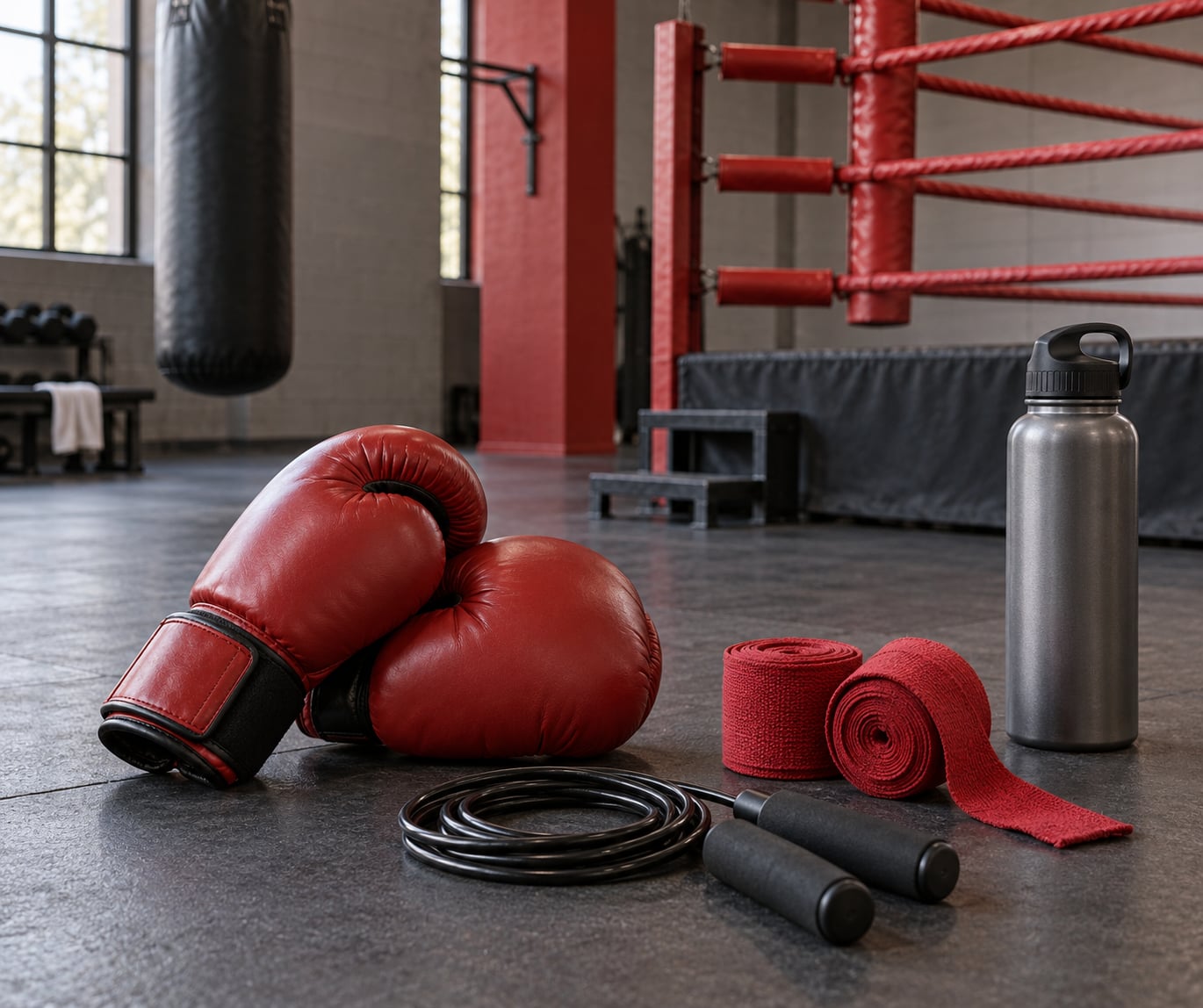
Hand wraps, comfortable training clothes, trainers and a water bottle are genuinely all you need for the first few sessions. Almost every boxing gym lends gloves and wraps to newcomers, so ask before you buy anything.
The one thing to buy early is wraps, once a coach shows you how to put them on. Wrapped hands that are done properly reduce the wrist pain that ends more beginner routines than any fitness excuse.
An honest chat with a doctor
If you have a heart condition, high blood pressure, a previous concussion, joint problems or a neck injury, talk to your doctor before you start. Say that you plan to do three sessions a week of jumping rope, running and punching, and let them tell you what to adjust.
I am not a doctor and this is not medical advice. But the adults who train longest are the ones who had that conversation in week one rather than week twenty.
Step-by-Step: How to Start Boxing as an Adult
Seven steps, in the order that actually works. The sequence matters because each one removes a reason to quit, and skipping ahead usually means going back.
1. Find a Beginner-Friendly Gym to Start Boxing At
Search for an amateur boxing club within about 20 minutes of your home, because travel time is the single biggest reason adults quit in month two. Then check the basics: does it have a ring, a row of heavy bags, and a beginner class at a time that fits your job?
Call or message before you turn up. Ask whether they have a beginner class, whether the coach works with adults who have never boxed, and whether you can borrow gloves for your first few sessions. A gym that answers those three questions well is almost always worth the visit.
One thing the community agrees on, from r/amateur_boxing: “In order to develop proper boxing skills u need a dedicated gym. There is no if and or buts.” That is the honest position. A home bag will get you fit; it will not teach you to keep your hands up.
2. Book an Introductory Lesson or Assessment
Most gyms run a first session that is part orientation and part assessment. Expect a coach to watch you move, ask about your training history and any injuries, and start you on footwork rather than throwing.
Questions worth asking in that first hour: what does a normal beginner week look like, how long before anyone is considered for sparring, what do you need to buy, and is there an adult or masters session separate from the kids’ class. If the coach cannot answer the sparring question clearly, that tells you something useful.
3. Buy Only the Gear You Need First
Buy hand wraps and training clothes. Borrow gloves for the first two weeks until a coach has watched your hands and knows what weight you need. After that, most adults start somewhere between 12 and 14 ounces, and heavier or harder-hitting beginners often move up to 14 or 16.
Glove weight is not a flex. A heavier glove builds a little strength and protects your hands and your training partner’s face. But the wrong size for your hand causes wrist pain in the first ten minutes, so get it fitted or recommended rather than guessed.
Skip for now: your own heavy bag, headgear, shin guards, and anything with a brand name on it that a coach has not mentioned. Most gyms already own the equipment that matters.
4. Learn Stance, Movement and Basic Technique
Before any punch comes the stance: feet shoulder-width apart, lead foot slightly forward, weight balanced, chin tucked behind the shoulder, hands up and elbows in. Bounce lightly on the balls of your feet. Breathe out on every punch and keep breathing.
Then learn four punches properly: jab, cross, hook, uppercut. Add footwork, because in boxing the punch does not work if your feet are not underneath it. The jab leads, the cross follows the back foot, the hook comes off the power of the rotation, and the uppercut starts low.
Do this in the order a coach would use: stance, guard, footwork, jab, cross, then combinations like 1-2 and 1-2-3. Repeatability beats power. A beginner who throws a soft, perfectly straight jab 400 times will beat a beginner who tries to knock the bag off its chain.
5. Build Conditioning Without Overtraining
Most adults arrive unfit, and most adult beginner classes start with jump rope. Two weeks of that will humble you. It is normal and it is also the fastest fitness gain in the sport, because rope work trains the same engine that rounds of punching need.
For your first month, aim for three sessions a week with at least one rest day between them. One Whirlpool forum user who started boxing and Muay Thai conditioning at 42 got this piece of advice and it is sound: “Start doing sit-ups and pushups before you turn up for your first class.” Two weeks of that at home makes the first class survivable.
Progress one variable at a time. Longer rounds, then more rounds, then harder rounds, then faster. Do not add all of them in the same week, and do not stack two hard boxing days back to back. If your resting heart rate is up, your sleep is worse, or you feel flat for days, drop a session rather than pushing through it.
6. Add Bag Work and Pad Work Gradually
Bag work is where you learn what a punch feels like without a partner moving. Start with single punches on the move, then simple combinations, then defence: slip, roll, step back between combinations.
Speed over power. As one coach put it in r/boxingtips: “Try focusing on speed now. Hold back on the power and let your arms fly. 1-2-1-2 and pivot.” That single line is better beginner advice than most paid tutorials, because it puts technique above damage.
Pad work with a coach is the fastest way to sharpen timing and accuracy, because the pads move and force you to react. Ask for one round of pads each session and treat it as the most valuable ten minutes of the week.
7. Treat Sparring as a Later Decision
Sparring is a decision made by you and your coach together, usually many months in, and it is never automatic. Plenty of adults train for years and never put a glove on another person’s face. That is a legitimate path, not a failure.
When it does come up, it comes with protective gear, a coach watching closely, and partners matched to your size and experience. The gate is usually the same three things: you can keep your guard up while moving, you can throw a straight jab and cross without telegraphing, and you can take a hint and correct it without getting defensive.
Nobody will hand you a pair of sparring gloves in your third week because you asked nicely. Ask about the timeline once, then train.
Common Mistakes When Starting Boxing as an Adult
These are the errors that show up again and again, and each one has a simple correction.
Buying too much equipment
The classic beginner purchase is a heavy bag, a speed bag, gloves, wraps, headgear and a jump rope on day one, in a spare room that is too small. Buy wraps and clothes, borrow the rest, and let the gym supply the bag. Money saved here is money spent on more months of training.
Training through pain
Sharp wrist pain when you punch means stop and get the technique fixed. So does persistent shoulder, elbow or lower-back pain. Some soreness is fine and expected; pain that changes how you move is information, not weakness.
Chasing sparring too early
Wanting to hit someone is normal and it is the fastest way to pick up bad habits. Sparring before your technique is solid teaches you tension, panic and bad habits that take months to unwind. Months of technique work first is not a delay, it is the shortcut.
Learning only from videos
YouTube is genuinely good for seeing what a stance looks like and for drills at home. It cannot tell you that your elbow is out, that you are dropping your back hand, or that your feet are crossing. Keep a coach in the loop.
Skipping wraps
Unwrapped hands on a bag build wrist and knuckle problems that end sessions early. Wraps also teach you to think about your hands before you use them, which is a habit worth having.
Progressing too quickly
Every few weeks adults get restless and want harder sessions. The alternative is boring and it works: three sessions a week for six months will beat five sessions a week for six weeks, every time. Skill is built by repetition, not intensity.
Confusing fitness boxing with real boxing
Follow-along classes and pad classes are good for fitness and genuinely useful for confidence. If your goal is to learn how to actually box, you need a coach correcting you and a gym where the same people train week after week.
Two habits carry more weight than anything else above: train on the same days each week, and train when you are tired rather than only when you are motivated. Consistency is the whole game.
Frequently Asked Questions
Can I start boxing at 30?
Yes, and it is one of the most common starting points. Amateur boxing has no age cutoff, and 30-year-olds are often better placed than teenagers because they train around a fixed schedule. Expect to spend a few weeks on footwork and rope work before anything technical sticks. If you have any joint or heart concerns, clear them with your doctor first.
Is boxing 3 times a week enough to get in shape?
For a beginner, three sessions a week is the sweet spot and it is what most coaches recommend. Two sessions works, but progress is slower because skill comes from repetition. More than four is usually a mistake early on, because beginners get sore, skip recovery and quit. Spread the sessions out with rest days between them.
Do I have to spar when I start boxing?
No. Nobody makes you spar or fight, and plenty of adults train for years with no contact at all. Sparring is a decision you and your coach make together once your guard, footwork and fundamentals are reliable, which usually takes months rather than weeks. Technical bag and pad work is a complete and legitimate boxing path.
How long does it take to get good at boxing?
A usable guard, jab and cross usually show up within a few months of consistent training. Looking competent in the gym takes about a year, and real skill takes several years of regular sessions. Conditioning changes fastest in the first four to six weeks. Anyone promising a polished fighter in eight weeks is selling something.
Can I learn boxing at home without a gym?
You can build conditioning, a habit and a feel for punching, and shadowboxing and rope work transfer well. What you cannot learn alone is a correct guard, real timing and how to react to a moving person. Use home training as a bridge while you find a gym, not as a replacement for one. Search for the nearest club and make the trip.
What gear do I need before my first boxing class?
Comfortable training clothes, trainers, a water bottle and hand wraps. That is genuinely it for the first few sessions, because most clubs lend gloves and wraps to newcomers. Ask about glove weight once a coach has watched your hands, since most adults start between 12 and 14 ounces. Leave the heavy bag and headgear at home.
Start With One Safe, Consistent Routine
Book one beginner class this week. That is the whole first step, and it needs no equipment, no fitness level and no permission from your fitness history.
Here is the simple plan. Today, find the nearest amateur boxing club and ask three questions: do you have a beginner class, can I borrow gloves, and how long before anyone spars. This week, go once and do nothing but listen, move and let the coach correct you.
Next month, aim for three sessions a week on the same days, with wraps in your bag and one honest conversation with your doctor about anything you are carrying from past injuries.
Three times a week, kept up for a year, will change how you move, how you sleep and how you handle a stressful afternoon. That is how to start boxing as an adult, and the only thing standing between you and the first session is booking it.