
Professional boxers are paid a negotiated purse for signing to appear on a card, usually made up of a guaranteed amount, a win or loss payment and a share of broadcast income. On top of that sit sponsorships, appearance fees and merchandise. The headline figure fans read is rarely what lands in the account.
The confusing part is that there is no standard rate. How fighters get paid in boxing depends on which country a bout is held in, which state commission licenses it, who promotes it and what the fighter negotiated beforehand. Two boxers on the same card can be paid wildly different amounts, and the same advertised number can produce different take-home pay.
What follows is the whole mechanism: where the money comes from, how a promoter values a fighter, what gets deducted before anyone is paid, and when the cash actually moves.
Table of Contents
- How Fighters Get Paid in Boxing: The Basics
- Where a Boxer’s Money Comes From
- What Is a Purse in Boxing?
- How a Promoter Sets a Boxer’s Purse
- How Much Does the Fighter Actually Keep?
- How Title Fights and Prize Fights Work
- Why Can a Guaranteed Purse Still Be Disputed?
- How Do Boxing Contracts Shape a Fighter’s Earnings?
- When Do Fighters Receive Their Money?
- What Contracts and Records Should Fighters Check?
- Frequently Asked Questions
- Conclusion
How Fighters Get Paid in Boxing: The Basics
A boxer’s income is contracted, not automatic. A manager negotiates a bout agreement with the promoter that fixes a guaranteed purse, sets what happens on the night (win bonus or loss payment) and decides how much broadcast revenue the fighter keeps.
Beyond the fight itself, earnings can come from sponsorship, social media partnerships, appearance fees, merchandise royalties, commentary and endorsements. None of those are automatic either — they depend on drawing power and, honestly, on whether someone is booking the deals.
Where a Boxer’s Money Comes From
Most fighters rely on one or two sources; elite champions have several. The table below separates money that arrives regardless of result from money that depends on how the night goes.
| Income source | How it is usually arranged | Guaranteed or conditional |
|---|---|---|
| Fight purse | Negotiated bout agreement between manager, promoter and fighter | Guaranteed once signed |
| Win or loss payment | Fixed figure triggered by the result | Conditional on performance |
| Title or tournament prize fund | Pooled money split between the finalists | Conditional on reaching the final |
| Broadcast participation | Percentage points or a flat share of pay-per-view and streaming income | Conditional on sales or viewership thresholds |
| Attendance or gate bonus | Extra money if a paid attendance figure is reached | Conditional on the number |
| Sponsorship | Annual or per-fight agreement with a brand or promoter | Guaranteed if contracted |
| Appearance fees | Flat fee for promotional, radio or press events outside a fight | Guaranteed per booking |
| Media and commentary | Flat fee per broadcast appearance | Guaranteed per appearance |
| Merchandise and licensing | Royalty on sales above a threshold | Conditional on sales |
Note the split in that third column. Guaranteed money is the only part a fighter can plan a year around, which is why experienced managers fight hardest to raise it and treat everything else as upside.
What Is a Purse in Boxing?

A purse is the agreed amount of money a promoter pays a fighter for a specific bout. It is not the event’s total revenue, not the value of the broadcast deal and not what the boxer banks.
The same advertised purse can produce very different outcomes. If part of the figure is conditional on a pay-per-view threshold that is never reached, or if the number includes a share of attendance the arena fails to hit, the fighter receives less than the headline figure. In some jurisdictions a licensed commission requires the promoter to deposit a portion of the purse before the fight so the money is actually there on fight night.
How a Promoter Sets a Boxer’s Purse
A promoter’s first job is pricing a fighter before there is any proof. Drawing power is the biggest factor, then everything else the deal depends on.
- The opponent’s bargaining power. A fighter with options and a winning record negotiates from strength. A newcomer negotiates from a take-it-or-leave-it position.
- Rankings and title status. A sanctioned belt raises the value of the date, especially a regional or national one a promoter can point at.
- Broadcast and platform value. A bout sold on pay-per-view or included in a subscription platform’s headline slate carries a bigger budget.
- Expected gate and sponsorship. The promoter works backwards from ticket demand and what brands have committed.
- Contract structure. Exclusivity, the number of remaining fights on a deal and rematch obligations all change what a promoter can afford.
Career tier is the most useful shortcut. Fighters quoted in industry coverage and commission filings describe a first professional bout in the hundreds to low thousands of dollars, an average journeyman in the low thousands, regional and national title fights in the tens of thousands, and a world title challenge in the six figures. Only at the top do purses reach the millions, and there the broadcast participation matters as much as the fixed fee.
A clearly labelled hypothetical: a contender signs for a six-figure guarantee, a six-figure win bonus and a share of broadcast income, with a contractual percentage kicking in once a sales threshold is passed. Multiply the number of points by the amount cleared above the threshold and the fighter’s participation adds up. The promoter, meanwhile, booked a gate and a sponsorship package against a total budget for the card.
How Much Does the Fighter Actually Keep?
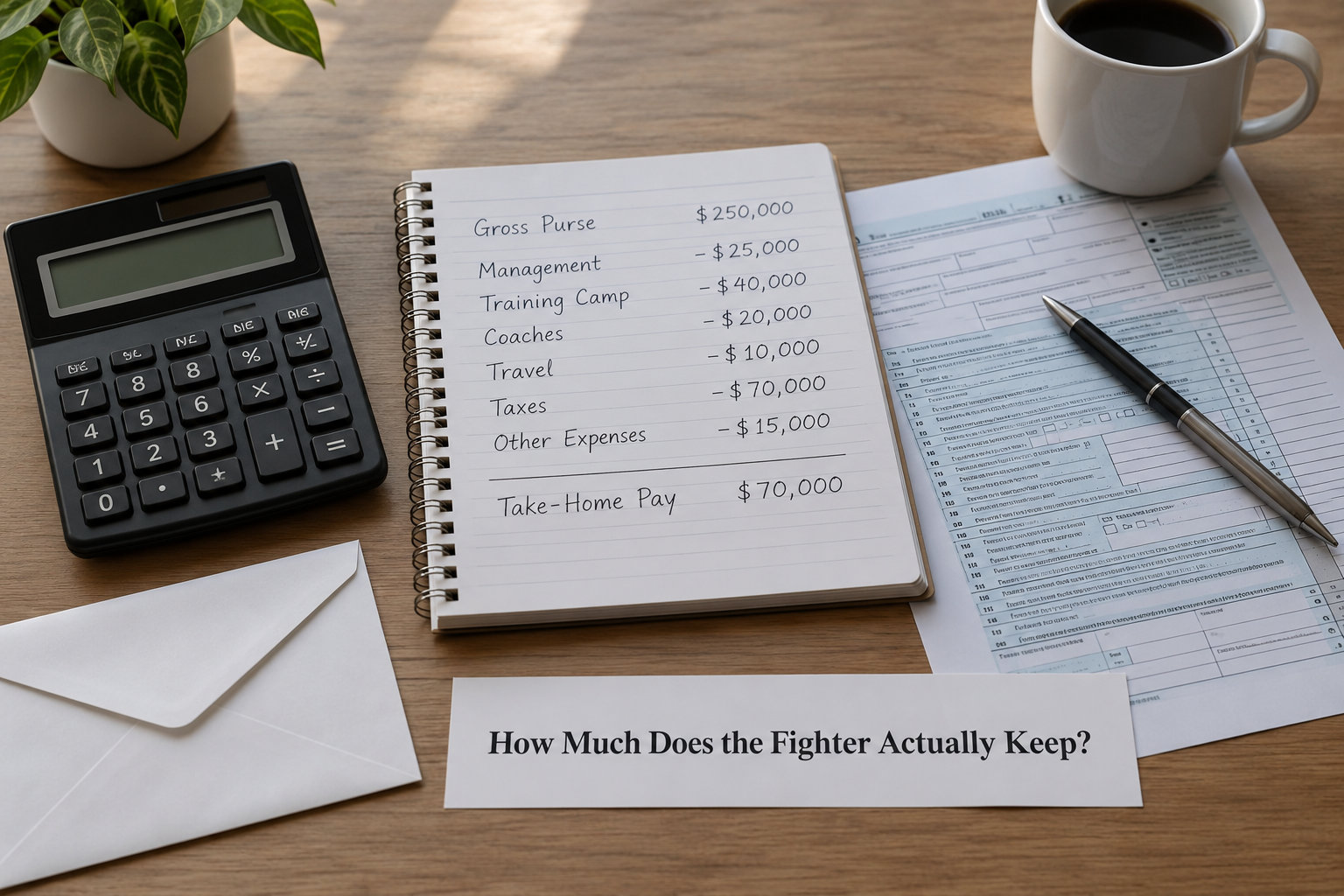
The gross purse is the number the promoter and the commission see. The net purse is what remains after the agreed deductions, and it is the only figure that reaches the fighter’s bank account.
The main deductions are the manager’s commission, a trainer percentage or flat fee, a cutman’s fee or percentage, corner and second fees, any advance already received, and the promoter’s own agreed cut where the structure allows one. Camp costs and travel may come out too, depending on who agreed to cover them. Then tax lands.
| Step | Illustrative cut on a 1 million dollar purse |
|---|---|
| Gross purse as reported | 1,000,000 |
| Manager commission (commonly 10 to 25 percent) | minus 150,000 to 250,000 |
| Trainer fee or percentage | minus 100,000 to 150,000 |
| Cutman and corner fees | minus 20,000 to 40,000 |
| Advance already paid | offset against the purse |
| Camp and travel costs not covered | varies widely |
| Federal and state tax | the largest single deduction for a high earner |
| Estimated amount retained by the fighter | often reported as roughly 30 to 40 percent of the headline figure |
Those are illustrative figures, not a tariff. Rates, tax treatment and which charges are permitted depend on the jurisdiction, the contract and the fighter’s residency. A foreign fighter working a US card can face withholding that reshapes the whole calculation.
How Title Fights and Prize Fights Work
A title fight is usually a two-part deal: a guarantee signed in advance, plus prize money that only exists if a condition is met. The guarantee is money the promoter owes regardless of what happens in the ring. The prize money is the escalator.
Common triggers include a paid attendance figure, a broadcast viewership number, or a pay-per-view sales threshold. A contract might pay the challenger a fixed sum once the card clears a stated gate, then add a percentage of every increment above that gate.
Tournament formats work similarly, except the prize fund is pooled. Several fighters share a pot that grows with attendance and broadcast income, and each finalist’s share depends on how the rules allocate the pool. Nobody’s share is known until the pot closes, which is the trade-off for a fighter who would rather gamble on a bigger night than bank a fixed fee.
One confusion worth clearing up: a percentage of revenue is not a percentage of profit. Revenue is what comes in before costs. A promoter who gives a fighter 10 percent of revenue has still paid venue hire, broadcast fees, staff and marketing before the rest of the budget is settled.
Why Can a Guaranteed Purse Still Be Disputed?
Guaranteed does not mean immune. Fighters and managers report disputes over several recurring causes.
- Cancelled or postponed bouts. A fight that never happens raises the question of whether the guarantee was earned, and who carries the cost of a rescheduled date.
- Incomplete paperwork. Missing signatures, an unsigned bout agreement or a sanctioning body that has not licensed the bout can stall payment.
- Disputed eligibility. Weight, gloves and licensing status are all things a commission can rule on after the fact.
- Unmet conditions. The attendance or broadcast figure a bonus depends on can be contested if nobody verified it on the night.
- Late promoter payments. Settlement can slip past the contracted date without anyone going to court.
- Insurance and insolvency. If a promoter cannot cover a commission deposit, the commission’s protection is what stands between the fighter and an unpaid cheque.
The practical response is to read the clause before signing, not after a dispute. Fighters and their teams should confirm the written guarantee figure, the payment deadline for each portion, the exact wording of every bonus condition, which deductions are permitted, and what happens if the fight is cancelled. Keeping the signed agreement and payment records does more than argument ever will.
How Fighters Get Paid in Boxing Beyond the Fight Purse
The purse is the part everyone quotes. It is also frequently the smaller half for fighters who have built a profile.
Sponsorship ranges from a gym’s back wall to a global sportswear campaign, and the difference is entirely reach. A regional fighter might receive equipment and a small monthly retainer; a champion can sign figures that dwarf an undercard purse. Social media partnerships have become a real line of income, with fighters promoting a supplement, a betting brand or a gym to audiences that broadcasters cannot match.
Appearance fees cover promotional events, radio shows, autograph sessions and store visits, usually paid as a flat rate per booking rather than a percentage. Merchandise and licensing royalties arrive only above a sales threshold, so a shirt line that sells steadily can still pay nothing. Broadcast commentary is salaried work a small number of former fighters pick up.
None of it should be assumed. These deals concentrate at the top of the sport, and a fighter planning a season around sponsorship income is taking a risk that pays nothing in a lean year.
How Do Boxing Contracts Shape a Fighter’s Earnings?
Two different documents sit behind a professional career, and confusing them causes real problems.
A bout agreement covers one fight: purse, win or loss payment, bonuses, rematch terms and payment dates. A promotional contract covers a run of fights: term length, exclusivity, option periods and image rights. Fighters often sign the broad contract first, young and without leverage, then negotiate each bout inside it — which is why the terms of the long deal decide how much room there is to move.
The clauses that matter most:
- Guaranteed money. What is owed regardless of the result.
- Options. A promoter’s right to require additional fights at terms set in advance.
- Exclusivity. How far a fighter is locked to one promotion.
- Advances. Money paid up front and deducted from later purses.
- Rematch clauses. A mandatory second fight, and what each fighter earns for it.
- Image rights. Who owns bout footage, likeness and name, and what happens to them after the contract ends.
- Payment timing. When deposits are due and when the balance is settled.
- Termination. What breaks the deal, and what the fighter recovers if it does.
An exclusive deal signed at nineteen can determine a fighter’s earnings at thirty, because the option periods and rematch obligations built into it carry forward.
When Do Fighters Receive Their Money?
Money usually moves in stages rather than in one payment. A deposit is due around signing or once the bout is licensed. A second tranche may follow at fight week, with the balance settled after the result and after any condition attached to it has been confirmed.
Some jurisdictions require the promoter to deposit a set share of the purse with the athletic commission before the bout, and the commission releases funds once the event is cleared. That filing is also public: the purse reported to the commission is how fans and journalists get the figures that appear after a fight, and how a fighter’s representative can check what was declared.
Timelines differ by contract and by state, so nobody should assume a specific date. What a team can do is confirm the payment deadlines in writing, keep the signed bout agreement and payment records, and check what protection applies if a promoter misses a date.
What Contracts and Records Should Fighters Check?
Before signing anything — and again before the money moves — go through this list.
- The purse figure, stated in writing, and which part of it is guaranteed.
- The payment schedule: deposit, fight-week payment, final settlement.
- Bonus conditions, phrased so the trigger can actually be verified.
- Permitted deductions, and the percentage each advisor takes.
- Who covers camp, travel, sparring partners and medicals.
- Insurance, and what happens if the bout is cancelled.
- Governing body and commission requirements for the bout to be valid.
- Every signature in the right place, on every version.
Boxing has no union and no collective bargaining agreement, which means there is no standard form contract and nobody checking a fighter’s back automatically. For contract-specific or tax questions, a qualified sports lawyer or financial adviser is the sensible call, and it is worth paying for before signing rather than after a dispute.
Frequently Asked Questions
How much money does a professional boxer get paid?
It depends entirely on career tier. A first professional bout can pay a few hundred dollars, an average journeyman a few thousand, regional and national title fights tens of thousands, and a world title challenger six figures. Champions add broadcast participation, sponsorship and endorsement income on top. The headline purse is gross, so after manager, trainer, cutman and tax, fighters often report retaining roughly 30 to 40 percent.
Is a boxer’s purse guaranteed to be paid?
A guaranteed purse is contractually owed regardless of the result, but payment can still be delayed or disputed. Cancellations, missing bout agreements, unmet bonus conditions and late promoter payments are the usual causes. Some jurisdictions require a deposit with the athletic commission before the fight, which gives the fighter a layer of protection. Confirm the deadlines in writing and keep the signed agreement.
Do boxers pay their manager or agent from every purse?
In most cases yes, and it is one of the largest deductions before tax. Manager commissions commonly sit in the 10 to 25 percent range, with trainers taking a percentage or a flat fee and cutmen taking a smaller share. The exact rate is contract-specific and varies by fighter, which is why the same advertised purse produces different take-home figures for two boxers on the same card.
How much can a boxer earn outside the ring?
Sponsorship, social media partnerships, appearance fees, merchandise royalties, commentary and endorsements can all pay well, but the money concentrates at the top of the sport. A regional fighter may receive equipment and a small retainer where a champion earns figures that dwarf an undercard purse. These deals are not automatic, so a fighter budgeting a year around outside income is taking a real risk.
What happens if a promoter does not pay a fighter’s purse?
It depends on the contract and the jurisdiction. A fighter may file a complaint with the state athletic commission, which can withhold or draw on a promoter’s posted deposit, or pursue a civil claim through the courts. Arbitration is common where the bout agreement requires it. The practical lesson is preventive: a written guarantee, clear payment deadlines and commission-level protection are worth more than any argument after the cheque bounces.
Conclusion
A boxer’s income is not one number from one source. It is a negotiated contract made of a guaranteed fee, conditional prize money and a long list of deductions, sitting on top of outside income that only some fighters can land.
Start by separating the guaranteed purse from the conditional money and from the deductions. That one step explains most of what fans get wrong about how fighters get paid in boxing, and it is the same thing a manager does before signing anything.