If you have seen one site say 500 calories and another say 1,200 for the same hour on the heavy bag, neither one lied. How many calories boxing burns in an hour runs somewhere between 500 and 1,000 for most people, and where you land inside that range comes down to three things: your body weight, how hard the rounds actually were, and which style of boxing you spent the hour doing.
A 60-minute gym class, an hour of free sparring, and 20 minutes of shadowboxing at home are three different activities wearing the same name. I want to give you a range you can actually trust, plus the math behind it so you can work out your own number rather than guessing.
Table of Contents
- How Many Calories Does Boxing Burn in an Hour?
- Calorie Burn Ranges by Boxing Activity
- How Many Calories Does Boxing Burn at Different Intensities?
- How Body Weight and Fitness Level Change the Estimate
- How to Estimate Your Own Calorie Burn
- Does Sparring Burn More Calories Than Bag Work?
- How to Use Calorie Estimates Without Overthinking Them
- Frequently Asked Questions
- How many calories does a one-hour boxing workout usually burn?
- Does boxing burn more calories than running?
- How many calories does an hour of sparring burn?
- Does shadowboxing burn the same calories as bag work?
- Are fitness tracker calorie estimates accurate for boxing?
- How many calories are burned during three rounds of boxing?
- Conclusion
How Many Calories Does Boxing Burn in an Hour?
Boxing burns roughly 500 to 1,000 calories in an hour of training. Body weight, intensity and training style set the number, not a single universal figure.
That range is wide on purpose. A 150-pound person doing moderate bag work sits near the bottom of it. A 200-pound person throwing hard combinations in a ring with a partner hits the top, sometimes past it.
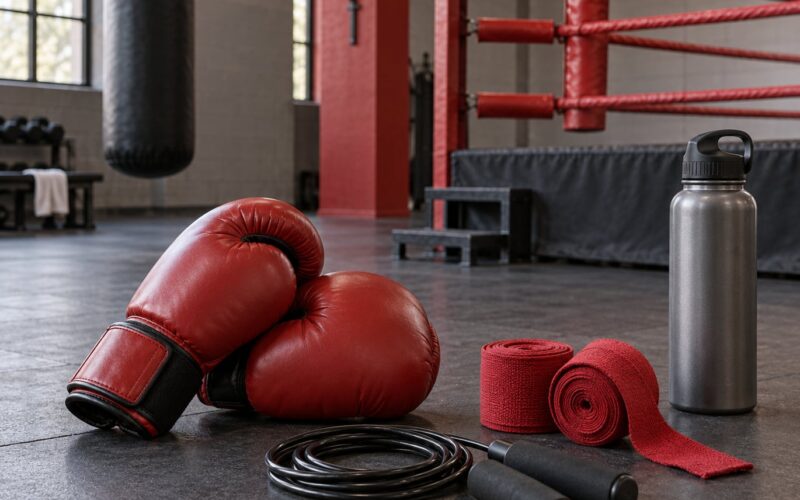
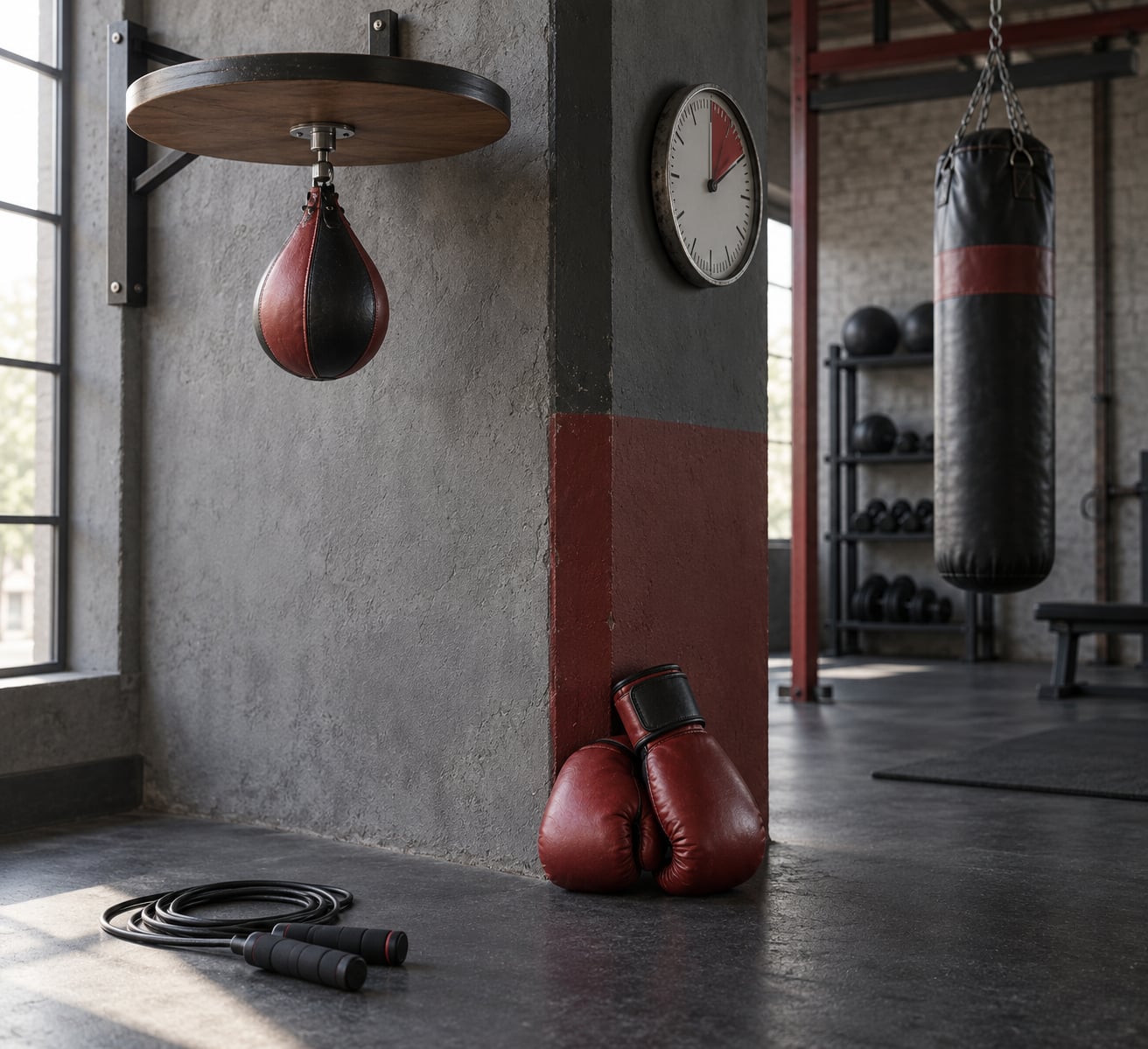
What most people mean by “boxing” is a gym class: jump rope warm-up, shadowboxing, pad rounds, bag work, then a cool-down. That hour contains several different activities with different costs, and the total is only as high as the hardest parts.
Fitness boxing and competitive sparring are not the same activity. Most boxing classes never involve getting hit, and that changes the burn significantly. You will see this split again further down when I compare the styles side by side.
Calorie Burn Ranges by Boxing Activity
The most reliable published figures come from the Compendium of Physical Activities, which assigns a MET value to each activity. A MET, short for metabolic equivalent of task, is the energy cost of an activity compared with sitting still.
The Compendium rates three boxing entries:
- Boxing, punching bag: 5.5 MET
- Boxing, sparring: 7.8 MET
- Boxing in a ring: 12.8 MET
Applying the standard formula to a 200-pound and a 150-pound person gives these hourly estimates.
| Training style | MET value | 150 lb person (68 kg) | 200 lb person (91 kg) |
|---|---|---|---|
| Punching bag work | 5.5 | About 394 kcal | About 525 kcal |
| Sparring | 7.8 | About 558 kcal | About 745 kcal |
| Boxing in a ring | 12.8 | About 916 kcal | About 1,222 kcal |
Heavy bag sessions tend to land around 400 to 600 calories per hour, which lines up neatly with the MET figure for bag work. Most gym classes, once you account for rope, shadowboxing and standing around in between rounds, fall in the 500 to 800 range.
Shadowboxing sits lower than bag work because nothing is absorbing the impact and your hands land on air, which means more bracing and more recovery time between combinations. It is still real work, and it adds up across a long session, but the per-minute number is lower.
Pad work with a coach sits somewhere between shadowboxing and full-contact sparring. You throw hard, but the load is manageable enough that you stay in a rhythm rather than resetting after every exchange.
How Many Calories Does Boxing Burn at Different Intensities?
The talk test is the most reliable intensity check you have. If you can hold a full conversation, you are in the light zone. Short sentences between rounds puts you in the moderate zone. If you are counting breaths between rounds and cannot form sentences at all, you are in the vigorous zone.
Applied to an hour of training, that maps roughly like this:
- Light intensity (technique-focused, long rests, casual pad work): closer to 400 to 550 calories per hour
- Moderate intensity (steady three-minute rounds, bag combinations you can sustain): roughly 600 to 800 calories per hour
- Vigorous intensity (hard sparring, short rests, high-output combinations): 800 to 1,000 calories or more
For context on what “vigorous” looks like numerically, one small study of 14 participants recorded an average heart rate of 145 and a maximum of 180 during an eight-round boxing workout, along with an average of 2,836 punches thrown.
Why published estimates disagree by more than twofold
Here is the part most articles skip. When you see one page claiming 482 calories and another claiming 1,222 calories for boxing, both can be right, because they are measuring different things.
The 482 figure comes from measured data: 14 participants wearing chest-strap heart rate monitors through a 30-minute, eight-round workout. The 1,222 figure comes from multiplying the highest published MET value by body weight for a full 60 minutes, assuming continuous ring-level work the entire hour with no rest.
Nobody does 60 minutes of unbroken ring-level boxing. Real training is intervals, and the one-minute rests are part of the hour, not free time outside it.
For the same 30-minute workout, the study reported 595 calories for men and 369 for women, a 38 percent gap. Both groups were doing the same rounds, which tells you how much body composition moves the number before intensity even enters the picture.
Members of r/amateur_boxing describe the same swing factor in practice: one poster training at 260 pounds reported burning over 1,000 calories per hour on the heavy bag, but put the low end at 500 to 600 when the session was less intense. Same person, same activity, different day.
How Body Weight and Fitness Level Change the Estimate
Body weight is the multiplier in every formula and in every table, because moving a heavier body costs more energy at any given pace. A 200-pound person doing the same bag work as a 150-pound person will consistently land about a third higher.
Muscle mass matters too. Muscle burns more at rest than fat tissue does, so two people at the same weight can have different totals, and the person with more lean mass generally comes out ahead.
Conditioning changes the shape of the session rather than the ceiling. A trained boxer may spend the same 60 minutes but hit a higher peak output in short bursts and recover faster between rounds, which can land the total in the same place as an untrained person’s steadier effort. Untrained boxers frequently burn as much or more, because they spend more of the round bracing, gripping and breathing hard.
Session length is the other variable people forget. Two 30-minute sessions are not automatically one 60-minute session in calorie terms, because the warm-up and gearing-up drag get counted twice.
Age is a quieter factor. It changes recovery between rounds more than it changes the burn during them.
How to Estimate Your Own Calorie Burn
The formula is simple enough to do in your head. Calories per minute equals your MET value multiplied by your weight in kilograms multiplied by 3.5, divided by 200.
So for a 91 kg person sparring at 7.8 MET, the per-minute figure works out to roughly 12 calories. Multiply by 60 and you land near 745 calories for the hour, assuming continuous work.
Per-minute boxing burn generally sits between 8 and 15 calories depending on intensity and body composition. Scaling that across shorter sessions gets you most of the way there.
| Session length | Light to moderate (8-11 kcal/min) | Hard session (11-15 kcal/min) |
|---|---|---|
| 15 minutes | 120 to 165 kcal | 165 to 225 kcal |
| 20 minutes | 160 to 220 kcal | 220 to 300 kcal |
| 30 minutes | 240 to 330 kcal | 330 to 450 kcal |
| 45 minutes | 360 to 495 kcal | 495 to 675 kcal |
| 60 minutes | 480 to 660 kcal | 660 to 900 kcal |
| 90 minutes | 720 to 990 kcal | 990 to 1,350 kcal |
| 2 hours | 960 to 1,320 kcal | 1,320 to 1,800 kcal |
If you want a reality check against measured numbers, the 14-participant study above is the best one available: 482 calories average over 30 minutes of eight-round work, averaging 2,836 punches, with an average heart rate of 145 and a peak of 180. Seven participants were men and seven were women.
That study also disclosed what it did not control for, including height, starting weight, nutrition and how consistently participants trained. That caveat matters more than the headline number.
Does Sparring Burn More Calories Than Bag Work?
Yes, on average. The Compendium values sparring at 7.8 MET against 5.5 MET for punching bag work, which is about a 40 percent difference in projected hourly burn before any adjustment for how you actually trained.
The gap comes from what sparring adds. You are reacting to another person rather than following a fixed rhythm, so you brace for incoming shots, adjust your stance, reset constantly, and work at a less even pace. That cognitive load has a metabolic cost that a metronome does not.
Round structure matters as much as the activity. Bag work lets you take your rounds at your own pace. Sparring rounds are dictated by your partner’s pace, your corner’s instructions and how the round ends.
So when you see a 7.8 MET figure quoted as if it applies to every minute of every gym class, that is the misreading. Most classes are a blend, and the blended total usually lands below the sparring figure.
How to Use Calorie Estimates Without Overthinking Them
Wearables are useful for showing trends across weeks. They are poor instruments for reporting a precise number on a specific workout, and boxing is close to a worst case for them.
The problem is that boxing is an interval sport with sharp spikes in effort and sharp drops during rests, and wrist and optical sensors struggle to read heart rate accurately when your arm is swinging and your fist is closed. Members of r/FitnessBoxing note that even with the discrepancy accounted for, VR boxing calorie readings run meaningfully high. Someone in r/xxfitness logged 1,208 calories for 16 rounds of shadowboxing on a Fitbit, which is not a plausible reading of that session.
If you are tracking a calorie deficit, log a conservative estimate rather than a flattering one. Members of r/amateur_boxing commonly work backward through the session, counting rope, plyometrics and the actual number of hard rounds, and land around 400 calories per hour as a floor for solid training. That habit is more defensible than logging whatever the watch says.
The afterburn effect, more formally called excess post-exercise oxygen consumption, gets oversold online. Boxing rounds are genuinely interval-style, so there is a recovery tail after training, but it is a modest addition to the session total, not an extra workout you get for free.
Track what you can actually control: sessions completed, round quality, how you feel at the end of round six, and whether you can still throw at the end of the last round. Those tell you whether the training is working. The calorie figure is one measure of workout demand, and treating it as a pass-or-fail test tends to end with people under-training because the number on the watch did not move.
Frequently Asked Questions
How many calories does a one-hour boxing workout usually burn?
A typical hour of boxing training burns roughly 500 to 1,000 calories. A technique-focused class with long rests sits near 400 to 550, a steady session of three-minute rounds lands around 600 to 800, and hard sparring or high-output bag work reaches 800 to 1,000 or beyond. Body weight, intensity and training style move the total more than almost anything else.
Does boxing burn more calories than running?
It depends on how fast you run and how hard you box. Running burns about 550 to 1,050 calories per hour depending on pace and terrain, which overlaps most of the boxing range. Boxing edges ahead because the interval structure keeps intensity higher, and because you are less likely to pace yourself comfortably without noticing.
How many calories does an hour of sparring burn?
The Compendium of Physical Activities rates sparring at 7.8 MET, which works out to roughly 558 calories per hour for a 150-pound person and 745 calories for a 200-pound person. Real sparring sessions often come in lower than that because rounds include rest, corner work and recovery that the MET figure assumes away.
Does shadowboxing burn the same calories as bag work?
Not quite. Shadowboxing is lower because nothing absorbs the impact, so you land on air and spend more energy bracing and re-setting between combinations. Twenty minutes of solid shadowboxing runs roughly 160 to 300 calories, while the same 20 minutes of heavy bag work sits closer to 200 to 350.
Are fitness tracker calorie estimates accurate for boxing?
They are useful for spotting trends and unreliable as exact numbers. Boxing combines interval effort with constant arm movement, which confuses wrist and optical heart rate sensors. If you are tracking a deficit, log a conservative estimate built from your actual round count rather than the watch reading.
How many calories are burned during three rounds of boxing?
Three rounds of standard three-minute work is about nine minutes of hard effort plus rests, usually landing between 120 and 200 calories. A measured study of eight rounds over 30 minutes averaged 482 calories across 14 participants, which works out to roughly 240 calories for an equivalent three-round effort.
Conclusion
So how many calories does boxing burn in an hour? Realistically, 500 to 1,000, and the honest way to pick your number is to match the estimate to the session you actually had. A relaxed technique class is not hard sparring, and the table above gives you both ends.
Use the number to sanity-check what you are doing, not to grade yourself. Consistency, recovery and round quality are what make the training pay off, and none of that shows up on a watch.
To keep the maths current as 2026 moves along, treat the range as a working estimate and recalibrate from your own sessions. If you want a firmer figure, track the same style of session for four weeks and see where your own numbers settle.