Slipping is a small lateral head movement that takes your chin off the line of an incoming punch so it misses by a few inches, driven by your knees, hips, and footwork rather than by leaning away, with both hands staying high so you can counter straight out of it.
That is the whole technique in one sentence, and how to slip a punch properly comes down to two habits: move only as far as the punch needs, and come back to a balanced stance every single time. Beginners usually get there in four to eight weeks of steady work, three short sessions a week, if you drill the reset as hard as the movement itself.
The mistake I see most in beginners is treating a slip as a big dramatic dip. It is not. It is a compact movement of about six to eight inches — roughly the width of a glove — that lets a punch miss without you spending energy on it. Slipping is also an attack, not just an escape, which is the part most tutorials leave out until the end.
Table of Contents
What You Need
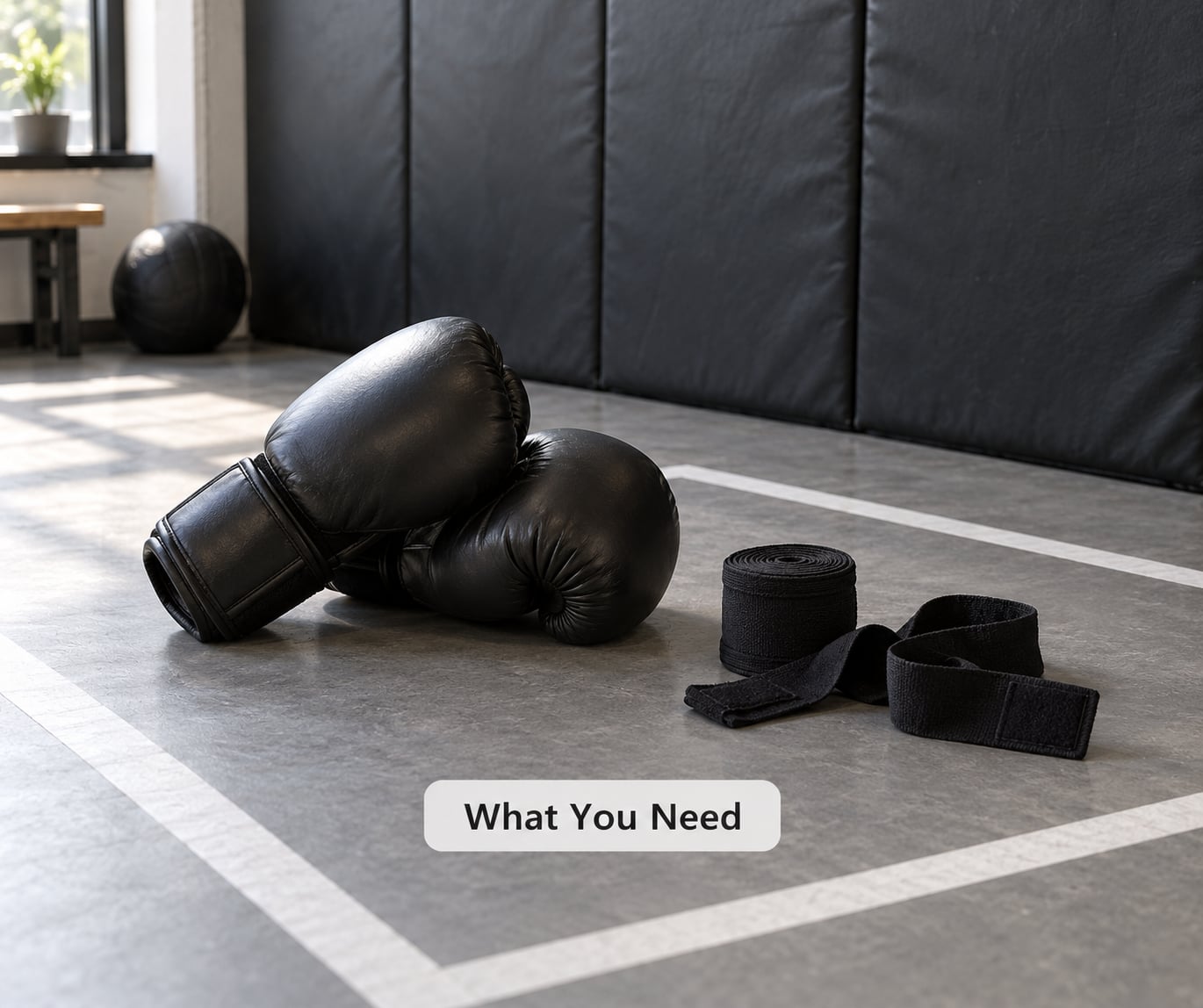
Very little, honestly. Slipping is a movement skill before it is anything else, and you can learn most of it in an empty room.
- A clear floor space. At least twice the length of your longest stride, with nothing behind you except a wall you do not want to be near. Most slips travel sideways, so look at your surroundings, not at your feet.
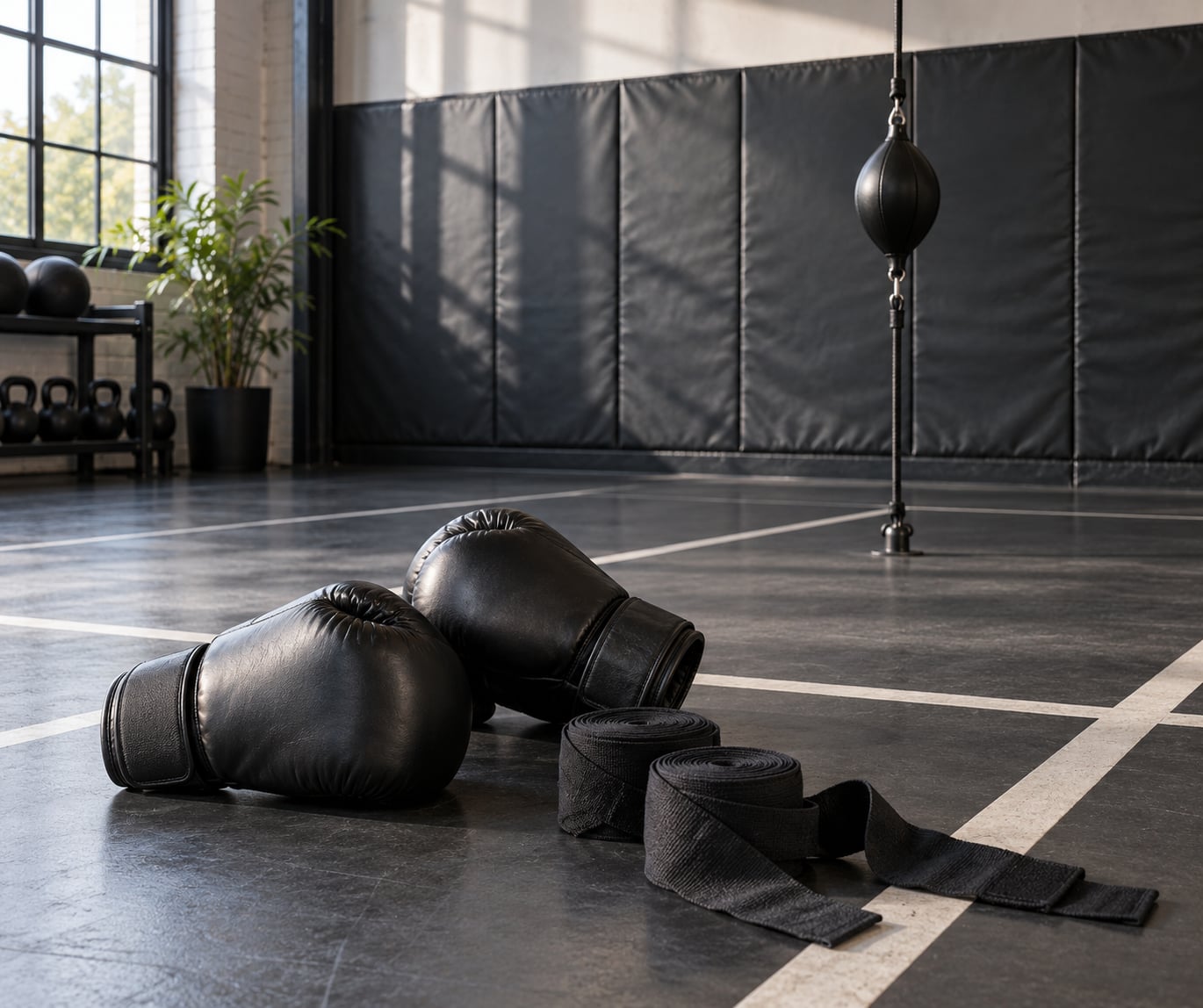
- Hand wraps. They cost little and they matter more than beginners expect, because the wrist and knuckle of the slipping hand take the awkward contact when you are learning.
- Boxing gloves once a partner is involved. Sparring gloves for partner work, bag gloves for your own sessions. Do the first weeks of partner work without contact rather than with it.
- A partner or coach, eventually. Shadow work alone teaches shape, not timing. Someone watching your shoulder telegraph matters once you want to read a real punch.
- Optional: a slip rope or resistance band and a double-end bag, both of which give you a moving target when nobody is around.
One safety line, because it is the real stakes here: no beginner should learn slipping in live sparring. Learn the shape solo, practise it with a coach or a controlled partner feeding slow, telegraphed punches, and only then take it into light technical rounds with a pad holder you trust.
How to Slip a Punch: Step-by-Step Technique
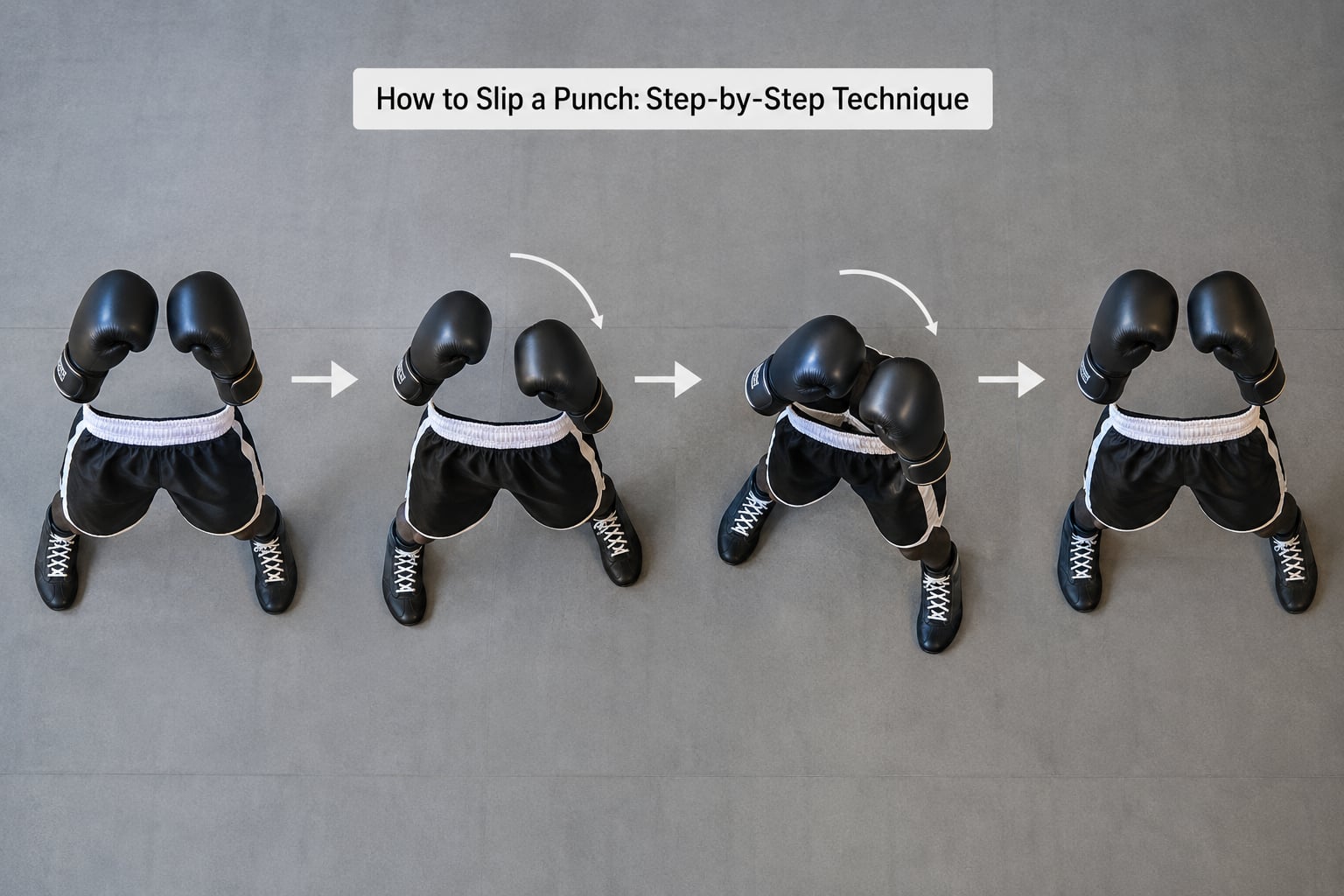
Below is the order coaches teach it in: stance, read, shift, move, recover. Each part is simple on its own, and the whole thing falls apart if you skip the reset at the end.
Set Your Stance and Distance
Stand with your feet a little wider than shoulder width, knees soft, weight balanced across both legs rather than resting back. Hands at cheekbone height, elbows in, chin tucked behind the lead shoulder so the centre line of your body is already partly hidden.
Distance does most of the work here. Start a shade further out than feels comfortable. If you are too close, you cannot slip a punch because there is nowhere to go but straight back, which is exactly the habit we are trying to break.
Read the Punch and Shift Your Weight
Watch the shoulder and the elbow, never the fist. A punch is thrown from the shoulder, so that is where the information arrives first, and looking at the gloves leaves you reacting late.
As the punch starts, shift your weight toward the side you intend to slip to — so your knees bend on the side your head travels toward and your hips drop slightly. The weight transfer is what makes the head arrive fast enough; without it you are asking your neck to do work your legs should be doing.
Slip Outside the Punch Line
Move your head a few inches to the outside of the incoming punch, keeping your chin behind the lead shoulder rather than lifting it. Say the punch is coming straight down the pipe at your face; your head goes just past the edge of that line so the glove passes beside your jaw instead of through it.
Outside movement is the safer first direction because it does not expose you to a following hook, and for a beginner it is usually the only direction worth learning at first. Inside movement — slipping toward the punch, toward the centre line — comes later, because it opens bigger counters and bigger risks at the same time.
Keep Your Guard Up and Recover
Your hands move with your head. They do not drop while you slip, and they do not swing wide for power. A few degrees of shoulder rotation is plenty, and turning your hips into a follow-through is how beginners end up off balance on the next punch.
Then come straight back to your stance, weight evenly distributed again, eyes on the chest or chin. Recovering to a neutral position is not the boring part of the drill — it is what makes you able to slip the second punch instead of only the first.
Practise the Slip Safely
Work up the ladder slowly, and do not skip a rung because a rung is boring.
- Shadow work, weeks one and two. Slip a phantom straight punch a hundred times per session, slow and deliberate, checking that your hands stay up and that you finish back in stance. Speed is not the goal yet; shape is.
- Slip rope or band, weeks two to four. A rope swinging at head height gives you a moving target with real timing pressure and no risk of contact. It is the fastest fix for flat, uncommitted head movement.
- Double-end bag. Slip the bag’s swings, count the ones you miss, and try to beat your own count next round rather than adding speed.
- Controlled partner work, week four onward. A partner throws slow, exaggerated straight punches with a hand target so your head lands on the target rather than near it. Aim for three of five, then build.
- Light technical sparring, once the reset is automatic. Both fighters at roughly half speed, only straight punches allowed, and stop the round the moment either of you stops resetting.
For most people, three rounds of five minutes twice a week is enough to feel a real change inside a month. Anyone promising you reliable slipping reflexes in a few days is selling something.
Common Mistakes
Seven errors account for nearly every slipping problem I have watched, and each has a simple correction.
- Watching the fist instead of the shoulder. Fix: keep your eyes on the chest or chin and treat the shoulder as your trigger.
- Slipping too early. Moving before the punch commits telegraphs everything, and a smart opponent simply follows your head with the next shot. Fix: react to the shoulder, not to the wind-up.
- Pulling your head straight back. This is not a slip; it is a lean. It drifts you onto your rear foot and out of range of your own counters. Fix: force yourself to travel laterally, even three inches.
- Moving the feet. The head moves, the feet mostly do not. Stepping during the slip means you are not back in stance when the second punch arrives. Fix: feet planted, small pivot at most.
- Dropping or widening the hands. Usually fatigue, usually on the second punch of a combination. Fix: slip smaller so your guard can stay where it was.
- Failing to recover. The classic beginner complaint: the first punch slips fine, then balance is gone for the rest of the exchange. Fix: make the return to stance a fixed part of every repetition, and treat it as the thing you are drilling.
- Slipping shots you should not slip. Wide hooks, uppercuts, and fast body shots are not slip targets for a beginner — block, roll, or step back. Fix: reserve the slip for straight punches and slow curves.
One more worth naming because it causes real injuries: leaning back to avoid a punch instead of moving your head. If you find yourself taking steps backwards under pressure, you are pulling back, not slipping, and you need to rebuild the habit from stance work.
Frequently Asked Questions
How much head movement do I need to slip a punch?
About six to eight inches, which is roughly the width of a boxing glove. More than that and you are spending energy and drifting off balance for no defensive gain. The movement should be small enough that your hands stay at cheekbone height the whole time, which is usually the best self-check: if your gloves dropped, you moved too far.
Does slipping a punch replace blocking?
No. Slipping and blocking solve different problems, and you need both. Blocking absorbs a punch and uses energy; slipping avoids the punch entirely and leaves you fresh, in range, and able to counter. Beginners usually build a defensive habit of blocking everything, then add slipping against straight punches once the reset is reliable.
Should beginners learn to slip inside or outside first?
Outside, almost always. Slipping outside keeps you away from a following hook and gives you more room to reset, which matters more when your technique is still forming. Inside slipping opens bigger counters and is used constantly at the top level, but it also exposes your chin if the timing is late. Learn outside until it is boring, then add inside.
How do I learn timing when the punch is too fast?
You cannot make the punch slower, so you move your read earlier and your body more honest. Watch the shoulder, shift weight before you move the head, and train the timing on a swinging slip rope until the pattern is automatic. If you only ever see the fist as it lands, that is a vision and awareness problem that bag and rope work fixes faster than sparring does.
When is it safe to try slipping in sparring?
When you can slip slow straight punches with a partner and finish every repetition back in your stance, unguarded and balanced. That takes a few weeks of consistent work for most beginners. Until then, drill on a rope and a double-end bag, work with a coach on hand targets, and keep live rounds to slow straight shots only.
Start with the outside slip against a straight punch, at walking pace, and finish every repetition back in your stance. If you can slip a punch and reset ten times in a row without your hands dropping, you have the foundation. Everything after that is speed.