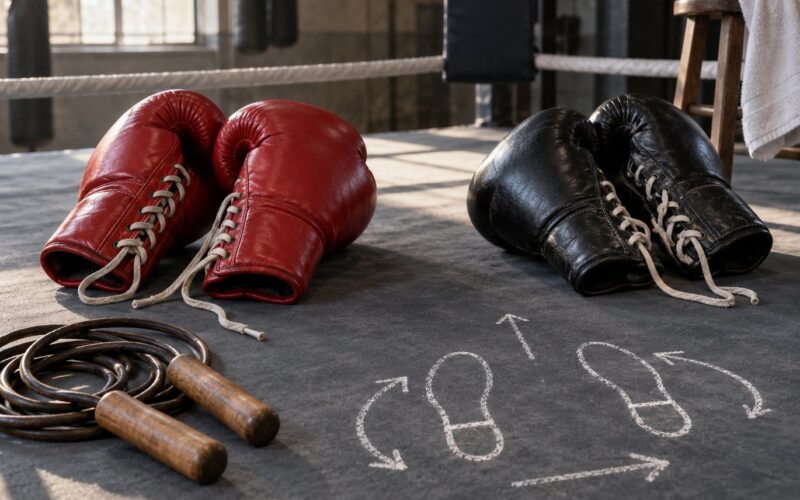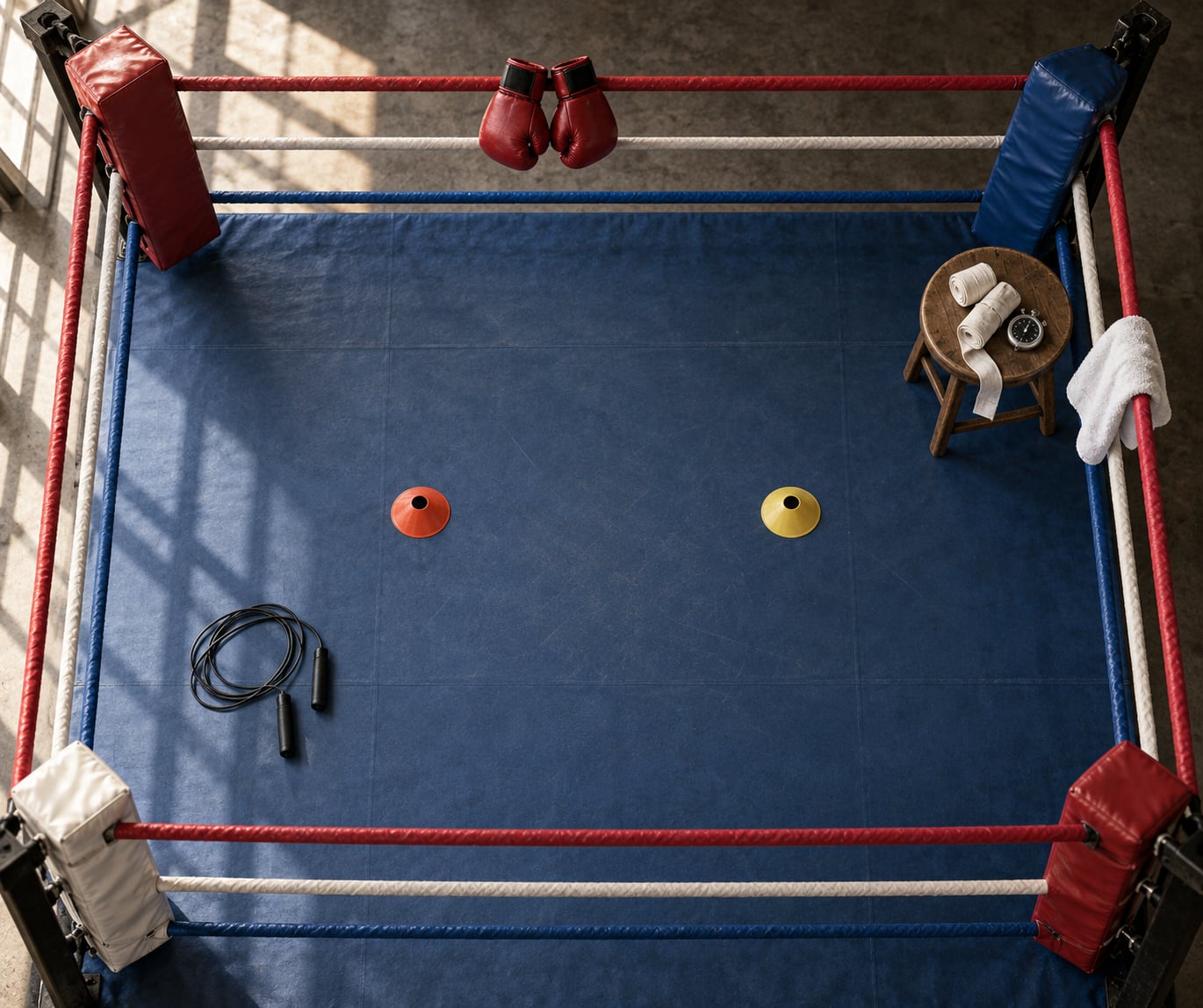
If you want to know how to beat a southpaw, it comes down to two things: win the battle for foot position so your lead foot sits on the outside, and land your straight right hand down the middle before the fight settles into a jab war. That is the whole plan. Everything below is how to make it work in the ring, how to drill it, and where amateurs usually blow it.
One warning before we start. Most beginners lose this matchup because they think they can out-work a southpaw with the jab. You cannot. A southpaw’s power hand is the left, and it is travelling straight down your line while your jab is travelling across it. Out-jabbing them is the single most common way orthodox fighters hand over a fight.
There is also a reason your right hand feels short against a southpaw, and it is not your fitness. It is a range illusion. In an orthodox mirror, your right hand is a comfortable two inches from where your opponent’s power hand sits. Face a southpaw and the geometry flips, so your eye misjudges where their head is. Move your lead foot outside and the right hand arrives on its own. Fix the foot position and the punch follows.
Table of Contents
- What You Need
- How to Beat a Southpaw: Step-by-Step
- 1. Confirm the Stance and Set Your Range
- 2. Control the Lead-Leg Side
- 3. Use the Rear Jab as a Range-Finding Tool
- 4. Attack the Lead Hook and Rear Straight
- 5. Make Angles After Every Exchange
- 6. Time the Right Counter After the Southpaw’s Jab
- 7. Vary Levels and Pace
- 8. How to Beat a Southpaw: A Round-by-Round Game Plan
- Common Mistakes and How to Fix Them
- Frequently Asked Questions
What You Need
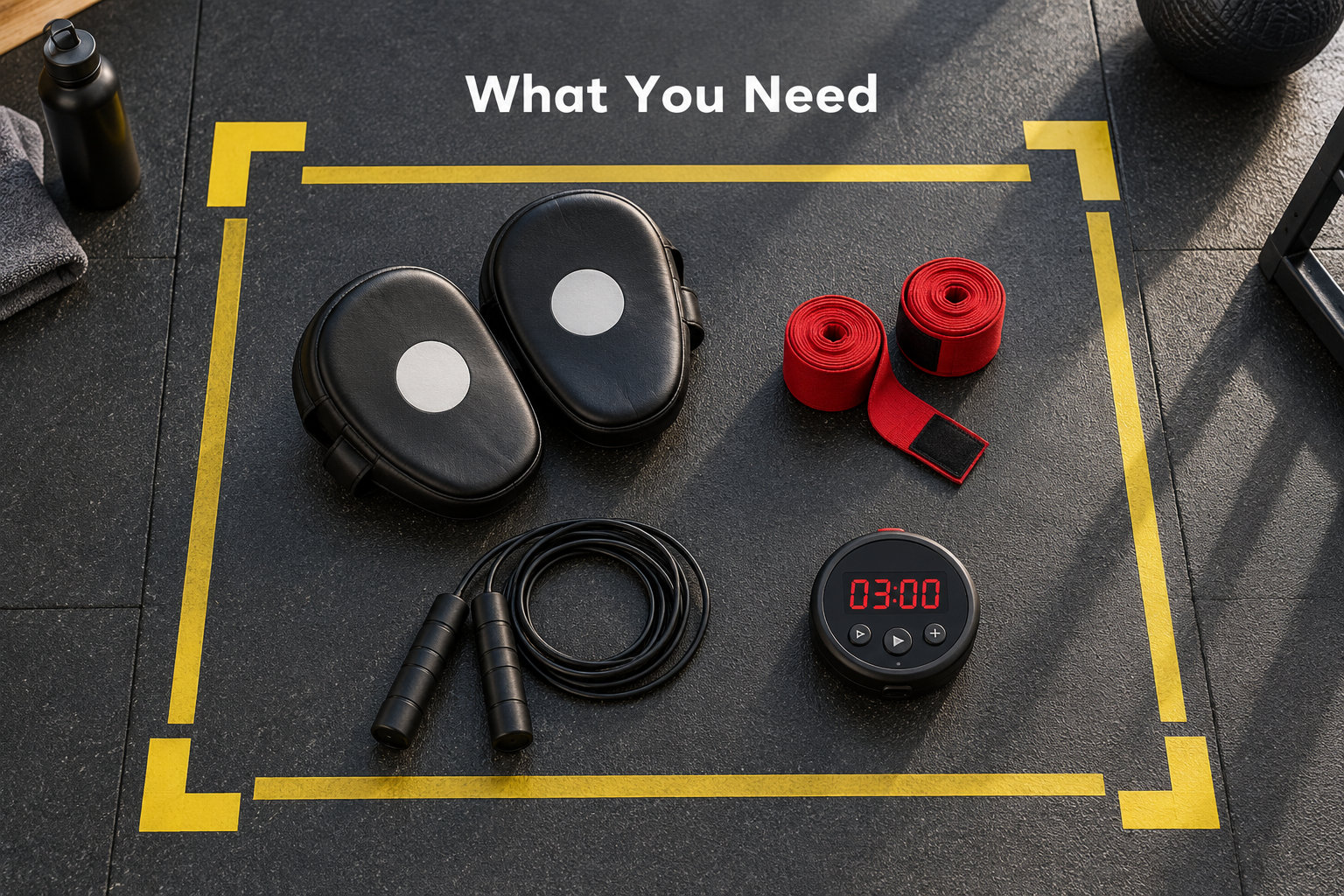
You do not need much. You need a solid orthodox base to build on, and enough sessions opposite a southpaw to make the geometry feel normal.
- A stable orthodox base. Bounce, chin behind the lead shoulder, hands where you can see them. If your feet are drifting wide, fix that first. Everything in this article assumes you can hold a stance for three rounds.
- A southpaw partner, or a plan to fake one. A pad-holder who stands southpaw and walks forward with a rear-leg feel is better than nothing. If your gym has nobody southpaw, switch stances with a partner for bag and pad rounds. Opposition fighters do this more than they admit.
- Focus pads or mitts plus a timer. Three-minute rounds, six of them, timed properly. Untimed sparring against a southpaw teaches you nothing about pacing, and pacing is where these fights are lost.
- Bag work for the southpaw-only combinations. Lead right, left hook off the pivot, jab to finish. If you cannot throw them on the bag without thinking, you will not throw them on fight night.
- A written attacking plan on a card. One line: what you do when you get the outside foot. Fighters who improvise against a southpaw end up jabbing, because jabbing is what they do when nobody tells them otherwise.
- Protective gear that fits. A mouthpiece, headgear for amateur rounds where it is required, and a groin guard. Nothing slows southpaw learning down like getting kicked in the ribs on the way in.
How to Beat a Southpaw: Step-by-Step
1. Confirm the Stance and Set Your Range
Watch the feet, not the hands. A southpaw stands with the left foot and left hand forward, weight on the back foot, and the long straight left loaded behind the front shoulder. If you cannot tell from the gloves alone, check which foot the jab comes off.
Then set a range that is wrong for them. A southpaw wants to close distance so the left lands on the way in. You want to be just outside that distance, close enough to land your right, far enough that their straight left needs a step to reach you.
You will know the range is right when their jab is landing on your guard rather than your chin and their back foot is shuffling constantly. If they are planted and comfortable, you are too close.
2. Control the Lead-Leg Side
This is the fight. Get your lead foot on the outside of their lead foot and you can see their right side, land your straight right down the centre line, and move in any direction you like. Stay inside and you are stuck looking at their left hand with no exit.
Three ways to get there: circle to your right until your lead foot lines up outside theirs, cut the angle after any exchange so you arrive off-line rather than square, or step back while angling so they have to close distance on your terms. The backward step is the hardest one to teach yourself because it feels like retreat. It is not.
Test it by pausing mid-round and asking which foot is forward relative to the other. If you cannot tell without looking down, you have already lost it.
3. Use the Rear Jab as a Range-Finding Tool
Your right jab is a measuring tool, not a scoring punch. Its job is to push them off their back foot and prove to your eye that your right hand has range before you throw it.
Throw it long enough to land on the shoulder or glove, then immediately follow with the straight right. That one-two-then-jab pattern stops the jab war, because now the jab is setting up your best punch instead of competing with it.
You will know it is working when you land the right hand without adjusting your feet afterwards. If you have to lunge or lean to reach, the range was not established and the punch will not count.
4. Attack the Lead Hook and Rear Straight
Your straight right is the main event, because their left hand sits directly in front of it. That is the entire reason the matchup favours you once the foot position is right.
Your lead left hook is the second punch, because their right hand is the one they cannot use to protect the left side of their face. The flat, slightly upward hook over their front shoulder lands clean when their weight is forward.
Sequence them as one attack: jab, straight right, step off to the angle, left hook, jab to reset. Learn the four-punch version first and only add more when it lands twice in a row on the pads.
5. Make Angles After Every Exchange
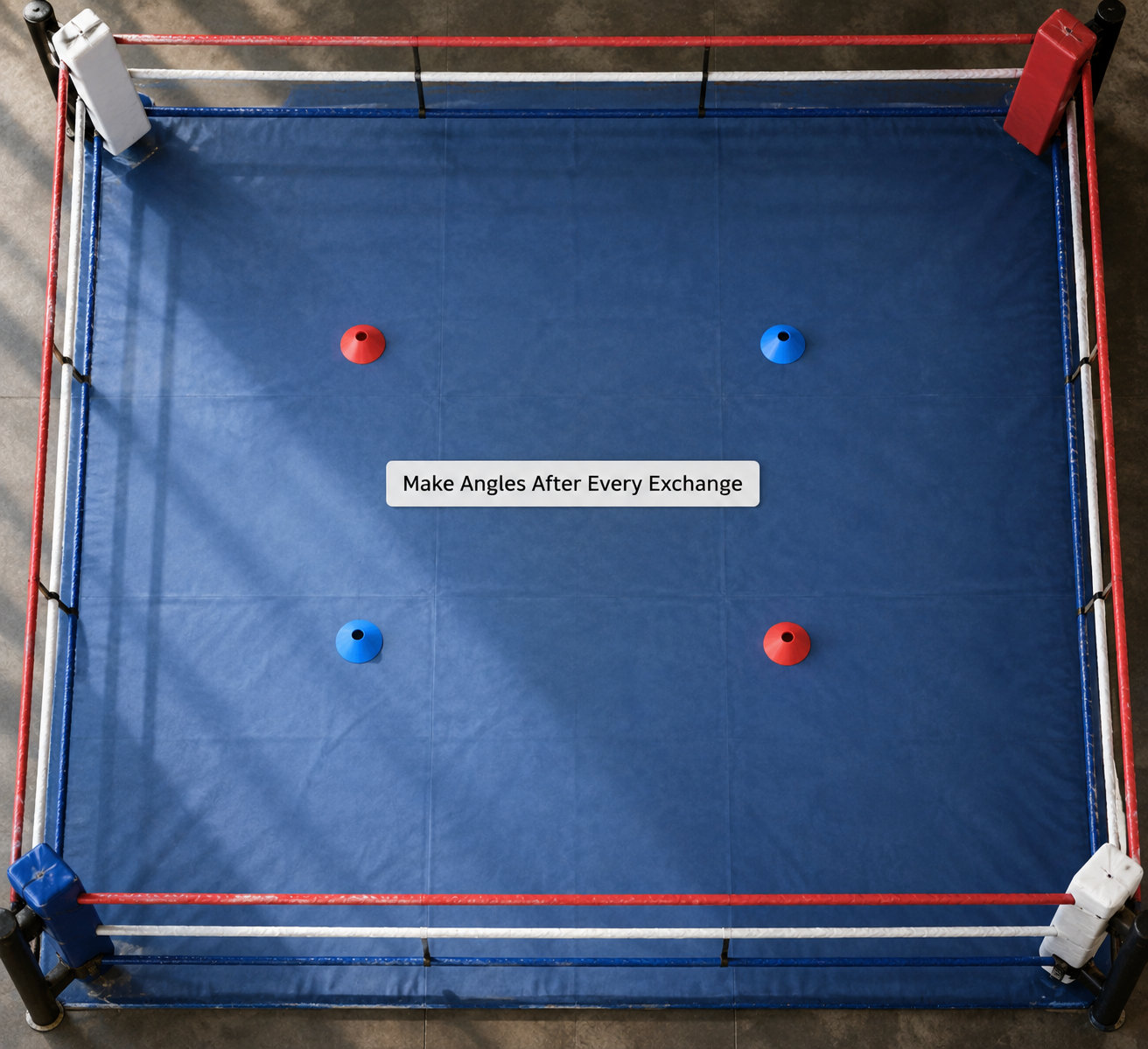
Every combination you land should end with you somewhere new. Push off the back foot and step off the line so you arrive at an angle instead of square-on. The punch that ends the exchange is the one that throws them past you.
Angle off, then jab to reset. That jab at the end is what rotates your head back to safety. Without it you finish a combination in range with your chin over your lead foot, and the left hook finds you.
How to tell it worked: they miss because they are reaching for where you were, not because they were short on timing. That is an angle, and it is worth more than a clean punch in the scoring.
6. Time the Right Counter After the Southpaw’s Jab
Most of what a southpaw throws is the jab and the left. If you only defend the left and ignore the jab, they can set up the cross without ever risking the cross.
Two options. Parry the jab and step in with the left hook, or let the jab hit your gloves and answer with the straight right as they reset. The second option is stronger because their weight is already forward when it lands.
Block or slip the left cross with a shoulder roll and you have created the opening for the left hook. Chasing counters with the jab is the trap. Let it go and counter with the right.
Test it on the pads: your partner feeds jab, left, then resets. You slip, step, hook. If you are swinging at air, your partner is throwing too fast, so slow them down until you can see the load.
7. Vary Levels and Pace
A southpaw who has seen you jab ten times will start slipping it. Vary the rhythm: pawing jab, double jab, then stop. One exchange fast, the next slow. Change your head level from up to down to mid so their read is wrong.
Feint the jab and go straight to the right hand. Feint the right hand and take the level down to the body. A southpaw guarding one level cannot cover both, and most of them guard high by default.
Feints only work at range. Throwing them inside means eating the left for free.
8. How to Beat a Southpaw: A Round-by-Round Game Plan
Put it on the card before the bell and follow it, because improvisation against a southpaw turns into jabbing.
- Rounds 1 and 2: range and angles. Establish the jab, start taking the outside foot, land the right hand, do not chase. Score comes from clean right hands and nothing else.
- Round 3: punish the pattern. They have jotted down that you jab. Feed it more, then punish with the left hook and the right hand.
- Rounds 4 and 5: body work. The right hand to the body, the right uppercut under the elbow, the jab stopping the hands from dropping. Southpaws shell high because the left cross is their identity.
- Round 6: take the finish. If you are ahead, work the body and let it happen. If you are behind, take the outside foot again and trade with intent rather than pot-shot.
Adjust for the body type in front of you. Against a tall southpaw, work the body and use your height to lean over their jab. Against a pressure southpaw, forearm-crush and chest-to-chest in the clinch, then angle off. Against a counter-puncher, be patient, take the outside foot, and make them initiate into your right hand.
Common Mistakes and How to Fix Them
Chasing directly. They back up, you follow, and you end up on their terms with your lead foot inside. The fix is one drill: work pads at a fixed distance and every time you drift inside, you owe the holder ten press-ups.
Over-committing to the left hook. It is the best punch you have against them and the easiest one to miss with. Throw it off an angle, not off a step-and-stop. If you land it three times in a row in training, you are loading it without rotating.
Fighting at their range. When you are inside their best punch with no foot advantage, the odds drop fast. Fix: whenever your nose touches their chest, push off and rebuild the angle instead of throwing.
Standing still and shelling up. A tight guard does not work in an open stance because their left arrives from outside your hands. Move or angle, always.
Getting predictable on the jab. One jab, one right, one hook, every time. Add a level change and a feint. Predictable is the same as losing.
Bad clinch mechanics. Put the chin on the wrong shoulder and you give up the inside position against a southpaw who wants it. Chin on your right shoulder when tying up with a southpaw, knees bent, hips in, work the short punches and break on your own terms.
Frequently Asked Questions
What is the best punch to beat a southpaw?
Your straight right, by a distance. It travels down the centre line into a target whose left hand is already forward, so it arrives before their guard can cover it. The lead left hook is the second punch because their right side is open. Jab to measure the range, then throw the right, then angle off. If you need one answer: win the outside foot position, and the right hand starts landing on its own.
Is a southpaw stance harder for an orthodox boxer?
It is harder in three specific ways, and none of them are about talent. The angles are wider, so a static guard does not cover the incoming left. Their straight left lands on your forward side, so you meet it coming in. And almost every boxer trains against orthodox opponents, so the southpaw has far more live reps in this matchup. That experience gap is why a less talented southpaw often wins.
How do I counter a southpaw’s jab?
Defend the jab properly instead of ignoring it. Parry it and step in with the left hook, or let it land on your gloves and answer with the straight right as their weight shifts forward. Chasing the jab with your own jab is the trap, because it keeps you head-on in their best range. The counter that works is the one that makes you step off the line, not the one that answers with another jab.
Should an orthodox boxer chase a southpaw around the ring?
No. Chasing puts you on their terms, with your lead foot inside and their left hand free. If they go backward, take one step back of your own while circling to the angle, which is a smaller move and keeps you closer to where you wanted to be. Circle to the outside, keep the jab measuring, and let them walk into the right hand. Forward pressure only works once you own the foot position.
How can I spar a southpaw strategy safely?
Build it up in stages. Start with bag and pad rounds in a southpaw stance, then shadow the angle work, then take light rounds with a partner who stays disciplined and calls the shots. Keep rounds short and stop before fatigue turns technique into recklessness, because southpaw sparring is where tired fighters get caught by the left cross. Headgear and a mouthguard are not optional in most gyms.
Can a southpaw use the same tactics against an orthodox boxer?
In reverse, yes. A southpaw fights the same game with the hands swapped: get the lead foot on the outside, land the straight left down the middle, work the lead right hook, and finish with the jab to reset. In mirror stances both fighters fight open. The advantage belongs to whoever owns the foot position, not to the stance itself.
Start tomorrow with the boring part. Take three timed rounds on the pads against a southpaw stance, working only jab, straight right, angle off, left hook, jab. Nothing else. If your right hand starts landing without a lunge, the range is finally in the right place, and the fight gets easier from there.