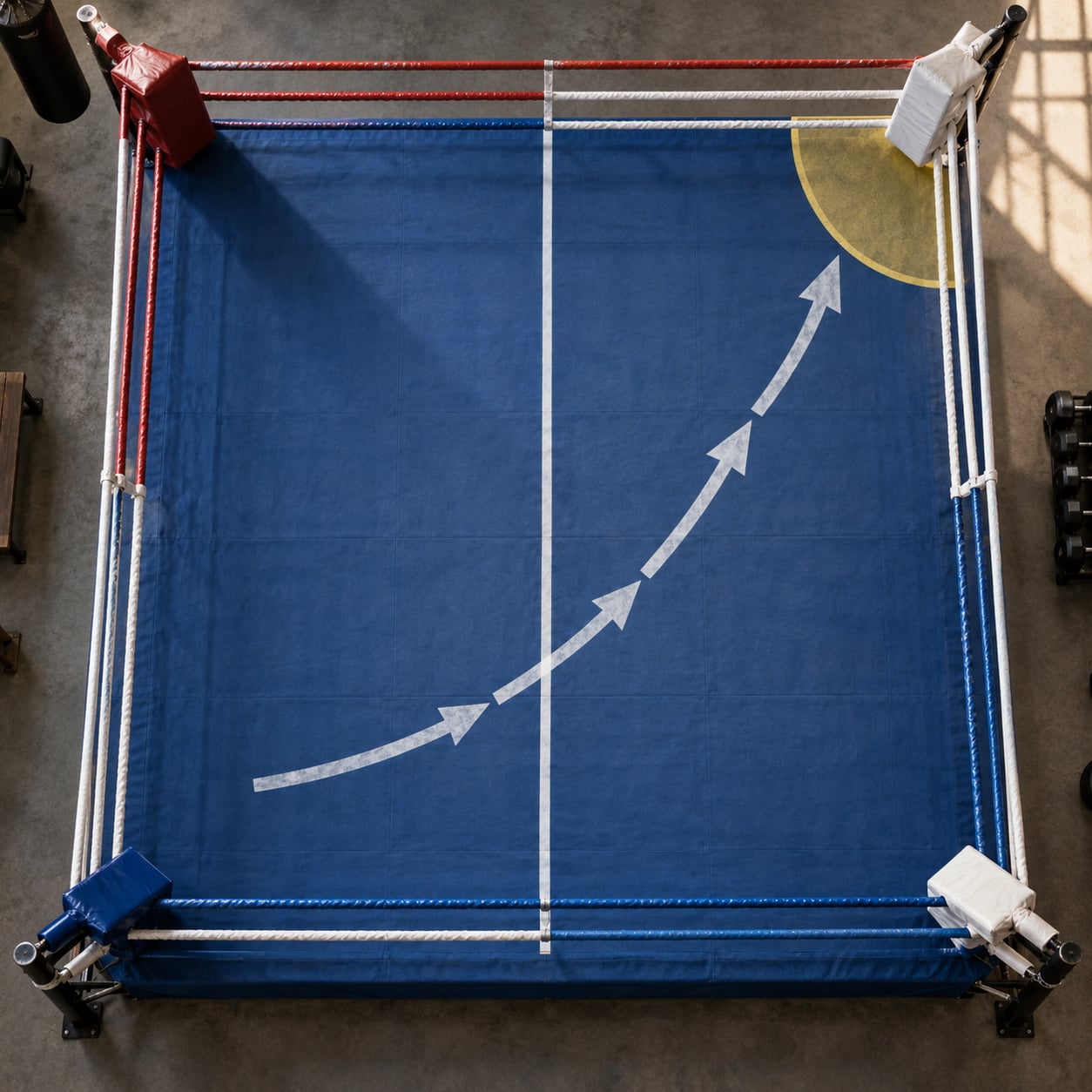
Cutting off the ring means using lateral footwork instead of chasing, so your opponent runs out of space instead of running away from you. Mirror the direction they circle, keep them in front of you, and shorten the ring a step at a time until the ropes are the only thing left.
Most beginners get this wrong in the same way. They see an opponent backing up, so they walk straight forward, eat a jab on the way in, and arrive tired with nothing left. The fix is not more aggression. It is choosing a better line across the canvas.
The rest of this guide breaks ring cutting into five steps, each with a visible result you can check in the gym. It also covers how to reset when the tactic gets turned back on you, which is the question most beginners actually have trouble with.
Table of Contents
What You Need Before You Start
Ring control is a positioning skill, not a punching skill, so the prerequisites are about movement and awareness rather than power.
Footwork you can do both ways. You need to move left, right, forward and back without crossing your feet. Cutting the ring is mostly circling work, and if your lateral movement is shaky, the angle will fall apart the moment you add punches.
One dependable punch. A jab you can throw without thinking gives you a reason to step in and a reason to pause. Most pressure fighters start with a straight lead hand and add everything else later.
Ring awareness. Glance at the ropes a few times per round, not once. Knowing where your opponent’s nearest corner sits is what tells you which direction to close.
Cardio for sustained output. Ring cutting only pays off in the second half of a round, and a pressure fighter works at a fraction of their reserve for longer than most people expect.
A partner who moves honestly. The best drill for this is two boxers where one has the single job of escaping to open space. Repetition under that constraint builds the instinct faster than shadow boxing alone.
One more thing worth knowing: a pro ring gives you more room to be cut off in, and an amateur ring is often tighter, so the same tactic closes faster. Check the size your gym uses before you judge how well it is working.
How to Cut Off the Ring in Boxing: Step by Step
1. Start With Ring Position and an Escape Route
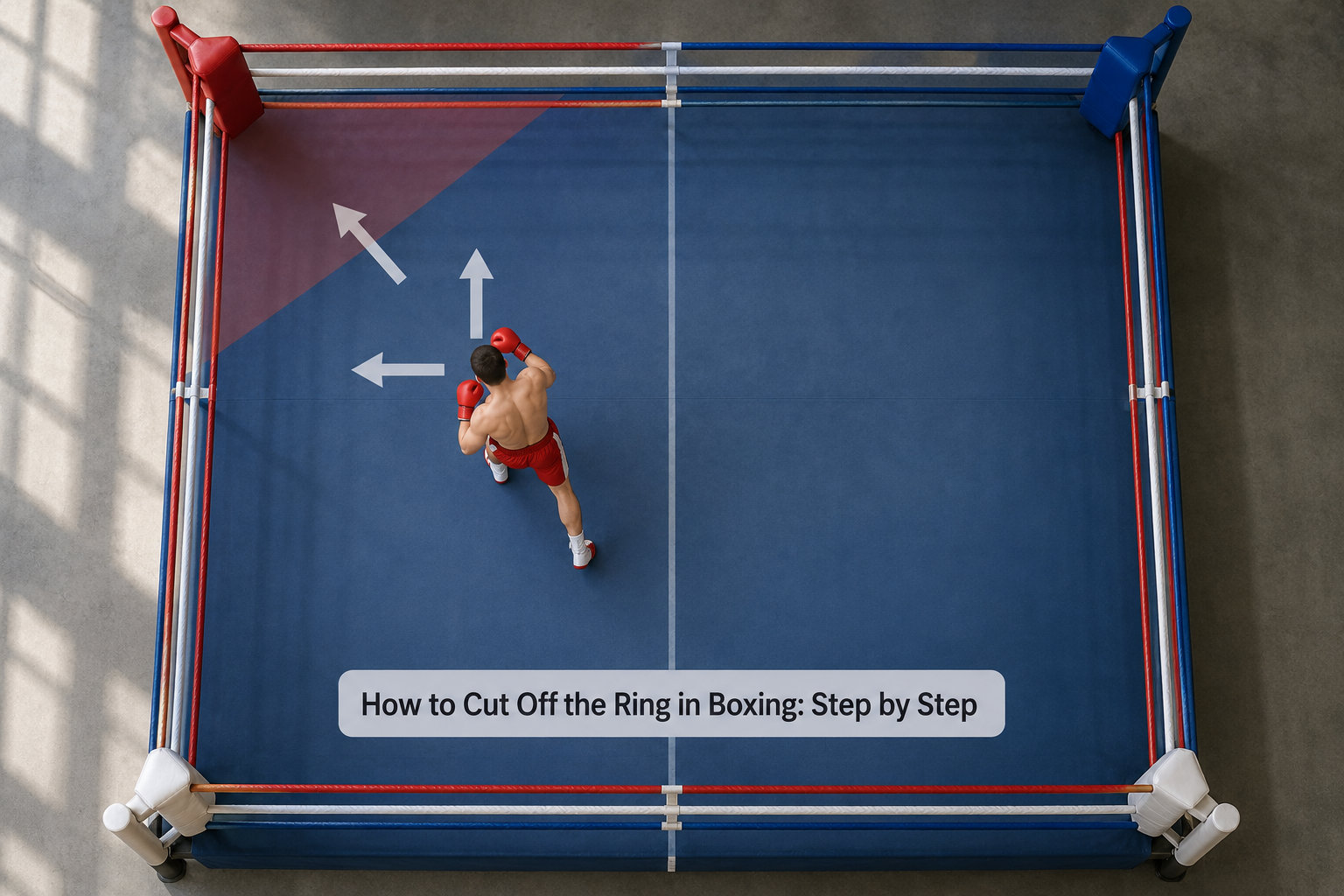
Entering at a slight diagonal does more work than any punch you will throw in the opening seconds. Approach at roughly 45 degrees rather than walking straight at your opponent, and you arrive balanced with a line to work from.
Before you commit, identify the nearest corner and the shortest route your opponent would need to reach open space. That route is the one you want to remove.
How you know it worked: your opponent has to turn to move, rather than being able to keep walking in a straight line. Turning costs them time and reveals whether they are comfortable moving left, right or backwards.
2. How to Cut Off the Ring With Small Steps
Use compact steps and a consistent jab, and let each step close a small amount of distance. Sudden rushes are easy to read: a boxer who sprints forward telegraphs the counter, usually with a check hook or a jab down the pipe.
Keep your weight where it can move in either direction. A boxer standing flat on both feet after closing distance is already half trapped, and that is how the tables get turned.
How you know it worked: you can feel the gap closing without your feet ever getting crossed, and your opponent is starting to punch at range because the space they wanted is gone.
3. Walk the Opponent Toward the Ropes
Angle across the ring rather than following directly. When you walk straight, you give them a lane to run along; when you walk at an angle, that lane closes.
Feints help more than speed here. A step that looks like a level change makes an opponent lean back or step away, and that reaction is what moves them for you.
Adjust the line as the round goes on. If they turn left more often, close the left side and let them travel right, where the ropes are closer. You are steering, not just following.
How you know it worked: your opponent is fighting with their back foot on the canvas and starting to reach for the ropes with their rear foot, which is the moment their exit options get thin.
4. Turn Ring Control Into Pressure
Once the space is controlled, your job changes. Instead of travelling, start throwing.
Volume is the point. A steady, accurate jab keeps them honest, and short combinations do more damage here than one big shot because the corner is where a tired defender makes mistakes. Think of it as drowning them with light work while you wait for the hard punch.
Work after missed punches too. A miss shifts a boxer’s weight, and the recovery is the moment a pressure fighter usually capitalises on.
One caution: over-eagerness in the corner is the most common way this tactic backfires. Crowding a trapped opponent invites a clinch, and in many amateur rules the clinch wipes out your advantage entirely. Back up a step, reset your feet and pick your shots.
How you know it worked: they are covering up instead of moving, and their escape attempts have become single shots rather than sustained movement.
5. Recognize the Turn and Reset
At some point the opponent does something back. They counter as you advance, pivot off the line, clinch to freeze you, or find a lateral exit you have not covered.
Learn to see it. The tell is usually a weight shift or a shot that is not meant to land but to push you off line. When you spot it, stop advancing, reset your stance, and re-establish a safer angle rather than following them into a dangerous exchange.
If you have already closed to nothing, pivot out and circle to create space instead of backing straight up. Backing up in a straight line is how amateurs end up against the ropes with nowhere to go.
How you know it worked: you re-enter at an angle with your feet under you instead of arriving out of balance and behind the exchange.
How to Cut Off the Ring Safely in a Spar
Yes, and you should, but the goal of the spar is movement, not damage. Start with movement only, no punches at all, and let your partner get used to escaping. Then add light technical shots and stop every combination the moment they slip.
Agree in advance on how you will reset after a slip or a clinch, and keep the power honest. Amateur boxers in particular get pulled into clinches where the whole point of the tactic disappears.
A simple progression works well: movement only for the first round, then jab and circles, then short combinations at the ropes. Three rounds is plenty to build the habit.
Common Mistakes
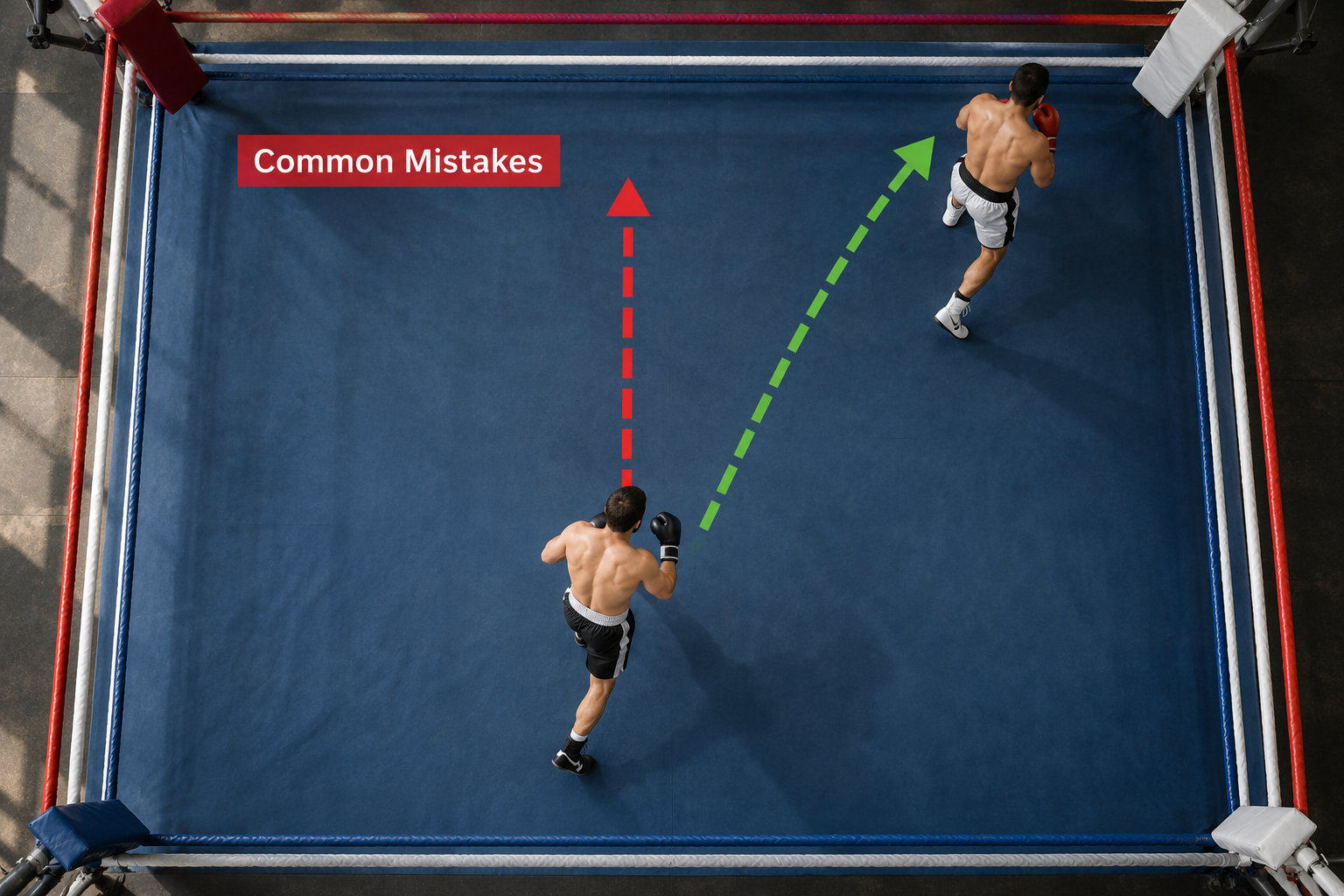
The errors below are worth watching for in your own footage. Most of them come from doing too much with the legs instead of too little.
Common Mistakes and How to Fix Them
Running straight after them. Predictable forward movement is easy to counter, and it is the single most wasted effort in the sport. Fix: pick a diagonal line and commit to it for several steps before changing.
Cutting across the ring too fast. Moving fast across the canvas usually means crossing your feet and arriving unbalanced. Fix: shorten the steps and let the jab set your pace instead of your legs.
Standing in one spot. A boxer who stops moving is a boxer who gets hit. Fix: use small bounce steps between every change of direction so you stay springy.
Loading every punch into the same line. Repeated head shots from the same spot are the easiest thing in the world to read. Fix: lead with the jab, then vary the level and the target.
Losing awareness behind the head. Looking at your opponent’s gloves instead of your opponent’s shoulders costs you the counter. Fix: keep your eyes up and let your peripheral vision track the ropes.
Failing to reset. After an exchange, most boxers drift forward by habit. Fix: build a rule into your drills that every exchange ends with you pivoting out and re-entering at an angle.
Letting fatigue decide. Ring control collapses late in a round if you spent the first half chasing. Fix: walk in the first two rounds and work hard only once you have shortened the ring.
One more practical note that ties it together: cutting the ring works best against opponents who move a lot and gives you less to work with against a fighter who already stands and fights in front of you. Against a counter-puncher, be more patient about the angle.
Frequently Asked Questions
Does cutting off the ring mean chasing an opponent?
No. You are trying to control the available space, not blindly follow someone. Angle across the ring, stay balanced and encourage the opponent toward a boundary while leaving yourself an exit. A useful test: if you can walk forward and reach them with a jab, you are cutting the ring. If you have to sprint to get there, you are chasing.
What punches are best for cutting off the ring?
A dependable jab is especially useful because it manages distance and can interrupt an escape attempt. After the jab is established, use short hooks, straights or compact combinations that fit the corner. Heavy single shots are less useful while you are still moving, since power punches need a planted stance and the corner is where accuracy matters most.
How can I cut off the ring against a faster opponent?
Do not try to match a faster boxer by sprinting after them. Take a diagonal angle, use the jab to discourage the first step and make yourself look committed to the next line. Pivot when the opponent changes direction, and accept that some rounds you will only win space rather than land anything. Consistency across a round matters more than one clean entry.
Is it safe to practice this tactic in sparring?
Yes, with a controlled partner and clear limits on power. Begin with movement, feints and light technical shots rather than trying to trap or injure your partner. Agree on how you will reset after a slip or clinch, and stop combinations the moment your partner moves. The drill builds footwork, not toughness.
How do I escape when my opponent cuts me off?
Stop walking straight backwards, because that is how you end up pinned. Pivot off the line toward open space, throw a jab while you turn to discourage the follow, and circle rather than retreat. If you are already close, use a short clinch to break the rhythm and reset your stance. Keep your guard high and your eyes on the shoulders, not the gloves.
Is cutting off the ring always a good idea in boxing?
No. It is most useful against opponents who rely on movement, circling or running, because it takes away the space they depend on. Against a fighter who already stands and trades in front of you, or against a patient counter-puncher, it matters less and can expose you to counters. Judge the tactic by the opponent in front of you, not by habit.
What to Do in Your Next Session
Pick one thing: angle your entry instead of walking straight at your partner for three rounds. Add the jab once the angle holds. Everything else in this guide stacks on top of those two habits, and both are learnable in a month of consistent partner work.