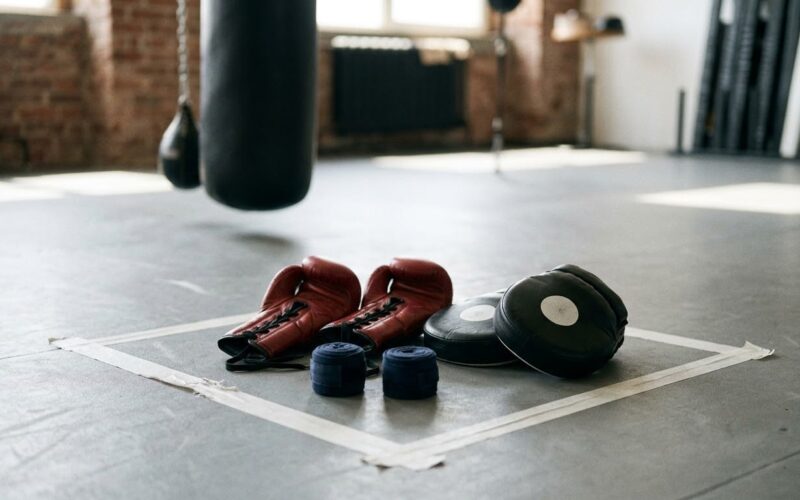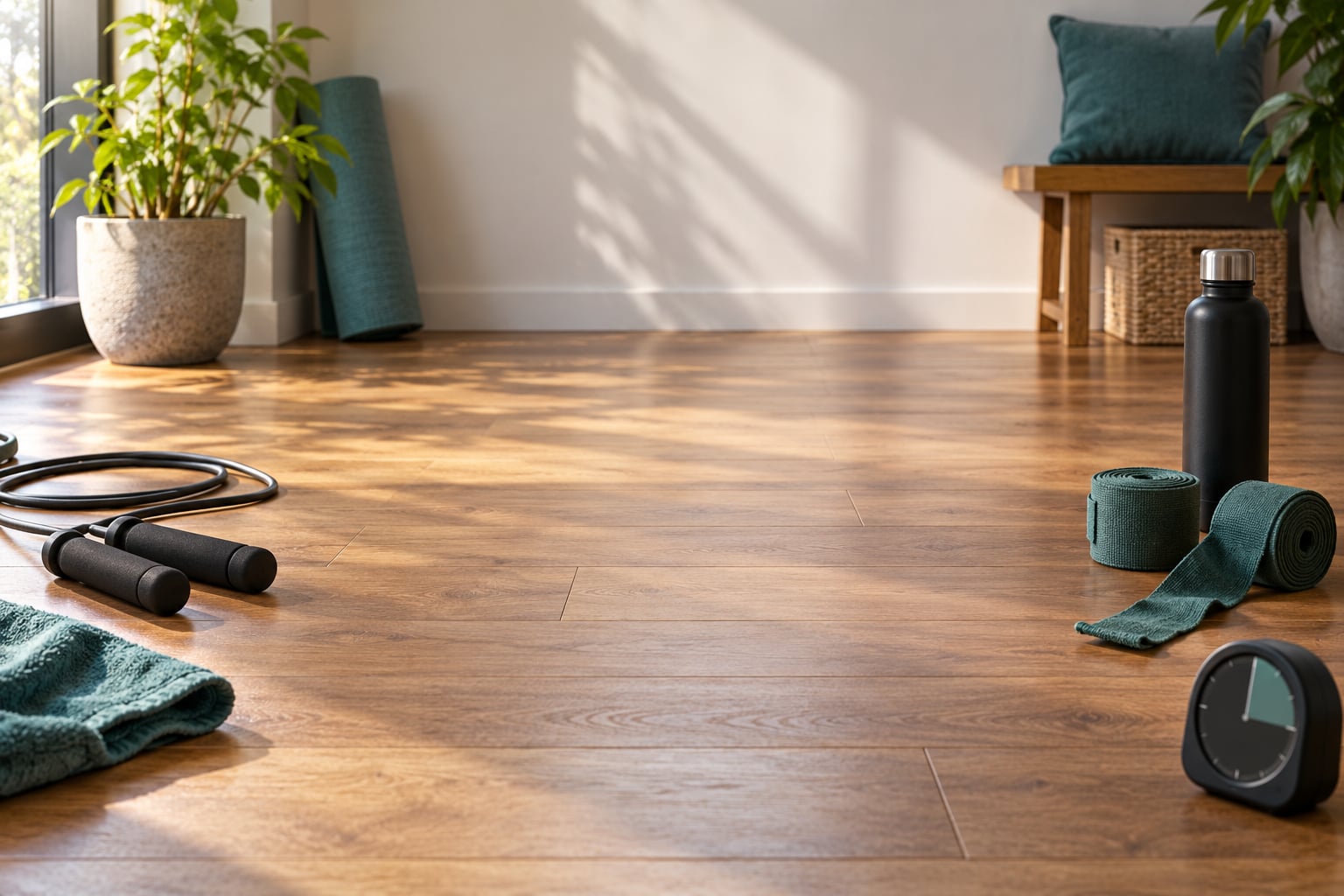
Shadowboxing is punching and moving against an imaginary opponent to build technique, footwork and cardio. It needs no bag, no partner and no equipment, so a beginner can learn to shadowbox anywhere with a few feet of clear floor and about fifteen spare minutes.
That is the whole appeal. You throw the jab, you move your feet, you come back to guard, and you do it again until your body stops needing to think about it. The catch is that nothing is in front of you to stop a bad punch, so form is the whole game in the first few months.
Below is how to shadowbox for beginners the way it tends to work best: get the stance honest, learn two punches instead of six, add a little movement, and build a session you will actually repeat. Expect the first ten minutes to feel awkward. It does for everyone.
Table of Contents
What You Need
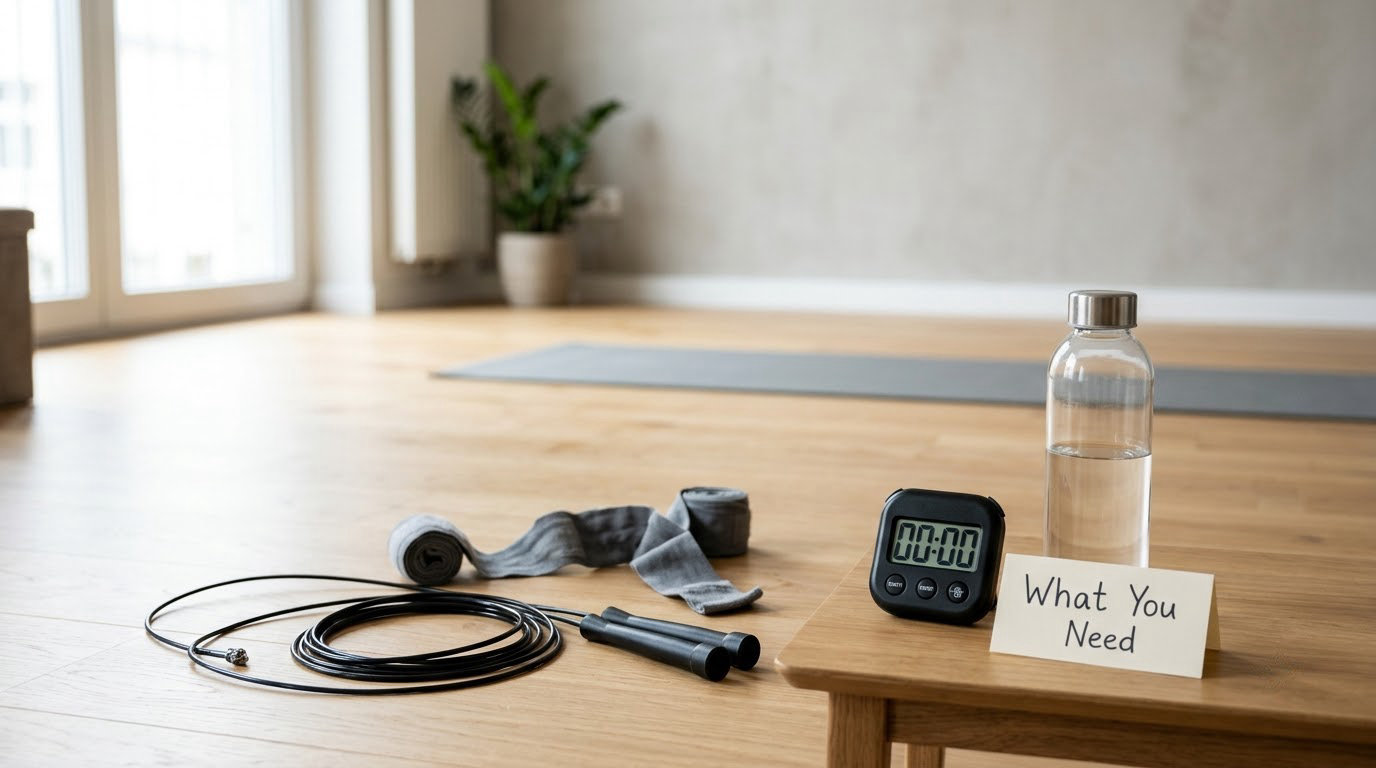
Almost nothing. That is the honest answer and it is worth repeating, because most beginner guides start with a shopping list you do not need yet.
The essentials are a clear patch of floor roughly six feet by six feet, a wall or door behind you that nothing can bump into, and water. Shoes matter more than anything else you will put on, and they matter for comfort rather than grip: if your floor is slick, a pair of training shoes with a flat sole stops you sliding out of stance mid-combination.
Optional but useful
- A mirror – the single most useful piece of equipment, because it shows you guard position, elbow flare and whether your feet are actually following your hands.
- A jump rope – the traditional warm-up, and a cheap way to get your heart rate up before you start punching.
- Hand wraps – mainly for wrist support and to remind you to keep the wrists straight.
- A timer or phone – rounds without a clock turn into random flailing.
- A phone camera – film one round, watch it once, fix the single worst thing you saw.
Two things you do not need yet: gloves (there is nothing to absorb the impact, so they add nothing) and hand weights. Beginners regularly ask whether light dumbbells make shadowboxing better. They do not, and holding weight while you throw punches teaches you to punch slow, which is the opposite of what you are training.
What to wear matters more than people expect. Train in something light that lets you raise your knees and circle without your shirt riding up, and clear the room of anything you would regret hitting, including ceiling fans, wall art, and the kind of glass coffee table that has ended more sessions than any punch.
Step-by-Step: How to Shadowbox for Beginners
1. Set Up a Comfortable Stance
Start orthodox: left foot forward, right foot back, both feet about shoulder-width apart with the rear foot turned slightly outward. This is the stance most people learn first, and most pro footage you watch starts here.
Southpaw is the mirror of it, right foot forward. Pick one and stay in it. Switching stances to look impressive is the fastest way to make a beginner feel clumsy, and there is nothing to gain from it in month one.
Now the details that separate a stance that holds up from one that falls apart. Knees soft, never locked. Weight on the balls of the feet so you can push off in any direction. Chin tucked down behind your lead shoulder. Elbows pulled in tight to the ribs rather than flaring out, because flared elbows leave your ribs open and drain energy.
Hands sit at cheekbone height, fists closed loosely, not clenched white. You want to see your knuckles when you glance down, not your own face. A good self-check: if you can see your hands in a mirror while your chin is up, your chin is too high.
2. Learn Your Basic Footwork
One foot moves, the other follows. That is the whole rule. Move your lead foot forward and the rear foot slides in after it, then you settle back into the same stance. Never step across your own feet.
Start small. Sliding three or four inches is plenty at first, because the rear foot moving is what keeps you square to your imaginary opponent. If you reach too far and your back foot never follows, you end up walking backwards into the wall you cleared earlier.
Your knees stay soft and your guard stays up the entire time, which is harder than it sounds. A beginner can spend a full round moving forward and back without ever noticing the hands dropped. Practice bouncing on the balls of your feet instead of standing still, and if your shoulders are rising toward your ears, the bounce is too high.
3. Practice the Jab and Cross
Learn two punches and get them right before you add anything. The jab is the lead straight, the cross is the rear straight.
Knuckles lead, wrist straight, elbow not hyperextended at the finish. The mistake nearly every beginner makes here is overextending, because there is nothing in front of you to tell you when to stop. Finish with your hand in line with your shoulder and hip, then return to guard. Nothing more.
The cross is a straight punch but the power comes from rotation. Your rear heel lifts and turns, your hips drive forward, your shoulders follow, and your weight transfers onto the lead leg as you land. The cross travels further than the jab and takes about twice the effort, so throw it half as often.
Exhale on every punch. Holding your breath is the single most common fault in the first month, and it kills both your timing and your recovery. Breathe out through your nose or a slightly open mouth, and let your breath reset between combinations rather than mid-punch.
4. Add Controlled Defensive Movement
Beginners tend to only learn offence, and then wonder why shadowboxing feels flat. Three simple movements fix that, and all of them are safe because nothing is actually coming back at you.
A slip moves your head a few inches to the outside, off the centre line, then back. A pull back is a small lean straight back from the hips. A roll tucks your chin behind your lead shoulder and bends your knees slightly, moving your head down and behind the punch line.
Stay under control. You are not dodging anything, you are rehearsing the movement so it exists in your body before you need it. Slide, roll, come back to guard, punch. Small movements, hands still high, no flinching away from nothing.
5. Build Simple Combinations
Boxers number punches so you can drill them. Your lead hand is 1, your rear hand is 2, the lead hook is 3, the rear hook is 4, the lead uppercut is 5, the rear uppercut is 6.
For your first few weeks, use only 1s and 2s. These are the sequences worth learning cold:
- 1-1 – jab, jab. The bread-and-butter double jab.
- 1-2 – jab, cross. The straight that teaches rotation.
- 1-2-1 – jab, cross, jab. Exits a combination, so start here.
- 1-1-2 – jab, jab, cross. One more jab to set the rear hand up.
- 2-1 – cross, jab. Adds a change of rhythm without new mechanics.
Practice slow and deliberate. One combination, thirty times, then the other side. Slowly, of course, since your opponent is imaginary and has nowhere to be. Every decent coach gives the same instruction here: mechanize the jabs and straights before you add anything else.
6. Use a Beginner Shadowboxing Routine
Three minutes of real rounds beats an hour of drifting. A clean beginner session looks like this:
- 2 minutes – warm-up. Jump rope or light movement, shadow stretching, raising your hands and shoulders.
- 3 minutes – stance and footwork only. No punches. Move forward, back, side to side, guard up.
- 3 minutes – 1s and 2s on their own, slow. Return to guard after every punch.
- 3 minutes – 1-2, 1-2-1, 1-1-2 with movement.
- 3 minutes – add one defensive movement between combinations.
- 1 minute – cooldown. Shake your arms out, breathe slowly.
That is a fifteen-minute session, which is right for most beginners. If you have no jump rope and no mirror, drop them and still do the session. If your space is a hallway, do the footwork and defence rounds only, stepping in place instead of forward and back.
7. Progress Without Overtraining
Progress one variable at a time, never everything at once. Once 1-2-1 looks clean at full speed, add the lead hook and it becomes 1-2-3-1. Only then try moving more between punches.
Watch the warning signs rather than chasing a number on a calendar: form falling apart at the end of a round, sore knuckles, sharp pain at the elbow when you extend, and general fatigue that makes your guard slump. The elbow complaint is the one to respect. Nothing in shadowboxing stops your punch from over-extending except you, and hyperextension at the joint is how beginners hurt themselves.
Tendons and joints adapt slower than muscles and lungs. That is normal, and it is a reason to build up over months rather than weeks. If you have an existing shoulder, wrist or neck injury, check with a doctor or physiotherapist before you start punching hard, and stay at technical speed until you have clearance.
Common Mistakes
Eight errors account for most of what goes wrong in the first month, and each one has a simple correction.
Dropping your guard when you finish
This is the fault beginners report most often. Both hands fall to your sides the second a combination ends, because nothing is attacking the gap. Fix it by naming the habit out loud: return, guard, breathe, then start the next combination.
Keep your hands high even between combinations. If fatigue is why your guard is dropping, shorten the round rather than dropping the hands.
Over-extending your punches
With no bag to bounce off, a punch has no natural stopping point and your arm can straighten past what is comfortable. Practice stopping at full extension with the hand in line with the shoulder, not hyperextended behind it.
If your elbow hurts when you punch, back the speed down. Speed first, power later.
Staring at your hands
Watching your own fists pulls your chin up and drops your eyes. Keep your gaze forward at the level of your imaginary opponent’s chest or eyes, and check technique between combinations rather than during them.
Punching hard
Power with no technique is just fatigue, and hard shadowboxing out of boredom is how people hurt their hands. Most of a beginner’s session should be at roughly half speed. Think technique, not impact.
Skipping footwork
Punching while standing still teaches a stationary habit that is hard to unlearn. Rear foot following the lead foot is non-negotiable, even on a short jab in a hallway.
Standing flat and square
Standing with both feet pointing straight at the wall gives you no rotation for the cross and no angle for a slip. Turn the rear foot slightly outward and keep the body bladed.
Holding your breath
Breathe out on every punch. If you are counting reps instead of exhaling, slow down until the rhythm fixes itself.
Training without thinking about the room
Clear the space before you start. A backward step into a glass table ends the session, and probably the week.
Frequently Asked Questions
Do beginners need gloves to shadowbox?
No, and for most beginners you are better off without them. There is no bag or partner to absorb impact, so gloves add bulk without protecting anything and can hide a bent wrist. Keep your wrists straight and fists loosely closed. If you plan to move onto a bag or pads soon, buy wraps first and gloves when you have a coach.
How long should a beginner shadowbox each day?
Fifteen minutes of focused work beats forty-five minutes of drifting. Most beginners do well with three or four sessions a week, building toward twenty minutes as technique improves. Shadowboxing is a skill more than a workout, so short frequent sessions build it faster than long occasional ones. Rest days are useful too, especially early on.
Should I punch hard when shadowboxing?
No. Aim for clean form at roughly half speed, which usually looks slow and feels harder than it should. Technique first, then power, then speed. Punching hard without technique builds bad habits fast and leaves your knuckles sore. If you want conditioning later, finish with faster work once your form holds up.
Is shadowboxing good for cardiovascular fitness?
Yes, and it is a legitimate conditioning session on its own. Three-minute rounds with a minute of rest will raise your heart rate significantly, and the constant resetting of your stance keeps you working. Just remember that technical shadowboxing burns more attention than it does calories, so pair it with a jump rope or a short run for a full cardio session.
What punches should beginners learn first?
The jab and the cross, and nothing else for the first month. Those two teach you to keep your hands up, to rotate your hips, and to transfer weight between your feet. Once jab-cross-jab looks clean at full speed, add the lead hook, which becomes 1-2-3-1. Uppercuts can wait until you have someone checking your depth.
Can I shadowbox in a small space?
Yes. Step in place instead of stepping forward and back, turn the routine into one you can do standing still, and keep your elbows in close. A hallway, a living room or a patch of patio all work. Boxing footwork travels a long way, so pick the travel and circling work on days when space is tight and add distance the days it is not.
Where to Start Tomorrow
Pick a spot, clear it, and run the fifteen-minute session above at half speed. Three minutes of footwork before any punches is the part people skip and the part that makes the biggest difference six weeks from now.
Film one round on your phone and watch it once with a specific question in mind, not a general sense of something being off. Fix one thing. Next session, fix the next one. That slow correction is how beginners who train alone end up ahead of beginners who watch a lot of technique and throw very few punches.