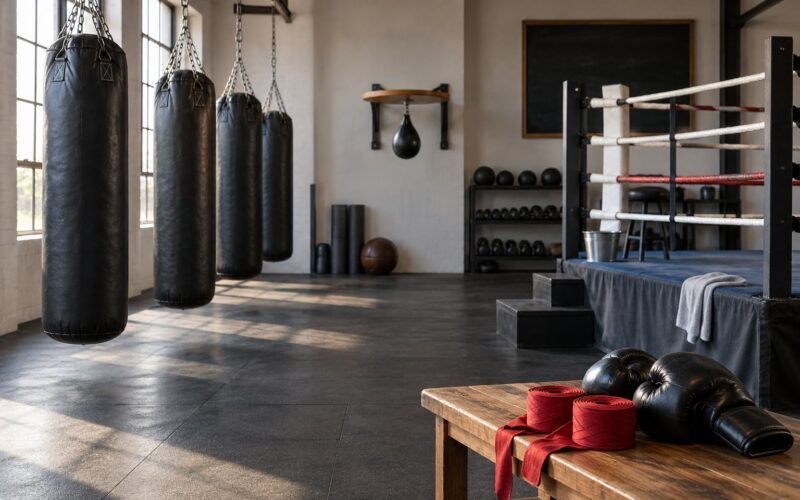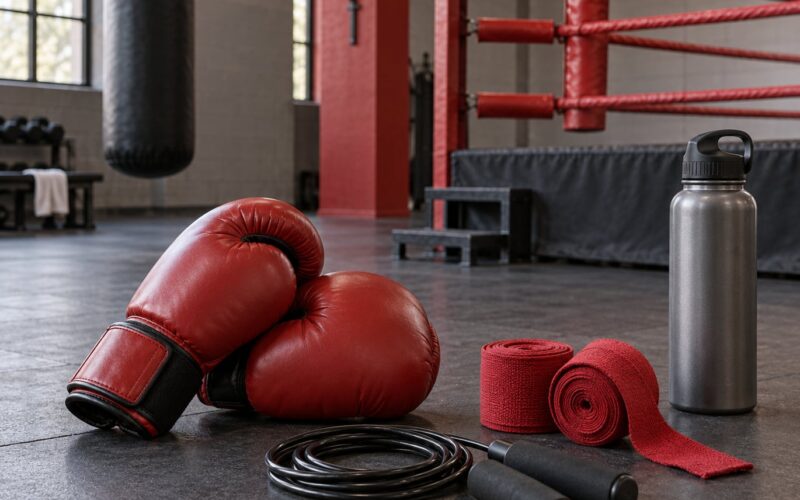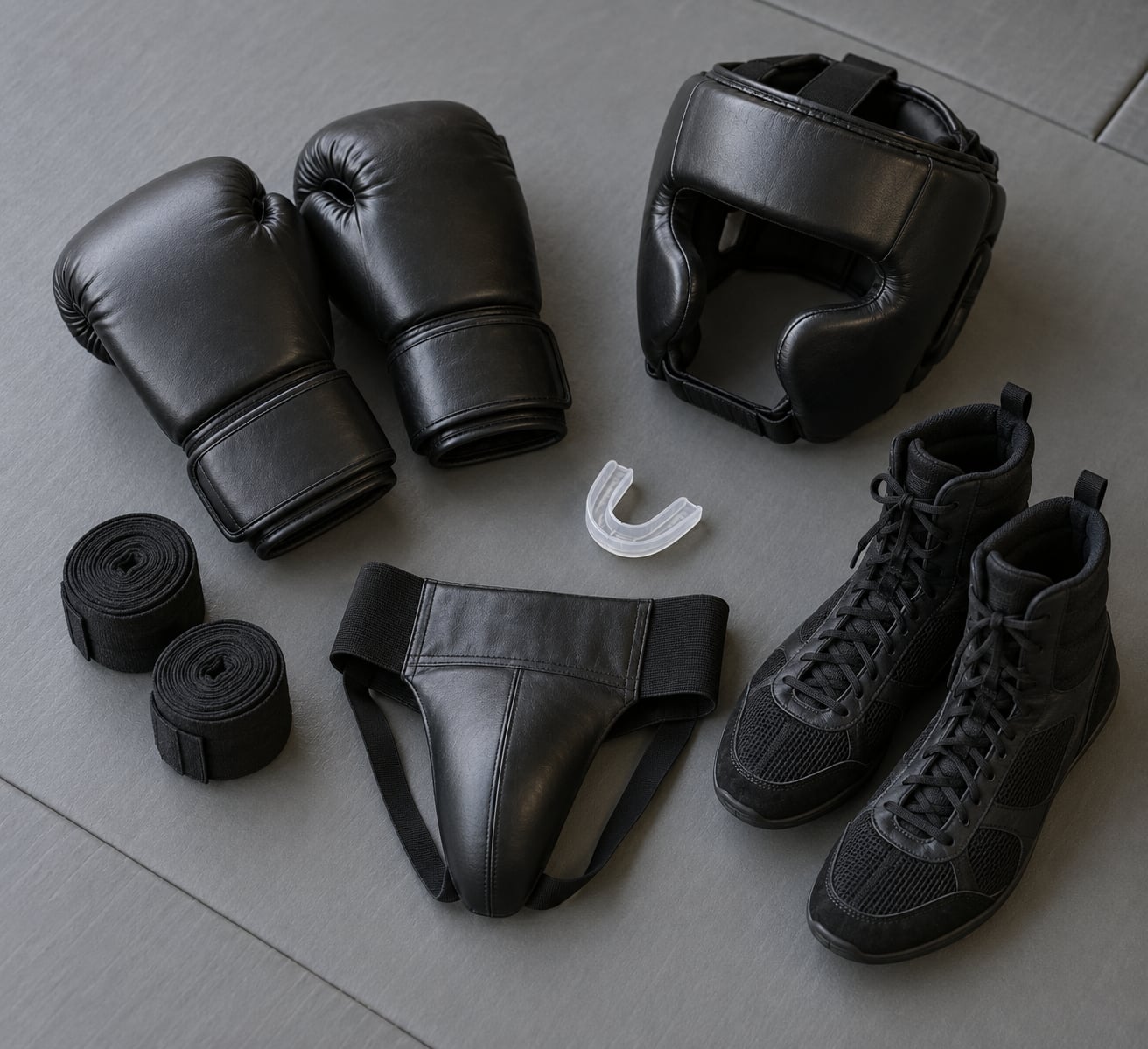
What sparring gear you need comes down to six pieces: boxing sparring gloves, hand wraps, a fitted mouthguard, a headguard, a secure groin protector and boxing shoes. Add a waistband or athletic cup underneath the protector, and a change of clothes. Everything beyond that depends on your gym’s rules, your contact level and how hard you get hit.
I’ve watched plenty of people over-prepare for their first round, buying a full rack of pads and body armour for one light technical session. That’s money and time you don’t need. Start with the core six, get the fit right, and add protection only when a coach asks for it.
Table of Contents
- What Sparring Gear Do You Need?
- How to Choose Sparring Gloves
- Choosing a Headguard for Sparring
- Mouthguards, Groin Protectors and Other Key Protection
- Hand Wraps and Boxing Shoes
- Clothing and Hygiene for Shared Sparring Gear
- A Checklist by Experience Level
- Frequently Asked Questions
- What essential gear do I need for my first boxing sparring session?
- Is a headguard mandatory for sparring?
- What size sparring gloves should a beginner use?
- Should I wear my own mouthguard and groin protector?
- How should I clean and maintain shared sparring equipment?
- What warning signs mean I should stop sparring?
- Bottom Line
What Sparring Gear Do You Need?
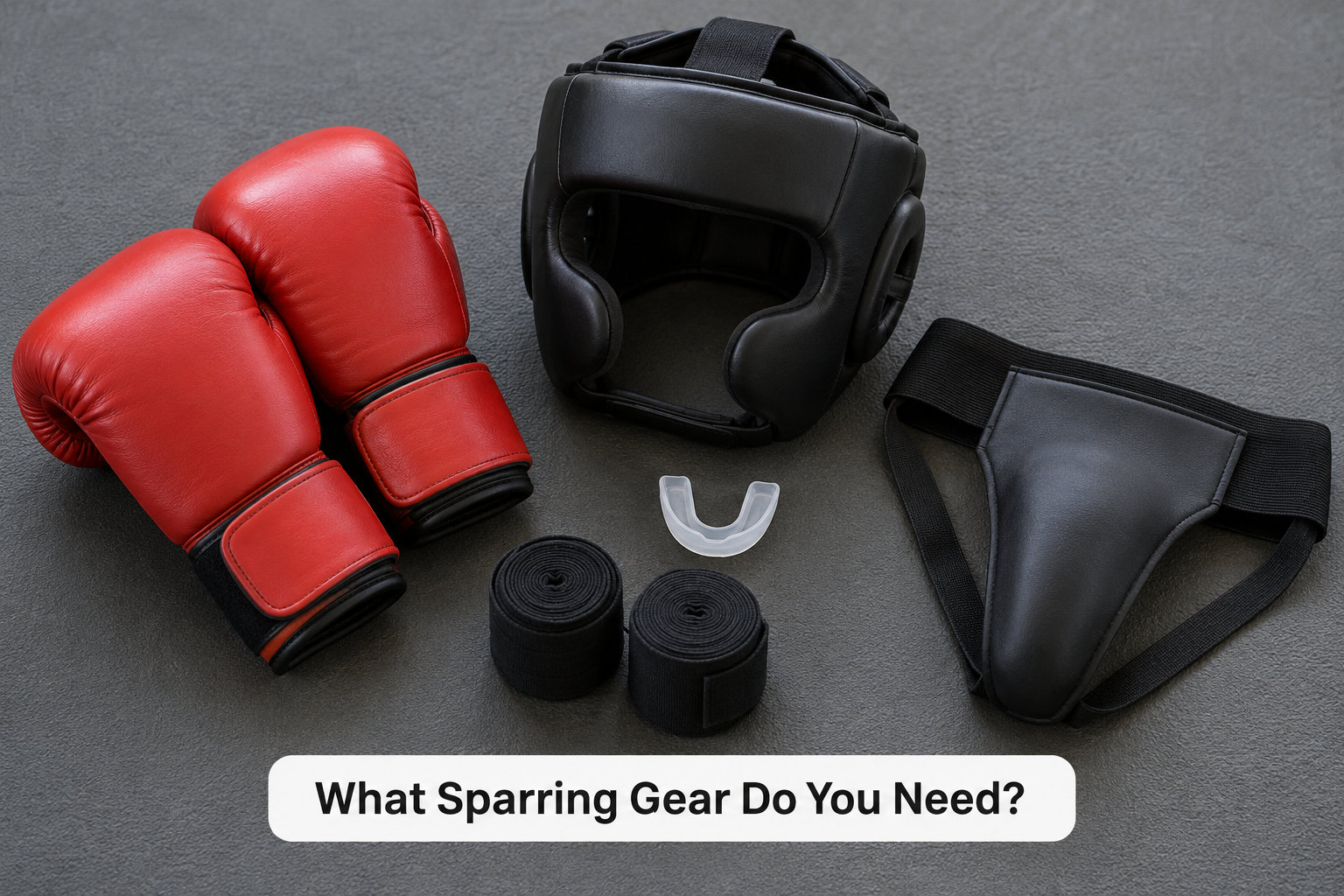
The core kit is short, and every item on it solves one specific problem.
- Sparring gloves — sized heavier than your bag gloves, usually 14oz to 16oz, so you don’t split your partner’s knuckles.
- Hand wraps — worn under the gloves to bind the knuckles and support the wrist.
- Mouthguard — fitted to your teeth, never a generic boil-and-bite from a vending machine.
- Headguard — a padded open-face or full-face style that your gym requires for contact work.
- Groin protector — worn over an athletic cup or waistband, not against bare skin.
- Boxing shoes — high ankle support and a flat, grippy sole for pivoting on the canvas.
Chest protectors, forearm guards, elbow pads and shin guards sit in the optional column. They matter in kickboxing, taekwondo and MMA, and in amateur bouts where body shots are scored, but a boxing sparring round rarely needs them.
What you actually need shifts with three things: your experience, the intensity your gym runs, and its own rules. Many clubs will not let a beginner enter live rounds without a specific headguard model, and some require you to buy their branded wraps so they can check the weight.
How to Choose Sparring Gloves
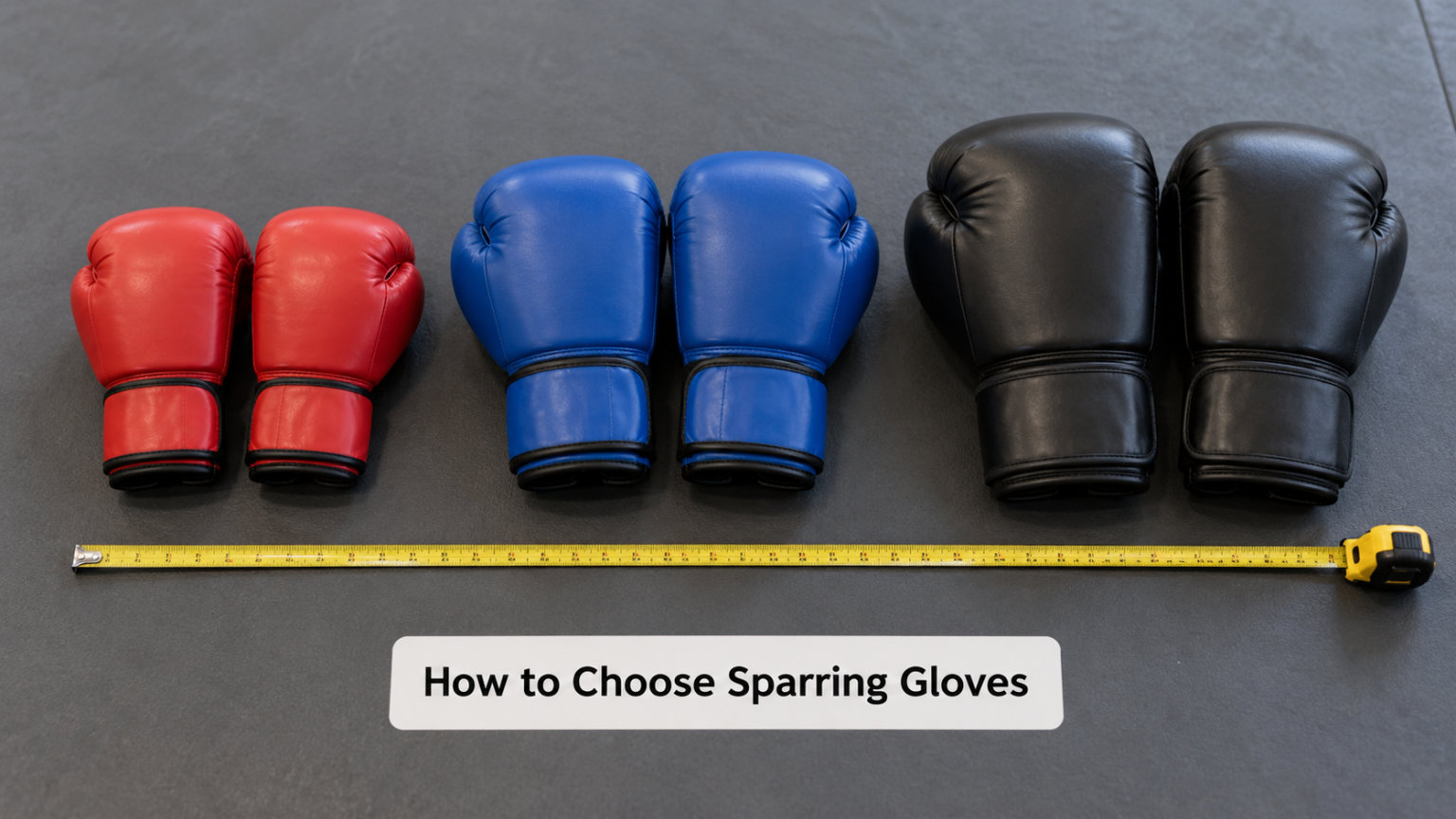
Three sizes cover almost everything, and the choice comes down to how hard the rounds run.
Bag gloves and 12oz training gloves for controlled technical rounds
These are the least protected option and the wrong choice for live sparring. A 12oz glove carries a thin knuckle pad, so a hard, honest shot lands as a broken hand on the other person’s face rather than a bruise. On r/amateur_boxing the repeated advice is the same: move up a size as soon as you can and stop hitting partners in 12oz gloves.
14oz and 16oz sparring gloves for general sessions
This is the workhorse range and the honest answer to what gloves are used for sparring. 14oz suits lighter fighters and technical gym rounds, while 16oz spreads the impact across a wider knuckle area and is the standard for heavier partners and harder sessions. Heavier boxers sometimes step up to 18oz.
Compact bag and competition-style gloves for the hardest rounds
Compact gloves put the padding right where the knuckles land, which feels more realistic and transfers well to competition, but they cut your hand protection noticeably. Fighters who have moved past beginner stage and train with hard partners often prefer them. A coach’s view beats any chart here.
What to check before you buy
Fit matters more than the label on the cuff. Put the glove on with your wraps already wound and shake your hand: the glove should not slide or twist when you flex. Then press the palm of your opposite hand into the knuckle area — if it feels like hitting a table rather than a cushion, the padding is too thin for what you plan to do.
Check the wrist support, which is a stiff panel that stiffens up over time, and the thumb attachment, which should be closed or properly laced so the thumb cannot roll outward on an impact. Lace-up gloves give a tighter, more stable fit, which is why many experienced fighters prefer them, though hook-and-loop is faster between rounds and easier for beginners. Look for ventilation in the palm and a smooth liner, because sweat inside a glove is what makes sessions miserable.
For fit, r/fightgear posters keep returning to the same point: comfort and durability beat brand prestige, and smaller fighters often struggle with adult-sized gear. Buy in your own size rather than settling for whatever fits the shelf.
Choosing a Headguard for Sparring
A headguard adds padding around the brow, temples, cheeks and chin. That padding softens glancing blows and reduces the chance of cuts, and it is why amateur and youth rules make it mandatory. It cannot make hard sparring safe, and anyone who tells you otherwise is selling you something.
Most studies on headgear and concussion have not found convincing evidence that it prevents concussions, because a strong hook rotates the head regardless of what sits on the skull. A headguard is a cut and impact-management tool, not a guarantee. If your gym runs hard sparring, the honest answer is to train more rounds with controlled contact rather than to gear up for head impacts.
Open-face versus full-face
Open-face headguards protect the brow and temples and leave the jaw and chin bare, which keeps your field of vision and airflow clear and lets you talk through combinations. Full-face guards add a cheek and chin bar that absorbs more on a clash of heads but narrows your sightline and gets hot fast. Boxers usually prefer open-face; kickboxing and youth rules often specify full-face.
Signs the fit is wrong
Good indicators: the guard does not shift when you shake your head or duck, you can see both of your sparring partner’s hands without turning your whole head, and the cheek pieces sit against your cheekbones rather than across your eyes. If it slides forward onto your brow or squeezes behind your ears, take it back. Fighters with long hair usually need a guard with a full back strap, since hair under the padding lifts the guard off the head.
Follow your gym’s rules over any online opinion. Some clubs run headguard-free hard rounds, some mandate a specific model, and a few will let you choose.
Mouthguards, Groin Protectors and Other Key Protection
A mouthguard should be fitted by a dentist, or be a properly sized boil-and-bite that you bite and hold in place until it sets to the shape of your teeth. It should sit over your upper teeth, stay put when you swallow and talk, and never be cut down at the front. A loose mouthguard is worse than none because it moves around during the impact it is meant to absorb.
For groin protection, most clubs require a cup inside a padded garment, which means a waistband, a jock short or a groin protector with a built-in pocket. It should sit high and tight against the body with no gap at the front. On r/Kickboxing the consensus is firm: a steel cup is the version worth owning, and fighters report that partners stop aiming low once they have been caught once.
Forearm and elbow guards reduce the sting of blocked kicks and cuts on an accidental head clash. Chest protectors absorb body shots and are standard in taekwondo hogu, MMA sparring and some amateur competition. Check whether your ruleset requires inserts such as a mandatory cheek or chest pad before you buy them.
Do not share items that touch skin. Mouthguards, wraps and headgear that sits against sweat-soaked hair or skin should be personal, and any reusable item that has cracks, hardened foam or a flattened pad should be replaced rather than passed around.
Hand Wraps and Boxing Shoes
Wraps do not prevent knuckle injuries, but a correctly wound wrap binds the fingers and knuckles into one unit and supports the wrist so a hard impact passes through the whole hand instead of the joint. It also keeps glove liner sweat off your skin.
A simple wrapping sequence
Start with the loop end at the base of the thumb, palm down. Bring the wrap across the back of the hand and around the knuckles three times, each pass overlapping the last. Angle down to the thumb and circle the wrist once, then back up over the back of the hand. Circle the wrist again, then work around the little-finger side of the hand to the middle finger, and finish by making an X across the back of the hand. Spread the fingers, tuck the loose end, and check the tension: snug, never tight enough to change the colour of your fingers.
Wrap care
Wash wraps after every session in warm water with detergent and let them dry flat, never in a dryer or over a radiator. Dried-out, stiff wraps lose their stretch and stop supporting anything. Rotate pairs so one is always dry, and replace them once they fray or stop holding tension.
Boxing shoes matter for footwork because you pivot, push off and slide constantly. Look for a high ankle that locks the heel in place, a firm flat sole that keeps you stable rather than rolling, a grippy outsole for traction on the canvas or mats, and a low, lightweight build that leaves your ankles free to move. A flat, non-marking sole also matters for gym etiquette. Any shoe can work at first, so borrow the gym’s sparring shoes for one session to see whether the difference is real for you.
Clothing and Hygiene for Shared Sparring Gear
Wear clothing you can move in and that wicks sweat: a fitted shirt or vest, breathable shorts or trunks, and compression shorts underneath if your club asks for them. Bring clean socks, a towel and a full change of layers, then shower and change straight after. Ring gear and shared headguards should be wiped down with the club’s own product between sessions.
For your own items, follow the manufacturer’s cleaning instructions rather than guessing. Foam headguards and mouthguards are hand-washed in cool water and air-dried, never soaked in hot water or a steriliser that can warp the shell. Airing sparring gloves overnight with the wrist cuff open keeps dampness out, and a washable glove bag makes the difference if you train several times a week. Do not compress foam headguards at the bottom of a gym bag, since dipped foam and EVA crack under that kind of pressure.
Check your skin before training and cover any open cut. If you notice persistent headaches, dizziness, confusion, nausea, unusual tiredness, ringing in your ears or sensitivity to light and noise after a session, stop sparring and speak to a doctor or physiotherapist. The same goes for a tooth that feels loose, a jaw that aches when you open it, or a rash that appeared after sharing gear. This article is general information, not medical advice.
A Checklist by Experience Level
What sparring gear you need as a beginner
Sparring gloves in the club’s required weight, your own hand wraps, a fitted mouthguard, the specific headguard your gym names, a groin protector with an athletic cup, and boxing shoes if you own them. Ask the coach before you buy anything. A lot of first-round nerves come from turning up with gear the club will not let you use, and many clubs let beginners borrow a house headguard for the first few sessions.
Your coach will probably also start you on light contact, which means slower shots and no full-power rounds. That is the phase where headgear and shin guards matter least, so it is not the moment to spend.
Regular club boxers
Everything above, plus a second pair of gloves so a torn liner or a soaking does not end your session, a mouthguard case so the guard is not left on a windowsill, and shin guards or forearm guards if your gym runs kickboxing rounds alongside boxing. The same members are shared, so at this level hygiene is the real upgrade: a washable glove bag and a routine for airing equipment between sessions.
Experienced competitive boxers
Your own gloves in the weight your coach selects, competition-fit headgear for amateur scoring, a dentist-fitted mouthguard, sparring shin guards for rounds that include kicks, and two full sets so you can rotate and keep everything dry. This is the level where fit, not price, decides everything. Fighters here are usually buying the same brand in their own size after outgrowing kit fitted for someone else.
Whatever your level, ask the gym three questions before spending: which headguard do you require, which glove weight do you spar in, and do you supply your own wraps. Those three answers narrow the list faster than any product page.
Frequently Asked Questions
What essential gear do I need for my first boxing sparring session?
Six items cover it: sparring gloves in the weight your gym uses, hand wraps, a fitted mouthguard, the headguard your club requires, a groin protector worn over an athletic cup, and boxing shoes. Bring clean socks, a towel and a change of clothes as well. Ask the coach about the required headguard and glove weight before you buy anything, and expect to borrow house gear for the first few sessions.
Is a headguard mandatory for sparring?
It depends entirely on your gym and your level. Youth classes, amateur competitions and most club sparring require one, and many clubs mandate a specific model. Hard sparring for experienced fighters sometimes runs without headgear. A headguard reduces cuts and softens glancing blows, but it does not make head impacts safe and research has not shown that it prevents concussions.
What size sparring gloves should a beginner use?
Most beginners should use 14oz or 16oz sparring gloves, which is heavier than the 12oz bag gloves you may have started on. Heavier fighters and harder sessions often move to 16oz or 18oz. Do not spar in 12oz gloves, because the thin knuckle pad transfers sharp impact to your partner’s face. Lace them over your wraps and check the fit with a coach before your first round.
Should I wear my own mouthguard and groin protector?
Yes, both should be personal items. A mouthguard should be fitted by a dentist or be a correctly sized boil-and-bite moulded to your teeth, and a groin protector should be worn high and tight over an athletic cup or waistband. Sharing these items is unhygienic, and a loose mouthguard moves around during an impact. Many clubs require a specific brand, so check the rules first.
How should I clean and maintain shared sparring equipment?
Wipe down shared headguards and body protectors between sessions using the club’s own cleaning product, and keep your own gloves, wraps and mouthguard to yourself. Wash wraps in warm water with detergent after every session and dry them flat, never in a dryer. Hand-wash foam headguards and mouthguards in cool water and let them air-dry, and avoid compressing foam gear at the bottom of a gym bag because it cracks under pressure.
What warning signs mean I should stop sparring?
Stop training and get advice from a doctor or physiotherapist if you notice persistent or worsening headache, dizziness, confusion, nausea, unusual tiredness, ringing in your ears, or sensitivity to light and noise after a round. Dental pain, a loose tooth, a jaw that aches when you open it, or a rash that appeared after sharing gear all deserve attention too. Clear your coach that you are stopping the session.
Bottom Line
Answering what sparring gear you need is not a shopping list problem, it is a fit and rules problem. Gloves, wraps, a mouthguard, a headguard, a groin protector and shoes are the working set; everything else waits until a coach asks for it.
Before your first round, ask the gym three things, try every piece on with your wraps in place, and put a minute aside for the fit check. That is a short shopping list and an afternoon, and it prevents the two things that actually go wrong on a first session: gear that shifts and gloves that are too light for the person you are hitting.