Boxers refuel between rounds with a small, fast hit of carbohydrate, sips of water or a dilute electrolyte drink, and whatever the cutman applies to the face. It is not a meal and nobody is chewing a sandwich on the stool. Most of what a fighter swallows in the corner is glucose and sodium, picked because the stomach can move it fast and it will not sit heavy while the bell is about to ring.
The surprising part is how little of it there is. A professional corner will often hand over a few hundred millilitres of fluid and somewhere around 20 to 40 grams of carbohydrate per break, then stop. The rest of the work is done in the 24 hours before the fight, and the hours after the final bell.
I have watched this go wrong more often than it goes right, mostly because the break is treated as a chance to push something extra in. Get this topic clear first, then the detail matters less.
Table of Contents
- How Boxers Refuel Between Rounds
- What Do Boxers Eat Between Rounds?
- What Do Boxers Drink Between Rounds?
- Why Is There Only About One Minute to Refuel?
- How Do Cornermen Give a Boxer Energy?
- Does Refueling Change for 12-Round Fights?
- Does Weight Class or Diet Change the Corner Plan?
- Common Refueling Mistakes Boxers Should Avoid
- Frequently Asked Questions
- Conclusion: What to Do First
How Boxers Refuel Between Rounds
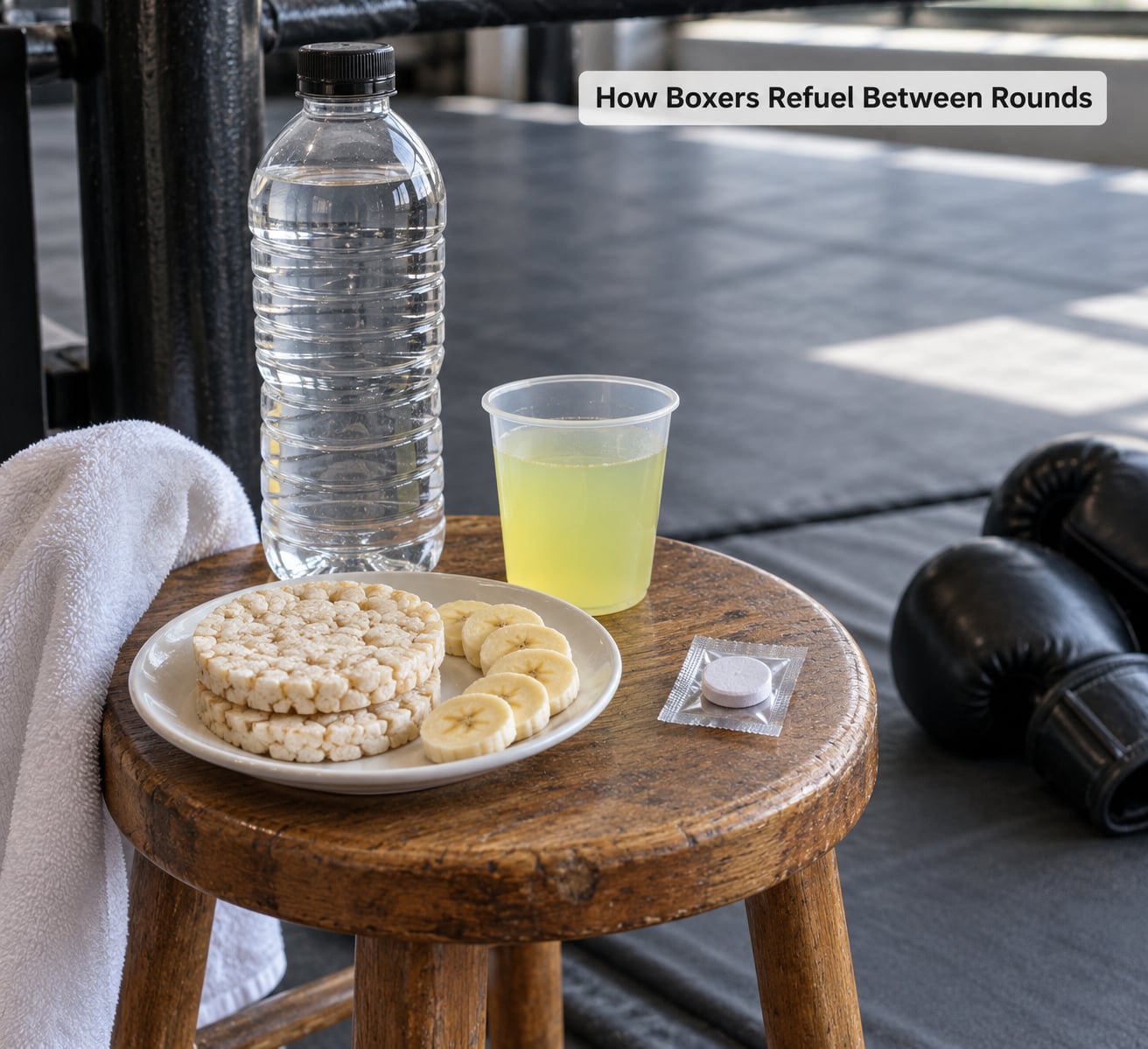
Boxers refuel between rounds by sipping water or a dilute carbohydrate drink, taking a measured amount of fast carbohydrate, and having sodium with it so the fluid stays in the body. A 60-second break is the whole window, so the routine is small, practiced and repeatable rather than generous.
There are two separate things happening, and fighters who confuse them tend to eat the wrong thing. Blood glucose rises quickly when you swallow simple carbohydrate, and that is the fuel that matters in the next three minutes. Muscle glycogen, the stored carbohydrate inside the muscle itself, takes hours to meaningfully refill. Nobody refills a muscle’s tank in a corner.
That is the honest answer to how boxers refuel between rounds: the corner is a top-up that slows the fade and clears the head, while the actual glycogen work is done days earlier.
What the body can actually take in 60 seconds
A stomach holds roughly one to two litres when full, and emptying into the small intestine happens at its own pace no matter how fast you swallow. What leaves the stomach quickly is water and simple sugar solution, because both pass without much mechanical work.
So the volume ceiling is real. Drink a litre in the break and a portion of it is still sitting in your gut when the bell goes, which is how fighters end up with gut cramps in round four rather than feeling better.
Gastric emptying also runs a little slower when the stomach is full of solids. A fighter who eats a whole sandwich and then tries to drink through it is stacking two slow processes into a sixty-second window and getting the worst of both.
What Do Boxers Eat Between Rounds?
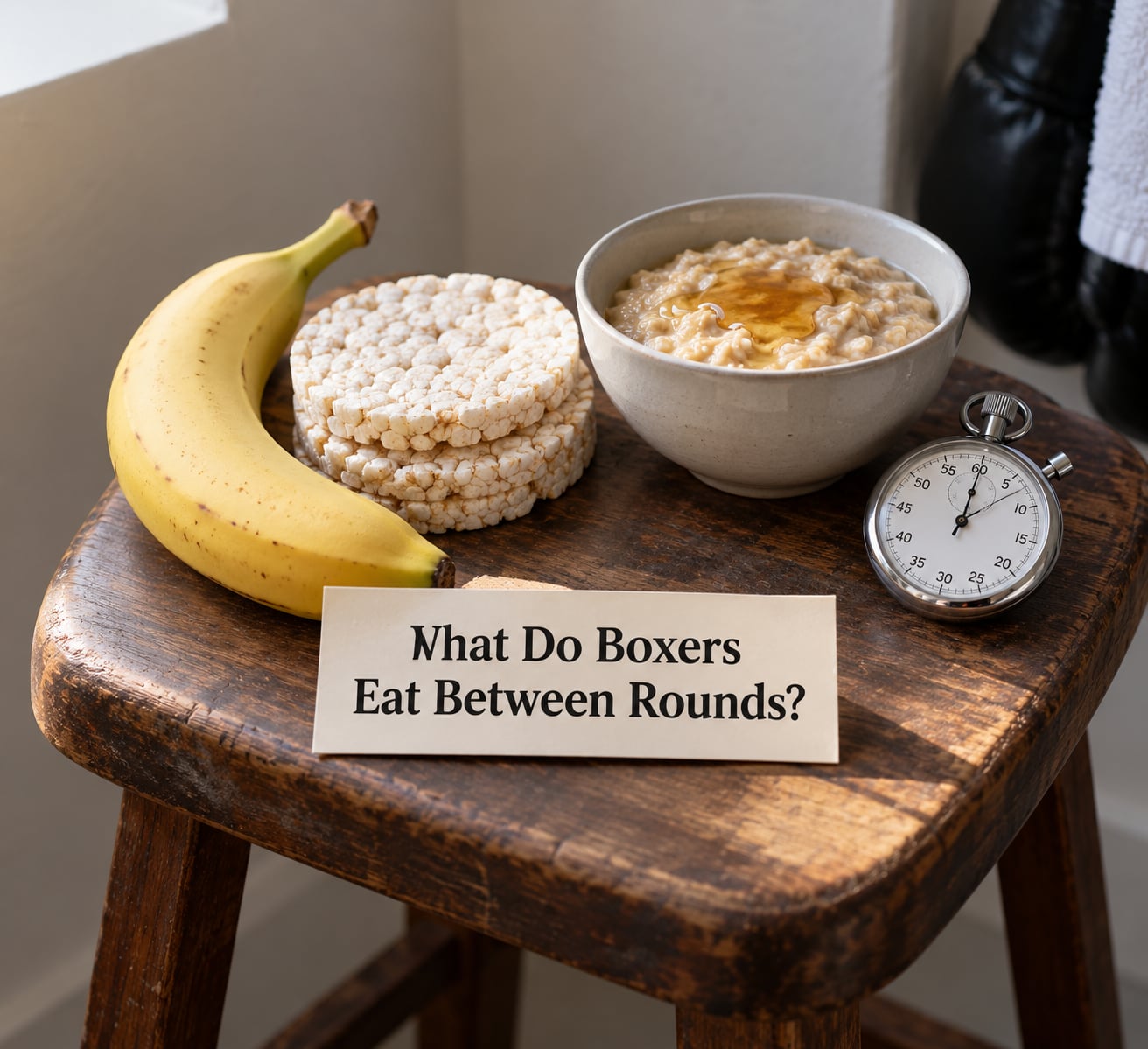
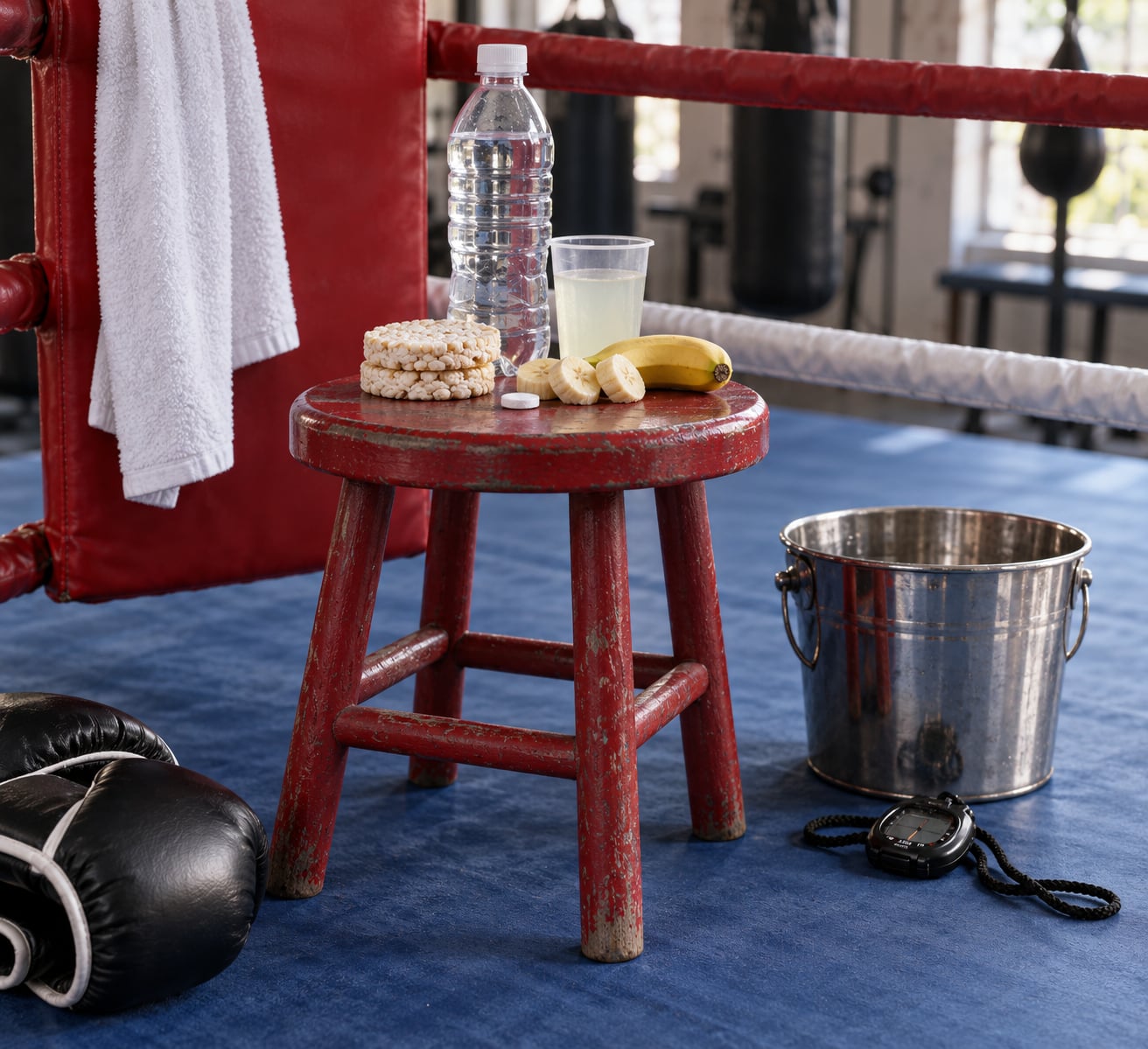
Quick carbohydrate, in a form that is easy to chew and easy to swallow. The list in a pro corner is short and boring on purpose: dilute fruit juice or a sports drink, jelly beans, a glucose gel, honey water, plain rice cakes, or a handful of banana slices.
None of that is exciting, and that is the point. Corners are not places for novelty, they are places for routine under pressure.
| What the corner gives you | Typical amount | Carbohydrate | Why it is there |
|---|---|---|---|
| Dilute sports drink or juice | 150 to 300 ml | 15 to 30 g | Glucose plus a little fluid in one swallow |
| Glucose gel | 1 sachet | 20 to 25 g | Dense carbohydrate, no chewing required |
| Jelly beans | 6 to 10 pieces | 15 to 25 g | Portable, dissolvable, no liquid volume |
| Honey water | 100 to 150 ml | 15 to 20 g | Gentle on the stomach, easy to sip |
| Rice cakes or banana | 1 to 2 pieces | 10 to 20 g | Something with a little bulk for a fighter who feels hollow |
| Electrolyte concentrate | 1 tablet or sachet | 0 g | Sodium, for fluid retention rather than fuel |
How boxers refuel between rounds without upsetting the gut
Anything with fat in it slows gastric emptying. Anything with fibre needs chewing and bulk. Both are fine meals and terrible corner items, which is why nobody in a professional corner is handing a fighter a granola bar between rounds even though the packaging suggests otherwise.
Protein is a separate question. It matters for recovery after the fight, not for the sixty seconds in the middle of one, and a fighter trying to get a large protein bolus down in the break usually just feels heavy.
The realistic ceiling for most fighters in one break is a couple of small items, chewed properly, taken with fluid rather than instead of it. If your corner plan needs four separate products to fit inside sixty seconds, it is a plan for the warm-up, not the fight.
What Do Boxers Drink Between Rounds?
Water first, then a dilute carbohydrate drink, then electrolyte concentrate when the fight is hot or the fighter is heavy. The choice depends on heat, round length, and how much the individual fighter tolerates, and that last part decides more outcomes than people expect.
The spit-rinse mechanics of the corner bottle
This is the question amateurs ask most and nobody answers properly. Fighters take the bottle, put water in their mouth around the mouthpiece, rinse, and spit into the bucket. That rinse clears the mouth, gets a moment of water and a gulp of air, and keeps the stomach from taking on volume it cannot use.
A good corner tracks how much of the bottle actually goes in versus how much goes in the bucket. Fighters who genuinely dehydrate drink and swallow; fighters who feel sick and bloated usually were rinsing and telling themselves they were drinking. Both are in the same 60 seconds.
When sports drink beats plain water
For a three-round amateur bout in a cool gym, plain water is enough and anything more is optional. A twelve-round fight in a hot venue is a different problem, because sweat losses carry sodium with them, and sodium is what pulls fluid back into the bloodstream instead of letting it dribble out.
That is also why the over-hydration story matters. Chugging plain water across a long fight without replacing sodium can leave a fighter with hyponatremia, where blood sodium drops. The symptoms are not thirst, they are nausea, confusion and a headache, and they are serious.
Concentration matters too. A full-strength sports drink is a lot of sugar to hand a fighter who is already heat-stressed and not moving much, and many corners dilute it. Fighters also report gut discomfort with concentrated mixes, so the strength that gets tolerated in a quiet gym can be the strength that causes problems under lights.
Why Is There Only About One Minute to Refuel?
Because sixty seconds is the break. Professional boxing gives one minute between rounds, amateur boxing in many federations does the same or slightly more, and everything that happens in the corner has to fit inside it along with the cutman, the coaching, the mouthpiece and the walk back to the corner.
What can be absorbed in that window is modest. Fluid and simple sugar move through quickly, but a meaningful share of even that stays in the stomach, and the muscle-side energy systems need far longer to restore anything. Fights are won and lost on the fuel that was loaded before the first bell, not on what happens in the break.
So fighters sip rather than gulp. A sip can be held in the mouth, rinsed around the mouthpiece, and either swallowed or spat, which is a controllable unit. A gulp cannot be reversed, and the fighter has no way of knowing how their gut will feel about it two rounds later.
A cornerman running a good corner is prioritising in a fixed order: fluid and sodium first, then a small amount of carbohydrate, then comfort, then the instructions. When the break is compressed or the fighter is in trouble, the carbohydrate is what gets cut, not the water.
How Do Cornermen Give a Boxer Energy?
A trained corner treats the sixty seconds as a fixed sequence rather than a conversation. The stool is positioned, the mouthpiece stays in or comes out depending on what the fighter needs to say, and the cutman works on the face while the second and coach handle fluid and food.
The 60-second corner protocol, second by second
- 0 to 10 seconds: the fighter sits, the cutman is already working on the face, and the mouthpiece comes out if the fighter needs to talk or breathe through the nose.
- 10 to 30 seconds: the bottle goes in. Rinse, spit, and swallow a controlled amount, with an electrolyte tablet or a dilute mix depending on the conditions.
- 30 to 50 seconds: carbohydrate. Jelly beans, a gel, or a few mouthfuls of the drink if the fighter is running empty. A cornerman watches the mouth for chewing and the face for signs of distress.
- 50 to 60 seconds: mouthpiece back in, one short instruction, stand up, walk out. No new ideas at this point.
The cutman is doing more than wiping blood. A fighter who has been taking shots in the face often breathes through the mouth and swallows blood and water, so clearing the nose and mouth matters for comfort in the next round as much as anything the corner gives him to drink.
Amateur corners look primitive next to that, and that is a resource problem rather than a knowledge problem. A stool, a bucket, one bottle and a cutman with a swab is enough to run the same protocol. Having no nutritionist does not excuse a corner from testing the routine in training.
Does Refueling Change for 12-Round Fights?
Yes, and mostly in the direction you would expect: more breaks, more total fluid, and more attention to sodium and gut comfort as the fight goes on.
Three rounds, six to eight rounds, twelve rounds
- Three-round amateur bouts: one or two breaks, water is usually enough, and a fighter who feels fine may take nothing at all. The main risk is drinking too much, because a single big volume in a short gap sits badly. Anything eaten should be liquid or near-liquid.
- Six to eight round contests: the routine becomes a habit rather than an event. Fluid with sodium from the first break onward, and a small carbohydrate item once the fighter reports the tank emptying. This is where a rehearsed routine starts to pay.
- Twelve-round title fights: the same sixty seconds, twelve times, which makes the cumulative volume a management problem. Corners work to a per-break target rather than an open bottle, watch the fighter’s weight and mouth temperature across the fight, and reduce solid food late because the gut gets slower under fatigue.
The late rounds of a twelve-round fight are not a refuelling problem so much as a pacing problem. Fuel delivered in round three is what pays in round nine, which is the argument most coaches make when a fighter fades early.
Fighters also change what they take as the night goes on, and not always for a physiological reason. A first-round routine that works can stop working when the fighter is behind on the cards and breathing through a swollen nose, so corners keep a backup option ready.
Does Weight Class or Diet Change the Corner Plan?
Weight changes the plan indirectly, through heat load and sweat rate, and diet changes it through what a fighter can tolerate rather than through any rule about the food itself.
A heavyweight rolling a much larger body over twelve rounds in a warm venue can be dealing with a serious fluid and sodium deficit, and their corner may put more emphasis on electrolytes and more total volume than a lightweight in the same building. A lightweight who has dehydrated for a weigh-in has a different problem entirely: their fluid needs are high, but their gut is fragile and they are trying to take in both food and fluid in a short window.
Fighters eating plant-based follow the same carbohydrate and electrolyte rules. The practical difference is that many plant-based products are higher in fibre, which is exactly the thing that slows gastric emptying, so the selection between rounds is narrower and more careful rather than different in principle.
Any of this needs individual testing. These are general principles from mainstream sports nutrition guidance, and the person who should be sizing them to a specific fighter is a registered dietitian or a sports nutrition professional, not a search engine.
Common Refueling Mistakes Boxers Should Avoid
- Chugging water in the break. The gut does not empty faster because the break is short, and a heavy stomach in round three is a real problem. Sip, and spit the rinse.
- Full-strength sports drink. Concentrated sugar in a fighter who is not moving much during a break is a common cause of gut discomfort. Dilute it, and cut the sugar in fights where the fighter tolerates plain water.
- Greasy or bulky food. Fat and fibre both delay gastric emptying. If it needs real chewing, it is not a corner item.
- Untested supplements. Commercial pre-workouts and energy drinks are the most common thing bought by amateurs and the most commonly regretted. Stimulants on top of fight-day adrenaline also mess with heart rate and the ability to read your own recovery.
- Swallowing without chewing. Gels and chewy items that go down whole can cause real problems in the throat and stomach. The old corner line about chewing and sucking on carbohydrate in the break exists for a reason.
- Ignoring warning signs. Nausea, cramping, dizziness or confusion in a break are not things to work through. Stop taking fluid, tell the corner and the doctor.
- Copying another fighter’s routine. What one boxer tolerates in a 12-round title fight may cause a different boxer to feel sick in a three-round club bout. Test it in training, at the same intensity, before you rely on it.
One more worth naming: the gut-cramp story. A fighter who feels heavy after a break usually drank too much or ate too much, and the instinct to fix it next time is to take less of everything. The better fix is to take a smaller volume more often, across more breaks, with sodium.
Frequently Asked Questions
How much water should a boxer drink between rounds?
Most fighters take somewhere between 150 and 300 ml per break, and plenty of that is a rinse rather than a swallow. In a three-round amateur bout in a cool gym, plain water is enough. For twelve rounds in a hot venue, the target rises and should include sodium, because sweat losses carry salt and fluid without it does not stay in the body. The right number depends on the fighter, the conditions and how much they sweat, so it is worth working out with a sports nutrition professional rather than guessing.
Should boxers chew gum or suck on carbohydrate products between rounds?
The traditional corner answer is chew a carbohydrate source slowly through the break, with the mouthpiece in or out depending on what the fighter needs. Chewing keeps the mouth busy, keeps the jaw relaxed and slows the intake so it arrives in stages rather than all at once. Fighters who cannot chew comfortably, or who have dental work or a recent cut in the mouth, get a gel or a drink instead. Sucking on a carbohydrate item is common too, and works for the same reason as chewing: small, repeated amounts.
What happens if a boxer cannot eat between rounds?
A missed break is survivable and fighters do it regularly. One missed break is not what ends a fight, because muscle glycogen takes hours to refill anyway and the blood glucose effect is short-lived. What matters more is fluid and sodium, so a fighter who cannot eat should still take a few mouthfuls of water with electrolytes. If the inability to eat is because of nausea, that is a different problem and worth mentioning to the doctor before it happens in the ring.
Are sports drinks better than water for every boxing fight?
No. For a three-round amateur bout in a cool room, water is plenty and a sports drink is optional at best. Sports drinks earn their place when the fight is long, the venue is hot and sweat losses are significant, because they bring glucose and sodium together. What they are not is a free upgrade. A full-strength mix is a lot of sugar to hand a fighter sitting in a corner, and many fighters report gut discomfort with it, so diluting or going sugar-free is a common professional choice.
Can a boxer change their between-round routine before a fight?
Not safely, and the answer is generally no. The between-round routine should be tested in training at real intensity, with the same products, the same volumes and the same timing, so that fight night is familiar. Last-minute changes are how fighters end up nauseated in a corner for the first time. If something genuinely needs to change, the safe route is a small adjustment agreed with the coach and a sports nutrition professional, and a repeat of the sparring test that confirmed the original plan.
Conclusion: What to Do First
Start small and familiar. Pick one carbohydrate item and one drink you tolerate, use them in every hard sparring round for a month, and write down how much you actually swallowed rather than how much you rinsed.
Then adjust with people who can see the whole picture: your cornerman, who knows what your face looks like at round six, and a registered dietitian or sports nutrition professional, who can size the volumes to your weight class, the room and the round count. Keep fluid and sodium steady, keep the carbohydrate modest, and never arrive at fight night with a routine you have not rehearsed.