To fight on the back foot in boxing, hold roughly 60% of your weight on your rear leg with your head sitting over that rear foot, staying just outside your opponent’s punching range so you can slip, angle and counter as they step in. It is a range game first and a counterpunching game second, and it takes a few weeks of honest pad work before it stops feeling awkward.
Key takeaways
- Weight: roughly 60% rear leg, 40% lead leg, head over the back foot, chin tucked behind the lead shoulder.
- Range: live on the edge of their effective range, never deep inside it, so their best punch is always the one that misses.
- Movement: angle and pivot off the rear foot rather than stepping straight backward, which is where most beginners get caught.
- Counter: slip, land one compact shot off the loaded rear leg, then reset to the same balanced position.
The front foot versus the back foot is a choice about who controls the distance. Going forward, you hunt for your own range and win by pressing the action; going backward, you hold your opponent on the end of their range and win by making them miss. Plenty of elite fighters use both, which is why the useful question is not which one is better but which one fits tonight’s opponent.
| What you are doing | Front foot pressure | Back foot counterpunching |
|---|---|---|
| Weight split | Around 55% lead leg | Around 60% rear leg |
| Best range | Inside, shoulder to shoulder | At the edge, just out of reach |
| Energy cost | High, you drive forward the whole round | Lower, but constant small steps burn the legs |
| Shot output | Often three or four punches per exchange | Usually one, occasionally two |
| Main risk | Walking onto counters and getting flattened | Drifting to the ropes and losing the round |
| Suits you when | You are the better fighter with the better engine | You are smaller, slower, or facing a pressure fighter |
Table of Contents
- What You Need
- Step-by-Step
- 1. Adopt a stance that lets you move backward
- 2. Control the distance before you retreat
- 3. Block without freezing your guard
- 4. Use angles instead of running straight back
- 5. Counter as you move off the back foot
- 6. Build a repeatable backpedal-and-counter pattern
- 7. Stay busy while you create space
- 8. Reset after every exchange
- Common Mistakes
- Frequently Asked Questions
- What does it mean to fight on the back foot in boxing?
- Is fighting on the back foot a good strategy for beginners?
- How do I stop backing up when an opponent pressures me?
- What is the best counter when fighting on the back foot?
- How do I slip punches while moving backward?
- How can I practise fighting on the back foot safely?
- Conclusion
What You Need
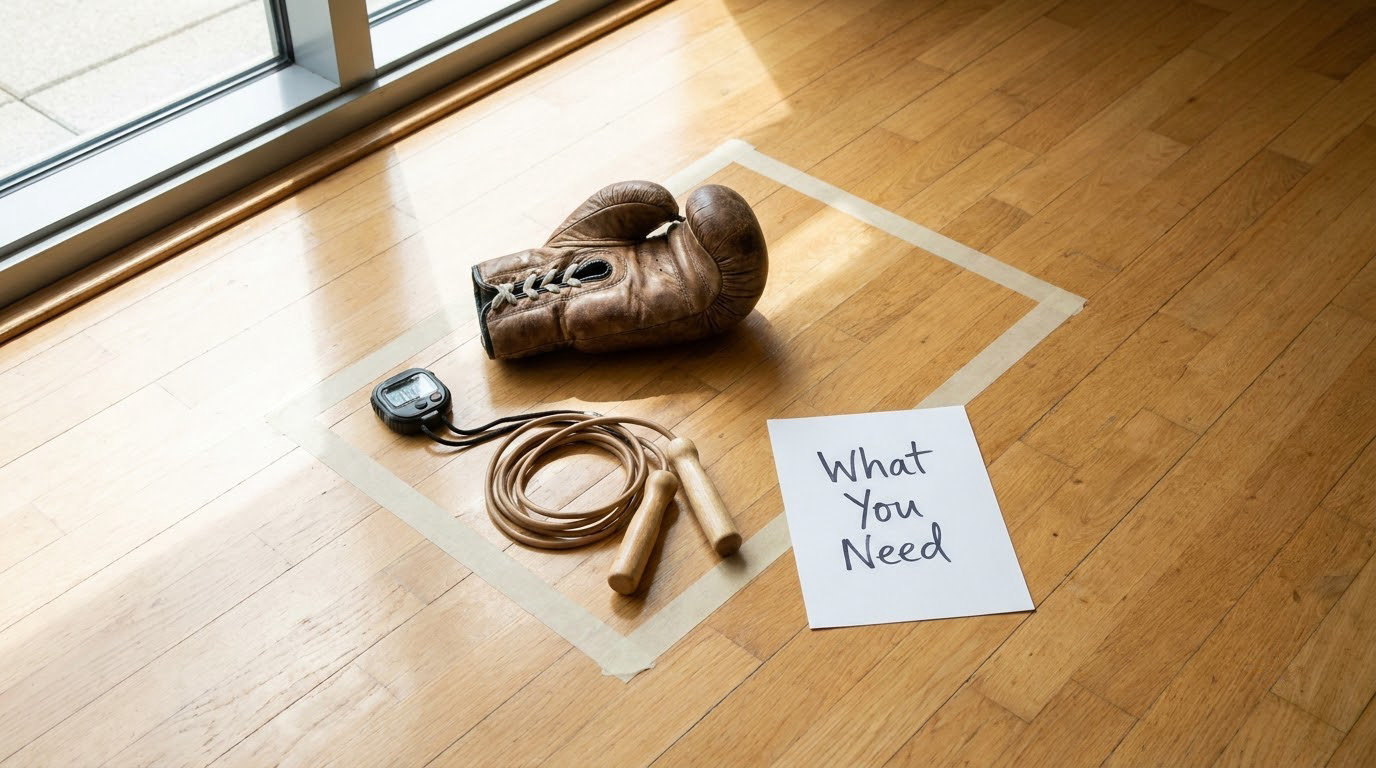
You need a stance you can move out of, not a new stance. If your lead foot is already in a good spot, back foot fighting is a set of habits layered on top of it: knees soft, weight biased rearward, chin behind the lead shoulder, hands high enough to see your opponent’s chest.
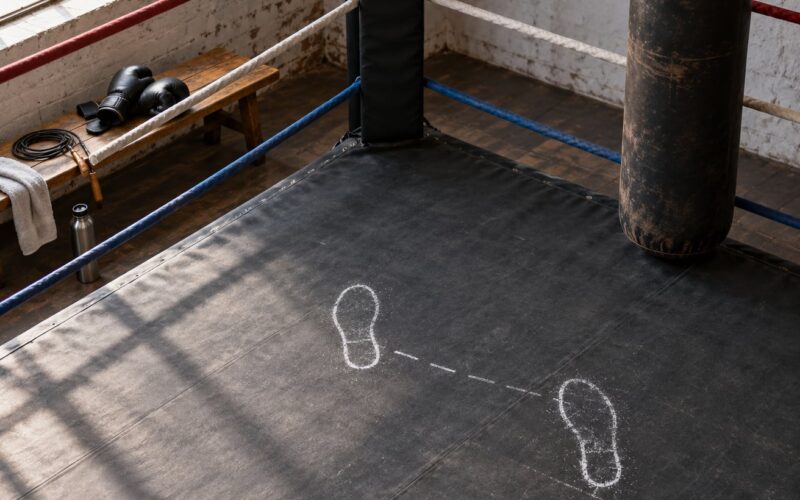
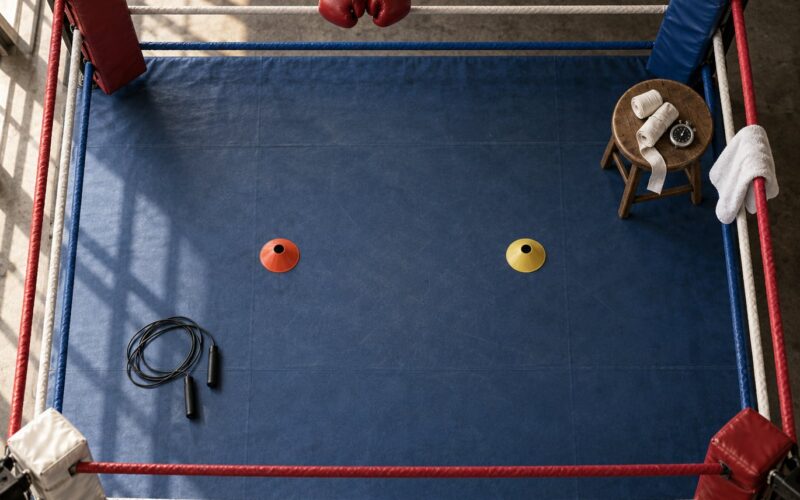
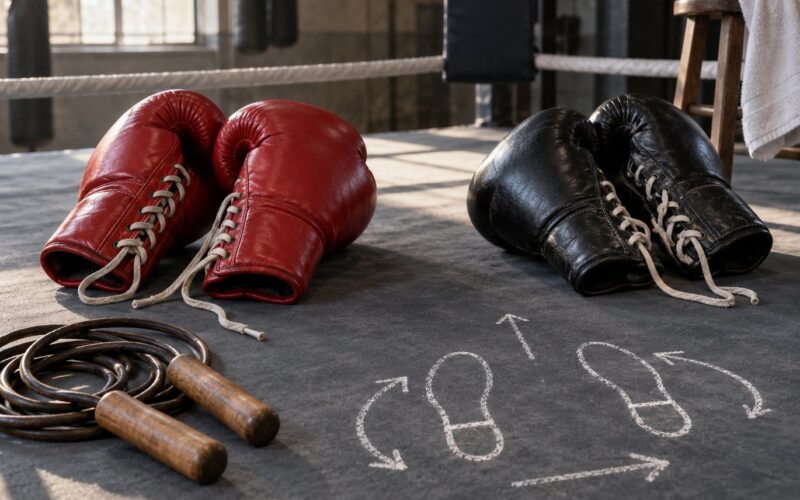
A pair of gloves and wraps are enough to start, and a jump rope handles the foot conditioning. Three metres of floor with your lead foot marked by a strip of tape gives you something to measure distance against. You want open floor, not a mirror you have to look at.
Then decide who is in the room. Solo shadowboxing teaches the shape of the movement. Pads teach the timing, and a coach watching from behind you catches the weight problem faster than you ever will from the front. Sparring is where it gets tested, and that comes last.
Be clear about what this is not. Back foot boxing is not running, and it is not a way to survive being outboxed by panicking. The version that works is technical: small steps, angles, and one clean counter at a time.
Step-by-Step
1. Adopt a stance that lets you move backward
Start in your normal orthodox or southpaw stance and shift your weight until about 60% sits on the rear leg. Your head should be over that rear foot, not hanging out past your gloves, and your lead foot stays light enough to move without loading it.
The coaching cue is “chin behind the shoulder”. The usual error is leaning back from the waist, which puts your weight on your heels and leaves nothing to push off. You know it is working when you can step backward two metres, shadowbox, and come forward again without your feet crossing.
2. Control the distance before you retreat
Back foot fighting is range management with punches attached, not a retreat. Extend a double jab, take one step back, then jab again. You are telling your opponent the space is closed, and you are still landing while you say it.
Coaches say “jab, move, jab”. The common error is backing up the instant they enter, which hands them the ring for free. If your opponent has to step twice to land anything, the distance is yours.
3. Block without freezing your guard
Four defensive tools work here: the slip, the roll, the parry and the high shell. Use the shell when a hook is coming and the slip when a straight shot is already past your chin. What matters is that the hands return to the face immediately afterwards.
The cue is “defend, then re-cover”. Holding a static cover with no elbow position is the usual mistake, and it is also how body shots get in. You know it worked when you can slip a jab, be back in stance, and fire within a second.
4. Use angles instead of running straight back
Moving straight backward is what gets you countered, and it is the single most common fault in this style. Instead, step back at roughly 45 degrees off your lead foot, or pivot your rear foot 90 degrees as they miss. You keep your exit route, they have to adjust, and you open the angle a counter comes from.
The cue is “turn, don’t retreat”. If you land at a new angle and your opponent has to chase, the angle is working. If you finish square in front of them, you moved sideways without escaping anything.
5. Counter as you move off the back foot
The counter is the whole point. Straight counter off the slip, rear cross when they step in with the jab, lead hook to the body when they shell up high, short uppercut when they crowd you. Keep it compact: rotate the hips, do not wind up, and let the rear leg supply the power.
Community consensus on r/amateur_boxing is that if you slip too far out of range you cannot counter at all, even when the punch misses wide. So slip a few inches and fire, not a foot away. One clean counter beats three wild ones.
6. Build a repeatable backpedal-and-counter pattern
Drill it as one unit: jab, step back, evade, counter, reset. Against an aggressive jabber, emphasize the parry into the rear counter. Against a pressure fighter who wants to swing, emphasize the roll under into the lead hook to the body. Against a southpaw, expect the rear straight and shift your angle away from the lead foot’s line.
Coaches call it a pattern: entry, exit, shot. If you can do the pattern without thinking, you can do it against a person who is trying to hit you.
7. Stay busy while you create space
Standing still and waiting wastes your legs. Keep the lead hand alive with jabs and feints, change your level, vary the shoulder rhythm, and touch the body between the high shots. A busy opponent has fewer ideas, and a feint at head height often draws the head shot you want to slip.
The mistake is overworking: throwing out of range with nothing behind it. Activity stops the moment you plant your feet to swing, and then your hands drop. Keep the hands busy, keep the feet moving.
8. Reset after every exchange
This is the habit that separates good back foot fighters from people who get trapped on the ropes. After you counter, bring the guard back up, re-establish the stance with a small step, restore the distance, and start with the jab or a feint. Reset means hands, feet, distance, in that order.
You know it worked when your opponent walks forward and you are already jabbing at the reset instead of scrambling. A successful defence should end with an invitation, not a scramble.
Common Mistakes
Backing up with both feet at once. You lose balance and cannot angle or counter. Fix it by pushing off the lead foot first and dragging the rear foot after. Drill three backpedal steps holding a mirror-facing posture.
Sitting on your back heel. Your upper body drifts upright and forward, which is exactly where a counter punch goes. Fix it by checking that you can only see your opponent over your lead glove. Shadowbox with a partner calling out “heel” whenever it happens.
Dropping the guard while retreating. It feels natural to relax when you sit back, and it is an invitation to the body. Beginners on r/MMA_Academy ask about this constantly. Fix it by fixing your gaze on the chest, not the eyes, and keeping the gloves touching your cheekbones.
Giving up the centre. Backward movement is fine in short bursts, but a full half-ring retreat means you are being pushed the whole way. Fix it by moving at an angle so you are never walking in a straight line, and by jabbing on every step.
Panic defence. Throwing a flurry with no plan while moving back. Fix it by choosing one shot: the counter you land or the shot you were going to land. Panic defence also raises the guard but drops the elbows, which is how body hooks arrive.
Overcommitting to counters. Punching until you are on the front foot, then getting caught on the way out. Fix it by firing one punch and resetting immediately.
Standing up tall. Height is useful on the back foot, but you still need soft knees. Fix it by pretending your opponent is slightly taller than they are and bending until they sit just below your chin.
Drifting into the ropes. Fix it by taking an angle every time you step back, so your exit line runs along the ring rather than into the corner. When your back hits the canvas, stop retreating and start pivoting.
Frequently Asked Questions
What does it mean to fight on the back foot in boxing?
It means holding roughly 60% of your weight on your rear leg with your head over that back foot, living at the edge of your opponent’s punching range. You give ground in short, angled steps, slip or roll their shots, counter off the loaded rear leg, then reset. It is a range and timing style, not a running style.
Is fighting on the back foot a good strategy for beginners?
Learn the mechanics of it early, because it teaches distance, defense and counters that help everywhere else. Just do not make it your whole style in the first year. Most beginners cannot keep the shape under pressure yet, so they end up retreating without countering or slipping. Shadowbox and pad the pattern before you take it into sparring.
How do I stop backing up when an opponent pressures me?
Jab before you move, and angle every step so you are not walking straight backward. Their pressure only works if they keep you walking in a straight line into the ropes. Slips and rolls let you move without giving up position, and a short counter after each one makes them hesitate. If you end up on the ropes, pivot off and reset.
What is the best counter when fighting on the back foot?
It depends on what they throw. Straight counter off a jab slip, rear cross off their step-in, lead hook to the body against a high shell, and a short uppercut when they crowd you. The best counter for a beginner is the straight one, because it can be fired from almost any defensive position without a big weight transfer.
How do I slip punches while moving backward?
Slip a few inches, not a foot. If you move out of range entirely you cannot counter, and you end up on flat feet. Keep your weight on the rear leg, pivot it as they miss, and bring the counter up as the head passes your shoulder. Rolling under works better against hooks and hooks thrown on the run.
How can I practise fighting on the back foot safely?
Work in three stages. Shadowbox first, three rounds of two minutes, focusing on shape and steps without any resistance. Then do pads with a coach calling for the pattern: jab, step back, evade, counter, reset, ten rounds of two minutes. Light sparring comes last, where the angle and the counter are the only things you work on.
Conclusion
The first thing to practise is not the counter, it is the position: weight on the rear leg, head over the back foot, chin behind the lead shoulder, hands high and eyes on the chest. Everything else, the angles, the slips, the one punch you land on the way out, depends on that position holding up under pressure.
Start with three two-minute rounds of shadowboxing and nothing else. Add the jab, move, jab rhythm, then layer the evade-and-counter pattern on pads. Take it into light sparring only once the pattern survives a tired third round, and keep the reset as the priority, because that is the habit that decides whether you are fighting on the back foot or simply running away from your opponent.