If you want to know how to find boxing fight schedules you can actually trust, use a dedicated combat-sports database for the shape of the card, then confirm the date, venue and broadcaster on the promoter’s own page before you plan your night. Most bad boxing schedules come from checking one source once and never again.
Cards move. A bout gets pulled for an injury, an opponent fails to make weight, the whole card shifts a week, or the broadcast jumps to a different service in your region. What you read in a search result from eight months ago is a snapshot, not a schedule. The method below is the routine I use, and it takes about a minute once you’ve done it a few times.
Last updated in 2026. Fight listings change constantly, so check the two closest sources to fight night rather than trusting a saved page.
Table of Contents
- What You Need
- Step-by-Step
- How to Find Boxing Fight Schedules on official boxing websites
- 1. Start with the promoter or sanctioning body
- 2. Check venue and broadcaster listings
- 3. Use a boxing calendar search
- 4. Filter for the fights and cards you follow
- 5. Confirm the date, venue, and broadcast details
- 6. Save events to a personal calendar
- 7. Recheck close to fight night
- Common Mistakes
- Frequently Asked Questions
What You Need
A phone or laptop and a reliable connection are the obvious starting point. The less obvious preparation is deciding what you actually want to track, because that changes which source you should trust.
Before you start, work out your region and your time zone. Most American schedule pages list times in ET, and a Saturday night main event can land after midnight on Sunday in the UK and the following afternoon in Australia. Knowing your own zone in advance saves the conversion work later.
It also helps to decide whether you are chasing marquee pay-per-view cards, a specific boxer’s next bout, or the small-hall shows happening twenty minutes from your house. Big cards are covered everywhere. Regional cards are not.
Two other useful things: a note on the promoters, broadcasters or fighters you follow, and a calendar app with reminders switched on. That’s it. No special account or subscription is required for the basic method.
Step-by-Step
The order matters. Start broad to get the shape of the week, confirm with an official source, then narrow down to the fights you care about, and finish by saving and rechecking. Seven steps, and the first two do most of the work.
How to Find Boxing Fight Schedules on official boxing websites
Official boxing websites are where you confirm, not where you discover. Promoters, sanctioning bodies, venues, broadcasters and state commissions each publish their own listings, and between them they cover everything from PPV main events to club shows. Use them as the layer that verifies a date rather than the layer that discovers one.
Every listing should give you the date, the venue and city, the full card with weight classes and scheduled rounds, the title stipulation if there is one, the broadcaster for your region, and a start time with the zone stated. If a page gives you a date but no time zone, treat the time as unconfirmed until you find it somewhere that names the zone.
1. Start with the promoter or sanctioning body
Begin by identifying who is behind the fight. Every promoted event belongs to a promoter or an organizing entity, and their events page is the first word on any bout, not the last word. Major promoters maintain a public schedule where fights are announced before any aggregator picks them up.
Sanctioning organizations publish the fights they sanction along with their rankings, so if the bout is for a title you can usually confirm the matchup from their listings too. For bouts that fall outside the major bodies, state athletic commissions issue event licenses, and a commission’s public records will often show an event’s status even after a promoter has quietly dropped a fight from its own page.
Once you know which promoter is involved, open their official events or schedule page rather than searching again. It’s faster and it’s the version other outlets copy from.
2. Check venue and broadcaster listings
Arenas and broadcast partners publish their own calendars, and those are unusually reliable for the practical details. The venue’s site will confirm the date, doors time, first bout time and sometimes the capacity-limited ticketing arrangement for a big fight.
The broadcaster or streaming service matters just as much. Networks list their upcoming boxing in a schedule of their own, which tells you which service carries the card and in which territories. This is the fastest answer to the question people ask most: where do I watch this in my country? Rights differ by region, so a card on DAZN in the UK can sit on a completely different platform in the United States.
When a promoter changes an undercard but keeps the main event, the venue and broadcaster pages often keep the original date and get updated late. Promoter, venue and broadcaster agreeing is a good sign. Any one of them disagreeing with the other two is your cue to check further.
3. Use a boxing calendar search
Search terms like upcoming boxing schedule, boxing events this month, boxing fight schedule tonight and title fight schedule return different sets of results, which is why rotating them is worth the extra ten seconds. Adding a region, a broadcaster name or a weight class turns a noisy general page into a usable one.
Combat-sports databases such as Tapology and Box.Live are built for browsing rather than reading, and they cover international and regional bouts that news pages skip. Filter by date range first, then narrow by weight class, promotion or country, and read the bout list rather than the headline.
Filtering by event status matters more than people expect. A search result that lumps announced, rescheduled and completed fights into one list is showing you history, not a schedule. Look for the filter that separates upcoming from past.
4. Filter for the fights and cards you follow
Once a source gives you a workable list, narrow it to your interests. Search a fighter’s name inside the calendar to see everything booked for them, which usually surfaces their next bout months before it is officially announced. Add the weight class or the promoter if you only follow certain divisions.
Regional and small-hall boxing needs a different approach. National broadcast pages will not list a Friday night card at a civic hall, so go to the venue, the local promoter, amateur boxing bodies, or the promotion’s own social account. Community threads on r/amateur_boxing and r/Boxing are often the only place a local show appears at all, which is worth knowing before you spend an evening hunting for one.
Filtering by broadcaster works well too. If you subscribe to one streaming service, narrow every card to that service and you have cut the schedule down to the events you can actually watch.
5. Confirm the date, venue, and broadcast details
Never trust one listing. When two independent sources disagree on a date, the promoter and the venue settle it. If those two agree and an aggregator disagrees, the aggregator is usually behind, not ahead.
Get the time zone right before you plan anything. The advertised start time is the first bout of the card, and the main event on a full card typically lands three to four hours later. If a bout sheet or order of bout is published in the week before the fight, use it to count back from the main event and work out your real arrival time. Where you live matters as much as what you watch: a card advertised for a European evening can begin in the morning for viewers in North America.
Keep weigh-in dates separate from fight dates too. Weigh-ins run a day or two earlier and sometimes share a date with an undercard, and plenty of confusion comes from mixing the two.
6. Save events to a personal calendar
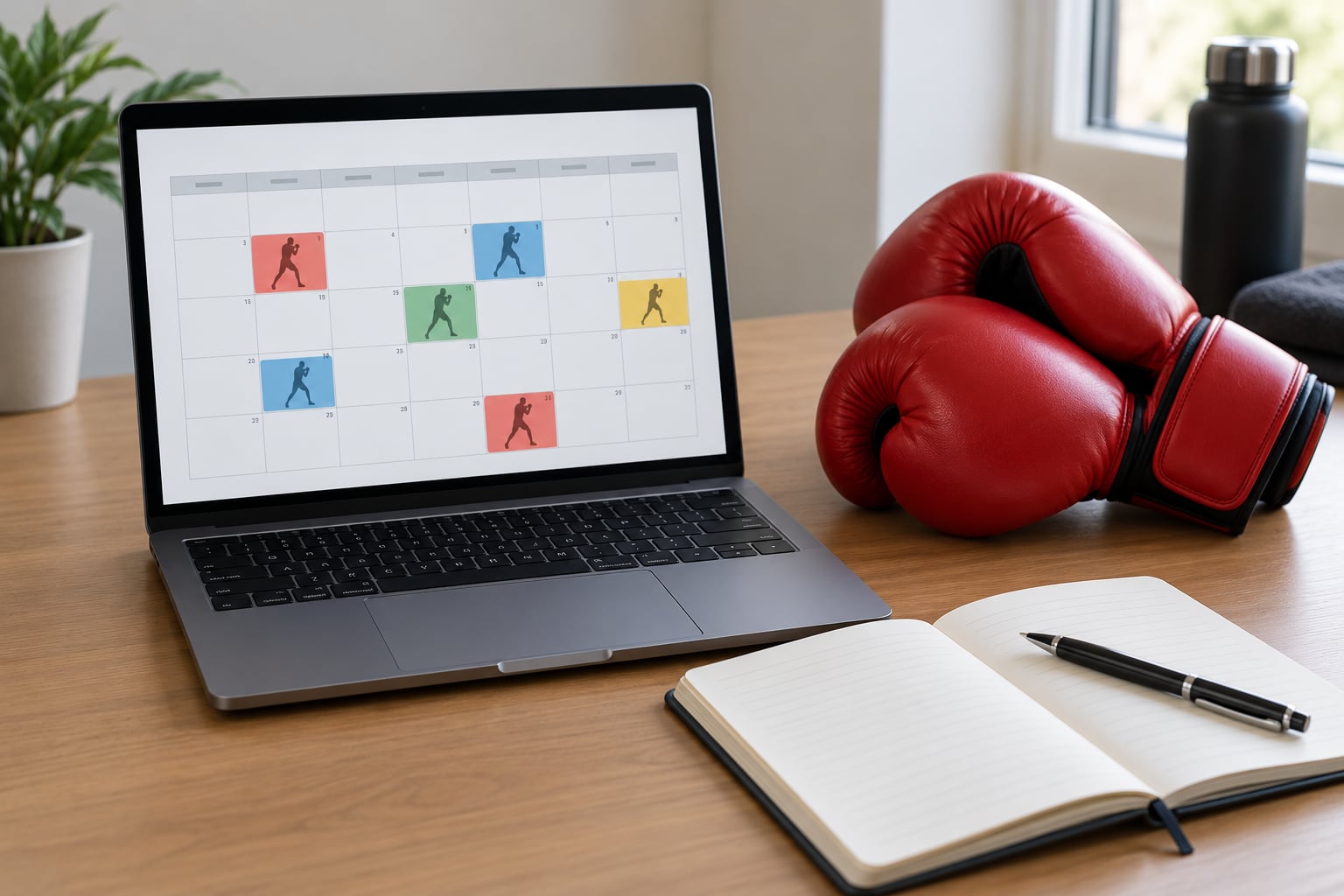
Put confirmed fights in your phone or desktop calendar rather than relying on a browser tab. Add the date, the first bout start time, the venue, and the main event in the title so it reads sensibly months later when you scroll back.
Set two reminders: one on the day of the fight an hour or two out, and one for the weigh-in if you track the division. Use the event’s note or description field to record which service carries it in your region, then update that note when the broadcast changes.
If a source offers an iCal or subscribe link, use it as well. Subscribe-style feeds are convenient, but they only help if you still open the original page in fight week, because a feed and the promoter can disagree.
7. Recheck close to fight night
Two days out, open the promoter and broadcaster pages again. Injuries, opponent changes, venue swaps and last-minute broadcast moves almost always surface there first.
On the day itself, check the community thread for the card. Fans in the daily discussion threads on r/Boxing report injuries and undercard changes faster than any site redacts a listing, and they are blunt about whether a scheduled fight still looks like it is happening.
If a fight has been cancelled, the listing usually stays up with the original date attached. A date with no recent confirmation is a warning, not a booking.
Common Mistakes
Trusting a cached search result. Search engines hold on to old listings for months, and an event from earlier in the year can look identical to an upcoming one. Check the month and year on the page before you read anything else, then open the source directly.
Confusing the weigh-in with the fight. Weigh-ins sit a day or two ahead of the card and occasionally share a date with an undercard. If your calendar reminder lands on the weigh-in, you have missed the fight you wanted.
Ignoring the time zone. An ET listing is not your local listing. Convert before you commit, and remember that the advertised time is the first bout, not the main event.
Treating one promoter page as the whole industry. Each promoter runs its own calendar. A fighter you follow on another promotion’s card will never appear on the first one you checked.
Assuming every card is available in your country. Broadcast rights are sold by territory, so the same event can be on a subscription service in one country and pay-per-view in another. Check the broadcaster listing for your region rather than copying what a fan in another country wrote.
Believing an unverified social post. Rumour threads run ahead of promoters constantly, and fake cards get announced every week. Treat a bout as real when the promoter, the broadcaster or the sanctioning body lists it.
Following stream links from comment sections. Link spam on sports threads is common, and the sites it points at are frequently malicious. Use official services or a licensed venue screening.
Two habits fix most of it: cross-check against a second independent source before you commit to plans, and recheck within a couple of days of the fight.
Frequently Asked Questions
What is the best site for boxing fight schedules?
There is no single winner, and the best source depends on the card. Combat-sports databases such as Tapology and Box.Live cover the widest range of events including regional shows, while promoter and broadcaster pages are the most accurate on dates, venues and broadcast details. Use a database to discover and an official page to confirm.
Is BoxRec reliable?
BoxRec holds an enormous historical record and is useful for past results and a boxer’s full record. For upcoming fights it is slower than promoters and broadcasters, which announce changes first, and parts of the site sit behind a login or membership. Treat it as an archive you check after the event rather than the source you plan from.
What time does the main event start?
The advertised time is the first bout of the card, not the main event. On a typical pay-per-view card the main event runs three to four hours after that first bell, sometimes later with long undercards. Check whether a bout sheet or order of bout has been published in fight week, then count back from the bout you care about.
How do I know if a boxing fight has been cancelled?
Check the promoter and the venue on the day. A cancelled bout usually stays listed on aggregator sites with its original date attached, so an unchanged listing means nothing on its own. Community threads in the daily r/Boxing discussion often report injuries and pulled fights before the listing has been cleaned up.
How can I watch boxing for free?
There are no reliable free legal streams of major title fights, but plenty of boxing is free to watch. Prelims on many cards air on free-to-air channels or the promoter’s own platform, and regional shows are often streamed or sold at the door cheaply. Check the broadcaster listing for the specific event rather than assuming everything is behind a paywall.
How do I find local boxing fights this weekend?
Skip the national schedule pages. Start with venues in your city, then your local promoter and the state or regional amateur and professional bodies, which publish calendars well ahead of time. Community boards for local boxing and amateur boxing communities are often the earliest source for small-hall shows.
Start with one combat-sports database to see the shape of the week, confirm anything you plan around on the promoter’s page and the broadcaster’s page for your region, then convert the start time before you set the reminder. Do that once, and the second half of 2026 takes care of itself.