Boxers rehydrate in phases: measured fluid with sodium and other electrolytes for the first couple of hours, a light solid meal a few hours in, then steady carbohydrate meals through to fight night. The exact volume is set by the fighter’s team and a doctor, not by a generic formula anyone can copy.
That last point matters more than it sounds. Online advice on post-weigh-in recovery ranges from “chug a gallon immediately” to precise sports science numbers, and most of it is written for someone who was not standing in a hot room weighing in at 6 p.m. with a bout the next evening.
This guide explains how do boxers rehydrate after weigh in as a process, what teams actually track, and where the honest limits are. It is general information, not a protocol for you or anyone else to follow. If you are cutting weight for a bout, your physician or a registered dietitian should set your numbers.
Table of Contents
- What Does Rehydrating After a Weigh-In Mean?
- Why Can Boxers Gain Weight After Weighing In?
- How Do Boxers Rehydrate After Weigh In?
- When Should Rehydration Begin?
- How Much Fluid Do Boxers Usually Need?
- What Should Boxers Eat and Drink?
- How Do Teams Check Hydration Progress?
- What Common Mistakes Can Make Recovery Worse?
- Frequently Asked Questions
- Conclusion
What Does Rehydrating After a Weigh-In Mean?
Rehydration is the process of putting back the fluid, electrolytes and stored carbohydrate a fighter lost while making weight, so they enter the ring at a body size that is both safe and useful.
It is a different goal from making weight. Making weight means getting under a limit. Rehydration means restoring function afterward — blood volume, digestion, temperature control, and the ability to think clearly and punch hard for three or more rounds.
Two separate things happen in the hours after the scales. Fluid comes back into the bloodstream and tissues, and carbohydrate stores in the liver and muscles refill. Fighters see pounds on the scale rise and stop there. The physiologically useful part is the refill, and it lags behind the number.
Commission rules shape the window. Most professional organizations allow roughly 24 hours between the official weigh-in and the first bell. A rehydration clause may cap how much weight a fighter can put back before competing, which changes the food and fluid plan rather than just the target weight.
Why Can Boxers Gain Weight After Weighing In?
A boxer’s weight can change a lot after an official weigh-in because what goes back on the scale is not only water. It is water plus the carbohydrate that binds to it, plus the food sitting in the gut, plus everything that came back the moment fluid restriction ended.
Carbohydrate stores hold roughly three grams of water for every gram of carbohydrate stored. When a fighter refills those stores through the afternoon and evening, that retained water comes with it. This is the single biggest reason a fighter who stepped on the scales ten pounds under the limit can step into the ring well above it.
Muscle glycogen does not return instantly either. After a period of restriction it rebuilds over roughly a day of consistent carbohydrate intake, which is why teams keep eating well into the night rather than stopping once they hit a target weight.
How much comes back depends on the size of the cut, how long the fluid restriction ran, how well the fighter tolerated food and drink afterward, and any rule capping rehydration. Fans often describe fighters as ballooning overnight, and r/Boxing threads about weight classes come back to that point repeatedly: cut the water, then refill it.
How Do Boxers Rehydrate After Weigh In?
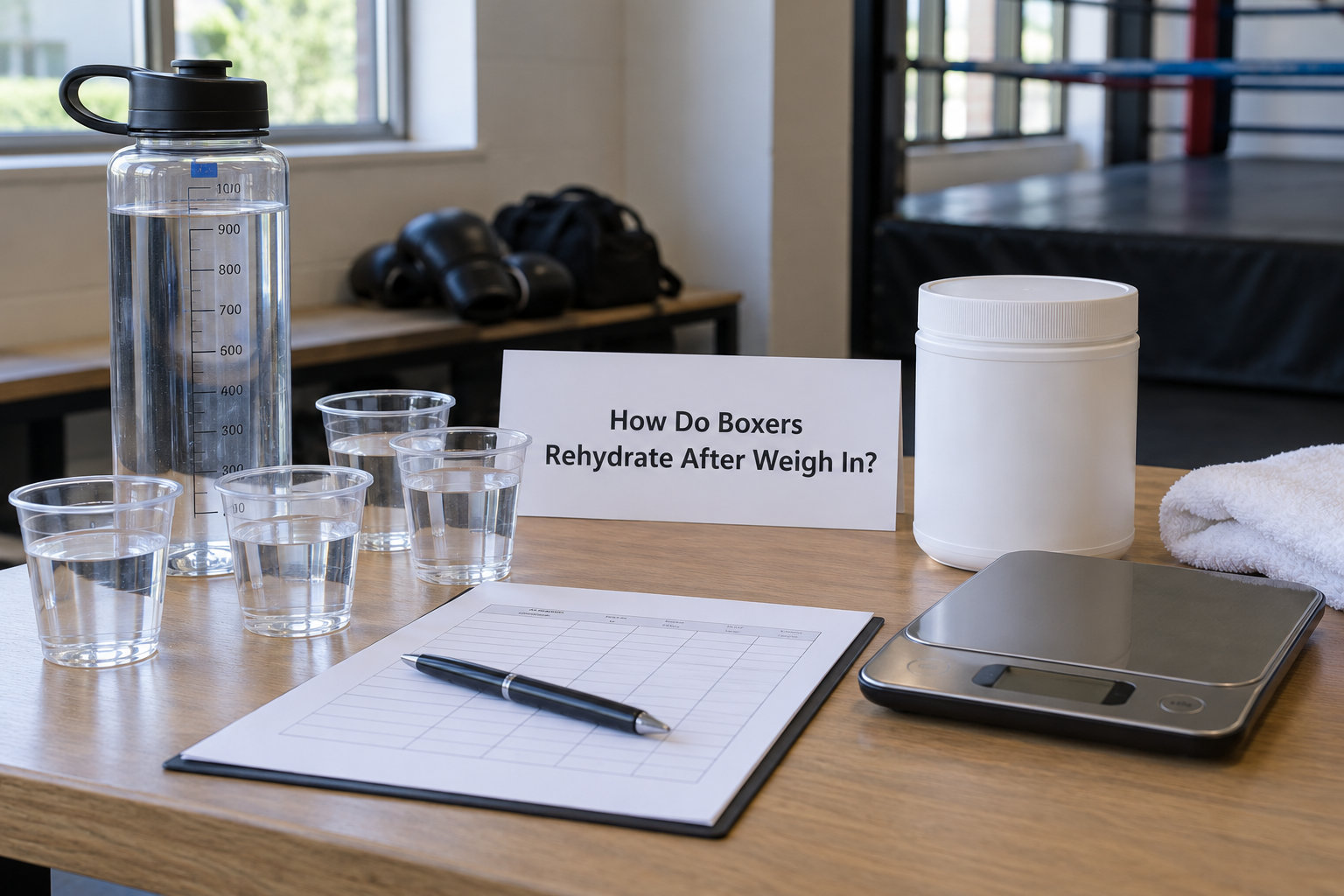
Teams rehydrate in three overlapping phases: immediate fluid and electrolyte replacement, a first light solid meal once the gut tolerates it, then steady feeding through to the bell. Pace and measurement matter as much as volume.
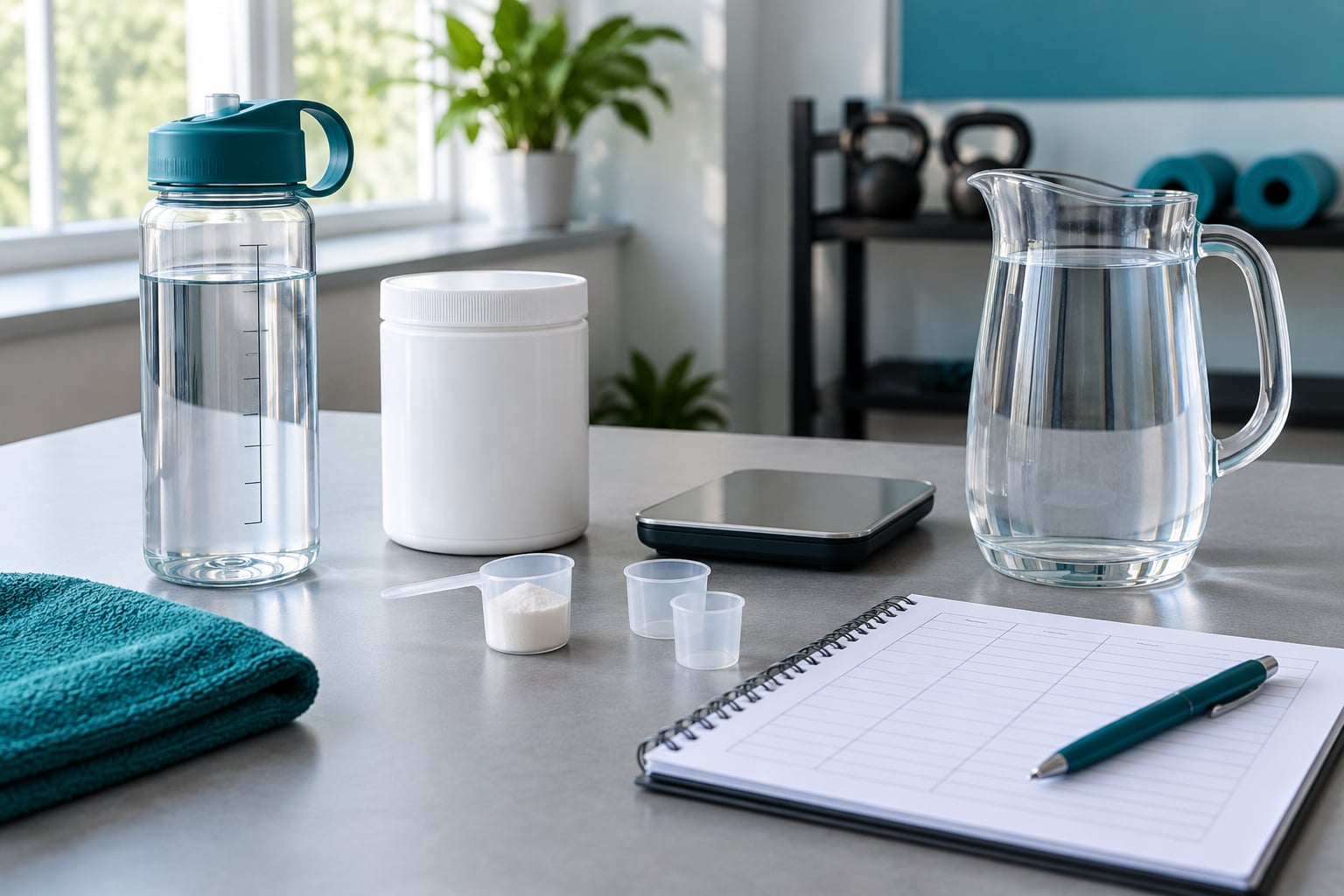
Phase one, the first two hours. Fluid intake starts almost as soon as the fighter is back in the dressing room, and it is tracked rather than guessed. Most teams use measured volumes from a graduated bottle or marked cups, sipped steadily instead of chugged. An electrolyte source is mixed in rather than drinking plain water alone, because fluid absorbed without sodium leaves the body faster than it arrived. Small sips of something salty and a carbohydrate-containing drink are the usual pairing.
Phase two, roughly two to four hours in. The first solid food is deliberately plain and small. A shrunk, unused gut does not handle rich food well, so the meal leans on easily tolerated carbohydrates such as white rice, sushi, plain cooked chicken, pasta or a low-fibre soup, usually with a measured drink alongside it. Portions grow in stages through the evening rather than arriving as one large dinner.
Phase three, evening through fight day. Eating becomes steadier and more varied, with carbohydrate portions increasing at each sitting and lean protein alongside. Closer to the bout, teams usually settle on a familiar, low-fibre meal a few hours before the scheduled start, then stop eating solid food so the gut is not working during the fight.
Rehearsal is part of the protocol. A plan a fighter has never run in training is a plan with an unknown outcome, which is why teams test the same foods, drinks and timings during sparring weeks rather than improvising on fight night.
When Should Rehydration Begin?
Rehydration begins promptly after the official weigh-in, normally within minutes of the fighter stepping off the scale, because the window between weighing in and the first bell is fixed and short.
There is no realistic way to finish the job instantly. Kidneys excrete fluid at a limited rate and will not clear an enormous load in one sitting, so teams spread intake across hours rather than concentrating it. Fluid balance also depends on what the fighter lost, what the fighter puts back, and how the body handles both.
The schedule around that start depends on weight class rules and the fighter’s team. Some organizations set a rehydration cap and a second weigh-in; some use a catchweight instead; some, particularly amateur shows, give a much shorter window between the weigh-in and the first bout of the day.
How do boxers rehydrate after weigh in without gaining too much weight?
There is no universal cutoff, and anyone promising one is guessing. Teams prioritise replacing fluid gradually, keep the food plan light and carbohydrate-led rather than heavy and fatty, and adjust both under supervision from the corner rather than by rule of thumb.
When a rehydration clause applies, the constraint is part of the plan from the moment the fighter steps on the scales, not an afterthought. Fighters have addressed the weight target, the purse consequences of exceeding it and how it shapes the whole day, because the alternative is arriving at the limit in a poor state with hours still to run.
The practical version of this question is easier to answer honestly: the goal is a fighter who is hydrated, fed and able to perform, not a number on a second scale. If the two goals conflict, that is a conversation with the commission and the doctor, not something to solve with a cut-off sauce bottle.
How Much Fluid Do Boxers Usually Need?
There is no single figure that fits all fighters. Need varies with the size of the fluid deficit, body mass, activity, climate, food intake, and any medical or medication factors.
Even a fighter who knows their walking-around weight and their weigh-in weight cannot fully derive their target from those two numbers alone. Tissue, glycogen and gut contents all sit in that difference, and they do not come back at the same rate.
Sports nutrition practice has long used a rough rule of restoring more fluid than the estimated deficit, because some of what is drunk is lost to ongoing sweat and urine. Widely cited guidance puts that figure near one and a half times the estimated deficit. Treat it as an orientation for a discussion with your team, not a calculation to run on your own.
Search results for this topic are full of specific numbers — a commentator suggesting around four litres after a three-kilogram cut, forum users describing cuts from the low hundreds back up. Those examples come from different people, different climates and different rules, so they are worth reading as illustration rather than prescription.
A registered dietitian who has seen your weigh-in number, your medical history and your schedule can put a realistic range around your own case. Nobody else can, and a corner that will not say no to the fighter’s request for more water is a corner that has lost control of the plan.
What Should Boxers Eat and Drink?

Fighters drink a combination of plain water and an electrolyte-containing drink, then shift to meals built around easily tolerated carbohydrate with lean protein, and keep portions measured and small early on.
Fluids. Water is the base. A measured sports drink or an oral rehydration-style solution adds sodium, potassium and carbohydrate, which helps fluid stay in the body instead of passing straight through. Avoid energy drinks and anything heavily caffeinated, because caffeine works against the retention the plan depends on.
Sodium. Salted foods and salty drinks help hold fluid in the bloodstream. It is the least glamorous and most functional item on the list.
Early carbohydrate. White rice, sushi, plain cooked chicken, pasta, clear soup, bananas and apricots are the recurring early choices. Simple sugars absorb quickly and sit lightly after a cut.
Later carbohydrate. Through the evening, complex sources such as oats, sweet potato and more pasta come in, with lean protein. Fibre is dialled back because a full gut on fight night is a bad trade for a marginally better number.
Pre-bout meal. A familiar, low-fibre meal a few hours before the scheduled start, then nothing solid. Fighters who plan to eat something new on fight night are gambling with the one meal they cannot afford to get wrong.
What to leave alone. Heavy fats, large dairy servings and high-fibre meals slow gastric emptying and leave a fighter feeling full and heavy. So do foods they have never trained with.
How Do Teams Check Hydration Progress?
Teams track progress with several signals together — body weight, urine colour and output, thirst, clinical observation and any sanctioned second weigh-in — because no single home signal shows hydration status reliably on its own.
Body weight is the obvious one, and the scale comes out repeatedly through the afternoon and evening. It is the clearest measure of progress, but a rising number does not prove fluids are where they need to be, and a fighter can climb fast on food and salt alone.
Urine colour is the most over-trusted marker in this whole process. Dark urine suggests fluid loss, but it is affected by supplements, vitamins and food, and pale urine after a big drink says little about how well fluid is distributed in the tissues. Teams read it as one input, not a verdict.
Urine output over the recovery window matters more than colour, along with observation of the fighter’s alertness, comfort, heart rate and any cramping. If a fighter is not gaining weight, feels worse as fluid goes in, or stops producing urine, that is a signal to bring in medical help rather than push more volume.
What Common Mistakes Can Make Recovery Worse?
The most common errors are drinking far too fast, eating unfamiliar or heavy food too early, chasing a scale number instead of function, and using unregulated products in an attempt to move faster.
Chugging large volumes at once. The body cannot clear it, so much of it leaves quickly and the gut gets worse, not better. This is the single most repeated mistake in forum threads about post-weigh-in recovery, and it is exactly the behaviour the slower, measured approach is designed to avoid.
Going heavy on food too early. A gut that has been unused for hours does not handle a full meal well. Heavy, greasy, high-fibre or large dairy-heavy meals often lead to discomfort and cramping that last into the fight.
Unregulated diuretics and supplements. Anything that promises rapid water movement, and anything taken without medical supervision, adds a health risk to an already stressed system.
Treating urine colour as the answer. It is one rough indicator among several. Teams that rely on it alone can misread a fighter in either direction.
Reversing severe dehydration without medical oversight. Some symptoms after a large cut need clinical attention rather than a corner solution. Knowing the warning signs matters as much as knowing the protocol.
Leaving it to fight night. Teams that treat rehydration as an afterthought on bout day have already lost the hours that mattered. The recovery is won or lost in the first two hours.
Frequently Asked Questions
How fast can a boxer put weight back on after a weigh-in?
Scale weight can move quickly once fluid restriction ends, often within a few hours, because the number includes water, gut contents and carbohydrate stored with water. Useful refuelling of glycogen and muscle function takes longer, usually across the following day. Anyone setting a specific target should work from their own deficit and medical advice, not from a published average.
Do boxers have to rehydrate before a bout?
Rehydration is not optional. It restores circulating volume, digestion, temperature control and mental clarity, all of which a fighter needs in the ring. A rule that caps how much weight can be put back before competing limits the target, but it does not remove the need to recover. Some organizations set a second weigh-in to enforce it.
How much water should a boxer drink after weighing in?
There is no universal amount, because need depends on how much fluid was lost, body size, activity, climate, food intake and medical factors. General sports nutrition guidance suggests restoring somewhat more than the estimated deficit, spread over hours rather than chugged at once. A doctor or registered dietitian should set your figure before the day rather than during it.
Can electrolytes help a boxer recover after making weight?
Yes. Sodium, potassium and magnesium help fluid stay in the body rather than passing through, which is why most teams drink an electrolyte-containing solution rather than plain water alone during the first couple of hours. Choose ordinary food-based or sports drinks, and check with a physician first if you have high blood pressure, kidney or heart conditions.
When does dehydration after a weigh-in require medical attention?
Seek help for dizziness, confusion, fainting, a racing or irregular heartbeat, severe headache, vomiting, muscle cramps that will not settle, or if you stop producing urine or cannot keep fluids down. A fighter who is not gaining weight and feels progressively worse is also a medical matter, not something to solve by drinking more at the corner.
Conclusion
Start controlled rehydration with your team the moment the weigh-in is over, follow whatever rule applies in your weight class, drink measured fluid with electrolytes rather than chugging water, and eat small tolerable meals of familiar carbohydrate foods as the evening goes on.
Then watch the fighter, not just the scale. Weight climbing is progress, but so is clear thinking, steady output and a gut that feels settled. If any of the warning signs above appear, stop treating it as a corner problem and get medical help.