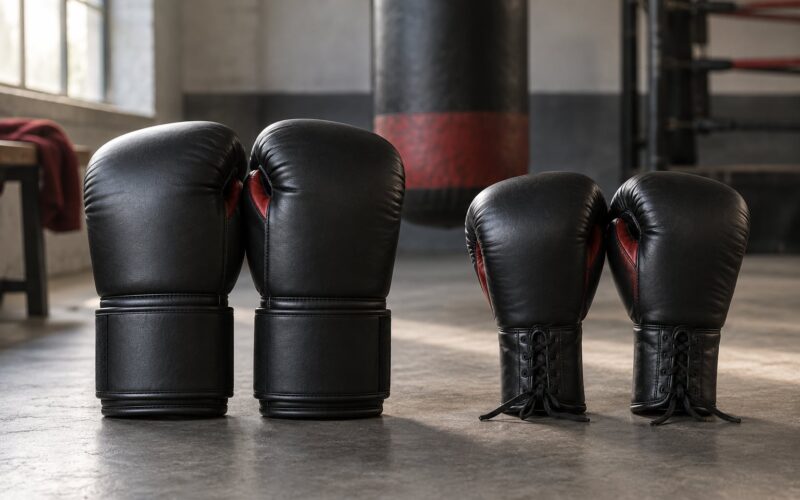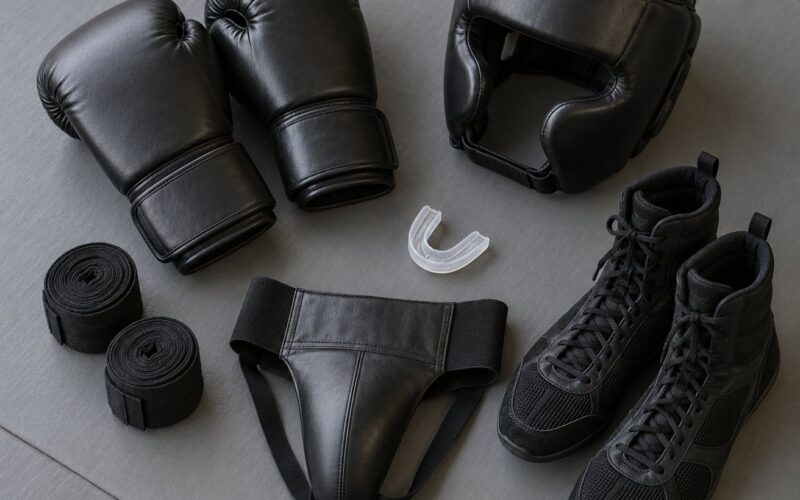
Boxing gloves are sized by weight in ounces, not by small, medium or large. The way to choose boxing glove size comes down to two things: the circumference of your hand, which decides whether the glove physically fits, and the training you actually do, which decides how many ounces of padding you want. Get those two right and everything else on the label is marketing.
Here is the honest version of the process, written for people who have never picked a pair deliberately. It takes about ten minutes with a tape measure, and it will save you from the single most common beginner mistake: buying gloves that are too tight once your hand wraps go on.
Table of Contents
What You Need
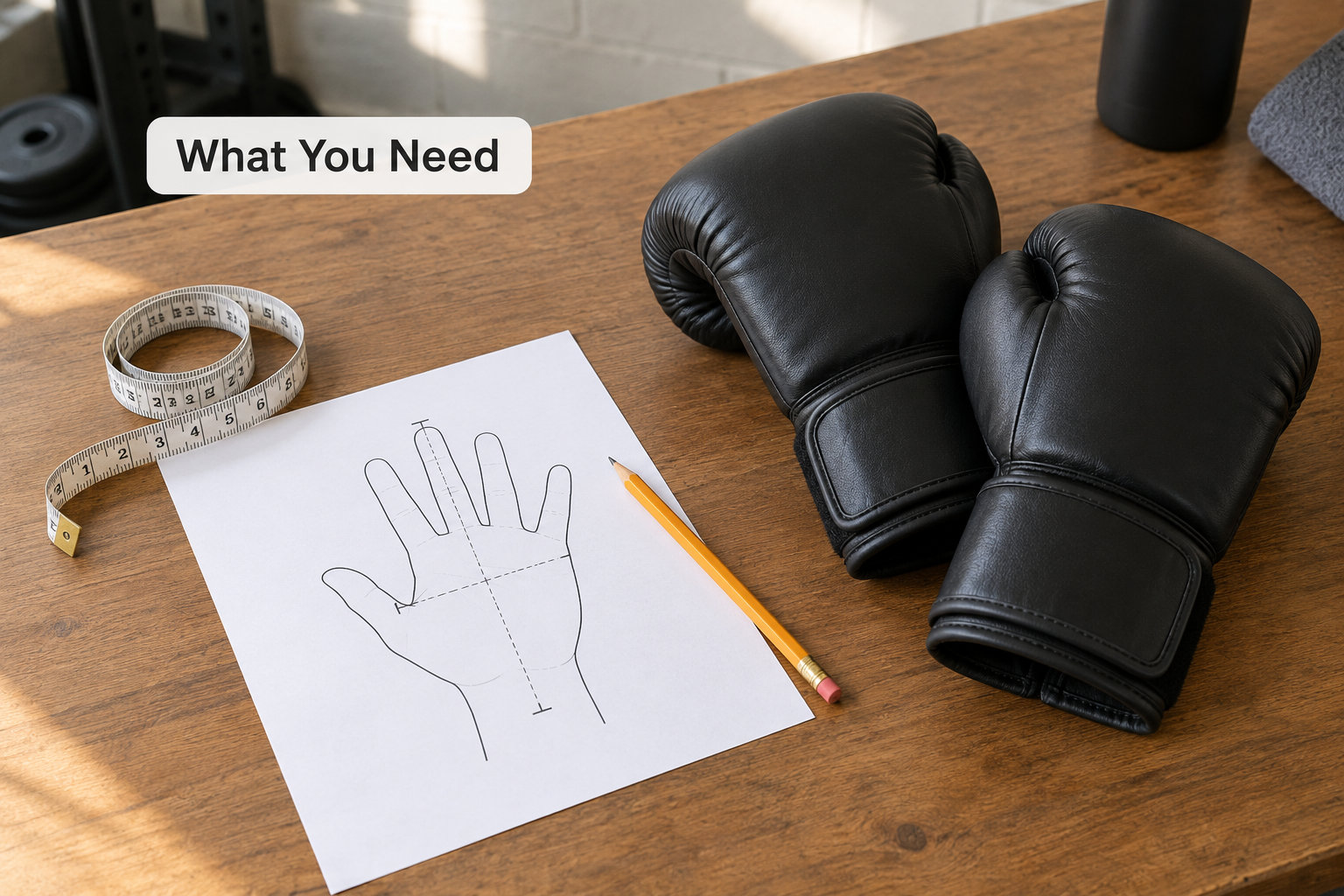
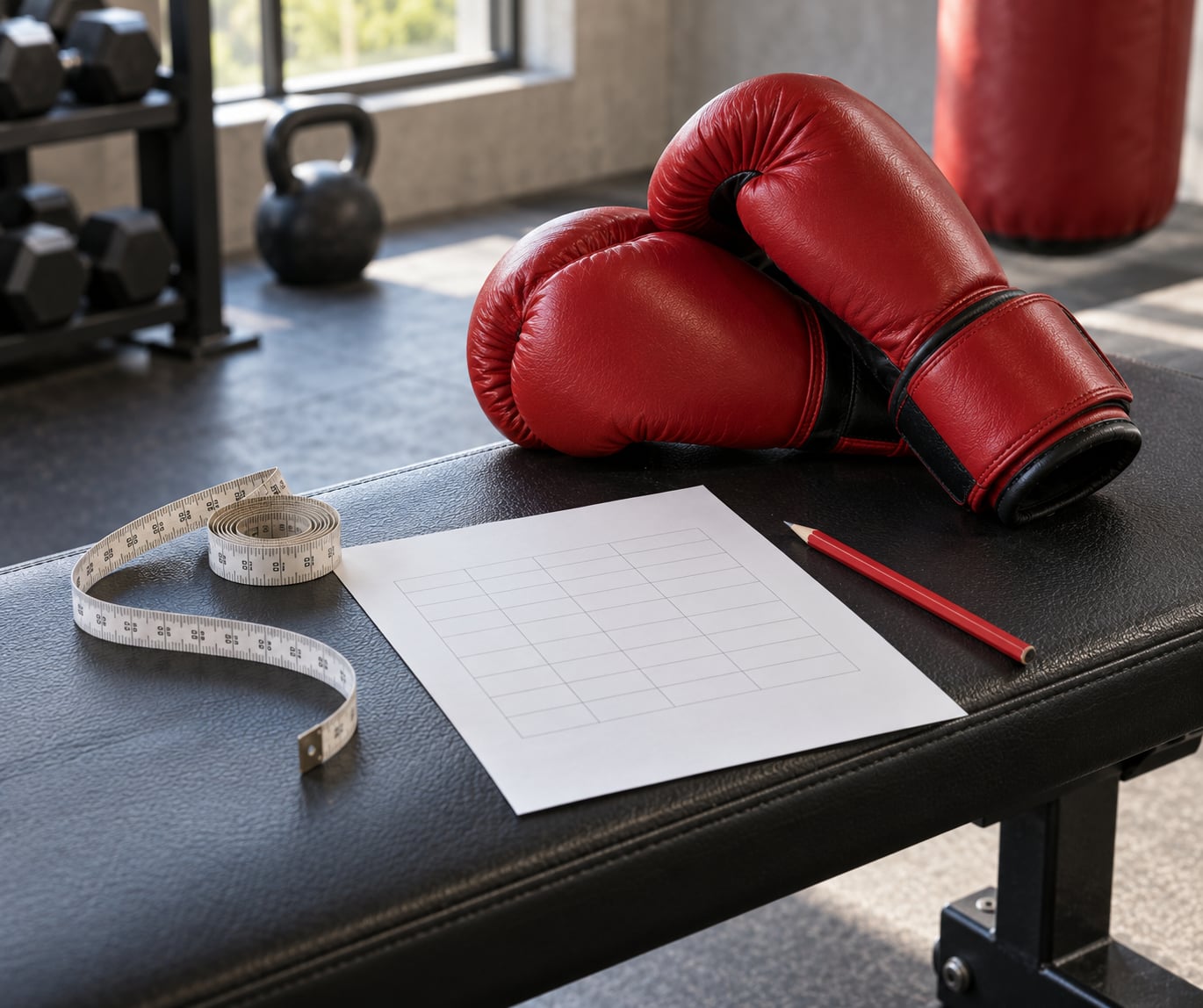
You need a flexible tape measure, the sizing chart from the brand you intend to buy, and a pencil to write down numbers. A cloth tape is better than a metal one because it follows the curve of your hand instead of cutting across it.
Also grab the hand wraps you actually train in. Not the pair you think you should train in. This is the step most people skip, and it is the step that decides whether a glove feels right or feels choked.
If you already own any gloves, bring them along. Comparing a new pair against a pair that already works for you is faster than trusting any chart, including the one below.
Step-by-Step: How to Choose Boxing Glove Size
Measure Your Hand Width and Circumference
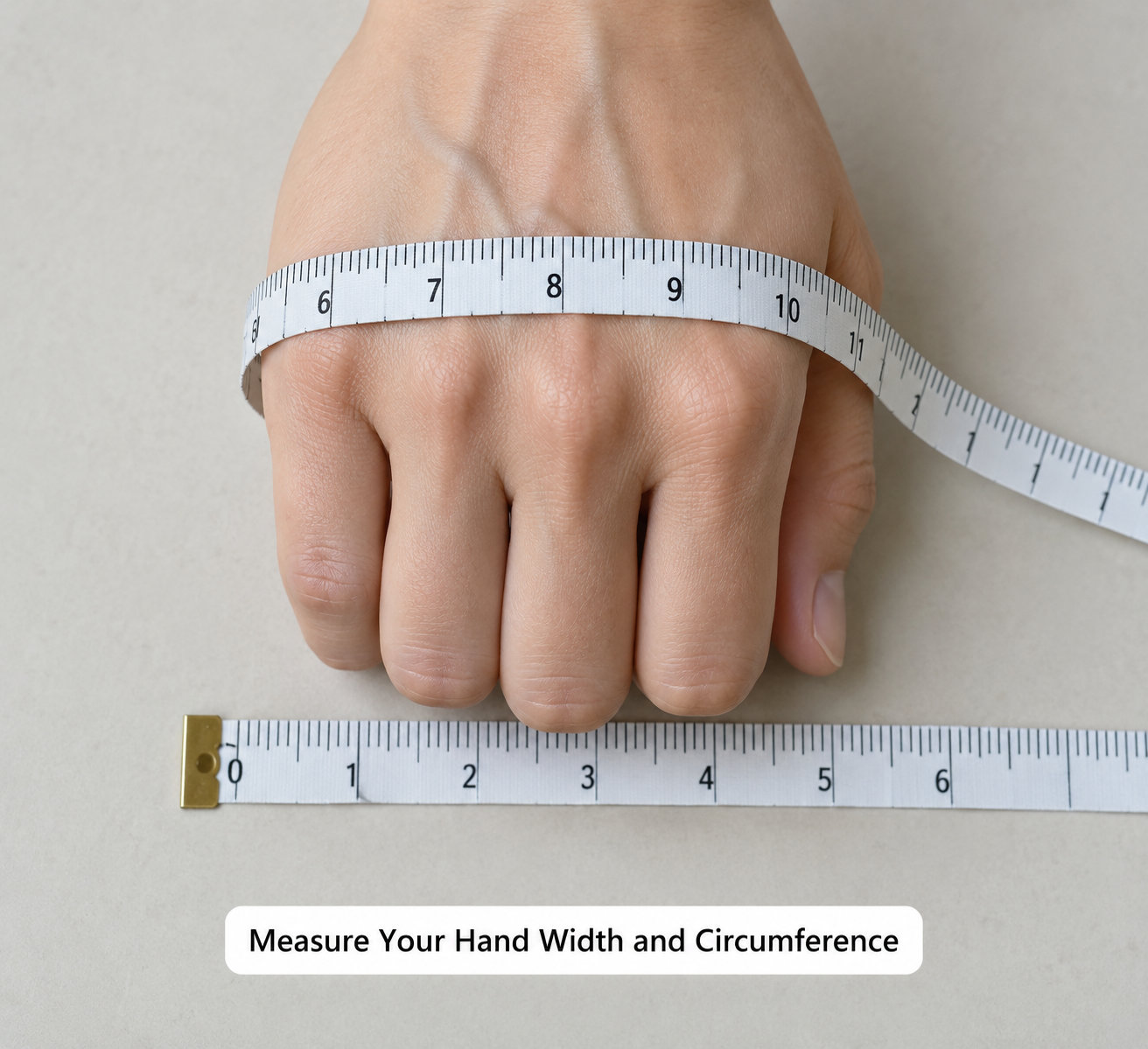
Take two measurements on a bare hand, before wraps and before gloves.
The first is width: run the tape across the four knuckles, from the index finger knuckle to the pinky knuckle line, with the thumb completely out of the way. Measuring over the thumb adds an inch or more and will push you into the wrong glove.
The second is circumference: wrap the tape around the full hand at knuckle level, again excluding the thumb, pulling it snug. Snug means you can slide a finger underneath. Tight means you are measuring your own compression, not your hand.
Do both hands, because people rarely have two identical hands. Measure after a normal day rather than first thing in the morning, when hands can be a fraction tighter. Write both numbers down.
Convert Your Measurement to a Glove Size
Now match your numbers against the manufacturer chart for the specific pair you are considering. Hand compartment size is a physical dimension, so it varies by brand and by model within a brand. Two gloves both labelled 16 oz from two different companies can fit two very different hands.
Here is where a lot of confusion starts, so let us be blunt: the ounces printed on a boxing glove do not describe hand size at all. A 14 oz glove can have a narrow palm and a 16 oz glove from another line can have a wide one. If you have seen people sizing up a glove because they assume more ounces means a bigger hand compartment, that assumption is why they end up with gloves they cannot close.
Generic small, medium and large labels are the least useful part of any glove. So are sizing rules based on your age or your sex. Hands vary far more between two women, or two men, than they do between the two groups. Use those labels only as a starting point, never as a decision.
Typical hand circumferences fall somewhere around 7 to 8.5 inches for many adults, and makers map that range onto their own small through extra large compartments. Your number only means something next to the chart printed by the brand whose gloves you are holding.
How to Choose Boxing Glove Weight for Your Training
Glove weight is the total weight of the glove, padding included. It is a protection and performance decision, not a size decision, and the right number changes completely depending on whether you are hitting a bag, holding pads, or hitting a person.
Use this table as your starting point, then adjust for your weight class and what your gym requires.
| Training you do | Glove weight | Why |
|---|---|---|
| Pad work and speed work | 10 oz | Light, fast, built for hand and foot speed rather than protection |
| Beginner and fitness training | 12 oz | Enough padding for the bag without loading your arms on every round |
| Heavy bag work | 14 oz | The most versatile all-round training glove for most adults |
| Sparring | 16 oz | Thinner palm padding and more knuckle and wrist protection |
| Amateur competition | 10 oz or 12 oz | Set by weight class under amateur rules, check the current rulebook |
| Professional fight night | 8 oz | Small, thin, and only ever used against a sanctioned opponent |
Because so many people want one simple answer, here is the short version for the three weights that come up constantly.
| Weight | Best for | The trade-off |
|---|---|---|
| 12 oz | Beginners, fitness classes, mostly bag and pad work | Light enough for long sessions, light enough that you can outrun your form on the bag |
| 14 oz | Recreational boxers who bag, pad and spar | The safe single-pair default if you only want to buy one pair |
| 16 oz | Sparring, especially at a gym where sparring is part of the week | Tiring on the bag, and pointless as your only pair if you never spar |
Heavier is not automatically safer. A 20 oz sparring glove feels safer and does almost nothing for your punch speed or your conditioning, and plenty of fighters find they cannot hold their shape through a long round with one. Lighter is not automatically better either, because 10 oz gloves give a beginner almost no knuckle protection on a heavy bag.
Your body weight matters, but less reliably than the charts claim. Different brands publish genuinely conflicting tables for the same glove: you will see 12 oz mapped to 100 to 150 pounds by one maker, 125 to 150 by another, and 150 to 180 by a third. Nobody is lying. They are all describing their own glove’s padding. Treat any single chart as a rule of thumb from that brand, not as a law.
Two practical factors settle most arguments. The first is how much boxing you do per week. Someone training five times a week on the bag will tire in a 16 oz glove and should consider dropping to 14. The second is your gym’s sparring rule. Ask the coach before you buy, because sparring gloves in many gyms are a house rule rather than a standard, and you will not be allowed to hit a person in whatever you turned up in.
Check the Fit Before You Buy
Put the wraps on first, then the gloves. This order matters more than anything else on this page.
With your hands wrapped, check that the wrist sits straight when you make a fist. The cuff should support the wrist without pushing it forward or cutting across the heel of your hand. You want to be able to make a full fist with the thumb tucked naturally against the index and middle fingers, not splayed out to clear padding.
Check the thumb. It should sit in its own compartment, aligned with the rest of the hand, without a lump of padding shoving it out at an angle.
Check the fingers. They should reach the end of the compartment with the fingertips close to the seam, and you should be able to curl them into a fist without the padding bunching up at the knuckles.
Check your palm. Wrap lace or Velcro straps should close without you fighting them, and there should be no hard ridge pressing into the heel of your palm.
Finally, take the gloves off. If you have to peel, tug or twist them off, they are too small. A glove that fits comes off in one clean pull, even after a session where your hands were swollen.
Common Mistakes
Measuring over the thumb. The single most common error, and it reliably costs you a half size to a full size. Re-measure with the thumb out.
Assuming ounces tell you hand size. They do not. Two gloves with identical weight can have completely different compartments, and the weight is printed in a huge number while the fit is not.
Buying by brand, colour or price. A well-known name does not fix a fit problem, and an expensive glove that pinches your pinky is still the wrong glove for you.
Buying competition gloves for sparring. A regulation competition glove is thin and offers almost nothing to the person you are hitting. Nobody serious sparses in 8 oz.
Buying sparring gloves for bag work only. If you never spar, a 16 oz glove is a tiring, expensive way to do bag work. Buy to your actual week.
Ignoring hand shape. Wide flat hands and narrow long hands are not served by the same compartment, and two gloves can share a stated size while fitting completely differently. Try them if at all possible.
Skipping the wraps during the fitting. Wraps add real bulk. A glove that feels snug on a bare hand can be painful with a full wrap on, which is exactly why people return unworn gloves.
Waiting for break-in to fix a bad size. Padding compacts a little with use and shape softens, but break-in does not make a too-small hand compartment fit. If it hurts in week one, it is not break-in.
Sizing children off adult charts. Kids need gloves sized on the same hand circumference measurement, but with a lower weight. A child’s 8 or 10 oz glove should be selected by hand fit first and training second.
Trying to solve a weight-class problem with a heavier glove. If you feel slower and weaker, the answer is usually technique, conditioning or a lighter pair, not a heavier glove.
Frequently Asked Questions
What do I do if I fall between two glove sizes?
Size the hand compartment first and buy the heavier weight in the smaller frame if the compartment matches. If the frame is tight in one and loose in the other, take the frame that fits and adjust the ounce weight using your training type. This is also the most common reason to buy from a seller with a real return window, because brand charts disagree by up to a full size.
Should boxing gloves fit tight when new?
Snug, not tight. You should be able to make a full fist, keep your thumb tucked, and pull the glove off in one clean movement without twisting. Genuinely new gloves can feel stiff and slightly unfamiliar for the first few sessions, and the padding will compact a little as you use them. Pain in the knuckles, wrist or heel of the palm is not break-in, and no amount of wearing will fix it.
How often does my hand size change?
Adult hand size is stable, so a measurement taken this year will still be valid in five years. Measure on an ordinary day rather than first thing in the morning, when hands can measure a fraction tighter, and always measure both hands. The exception is injury or surgery, or rapid body composition change, where a re-measure is sensible. Children are the group whose sizing changes, which is why youth gloves are replaced often.
Are the two boxing gloves ever different sizes?
Very rarely. Most brands cut a matching pair from the same pattern, so a size mismatch between the two gloves is uncommon but not unheard of, particularly on clearance pairs. The fit you need is more about hand shape than about handedness: a wide flat hand can suit one compartment far better than the other. Try both gloves on, make a fist in each, and set aside any pair where the two feel meaningfully different.
How do I care for boxing gloves and when should I replace them?
Wipe the inside with a damp cloth after every session, let them dry fully with the mouth open, and never leave them in a sealed gym bag overnight. Air them out between sessions. Replace them when the knuckle padding has flattened and no longer rebounds, when the wrist cuff no longer holds alignment, or when the lining starts to smell permanently through cleaning. Bought well and aired out, a solid pair lasts a couple of years of regular training.
Conclusion
That is the whole process. Measure both hands now, record the width and the knuckle circumference, then open the sizing chart of the specific pair you want and check the compartment against your numbers. Once the fit is confirmed, choose the ounce weight to match the training you will actually do this month, not the training you imagine doing eventually.
If you spar, ask your coach what the gym requires before you order anything. That single question saves more bad purchases than any chart, and it takes ten seconds.