Knowing how to hold pads for a boxer comes down to four things: a shoulder-width stance, elbows tucked to your ribs, targets held at the boxer’s eye and chest line, and roughly 2-3cm of forward movement as each punch lands. That last part matters more than beginners expect, because a passive holder teaches the boxer to pull their shots. Anyone can pick the basics up in one session, and most people need a few weeks of regular mitt work before it stops feeling like a job.
A good pad holder does more than absorb punches. They move like the opponent, angle the targets, call the combinations, and correct technique while there is still time to fix it. That is the whole difference between pad work that builds fighters and pad work that just makes them tired.
Table of Contents
- What You Need
- Step-by-Step: How to Hold Pads for a Boxer
- Common Mistakes
- Frequently Asked Questions
- How far should a pad holder stand from a boxer?
- Should beginners use focus mitts or both focus mitts and bags?
- How do I hold the pads for jabs, hooks, and uppercuts?
- What is the best grip when holding boxing pads?
- How do I move the pads to improve a boxer’s footwork?
- When should a pad holder stop a round because of discomfort?
What You Need
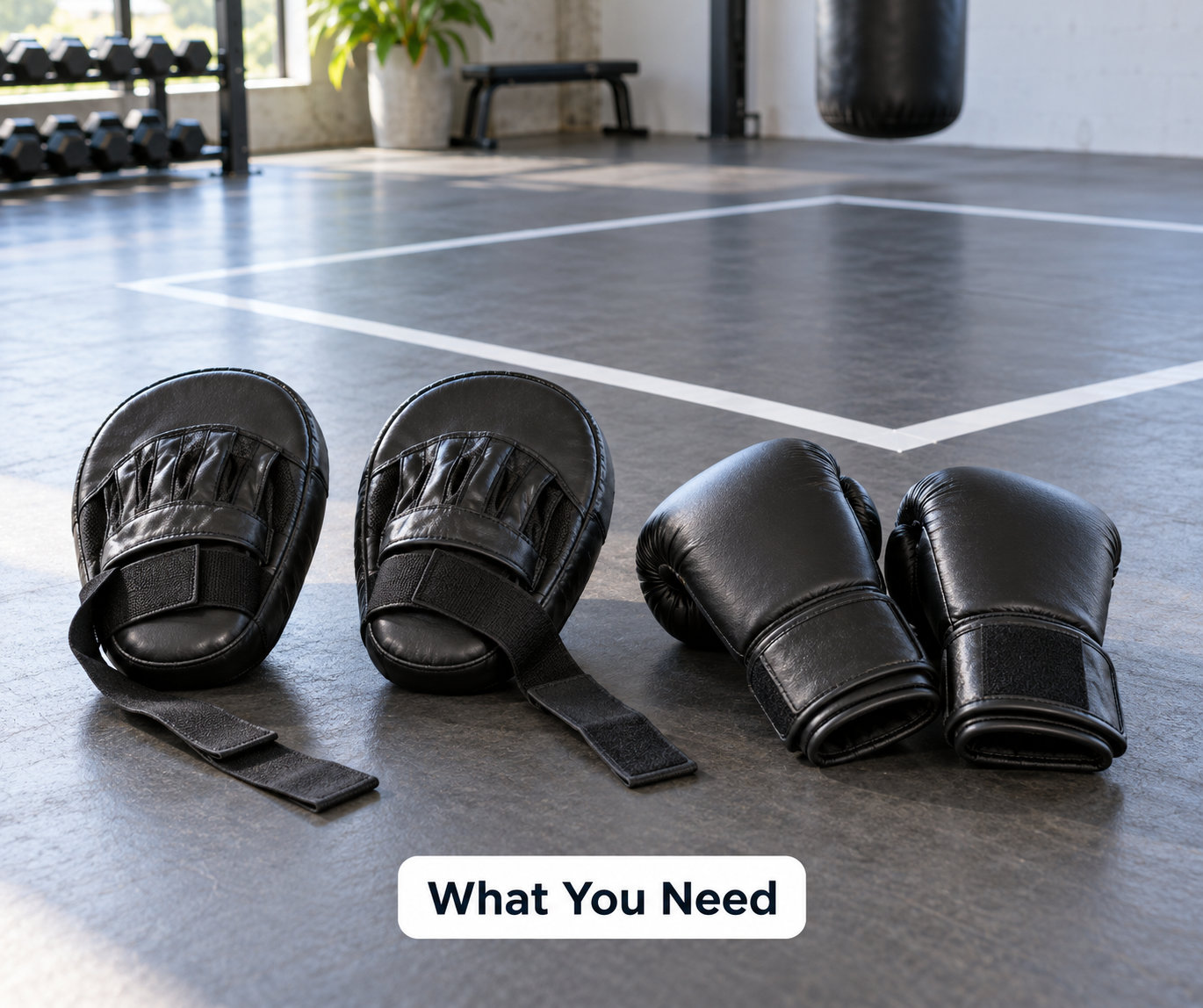
You need very little, and the order you set it up in matters. Work through this list before the first round starts.
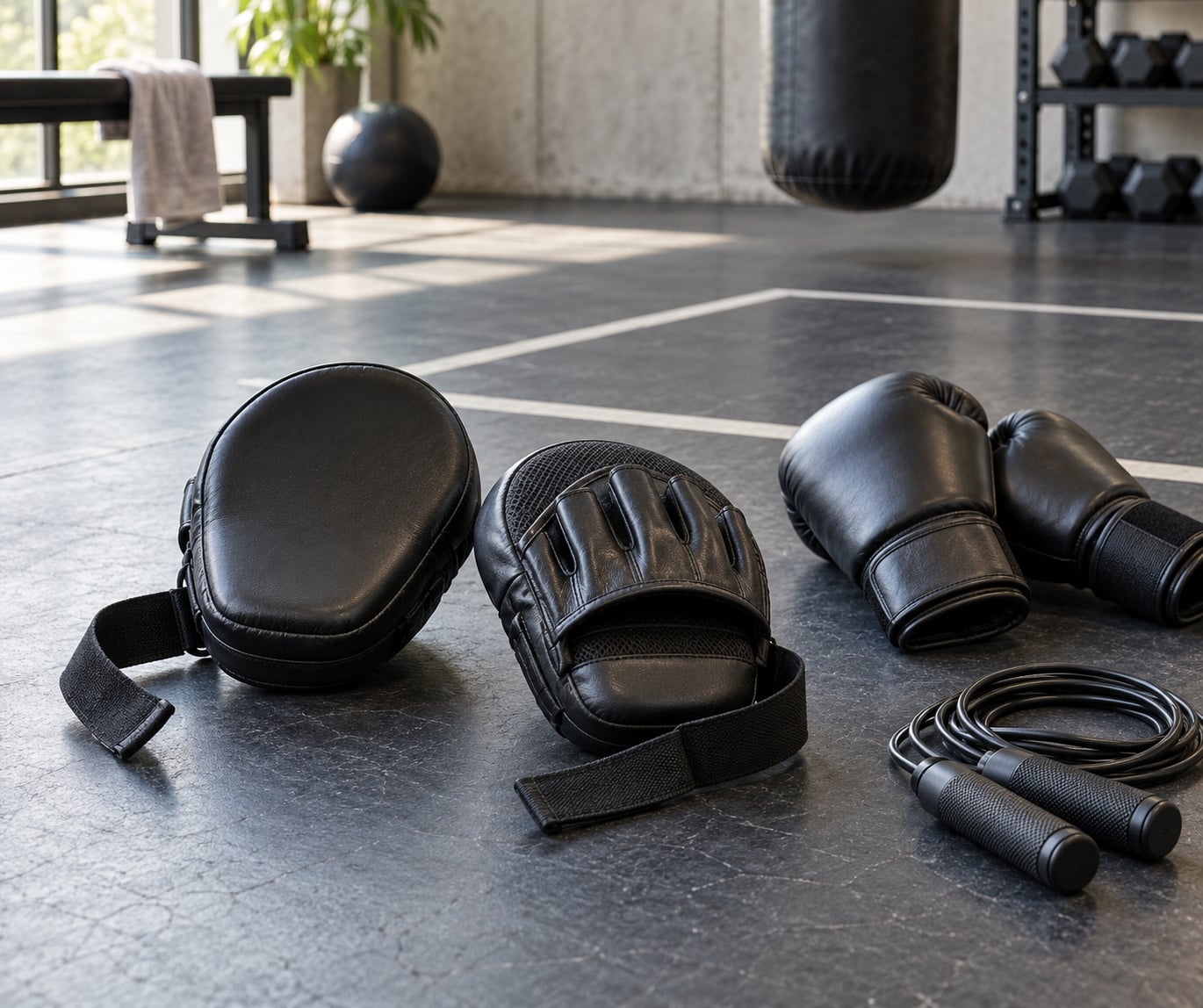
- A fitted pair of pads. Focus mitts sit in the palm, Thai pads run along the forearm from wrist to elbow. Either works, but the strap has to be snug enough that two fingers barely slide underneath.
- Hand wraps or thin training gloves. Even with good padding, a hard hook across the forearm will bruise the skin over a session.
- Clear floor space. Around three meters square, with nothing in it. Bags, benches and stray equipment are what turn a drill into a collision.
- A timer. Phone alarm is fine. Rounds run three minutes, and you want to stop on the bell rather than on fatigue.
- A boxer who wants to work. Agree the plan before the gloves go on: what you are drilling, how hard, and what they are meant to feel.
Fit is the one thing you cannot fake. A pad that rotates a few degrees during a fast combination turns a clean catch into a wrist problem, so tighten the strap until the pad does not shift when you shake your hand, then stop tightening.
Step-by-Step: How to Hold Pads for a Boxer
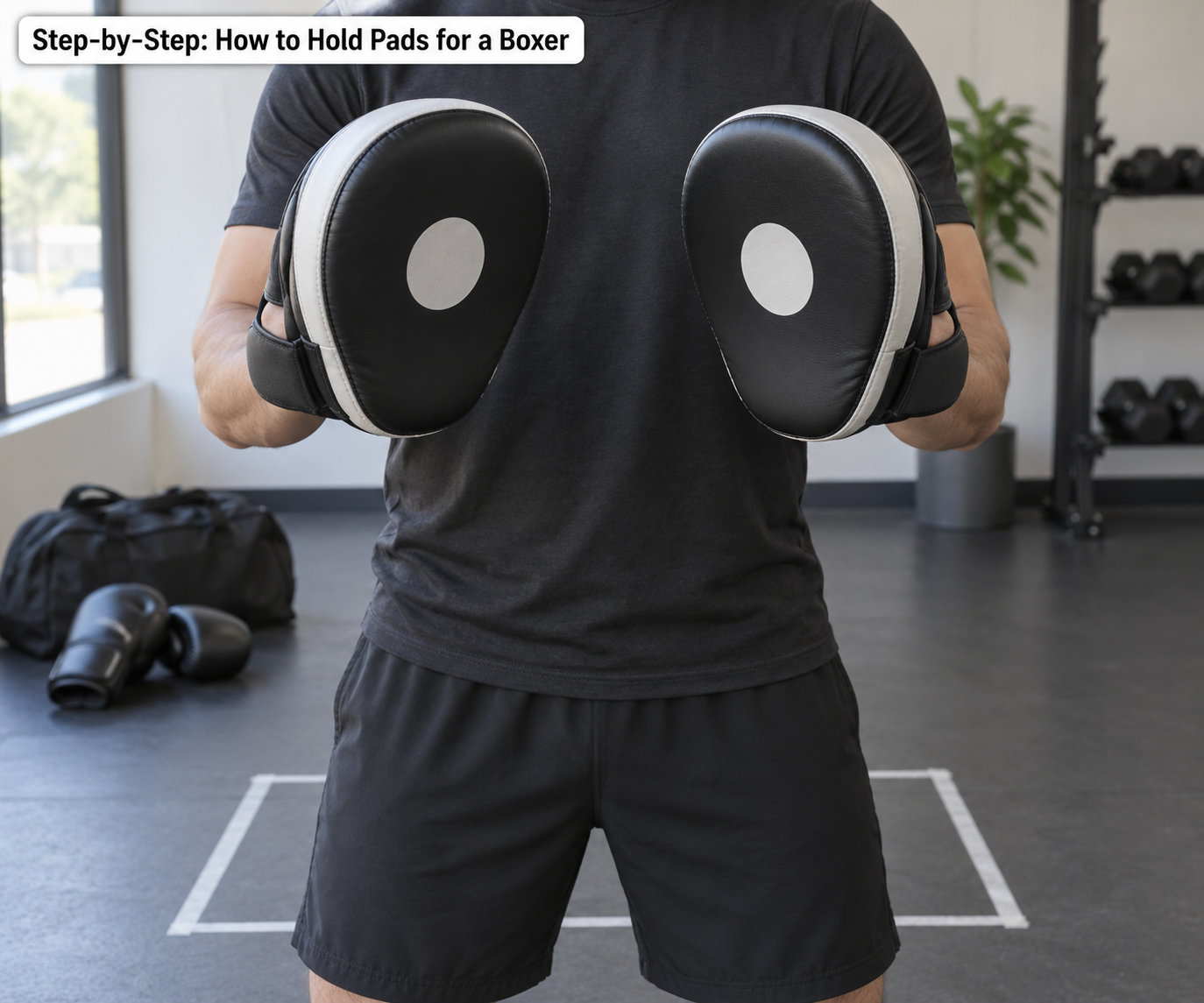
Set a stable stance before the first punch
Stand with your feet a little wider than your shoulders, weight even across both, knees soft and unlocked, chest tall. Elbows stay in contact with your ribs from the first second, because a flared elbow turns every straight punch into a wrist and elbow problem.
Position yourself an arm’s length plus one step away. Close enough that a fully extended jab lands on the pad without the boxer leaning in, far enough that their head and guard never pass your hands. Then stop standing in the middle of their eyeline and step to an angle of roughly 30 to 45 degrees, which is where an opponent would actually be.
Choose the right grip and hand position
For focus mitts, the striking surface faces the boxer and sits at knuckle height, with your fingers straight and the heel of your hand filling the middle of the pad. Your wrist stacks directly over your forearm rather than bending back.
For Thai pads, the long panel runs along the outside of your forearm, curve facing the boxer, elbow near one end and wrist near the other. Support the weight with your skeleton and the strap, not with a death grip in your fingers. Squeezing is how hands fatigue by round two.
Present a clear target
Straight punches go at eye or chin height, body shots at the sternum, and uppercuts low and angled up toward the chin. Hold the two pads close together, roughly a head’s width apart, not out at shoulder width. A wide target trains a boxer to punch without seeing anything.
Show the target before they commit, hold it steady long enough for them to load the punch, then catch it. Moving the target late or unpredictably teaches blind punching, which is a hard habit to unlearn later.
Move with the boxer
Small side steps are enough at first. Retreat a half step when they step in, angle around them as they circle, and use the step to stay clear of their lead foot. Moving in slightly to meet each punch protects the holder as much as the boxer, because you absorb the shock by absorbing it, not by bracing against it. Good holders do this without thinking about it.
Keep your eyes on their feet more than their gloves. Their feet tell you which direction the next punch is going, and it is the reason pad work improves footwork instead of hiding it.
Give timing and technique cues
Call the combination before it starts, using the standard numbering most fighters learn: one jab, two cross, three lead hook, four rear hook, five lead uppercut, six rear uppercut. “One-two, then down to the body” is clearer than a stream of words over their head.
Talk during rest periods, not mid-combination. Rewarding clean technique with an immediate reset keeps the boxer focused, and varying the drill from single punches to doubles to triples keeps them honest without turning the session into a shouting match.
Common Mistakes
Almost every bad pad session comes down to one of these, and all of them are fixable in a round.
- Holding like a dead fish. Arms locked out, no movement, purely there to absorb. The boxer gets no realistic feedback and your elbow takes everything. Fix it by meeting each punch with 2-3cm of forward movement and snapping back to ready.
- Standing too close or directly in front. Your hands end up where their guard wants to be. Fix it by stepping out to an angle immediately and keeping an arm’s length of space.
- Holding the pads too wide. Shoulder-width targets let a boxer throw without aiming. Fix it by bringing the pads closer together than feels natural.
- Flared elbows and raised shoulders. This is where pad holder’s elbow comes from. The pain shows up on the outside of the elbow where the wrist-extending tendon attaches, and it flares when the elbow stays open and the forearm eats the shock. Keep the elbow down and the shoulder relaxed.
- Coaching through the combination. Talking over a working puncher breaks their rhythm. Fix it by calling the next combination instead of critiquing the last one.
- Ignoring height mismatch. A much shorter holder can bend the knees, widen the base and adjust target height rather than holding everything at their own chest.
- Refusing to stop. Three to five rounds before swapping roles is a sensible limit, and any sharp pain is a reason to end the set right there. If elbow or shoulder pain keeps returning, get it checked by a doctor instead of training through it.
Frequently Asked Questions
How far should a pad holder stand from a boxer?
Start an arm’s length plus one step away, then move to an angle of 30 to 45 degrees. That distance lets a fully extended jab land on the pad without the boxer leaning forward, and the angle keeps your hands out of their eyeline. Retreat a half step whenever they step in, and keep an eye on their feet rather than their gloves.
Should beginners use focus mitts or both focus mitts and bags?
Start with focus mitts. They are lighter, easier to move and forgiving of imperfect timing, which makes them the right tool for learning how to hold pads for a boxer without getting an elbow problem in week one. Add a heavy bag once the boxer can hold his shape through a full three-minute round, because a bag teaches balance and endurance that pads never will.
How do I hold the pads for jabs, hooks, and uppercuts?
Jabs and crosses land at eye or chin height with the pad flat and square. Hooks land on a pad angled inward at the same height, with a slight outward curve so the punch wraps. Uppercuts need a low target angled up toward the chin, held a little closer to your body. Whatever the punch, the pad meets the glove at a right angle to the punch line.
What is the best grip when holding boxing pads?
Loose but secure. Your fingers stay straight inside a focus mitt, filling the middle with the heel of your hand, and the strap does the holding rather than your grip. For Thai pads, the panel runs along the forearm with the curve facing the boxer. Stack the wrist over the forearm and never squeeze to hold position, because grip strength is the first thing to fatigue.
How do I move the pads to improve a boxer’s footwork?
Match their step with your own and never cross in front of their lead foot. Present a target slightly behind where they are standing so they have to take a step to reach it, then slide to a new angle after each combination. Changing angle and distance every few rounds forces the boxer to reset his feet instead of planting and flailing.
When should a pad holder stop a round because of discomfort?
Stop the moment you feel a sharp point of pain in the elbow, wrist or shoulder, and do not try to finish the round. Dull forearm fatigue is normal and worth working through, but a sharp or recurring ache is a warning. If it keeps coming back after you have corrected your stance and grip, stop training it and get it assessed rather than pushing on.
Start with the basics: gloves on, timer set for three minutes, feet wide, elbows in. Hold the targets at eye and chest level, meet the first jab with a couple of centimeters of forward movement, and let the boxer reset. Everything else, the angles, the movement, the coaching, comes after those four things feel automatic.