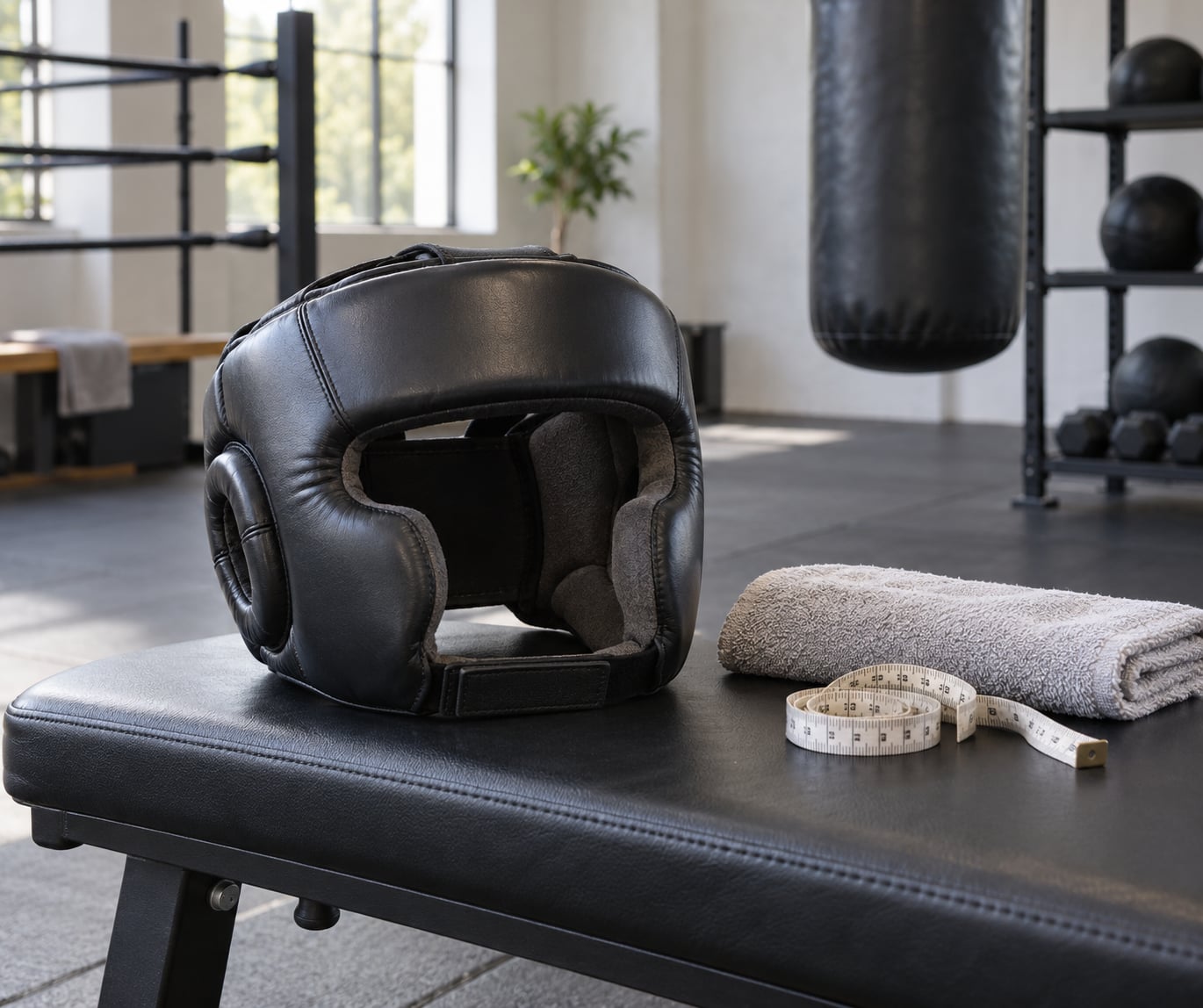
Boxing headgear fits correctly when the cheek protectors sit directly over your cheekbones, the front edge rests on or just above your eyebrow line, your ears sit inside the ear padding, and nothing shifts when you nod or shake your head. Getting there takes about five minutes, needs no tools beyond a measuring tape, and is a skill you can re-check before every session.
If you only remember one thing, remember this: a snug, centred fit protects you, while a loose or oversized fit gets in the way of seeing the punch coming. Badly seated headgear rotates on your head during sparring, rides up into your eyes, or presses on your jaw until you cannot swallow properly. None of that is better than having no headgear on at all.
Boxers who fit their own headgear tend to make the same handful of mistakes in the same order, and every one of them is fixable in under a minute once you know what to look at. The steps below take you from checking the shell to running a movement test, and they work for open face headgear, full face headgear and face-saver style headgear alike.
Table of Contents
What You Need
Start by confirming the headgear matches the work you are about to do. Competition rules and sparring rules differ from what you would wear on the pads, and a headguard meant for bag work rarely has enough cheek or brow coverage for a live round. If you are stepping into sparring for the first time, get a coach to confirm the type before you worry about the fit.
You also need a clean hand towel, the manufacturer’s sizing and care instructions, and access to a second pair of hands when you can get it. Full face headgear with top lacing is much easier with a helper standing above you, the way a hairdresser works. A coach, trainer or qualified gear fitter is the right person whenever you are unsure about a size or a safety decision.
Fit matters more than brand. Two headguards from different makers labelled medium can sit very differently, so judge each one on how it sits on your own head rather than on the label. Never train in headgear that is cracked, has loose padding, or is clearly undersized for your head. It protects less and distracts you more.
Step-by-Step: How to Fit Boxing Headgear Properly
1. Check That the Headgear Is the Right Type and Size
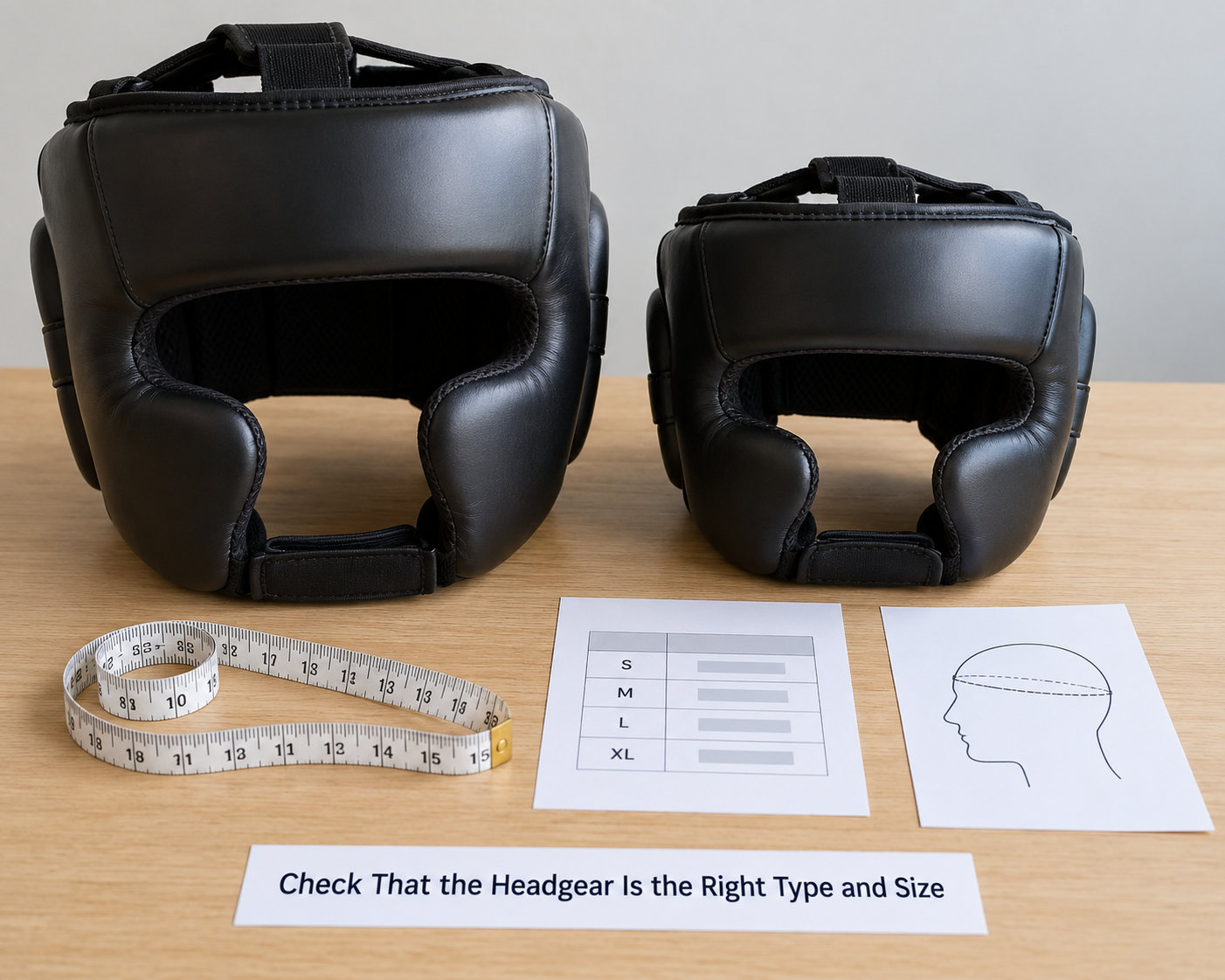
Match the headgear to the activity first: training pads, sparring headgear, and competition use each have different coverage requirements. Then read the size chart, measure your head as it instructs, and lay out the shell. Run your fingers around the cheek, chin, forehead and rear padding looking for cracks, compressed foam, or frayed straps. Stop here and get a second opinion if the padding is not even on both sides.
Check the shell before it ever touches your face. Compression or missing padding on one side only will pull the whole unit sideways the moment you start moving, and that twist is the reason so much headgear seems to slip in the ring.
2. Open the Fastenings Fully Before You Put It On
Loosen the rear closure, the top strap or lacing, and the chin strap completely before the headgear goes anywhere near your head. Padding dragged into position by a half-fastened strap sits unevenly, and you end up tightening one side to compensate for the other.
You should be able to put the headgear on and settle it comfortably before you tighten anything. If it feels like a fight when it first goes on, the size is wrong.
3. Position the Headgear Centrally
Place the headgear so the forehead padding sits level with your brow, on or just above the middle of the eyebrow. Centre the nose opening between your eyes and keep both cheek guards symmetrical, each one resting on its own cheekbone.
Do not tilt the headgear upward to open up your field of view. Plenty of fighters do it, and it exposes the forehead while shifting the cheek pads toward your ears where they do nothing. If your view is blocked, the headgear is the wrong size, not badly angled.
4. Secure the Rear and Top Straps
Fasten the rear closure first, then work the top and side straps evenly. You should be able to slide one or two fingers under each strap, and no more. The test is retention rather than pressure: the headgear should not shift when you nod or turn your head, and it should not leave a mark on your scalp either.
Even tightening is the whole trick. Pull one side snug, then match the other side before tightening anything else. Rearranging or swapping the headgear is often the fix when one side feels tighter than the other.
5. Adjust the Chin Fastening
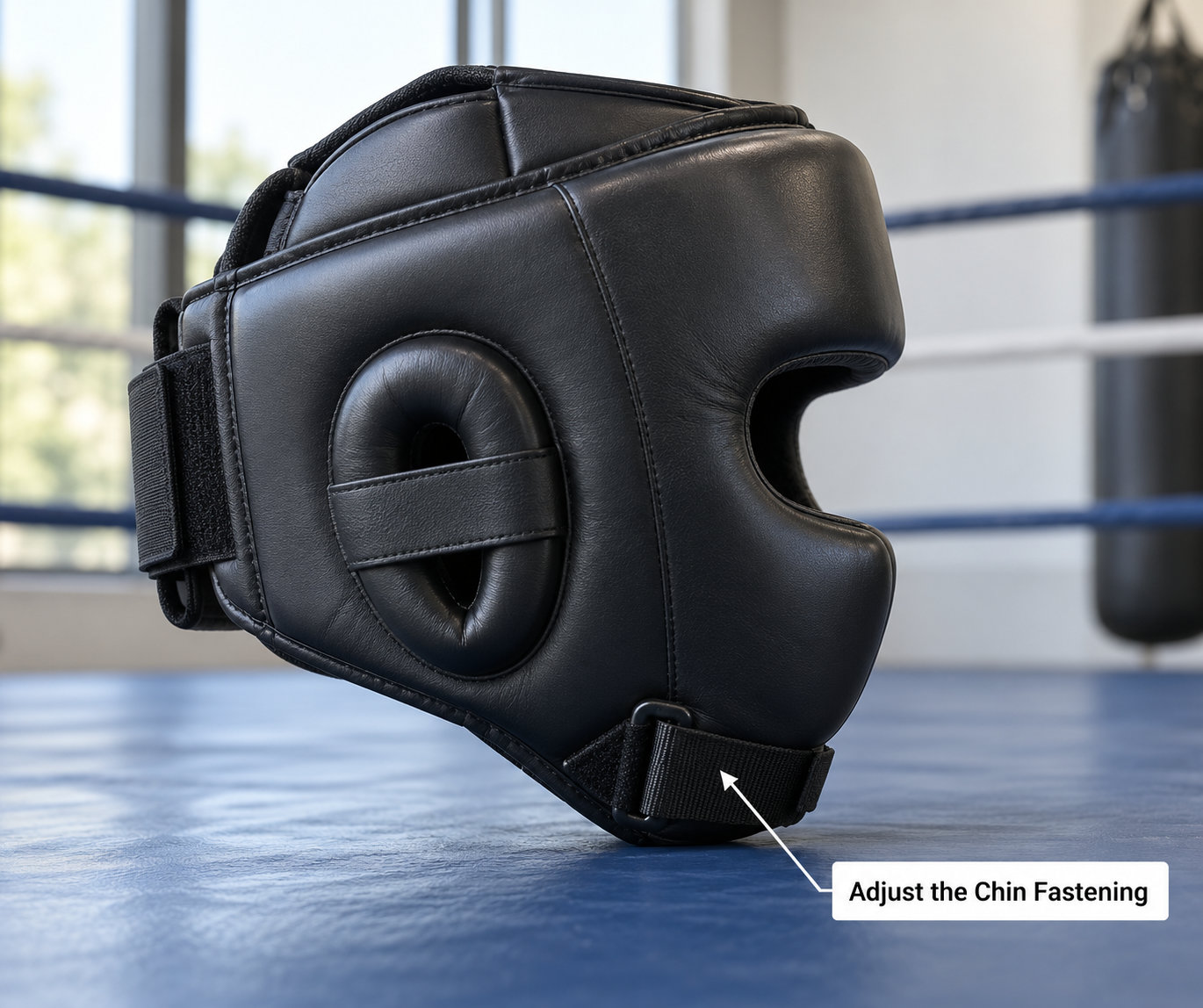
Position the chin cup so it supports the lower face without touching your throat or pushing your jaw upward. Then check the three things that catch people: your mouth opens naturally, your airway stays clear, and there is no pressure around your ears, temples or teeth.
A chin strap should feel secure, never restrictive. If you can slide two fingers between the strap and your throat, that is the right zone. Anything tighter starts to feel like being choked within a round or two, and fighters who ignore it end up with a headache they cannot explain.
6. Test Visibility, Hearing, Comfort, and Movement
Run the movement test before you step into a ring. Look left, right, up and down, then open and close your mouth and breathe through both your nose and mouth. Follow that with gentle nods, a chin tuck, a shake, and some shadowboxing at half speed.
The headgear should stay centred through all of it. It must not bounce, rotate, press painfully, block your peripheral vision, or muffle instructions from your corner. Bouncing around on the head during shadowboxing is a clear signal to stop and readjust before anything harder.
Common Mistakes
Wearing a size that is too large is the most common error and the most dangerous one. Oversized cheek pads eat the peripheral vision you need to see a punch arrive, and fighters report heading home with headaches after sessions where the headgear simply never sat right. Fix: remeasure, then size down one and re-run the movement test.
The opposite problem, headgear that is too small, shows up as cheek protectors resting too far back toward the ears instead of on the cheekbones, or as a forehead gap you can fit a finger through. Fix: go up one size, or add a size liner if your model accepts one.
Uneven tightening is the quiet culprit behind most slipping headgear. One strap pulled tighter than the other twists the shell so it rotates when you move. Fix: undo everything and tighten in order, alternating sides until both feel identical.
Raising the forehead padding to see better is a habit worth losing. It leaves the brow exposed and slides the cheek pads off the cheekbones. Fix: return the padding to eyebrow level and accept the size you actually need.
A loose chin cup gets ignored because it feels harmless. It is not. A chin strap that lets the headgear drop means the forehead and cheek pads stop protecting the places they were meant to. Tighten it until two fingers fit, then test again.
Cutting, trimming or padding out the inside of a headgear is a modification that changes the protection you paid for and voids most warranties. If padding is worn through or flattened, replace the unit rather than reshaping it.
Finally, do not train through warning signs. Numbness, a headache that lingers, ringing ears, breathing difficulty, or pressure that builds across a session are all reasons to take the headgear off and get a coach or fitter to look at it. Persistent symptoms after a session are a reason to speak to a doctor.
Frequently Asked Questions
Should boxing headgear feel tight?
Snug, not tight. You should be able to slide one or two fingers under the top and rear straps, and the headgear should not shift when you nod, shake or shadowbox. If you feel pressure points on your temples, forehead or the back of your skull, that is too tight. Headgear that feels loose will move in a round, and a headgear that feels tight gives you a headache before the session ends.
How tight should the chin strap be?
Secure enough to hold the headgear in place, loose enough that you can breathe and swallow normally. Two fingers should slide between the strap and your throat. The chin cup should sit under your jaw without pushing it upward or resting against your throat. If you catch yourself holding your breath, unclench your jaw and loosen the strap before you continue.
What if my head shape makes the sides feel tight?
Most likely you are between sizes, which is common because head shape varies far more than the labels suggest. Try the next size up and see whether the forehead and crown sit better, or use a larger size with a thinner liner if your model allows one. Avoid buying a smaller size on the theory that foam will mould to you; a cramped fit will not reshape, it will just compress unevenly.
When should I adjust boxing headgear during training?
Adjust before the first round and whenever it shifts during one. A quick check between rounds is worth it: look in a mirror, confirm the cheek pads sit on your cheekbones and the forehead padding is level, then retighten the straps evenly. Keeping the rear strap fastened between rounds also makes putting the headgear back on much faster.
Can I wear glasses inside boxing headgear?
Rarely comfortably. Most headgear is designed to sit on or just above the eyebrow, which is exactly where glasses frames run, so the pads press on the frame and the frame pushes into your brow. If you need corrective lenses, consider a model with a higher or narrower forehead opening, or wear contacts for training. Ask a fitter to test the specific combination before you rely on it in a round.
How do I know when boxing headgear should be replaced?
Replace it when the foam no longer springs back, the shell has cracks or hard creases, straps are stretched or the fastener no longer holds, or the lining smells permanently even after cleaning. Most wear shows up first at the forehead and cheeks, which take the most contact. Once padding is compressed, protection drops and the fit changes, so a second opinion from a coach or fitter is worth it.
Fit It, Test It, Then Get a Second Check
Start with the correct size for your activity, open every fastening before the headgear goes on, and tighten the rear, top and chin straps in order and evenly. Then run the movement test, looking left and right, breathing, and shadowboxing at half speed, and check that nothing shifts.
Do it once with a coach watching before you rely on it in hard training or sparring. If your vision, breathing or hearing is affected in any way, get a second opinion rather than adjusting around the problem.