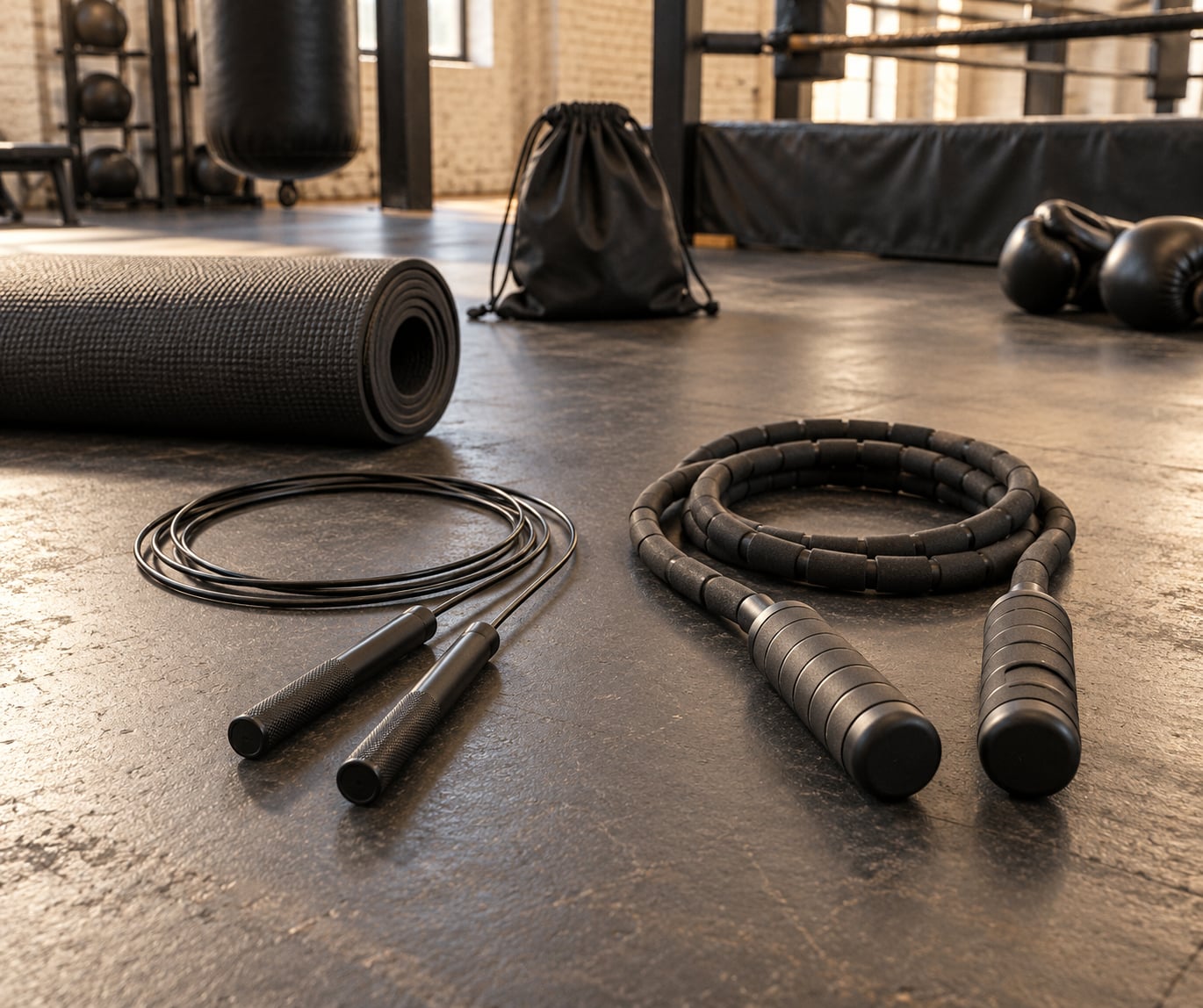
The difference between speed rope and weighted rope comes down to mass. A speed rope is a thin, lightweight cable built to turn fast, while a weighted rope carries extra weight in the handles or in a thicker cable, so every revolution is harder and slower. A speed rope trains rhythm, footwork and cardiovascular capacity; a weighted rope trains your shoulders, forearms and trunk at a steadier pace. Most people should learn on the light one first.
The question that comes up in almost every boxing gym is the one a beginner posted on r/Fitness years ago: what is each rope actually for, beyond being lighter or heavier? The honest answer is that they train different things, and pairing the wrong one with your goal is how people end up doing three months of rope work and getting almost nothing they wanted.
Table of Contents
- Difference Between Speed Rope and Weighted Rope at a Glance
- What Is a Speed Rope?
- What Is a Weighted Rope?
- How Do They Feel During a Workout?
- Which One Is Better for Boxing?
- Speed Rope vs. Weighted Rope: Technique and Safety
- How to Choose the Right Rope for Your Goal
- Which Should You Choose?
- Frequently Asked Questions
- Conclusion
Difference Between Speed Rope and Weighted Rope at a Glance
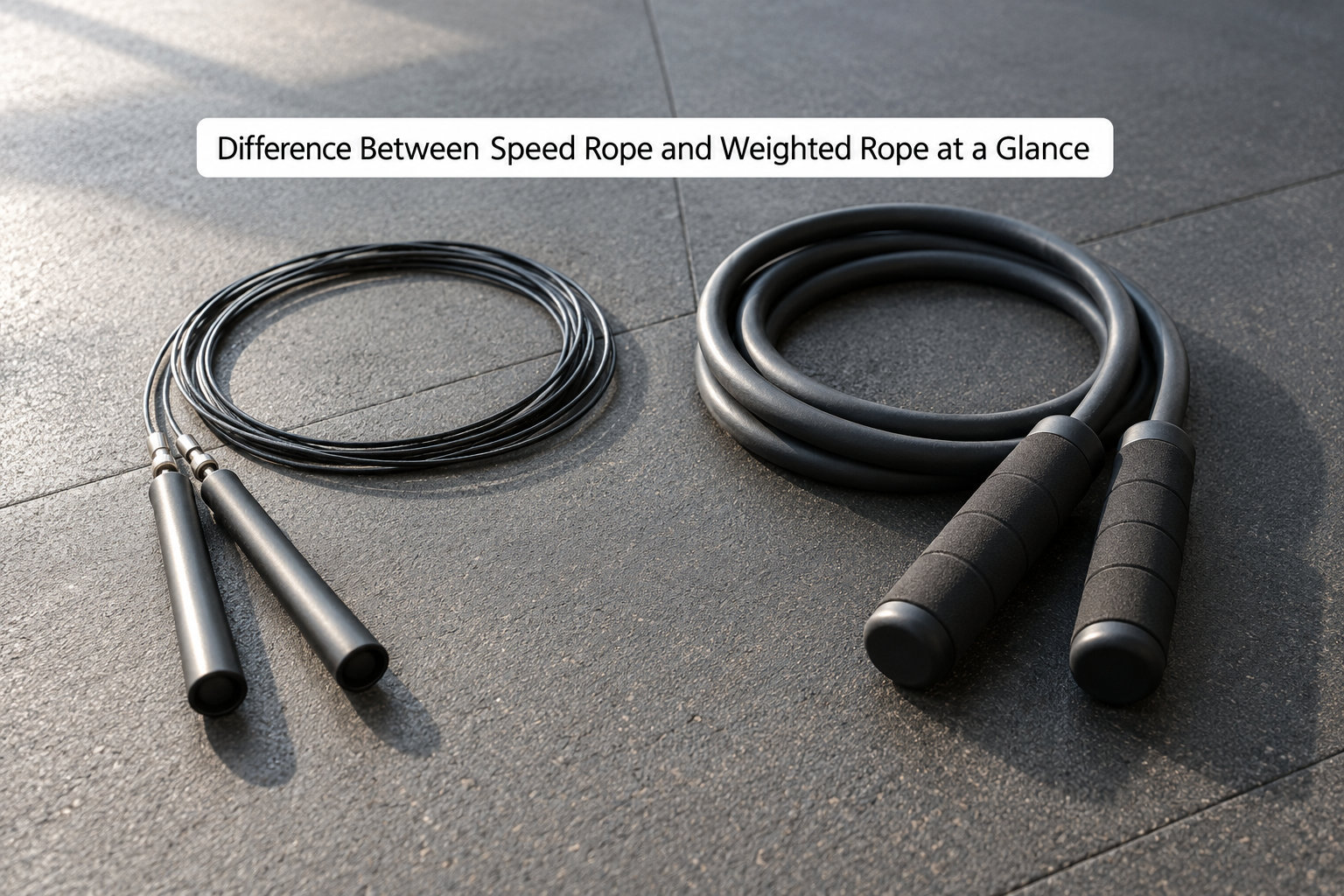
| Category | Speed rope | Weighted rope |
|---|---|---|
| Rope weight | Very light, often a few ounces of cable plus plastic handles | Adds roughly 0.5 lb to 2 lb of extra mass |
| Where the weight sits | Evenly, across a thin cable | In the handles, or evenly down a thicker cable |
| Realistic turn rate | High, fast enough for double unders | Moderate, rarely more than a steady skip |
| Main demand on the body | Calves, shoulders rhythm, cardiovascular system | Shoulders, biceps, triceps, forearms, trunk |
| Feel | Light, quick, easy to lose rhythm on | Heavy, deliberate, hard to rush |
| Best for | Footwork, timing, HIIT, boxing conditioning, warm-ups | Upper-body endurance, slower intervals, arm-work pump |
| Beginner suitability | Best for learning the basic bounce, once spacing and posture are right | Helpful for rhythm, harder to turn |
| Joint and tendon load | Low impact, thousands of light landings | Higher load through knees, ankles and shoulders |
| Space needed | Small patch of clear floor | Same, but with more room for safe landings |
One row deserves emphasis. The difference between speed rope and weighted rope is not simply heavier versus lighter; it is where that mass sits, and that single design choice changes how the rope behaves through a full set.
What Is a Speed Rope?
A speed rope is a jump rope built thin. The cable is usually PVC-coated vinyl or steel wrapped in plastic, the handles are hollow or foam-filled plastic, and the bearings at each end are the part that matters most. A good speed rope turns on a single fluid wrist motion with almost no resistance, which is exactly what makes fast repetition possible.
- Primary benefits: raises heart rate quickly, sharpens hand and foot coordination, and builds a sense of timing you can carry into the ring.
- Best for: boxing footwork, shadow work, interval conditioning, travel cardio and any home warm-up that needs to happen in two minutes.
- Not best for: adding meaningful resistance to the arms and shoulders.
Why the speed rope builds footwork
Skipping forces you to stay light on the balls of your feet and to keep the bounce short, which is the same shape a boxer needs when moving in a small space. It also punishes bad rhythm immediately, so the feedback loop is fast.
The signature move here is the double unders, where the rope passes under your feet twice for a single jump. You will not do them on your first day, and most people never do them well on a weighted rope at all, because the rope has to accelerate fast enough to catch both passes. If your goal involves them, a speed rope is not optional.
What Is a Weighted Rope?
A weighted jump rope is a rope that has been deliberately made heavier, usually by adding mass to the handles or by using a thicker cable with weight built in. The added inertia means the rope takes more force to move and comes around more slowly, so your turns get heavier and your cadence settles.
- Primary benefits: loads the shoulders, biceps, triceps and forearms, and gives you spatial feedback that makes a steady rhythm easier to find.
- Best for: upper-body endurance, slower conditioning intervals, and finishing arm or shoulder sessions.
- Not best for: maximum turn rate, double unders, or anyone whose knees or shoulders are already irritated.
Weighted handles vs weighted cable
These two versions are often sold under the same name and they are not the same tool. Weight in the handles makes the rope uneven, so it lags on one side and can pull your rhythm out of line. Weight distributed down a thicker cable rotates more consistently, so the rope feels more balanced even though the total mass is the same.
Common weight steps run in quarter-pound increments, so you will see ropes at 0.5 lb, 1 lb, and 2 lb, with lighter options around 0.25 lb for very heavy ropes where that figure means the cable alone. Adjustable handle models let you dial up in small steps rather than buying a new rope each time.
How Do They Feel During a Workout?
Ten minutes on a speed rope and ten minutes on a weighted rope are not the same session, even though the clock says the same thing. The speed rope lets you hold a cadence around 160 to 190 jumps per minute, which is genuinely hard, but the effort is spread through your legs and your cardiovascular system.
The weighted rope sits at a much lower jump count, somewhere in the 80 to 120 range, and the burn shows up in your forearms and shoulders first. People describe the light rope as buzzy and the heavy rope as grinding, and beginners often find the heavy rope steadier, because a slower rope gives you time to correct your timing. That is the part most people miss on this query: added weight slows the rotation, which can make rhythm easier to find even though the work is harder.
On calories, a heavy rope usually burns fewer per minute than a fast light rope simply because you cannot keep the pace up. A person chasing fat loss gets more out of fast skipping; a person chasing a pump gets more out of the heavy rope.
Which One Is Better for Boxing?
For boxing, the speed rope wins on footwork, rhythm and conditioning, and the weighted rope wins on controlled resistance. Neither one is better for every boxer, and the honest split is by what your session is for.
Most competitive programmes keep a speed rope in the bag because it builds the engine and the timing that a three-minute round demands. It is also the fastest warm-up there is: a boxer can step off the floor, get a rope going and be working within a minute.
Where a weighted rope earns its place
Use a weighted rope for slower interval work between rounds, for shoulder and arm endurance, and for shadow work where you want the rope to slow you down rather than speed you up. Practitioners on the 8LimbsUs Muay Thai forum have argued about this for years, and the split that most of them land on is simple: light rope for fast rounds, heavy rope for controlled rounds.
The long-running r/bjj thread on weighted rope versus speed rope makes the same point from the grappling side. Warm-ups and long easy sessions go faster, and a heavier rope is more useful as a finisher or a pacing tool than as the main event.
Speed Rope vs. Weighted Rope: Technique and Safety
Setup matters more than rope choice, especially for a beginner. Get these four things right and either rope will behave.
- Check the length: stand on the middle of the rope with both feet and pull the ends up. They should reach your armpits, no lower.
- Set your grip: hold the handles in your palms with your thumbs wrapped, elbows close to the ribs and shoulders down. The rope turns from the wrists, not the arms.
- Keep the bounce low: jump about an inch off the floor, land on the balls of the feet, and keep your knees soft.
- Pick the surface: a sprung gym floor or padded mat beats concrete. Skip outdoor asphalt entirely; the joint load is not worth the novelty.
Common mistakes and joint precautions
The most common mistake with a weighted rope is picking one that is too heavy too soon, then cheating the turn with the whole arm and wrecking the shoulders. A rope you can only move by swinging your elbow is too heavy for that session.
Second mistake: skipping on concrete, which multiplies the impact through the knees and ankles. Third: adding volume before the rhythm is clean. Each rotation lands as a small impact, and a heavy rope makes each one slightly bigger, so tendons and joints take the bill before the muscles do.
If you have existing knee, ankle or shoulder problems, start with the light rope on a soft surface and speak to a doctor or physiotherapist before adding load. Progress the weight in small steps rather than jumping from nothing to a heavy rope.
How to Choose the Right Rope for Your Goal
Start from the goal, then the experience level, then the space and the joints. A simple way to pick a weighted rope is to choose the lightest weight that still feels like work, then jump up a quarter pound at a time once two clean sessions have passed.
| Goal | Experience | Rope to use |
|---|---|---|
| Learn the bounce and basic rhythm | New | Light speed rope, or the lightest weighted option |
| Boxing footwork and conditioning rounds | New to moderate | Speed rope |
| HIIT and maximum calorie burn | Moderate | Speed rope, fast cadence |
| Upper-body endurance and arm pump | Moderate | Weighted rope, mid range |
| Double unders | Skilled | Speed rope, thin cable |
| Slow, controlled interval work | Skilled | Heavier weighted rope, cable-weighted |
On the beginner contradiction you will read around the web, the split depends on what kind of beginner you are. If your problem is stopping on every third jump because the rope keeps catching your shoes, a slightly weighted rope may fix it. If your problem is that you cannot string ten jumps together, a speed rope with a proper length and posture coaching will get you there faster.
Which Should You Choose?
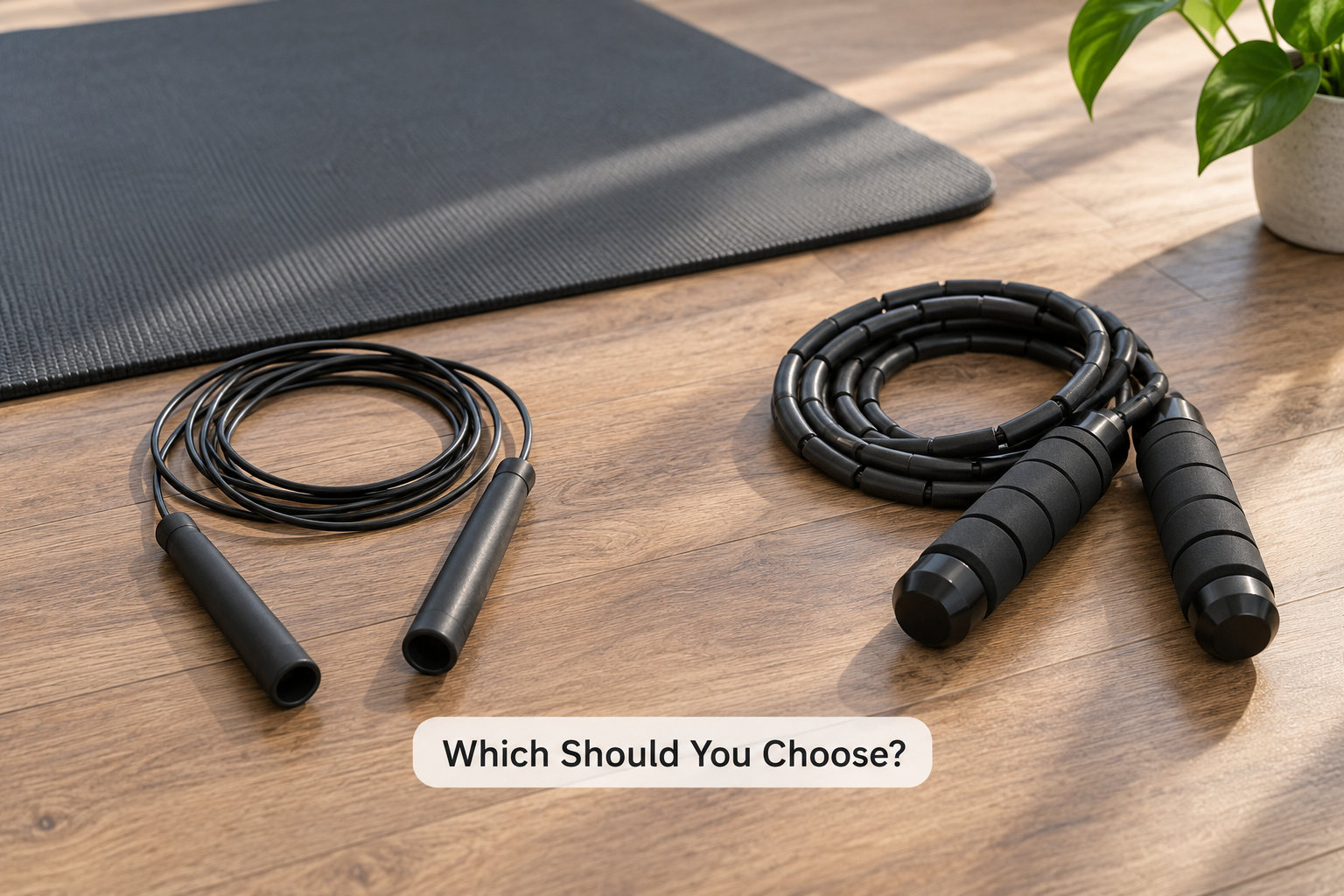
- Choose a speed rope if your goal is fast boxing conditioning, footwork, timing, double unders, weight loss, or a warm-up you can do anywhere in two minutes.
- Choose a weighted rope if your goal is upper-body strength and endurance, slower conditioning intervals, rhythm work, or a pump after an arm and shoulder session.
- Use both if you train regularly. A simple weekly split is speed rope for fast days and footwork sessions, weighted rope for slower interval days, and one full rest day from the rope for the knees.
If you can only own one rope, own the light one. It is easier to progress from a speed rope to a weighted rope than the other way around, and it is the tool that supports more of what a boxer actually does.
Frequently Asked Questions
Is a weighted rope harder than a speed rope?
Usually yes, because the extra mass slows the rope’s rotation and makes your shoulders, arms and trunk work harder. The gap narrows fast: most beginners find a lightly weighted rope easier to keep rhythm on, because the slower arc gives them time to correct their timing. If a rope makes you swing from the elbow instead of turning from the wrist, it is too heavy for that session.
Do weighted jump ropes build muscle?
They add resistance to jumping and rope handling, which builds endurance and produces a noticeable pump in the shoulders, biceps, triceps and forearms. That is not the same as building muscle size. Actual growth needs progressive resistance training, enough protein and consistent recovery. Treat a weighted rope as a conditioning and coordination tool that supports your training, not a replacement for it.
Are weighted jump ropes good for beginners?
They can be, and the sources often disagree on this. A slightly weighted rope slows the rotation, which helps some beginners find a steady rhythm instead of tripping. Other beginners just find a heavier rope harder to turn. Start with the lightest option, use a soft surface, and drop back to a speed rope if your form breaks down over three or four sets.
How heavy should a weighted jump rope be for boxing?
There is no single required weight. Choose the heaviest rope that still lets you keep smooth wrist turns, steady breathing and controlled landings for the full interval without swinging from the shoulder. Most people land between the lightest option and around one pound, and heavier ropes suit slow controlled rounds rather than fast ones. Raise the weight in quarter-pound steps once two clean sessions have passed.
Conclusion
The difference between speed rope and weighted rope is mass, and mass decides the workout you get: fast footwork and cardio from the light rope, upper-body endurance and slower conditioning from the heavy one. Start with the rope that matches the goal you are training this month, get the length and posture right, and add weight or duration only once the rhythm is clean.