Boxing headgear reduces cuts, abrasions, swelling and superficial bruising on the face. It does not prevent concussion or traumatic brain injury. That gap between what it does and what people assume it does is where most gym injuries get their false confidence.
I have watched plenty of fighters put headgear on before hard sparring and relax, because the padding feels like permission. The padding is real. The permission is not. A headguard sits between a glove and a face; a concussion comes from the brain accelerating and rotating inside a rigid skull, and foam sitting on the outside of that skull does very little about either.
So let’s split this properly. What follows covers what headgear genuinely helps with, what it leaves completely exposed, how the three main designs differ, and what actually lowers your risk of a bad head injury.
Table of Contents
- What Headgear Does and Does Not Prevent in Boxing
- What Boxing Headgear Is Designed to Protect
- Cuts, Swelling, and Facial Injuries
- Does Boxing Headgear Prevent Concussion?
- Ear Protection and Cauliflower Ear
- What Headgear Does Not Do
- Headgear Types and Their Main Trade-Offs
- How to Improve Protection Without Relying on Headgear
- Frequently Asked Questions
- Conclusion
What Headgear Does and Does Not Prevent in Boxing
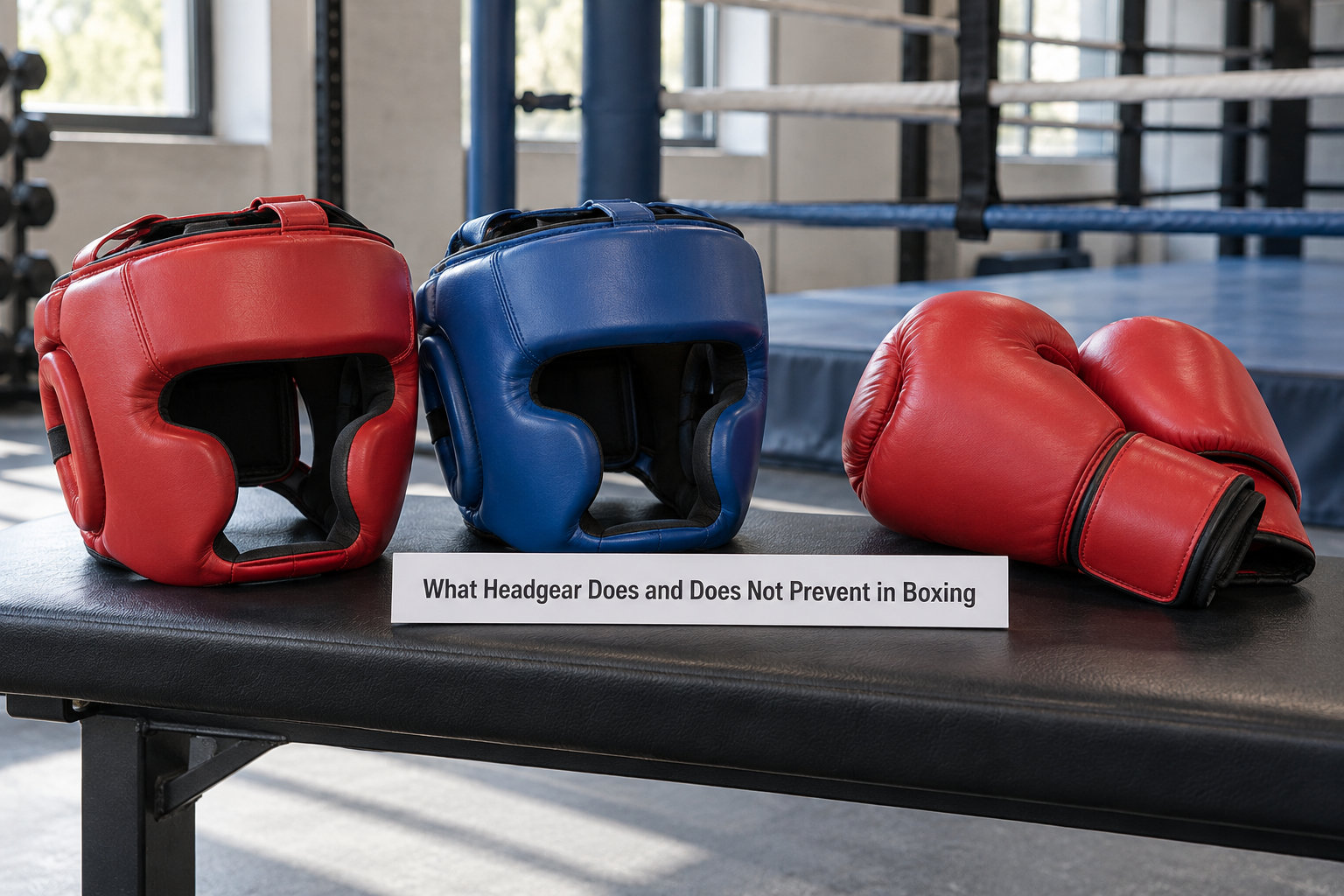
The short version: headgear is a surface injury tool. It spreads a punch across a wider area of foam instead of a small area of skin, and that spreading is what stops lacerations and cuts. Everything below the skin, and everything inside the skull, is outside what it was designed to do.
What headgear does help prevent:
- Cuts and lacerations over the eyes, cheeks and nose bridge
- Abrasions from scrapes on the ring canvas
- Superficial bruising and swelling around the eyes
- Facial cuts caused by accidental head clashes at close range
- Ear damage in designs that actually include ear protection
What headgear does not prevent:
- Concussion or traumatic brain injury
- Broken noses, jaw fractures and orbital bone fractures
- Whiplash-style neck injury from rotational force
- A knockout, or the sequence of punches that causes one
- Cuts deep enough to need stitches when the blow lands hard
- Bad habits, because it changes nothing about where your hands are
Not one person on the forum threads I read described headgear stopping a punch. What they described, over and over, was fewer cuts and more confidence, and those two outcomes sitting in the same sentence is the honest summary of the equipment.
What Boxing Headgear Is Designed to Protect
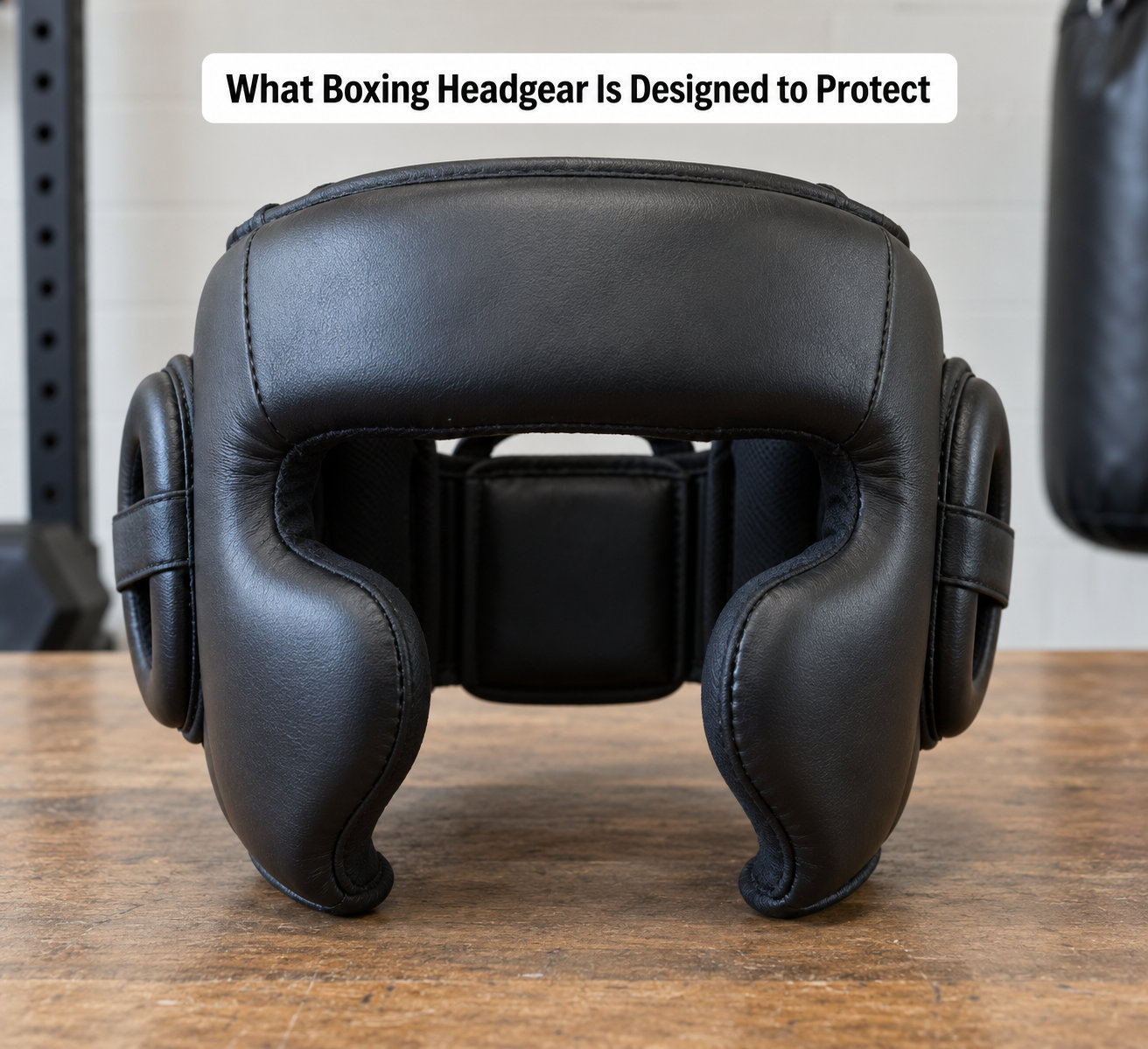
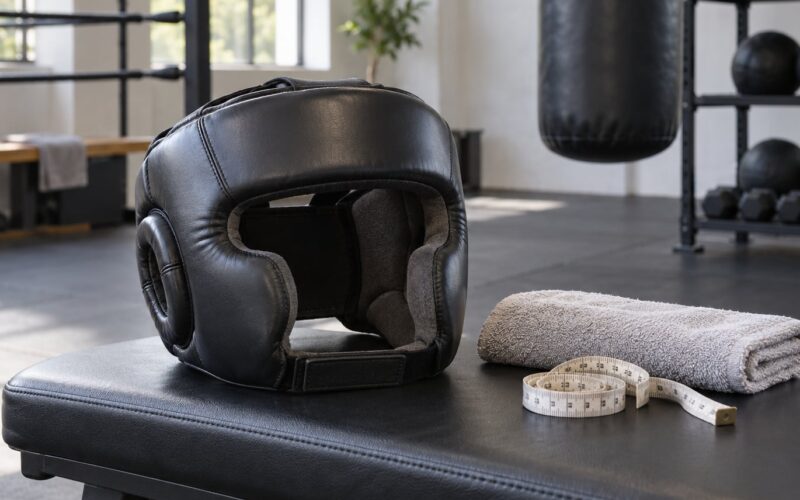
A boxing headguard is a padded shell that covers some combination of the forehead, temples, cheeks, ears, nose bridge and the back of the skull. Which parts it covers depends entirely on the design, and that is the detail most product pages skip.
Open face headgear wraps the forehead, temples and sides, and leaves the face open. It is the classic amateur competition look and the easiest to see out of. Cheek protector headgear adds padded cups over the cheekbones, which is where amateur rules tend to demand coverage. Full face headgear adds a nose bar or facesaver-style bar across the bridge, and it is the design most associated with kickboxing and with fighters coming back from a broken nose.
Notice what is missing from most of them. The ears are usually exposed or only lightly grazed, the chin is almost always bare, and the top of the skull is covered thinly at best. In hard sparring, the strike zone that gets used most is also the zone with the least padding.
Cuts, Swelling, and Facial Injuries
Headgear reliably reduces superficial facial injuries, and this is its entire reason for existing. A cut over the eye is the injury that ends careers more often than a knockdown does, because the swelling closes the eye and the fight or the tournament is over.
The mechanism is simple. Without padding, a glove concentrates force into a small patch of skin and the skin splits. With a centimeter or two of foam, that same force spreads across a wider area and the skin stays intact. The padding does not remove the force, it redistributes it.
Where the protection fails is when the surface is different. A fighter driven through the ropes onto the canvas, or taking an elbow on a hard angle, hits harder than the equipment was built to absorb. Fighters returning to the gym report nose and eye injuries that happened despite wearing headgear, and they are not exaggerating, because padding designed for a straight punch does very little for a headbutt or a fall.
There is also the fit problem. A loose headguard shifts, and once it shifts, the padding that was protecting the cheekbone is now pressing somewhere useless. Most cut-through headgear injuries I have heard described came from equipment that had stretched over months and was never replaced.
Does Boxing Headgear Prevent Concussion?
No. Headgear does not prevent concussion, and no governing body or sports medicine authority claims that it does.
A concussion is a brain injury driven by acceleration and rotational force, not by surface contact alone. When a punch lands, the skull moves, and the brain moves inside it at a slightly different speed and on a slightly different path. Headgear adds foam to the outside of the skull. It changes the friction between glove and face; it does not meaningfully change what the brain is doing.
Experts in sports medicine have been blunt about this for years. A 2023 report carried by The Guardian relayed the position of Australian concussion specialists, who warned that wearing headgear does not protect against concussion and called for better public awareness of the distinction.
There is one piece of counter-evidence worth being honest about, because it complicates the picture rather than confirming the slogan. A 2025 peer-reviewed article in the medical literature reviewed evidence on protective headguards in amateur boxing and mixed martial arts and reported that headgear increased protection against acute concussion symptoms in amateur Olympic boxers. Acute symptoms are not the same as long-term damage, and that finding has not been reproduced in professional boxing. If you want one sentence to remember: headgear may take the edge off how a bad hit feels in the amateur ring, and it does not make the brain safe.
Getting this wrong has consequences at the moment of injury, not just at the article. If you take a head impact and have symptoms such as confusion, headache that will not settle, nausea, blurred vision, slurred speech, unusual fatigue or trouble concentrating, stop training and get assessed by a doctor rather than finishing the round. Do not hand it to a coach and do not sleep on it. And if you see someone else go down and stay down, call emergency services rather than waiting to see if they get up.
Ear Protection and Cauliflower Ear
Headgear only helps your ears if it is built to. Ear cups, or removable silicone or foam ear protectors worn under a headguard, are the only designs that address cauliflower ear directly, because the mechanism is friction and pressure on the ear, not impact on the head.
Cauliflower ear, technically auricular perichondritis, happens when the cartilage between the ear and the skull is damaged and the ear swells into that lumpy shape. It develops gradually across a session, a week, or months, and once it has started, no headgear will reverse it. Prevention is the only real option.
Forum consensus on this is consistent, and it is more useful than most gear marketing: headgear is prevention, not a cure. Fighters still arrive with cauliflower ear despite wearing the thickest headgear available, usually because the design they chose leaves the ears exposed or because they removed the ear cups by round three. That is the honest answer to the question everyone in the gym asks.
What Headgear Does Not Do
Some of the most persistent myths come from treating headgear as a solution instead of one layer. It does not make punches harmless, does not eliminate concussion risk, and does not prevent every eye or nose injury.
It also does not correct your defence, your distance work or your habit of pulling back on the same hook every time. That is technique work, and a piece of foam cannot do it for you. Nor does headgear make hard sparring safe, which is the misunderstanding with the highest cost attached to it.
Two more limits worth naming. It does not reliably reduce knockouts, because a knockdown comes from accumulated rotational force and a loss of balance, not from the skin. And it does not protect the neck, which takes rotational load on every heavy hook.
Headgear Types and Their Main Trade-Offs
Every design trades coverage against what you lose wearing it. More padding means less peripheral vision, less hearing your corner, more heat, and a bigger-looking target.
| Headgear type | Covers | Does not cover | Main trade-off |
|---|---|---|---|
| Open face | Forehead, temples, sides of the skull | Nose, cheeks, ears, chin | Best visibility and cooling, least facial coverage |
| Cheek protector | Forehead, temples, cheekbones | Nose bridge, ears, chin | More swelling protection, noticeable field-of-view reduction |
| Full face with bar | Forehead, temples, cheeks, nose bridge | Most of the ears, chin, back of the skull | Most facial coverage, least visibility and cooling |
| Ear-cup or ear-protector style | Ear cartilage, plus the coverage of its base design | Varies; often lighter on the nose and cheeks | Targets cauliflower ear, padding varies widely by model |
Open face headgear and visibility
Open face is the easiest to fight in and the easiest to see out of. Fighters who take their eyes off the opponent tend to lose peripheral vision first with bulkier designs, and open face limits that problem.
Cheek protector headgear and eye swelling
This is the amateur standard in most competitions and the design to pick if swelling around the eyes is the injury you keep getting. The cost is a narrower view of the ring and a warmer face.
Full face headgear and the nose bar
The bar exists to spread impact across the cheekbones so the nose does not take a direct shot. It works as designed on clean, straight punches and does very little against elbows, falls or head clashes. Fighters returning from a broken nose often use it for a period and then drop back to cheek protector.
Foam sparring headgear versus regulation boxing headgear
Foam sparring headgear and regulation competition headgear are not the same product. Foam gear is a rounded, closed-cell shell worn for sparring, usually with less cheek and ear coverage. Regulation headgear is the padded, laced or hook-and-loop competition design your sanctioning body requires. Beginners mix these up constantly, so check with your gym before you order anything.
How to Improve Protection Without Relying on Headgear
The actual risk reduction comes from everything around the equipment, and it is not glamorous.
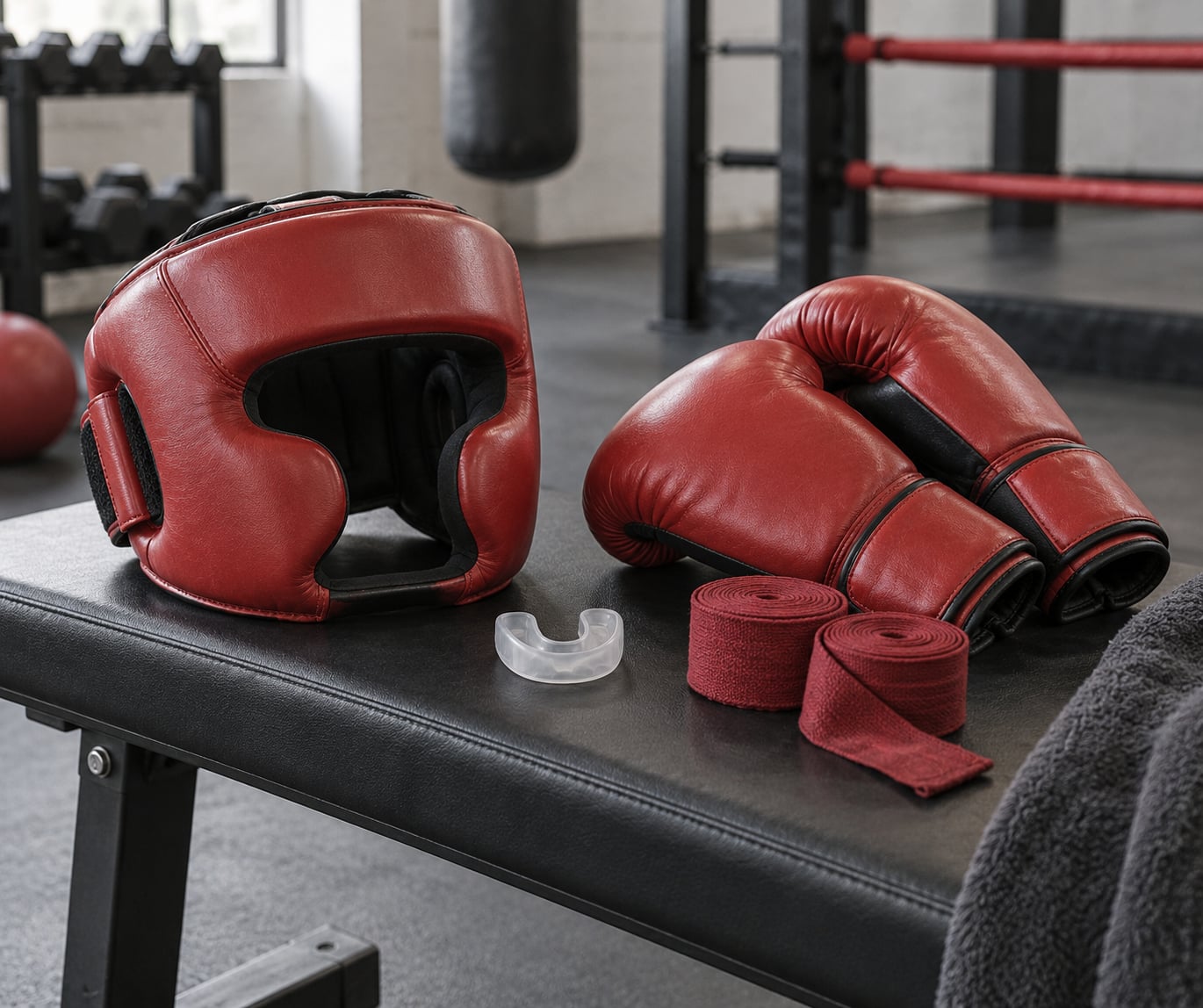
- Use approved, correctly fitted gear. A headguard from your sanctioning body’s approved list, fitted so it does not shift when you move.
- Inspect it before every session. Worn foam, stretched straps and a shifted cheek cup are worse than no gear because they look like protection.
- Build your defence. Chin tucked behind the glove, feet moving, head out of range. The cheapest head impact is the punch that never arrives.
- Match glove weight to the work. Not every session is a hard session. Progress sparring intensity deliberately rather than jumping to competition pace.
- Wear a fitted mouthguard. It protects the teeth and jaw and it keeps you from biting through your own lip on impact.
- Look after your ears properly. Ear cups or removable ear protectors for sparring, and deal with early swelling rather than hoping it settles.
- Respect the rules on blows to the head. Most gym cultures treat a hard head shot as a foul in spirit even when nobody is keeping score.
- Stop when symptoms appear. A headache that will not settle, confusion, nausea or blurred vision after a head impact means you are done for the day and need a medical opinion.
Neck strength and controlled sparring load matter too, and both are easier to build than most people expect. A boxer who takes hard sparring twice a week and pads once has a different head exposure profile from one who does both at full intensity, regardless of what either of them wears.
Frequently Asked Questions
Does headgear prevent concussions in boxing?
No. A concussion comes from acceleration and rotational force moving the brain inside the skull, and padding on the outside of the skull does not change that. Sports medicine authorities have stated clearly that headgear does not protect against concussion. It reduces cuts, abrasions and swelling. If you take a head impact with confusion, nausea, blurred vision or a headache that will not settle, stop and get assessed.
Is headgear useful in boxing?
Yes, for the job it was designed for. It is one of the most effective tools against cuts over the eyes, cheek abrasions and swelling caused by head clashes, and those injuries end more amateurs than knockouts do. It is not useful as brain protection, and treating it that way leads fighters to trade harder than they should.
Does headgear prevent cauliflower ear?
Only if the design actually includes ear protection. Cauliflower ear develops from friction and pressure on the ear cartilage over time, so only ear cups or removable ear protectors address the mechanism. Once swelling has started, headgear cannot reverse it. Prevention during training matters far more than treatment after the fact, and most cases trace back to gear without real ear coverage.
Does headgear prevent broken noses and facial fractures?
Partly at best. A nose bar spreads impact across the cheekbones so a clean, straight punch is less likely to fracture the nose directly, which is genuine protection in that specific case. It does very little against elbows, falls, or a hook landing on an angle. Anyone with a suspected fracture needs a doctor, not a piece of equipment.
Does headgear make a knockout more or less likely?
Neither in any reliable way. A knockdown comes from accumulated rotational force, balance loss and a fighter being unable to recover, not from skin contact. Wearing headgear has been linked to bouts lasting longer because fighters feel safer taking head shots, and a longer bout is more exposure, not less. Boxers stopped wearing headgear in Olympic competition in 2013 over concerns tied to this.
Why don’t professional boxers wear headgear in fights?
Professional rules do not require it and most sanctioning bodies actively discourage it. The reasoning is that it slows fights, reduces clean punching, restricts vision and removes the fighter’s own awareness of taking a damaging shot. Amateur competition still requires approved headgear, so the split between levels is deliberate. If you want the history of that decision, it is worth reading the governing body rules directly.
Conclusion
Headgear reduces cuts, abrasions, swelling and head-clash injuries, and for the amateur ring that is a real and worthwhile benefit. It does not prevent concussion, fractures, knockouts or cauliflower ear. Start by choosing well-fitted, approved protection for the job you are doing, then put your real effort into defence, controlled sparring and taking head-impact symptoms seriously.