Boxing shoulder pain usually has three causes: a technique fault that loads the joint, a strength base built almost entirely on pushing, or simply more rounds than the shoulder can recover from. Warm up properly, correct the punch, and balance your training, and most of that ache never arrives.
This is a prevention guide for recreational and competitive boxers, not a diagnosis. The work is small: about 15 minutes per session plus two or three short strength blocks a week, done consistently, starting before pain shows up.
One number frames all of it. A single professional fight can involve more than 1,600 blows to the head, and every one of them asks the rotator cuff to hold the shoulder steady while the arm extends and absorbs impact. Four small muscles, thousands of repetitions, often no warm-up and no pulling work at all.
For anything persistent, severe or unexplained, a doctor or a qualified sports clinician is the right call. Nothing below replaces that.
Table of Contents
What You Need
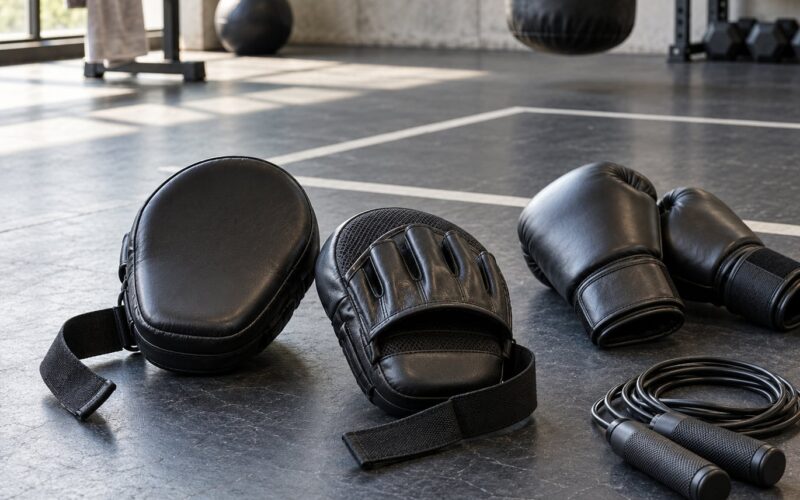
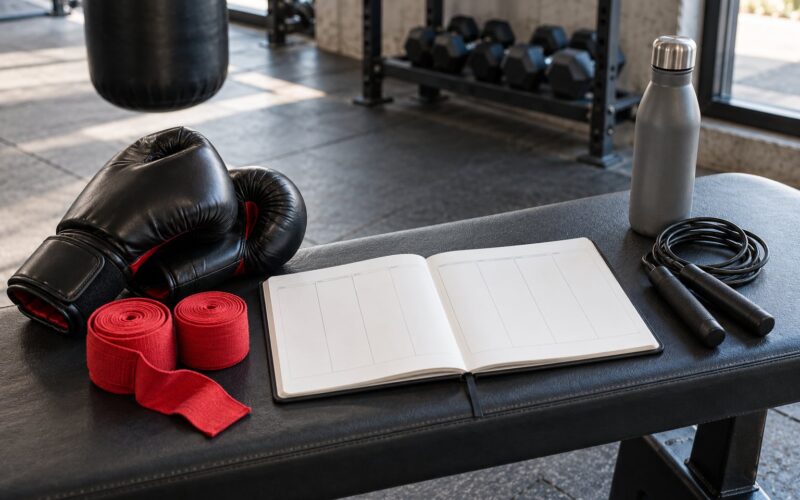
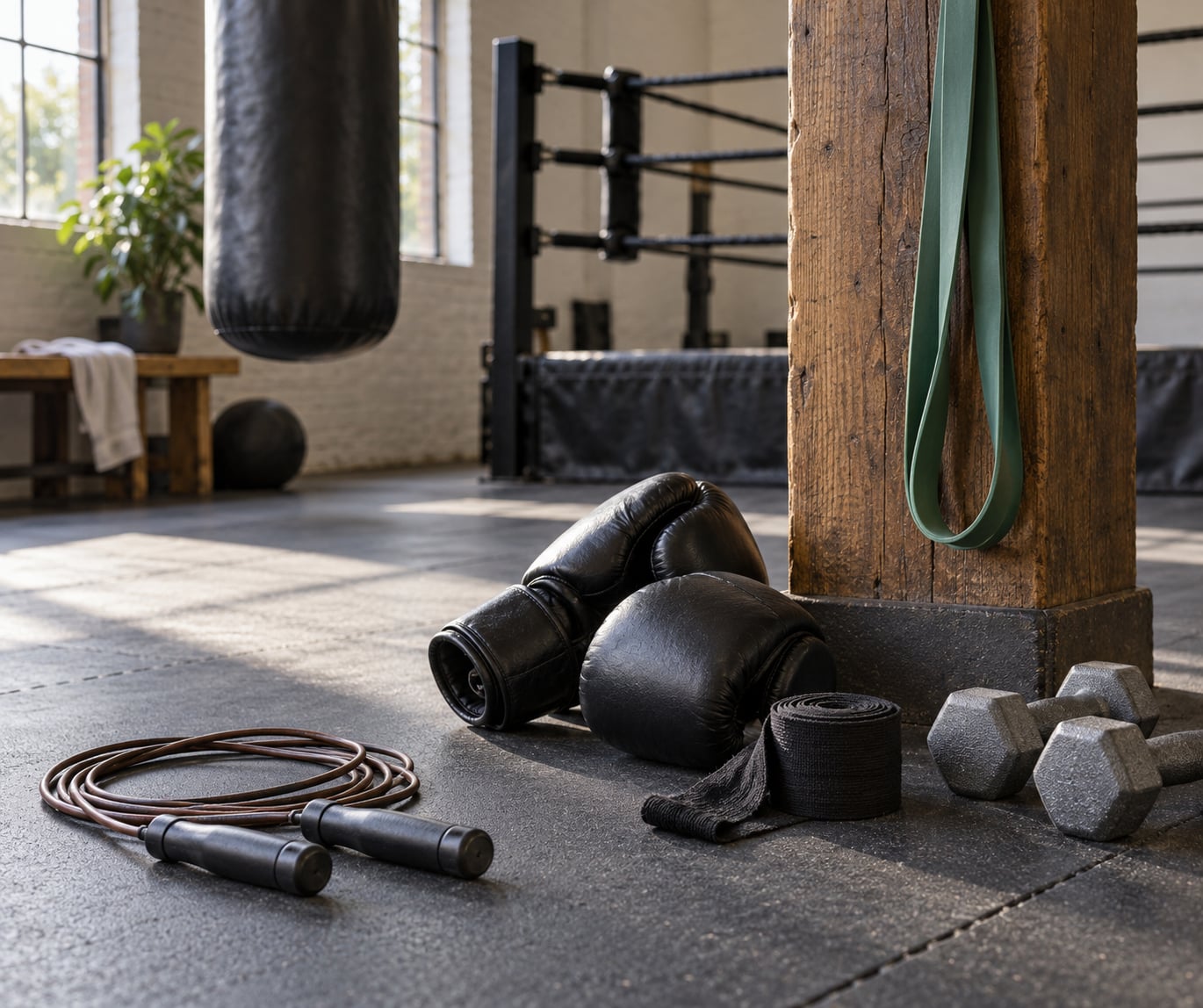
The gear list is short, and most of it is cheap. You need somewhere with a mat or soft floor, a jump rope, and a resistance band. The band is the single most useful object in shoulder prehab, and a doorway anchor or a sturdy post is all it takes to use one.
Hand wraps and gloves that actually fit you matter more than beginners expect. Wraps that sit wrong change how your forearm feels at full extension, and gloves too small for your hands make you clench harder, which travels straight up into the shoulder.
- A fitted pair of hand wraps and gloves so your fist sits in the wrap instead of sliding on it.
- A resistance band, light to medium tension, plus an anchor point at roughly chest height.
- A jump rope for two minutes of easy work before you touch the bag.
- Mat space or a soft floor for the floor-based shoulder work, since forcing a range you do not have is what causes the problem in the first place.
- A heavy bag and a timer so you can add rounds in planned increments rather than by accident.
- A coach or an experienced training partner for the days when the same punch keeps nagging you.
- Access to a healthcare professional for persistent or severe symptoms, which is non-negotiable.
Step-by-Step: How to Prevent Shoulder Pain From Boxing
1. Warm Up the Shoulder and Upper Body
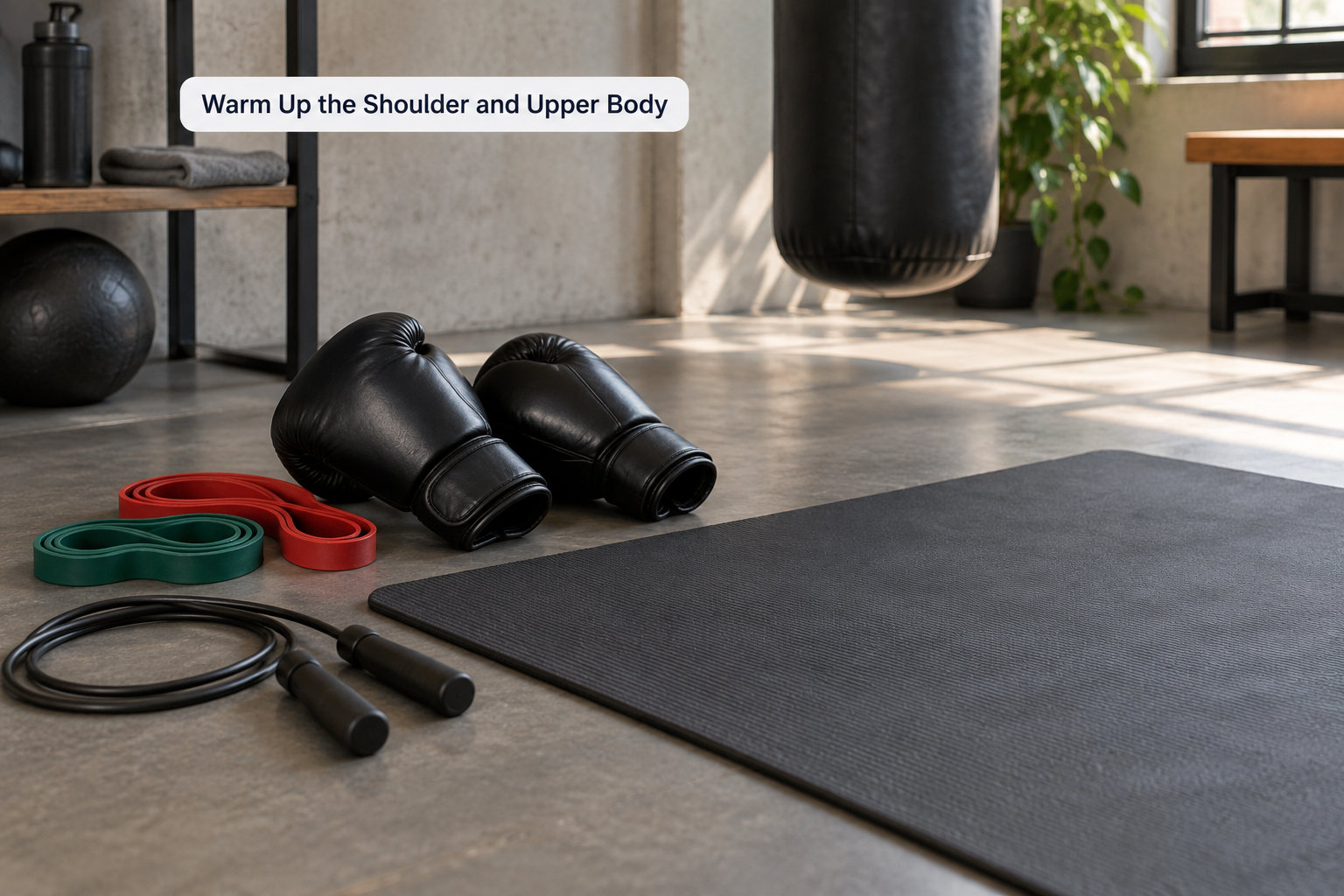
Most people under-warm their shoulders and then wonder why the first three rounds feel heavy. The fix is dosage, not intensity. Ten to fifteen minutes, done before every session, is what threads posting about pre-session stretching keep coming back to.
Hold each stretch 20 to 30 seconds. Five-second taps do almost nothing, and forcing a painful range does less than nothing.
- Easy rope or jog, 2 minutes. While you move, roll your arms in slow circles, growing from small to full. If your shoulder clicks or pinches at the top of the circle, shrink the circle rather than pushing through it.
- Band pull-aparts, 15 reps. Band at chest height, arms straight, pull it apart by squeezing the upper back. Slow, no bounce. This is the one people skip and the one that matters most for scapular control.
- Punch the ceiling, 10 each side. From a stance, reach one arm up and across, rotate through the ribs, then return. Slow and unhurried.
- Scapular push-ups against a wall, 12 reps. Elbows at shoulder height, shoulder blades spread apart as you press. This teaches the blade to move instead of the arm flaring out.
- Shadowboxing, 3 rounds of 1 minute. Light, technical, technical-range only. No power shots. You are raising the heart rate, not testing the shoulder.
- Two long stretches, 20-30 seconds each. Cross-body arm pull for the back of the shoulder, and a doorway or arm-behind-back reach for the front of the chest and the front of the shoulder.
How do you know it worked? Your guard sits slightly lower, the first round does not nag, and you can reach across your chest without a sharp stop. If the warm-up feels like it needs to be longer, it probably does, and 15 minutes is not a rule carved in stone.
2. Use Technique That Protects the Shoulder
Shoulder pain from punching is usually a technique problem before it is a fitness problem. The joint is designed to rotate, not to extend past its range, and most early arm tension comes from overextending the punch and landing on a straight arm.
Leave a reserve. Land the punch with roughly a quarter to a third of your reach still in hand. A fully locked-out arm at the moment of impact drives the humerus up into the bony roof of the shoulder, and that is the single easiest habit to change.
Keep the elbow under the punch rather than flaring it out to the side at ninety degrees, especially on the straight shots. A flared elbow splits the force across the joint instead of driving it through the target and the core.
Rotate from the floor up. Power should come from the hips and the turn of the torso. When a boxer generates the punch by throwing the arm alone, the shoulder absorbs what the legs did not, and it pays for it the next morning.
Shorten the hook arc. A hook that travels the full width of the room recruits the shoulder to travel further than it needs to. A smaller, more vertical hook in close keeps the elbow below shoulder height and the rotation in the mid-back.
Keep the elbows in and the shoulders down. Boxing threads describe guards and traps tightening through a session as the root cause, and a permanently raised guard is a real source of that dull neck-and-shoulder ache. Sink the elbows, drop the shoulders, and unclench the jaw.
If one punch keeps producing the discomfort, get a second set of eyes on it. A coach watching two rounds will spot the fault faster than you can feel it, and it costs you nothing to ask.
3. Build Shoulder and Upper-Back Strength Gradually
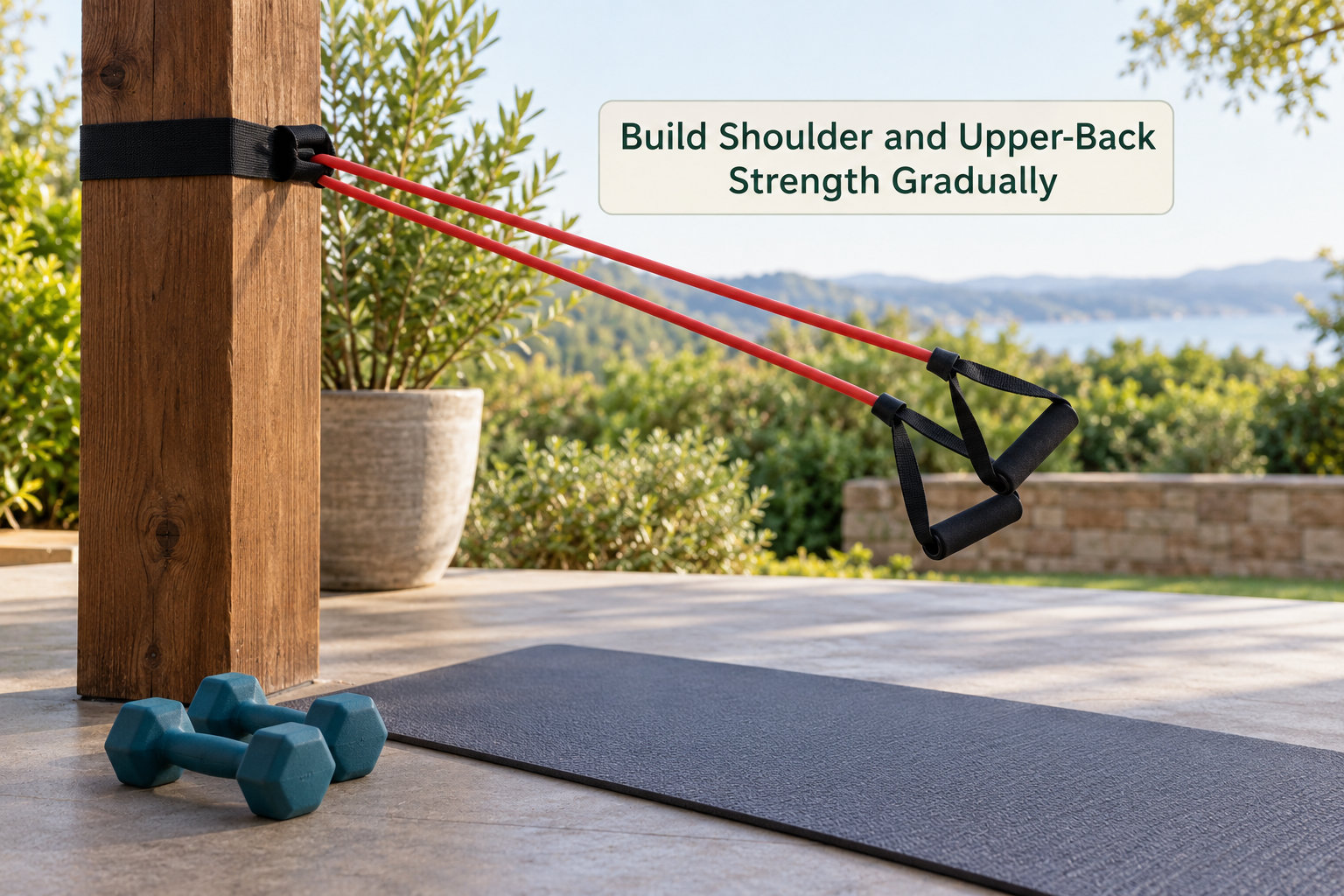
Boxers train the pushing side relentlessly and almost never train the pulling side, so the shoulder ends up strong at pushing and weak at controlling rotation. That imbalance is not a theory. Research on amateur boxers has repeatedly linked weak external rotation strength relative to internal rotation to shoulder injury.
So build the cuff, the blade, and the upper back twice a week, with light load and strict control. Add reps before you add resistance, and stop any rep that pinches.
- Band external rotation, 3 sets of 12-15. Elbow pinned to your ribs at ninety degrees, rotate the forearm outward. This is the one that matches the research.
- Band internal rotation, 3 sets of 12. Same position, rotate inward. Keep the two sides honest and use the same tension on both.
- Face pull, 3 sets of 12-15. Pull the band to the forehead, rotating hands apart at the finish. Excellent for the rear cuff and the mid-back.
- Bent-over row, 3 sets of 8-10. A dumbbell or band, elbows close, pause at the top. If you need a heavy barbell to feel this, use lighter weight and pause longer.
- Scapular push-up, 3 sets of 10-12. On the floor this time, range you can control.
- Push-up to row, 3 sets of 6-8. One rep, one row. Slow, and only when nothing pinches at the bottom.
Then check the rest of your week. Boxing is a pushing sport, so for every three sets of pressing, put in two sets of pulling. And be suspicious of the gym accessories behind a lot of boxing shoulder pain: strict overhead pressing, dips, and wide-grip bench press all drive the shoulder into a position it is already tired of. Swap them for a landmine press, a neutral-grip bench, and another two sets of rows while the shoulder is complaining.
4. Manage Punch Volume and Recovery
Technique and strength only matter if the load is something you can actually absorb. Add rounds in planned increments rather than doubling the session because you had a good week, and hold a hard sparring day and a technical day as opposites rather than stacking them.
A deload every third or fourth week keeps most people ahead of injury instead of managing it. Halve the rounds, keep the intensity, cut the sparring. You keep the habit and the skill, and the shoulder gets a chance to settle.
Seven to nine hours of sleep does more for your shoulder than any single exercise on this page. Tissue repairs overnight, and a boxer running on five hours has a lower threshold for pain and a worse recovery of everything else too. Hydrate before you worry about anything else, and skip hard rounds when you are sick or your guard has been locked up all day.
Here is the practical rule. If an ache lingers past 48 hours after a session, or it builds through the first two rounds instead of fading, treat it as a volume problem. Take 48 to 72 hours off from punching itself, and keep the legs, the bike or the run, and your mobility work. You are not losing your boxing, and going completely cold is the most common response and the worst one.
5. Improve Posture and Everyday Load Management
Ask a boxer about shoulder health and you will usually get an answer about neck stretches and upper-back mobility as well, which is exactly right. The shoulder does not operate on its own, and a week of hunched desk work shows up at the eighth round.
Ten minutes on rest days covers it. Chin tucks, 2 sets of 10, for the forward head position that comes from a phone held at chest height. Upper-trap stretches, 30 seconds each side. Wall angels or band pull-aparts, 2 slow sets of 10, to reopen a chest that has been closed all day. Longer holds in a yin-style position on the upper back and shoulders for 2 to 3 minutes once you can sit there without straining.
Watch the small stuff too. Keep loads close when you lift, avoid hanging a heavy bag off one shoulder for the walk to the car, and get your head under a barbell or dumbbell rather than pressing it away from you. If you sit for a living, a five-minute movement break every hour is worth more than any single stretch you do before training.
6. Know When to Pause and Get Help
Sorting pain into three buckets is more useful than any single stretch, and it is what tells you whether to train.
- Expected. A dull ache during the hardest round that eases as the round goes on, the same on both sides, and gone by morning. Train as normal.
- Deload territory. The ache builds through the session, one side is worse than the other, you have less power than usual, or it is still there the next day. Cut volume and sparring, add the pulling work, and reassess in a week.
- See a clinician. Pain right at the top of the throw, pain that wakes you at night, obvious weakness such as dropping a full bottle, numbness or tingling down the arm, clicking that comes with a loss of range, or any pain after a specific hit or fall. Also anything hot, swollen or visibly deformed. Stop training and get it looked at.
None of that is a diagnosis, and this list is not one. A sports physiotherapist or a doctor can tell the difference between a load problem and a structural one in a way that nobody at your gym can, and it is worth the appointment rather than another month of hoping.
Common Mistakes
- Punching through pain. Finish the session first, sort it out later. Fix: if it is not gone by morning, you have your answer already.
- Stretching for five seconds at a time. It feels like you did something, so you assume it counted. Fix: 20 to 30 second holds, 10 to 15 minutes total, before every session.
- Adding rounds too quickly. Going from four rounds to nine because the last week went well. Fix: plan the increment, and deload every third or fourth week.
- Training the push side only. Pressing, pressing, and more pressing, with rows skipped for time. Fix: two pulling sets for every three pushing sets, all year.
- Holding on to overhead press, dips and wide-grip bench. They are fine in theory and behind a surprising share of grumbling boxers. Fix: landmine press, neutral-grip bench, and one more set of rows.
- Reliance on one punch. Everyone has a favourite hook, and the arm that throws it thousands of extra times per year pays for the asymmetry. Fix: drill the punch you avoid, and the straight shots, until the load is spread again.
- Guarding high and tense. Shoulders up by the ears, traps doing the work. Fix: elbows in, shoulders down, jaw unclenched. Check it between rounds.
- Ignoring symptoms that have lasted a week. Fix: one appointment. You lose a few days, not a season.
Frequently Asked Questions
Why does punching hurt my shoulder?
Because the rotator cuff has to stabilise the joint while your arm extends and takes the impact, thousands of times per session. Most cases come down to three things: overextending the punch until the arm locks out, a strength base built on pushing with weak pulling muscles, or more rounds than the tissue can recover from before the next session.
How long should I rest my shoulder after boxing?
For an ache that clears by morning, you do not need to rest at all, but you should check what caused it. For pain that lingers past 48 hours, take 48 to 72 hours off from punching while keeping your conditioning and mobility work. For pain at the top of the throw, at night, or with weakness, numbness or a loss of range, stop and see a clinician rather than picking your own timeline.
Should I stop training if my shoulder hurts?
Not always. Mild, symmetrical fatigue during the hardest round that goes by morning is part of boxing. But if pain builds through the session, is worse on one side, or stays with you into the next day, cut your rounds and stop sparring. If it wakes you at night, weakens your grip, or comes with tingling, stop training and get it assessed by a doctor or sports physiotherapist.
How often should I do rotator cuff exercises?
Two to three sessions a week is the usual sweet spot, on days that are not back-to-back, since the cuff needs time to recover like any other muscle. Two or three sets of 12 to 15 reps each for band external rotation, internal rotation, face pulls and rows is enough to start. Progress by adding reps before you add resistance, and stop any rep that pinches.
What are the worst exercises for shoulder impingement?
Strict overhead pressing, dips, and wide-grip bench press are the usual culprits, because they drive an already irritated shoulder into a compressed position under load. Upright rows and behind-the-neck pressing are worth dropping too. Landmine press, neutral-grip bench press, and more rows give you the training stimulus with far less aggravation while the shoulder settles.
Why can’t I straighten my arm at the elbow after a workout?
It is usually the same effort showing up somewhere else. Heavy punching, high-volume extensions and hard pressing leave the triceps and the elbow tissues tired, so the arm feels spent or refuses to lock out. A shoulder with rotator cuff irritation can also refer sensation down the arm and change how the elbow feels. Persistent inability to straighten the arm, or pain on one side only, is worth a clinical look.
Conclusion
Start with the two cheapest habits. Do the ten-minute shoulder warm-up before every session, with real hold times, and put two or three sets of pulling work into your week next to the pressing. Then fix the punch you keep throwing hard, add your rounds in planned steps, and stop pushing through an ache that is still there the next morning.
None of that is complicated. It is just repetition of the right small things, and it is far cheaper than a shoulder that stops you throwing. If something on this page describes your symptoms now rather than as a plan, book the appointment.