An uppercut is a short-range power punch thrown straight up from underneath your opponent’s guard, landing on the chin, jaw or body with the forearm finishing roughly perpendicular to the floor. Learning how to throw an uppercut comes down to one thing: dip the punching hand about a foot, never lower than chest height, then rotate the hips and shoulder and drive the fist up with the elbow tucked underneath.
It is the hardest punch in boxing to make feel natural, and beginners usually need a few months of regular work before it stops feeling awkward. That is normal, and it is why this guide breaks the movement into six checks you can feel rather than six things to memorise.
Table of Contents
- What You Need
- Step-by-Step: How to Throw an Uppercut
- Common Mistakes and How to Fix Them
- Tips for Practicing an Uppercut Safely
- Frequently Asked Questions
- Should I throw an uppercut with a straight or bent arm?
- Which hand should throw the uppercut first?
- How do I generate power without overextending?
- Is an uppercut effective against a taller opponent?
- How many uppercuts should a beginner practice at one time?
- Can I learn an uppercut using a heavy bag alone?
What You Need
You need very little to practise the mechanics. Everything else is optional and only makes the practice safer or faster.
- Hand wraps. Wrap your hands before any bag work, every time. Wraps are the cheapest insurance against a broken knuckle.
- Boxing gloves sized for the work. Bag gloves are fine for solo sessions. Sparring gloves, noticeably smaller, are for partner work only.
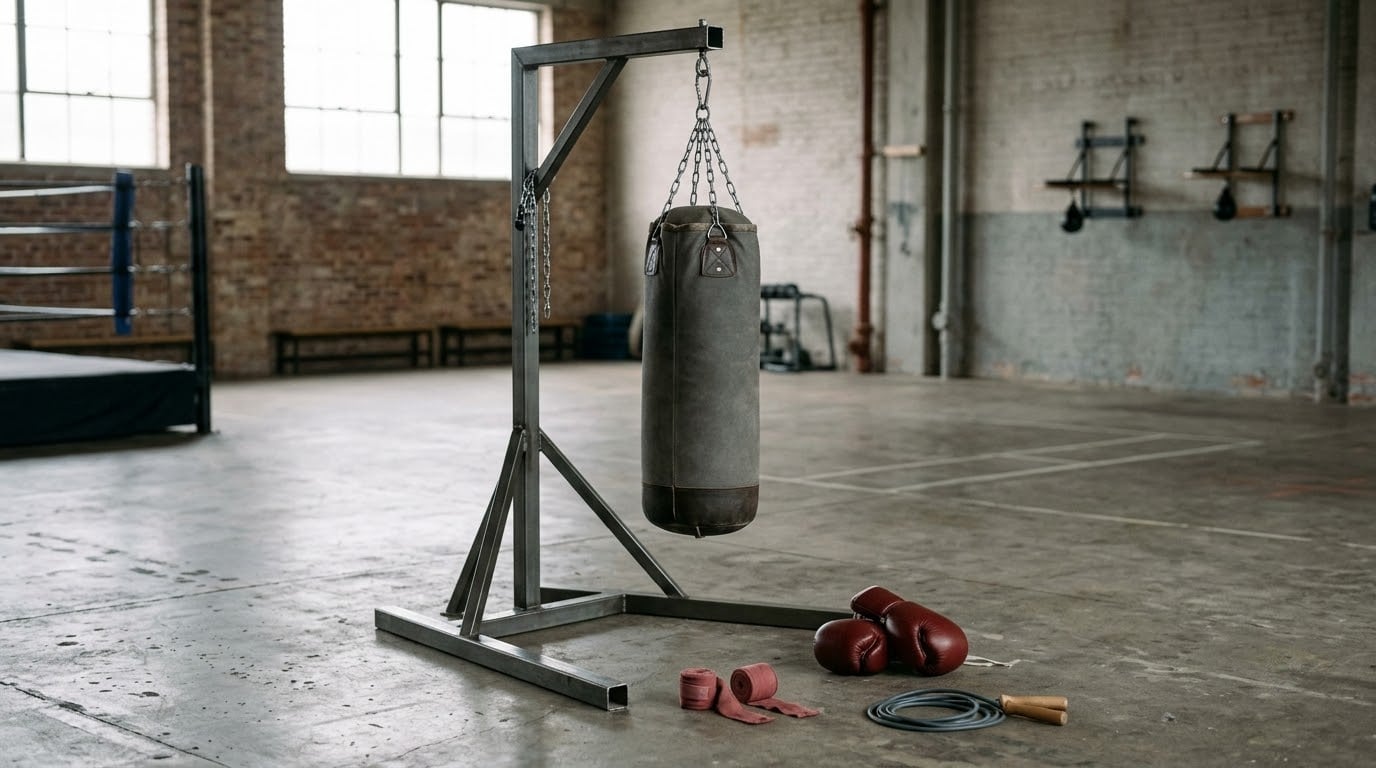
- A heavy bag or double-end bag. Any bag will do. A double-end bag returns to you and punishes bad timing, which makes it the better teacher.
- A partner or a coach for pad work and light sparring. Do not learn this punch by trying to land it hard on a person who is not coaching you.
- Three to four metres of clear floor. An uppercut ends with your weight forward, so you need room to reset without backing into anything.
- A mirror, or a phone on a tripod. Almost every fault below is invisible from the inside and obvious from the side.
One thing worth clearing up early, because it comes up constantly: the uppercut is a legal punch in boxing. Back fists, headbutts, and blows with the elbow are not. If you are new to a gym, a coach will want to see you hit a bag correctly before you touch pads.
Step-by-Step: How to Throw an Uppercut
Work through the six steps below in order and resist the urge to add speed. Speed is the last thing to arrive, and chasing it early is what produces the wild, looping swing most beginners end up with.
1. Start in a Balanced Boxing Stance
Stand with your lead foot slightly forward, knees soft, weight sitting roughly 60/40 toward the back leg, and hands at the cheekbones. Your chin should be tucked behind your rear shoulder rather than pushed forward, because the uppercut finishes near your own chin height.
How to tell it worked: you can hold this position for a full minute without shifting your feet or feeling your lower back complain. If your weight is already mostly on the front leg before the punch, you have nowhere left to go.
2. Set the Target and Keep Your Guard Up
Choose the level before you start: chin for a head uppercut, sternum for a body uppercut. Dip the punching hand roughly a foot, so the knuckles pass near your own chest or nipple line, and nowhere lower.
That dip is the single most argued-about detail in the sport. Beginners are told both never drop the hand at all and drop it about a foot. Both coaches are describing the same finished position, because a hand that starts at the chin can travel down about a foot without dropping past chest level.
How to tell it worked: your rear hand never left your face and your chin is still covered. If your elbow points out to the side at any point, you have gone too low.
3. Step or Pivot Into Position
Close the gap with a small step, a slip, or a pivot on the front foot. The step should be short, roughly half a normal jab step, and it should bring your weight under the punch instead of stretching you out straight.
Southpaws and orthodox boxers both use the same idea here, only mirrored: whichever hand leads, that foot becomes the pivot.
How to tell it worked: you finished the step with your knees under your centre of mass and you can still withdraw the hand safely. If your front leg is straight and your back heel is lifted far behind you, you overstepped.
4. Drive from Your Legs and Hips: How To Throw An Uppercut With Power
Power comes off the floor. Push down into the leg you are standing on, rotate the hips first, keep the elbow tucked under the punch, and only then let the fist travel. Arm strength contributes almost nothing here, which is why a strong beginner with weak hips throws a soft uppercut.
There are two schools on what the back foot does. Most coaches teach a 60/40 to 40/60 weight transfer into the front leg. A smaller group, best known from ExpertBoxing, teaches you to stay on the same leg and pivot in place without shifting weight. Try both on the bag and keep the one that lands harder without you losing balance.
How to tell it worked: your fist is still travelling fast when it reaches the target. If you felt your shoulder or biceps burning, it was an arm punch.
5. Rotate Your Shoulder and Throw the Punch
Let the shoulder come around with the hip and the fist travel on a vertical line, with the forearm finishing about 90 degrees, palm facing inward toward your own face. The elbow stays low and under the punch the whole way.
A tight loop beats a long one. If the hand sails past where your opponent’s head would be, you have thrown a straight line instead of an arc, and there is no power in it.
How to tell it worked: you can hear the strike on a double-end bag without throwing harder, and your knuckles finish in front of your own chin rather than above your head.
6. Follow Through and Reset
Recoil the hand the same short distance back to the guard, put the rear hand back on the cheekbone, and return to the balanced stance you started from. Reset fast, because an uppercut that takes a second to come back is a punch an opponent can answer.
Throw two, then step out and reset fully. Repetition is not the goal here, clean sequences are.
How to tell it worked: after two uppercuts your feet are in the same place they started and your guard looks identical to the guard you had before the combination.
Common Mistakes and How to Fix Them
The three faults beginners hit most are dropping the punching hand too low, punching with the arm instead of rotating the hips, and throwing the hand in a straight line past the target. All three share one symptom: the punch looks busy, feels exhausting, and lands softly.
Dropping the punching hand to the waist
Your chin is wide open and the punch has a long way to travel upward. Dip about a foot only, keep one hand at the cheekbone the entire time, and film a set from the side to see how far the hand actually drops.
Punching with the arm only
The shoulder does all the work, so the punch arrives at a fraction of its real speed. Throw at half power and exaggerate the hip rotation. The fist should feel like it is being carried, not pushed.
Throwing in a straight line past the target
You miss the head entirely and lose the compact arc that carries the force. Pick a target on the bag at chest height and finish with the knuckles in front of your own chin.
Popping the hips upward and rising off the ground
Balance goes, and a rising uppercut has almost no base to push from. Keep both knees bent and stay on the balls of your feet. If you feel yourself standing up, you have loaded too much.
Flaring the elbow like a chicken wing
Rotating around the front of the arm kills your power and opens up the guard. Rotate around your back instead, and picture the elbow dropping with the fist following it up.
Dropping the rear hand during the punch
The rear hand is your chin cover while the punching arm is committed. Do three slow repetitions with a partner counting it out loud, because bag work alone will not teach you this one.
A useful self-test comes from the same coaching circles: throw two uppercuts from the same hand and notice whether the second one feels heavy and grounded, or light and rising. Usually the second one is the honest version of your technique.
Tips for Practicing an Uppercut Safely
Most people learn this punch faster with fewer injuries by progressing slowly through three stages and by getting feedback on technique rather than effort.
- Shadowboxing first, three rounds of two minutes. Do slow technical rounds: double jab, lead uppercut, rear uppercut, step out. Slow hands show the rotation honestly.
- Bag work next, twenty to thirty reps. Pick one spot on the bag and stay there. A moving target lets you lean and reach, which is the habit you are trying to remove.
- Pad work or light sparring last. A partner who calls out a dropped hand teaches more in five minutes than an hour alone. Keep it light and stop when the technique degrades, not when you are tired.
- Put it in combinations. Jab, jab, lead uppercut. Jab, cross, rear uppercut. The uppercut belongs between punches, not as a standalone novelty.
- Judge technique, not fatigue. End each session while the last uppercut still looks like the first one. Training past that point is how bad habits get built.
Two or three short sessions a week is enough for most beginners to see visible progress in a month, and boxers in amateur forums consistently describe the uppercut taking months longer than jab-cross to stop feeling awkward. If you are training unsupervised, keep it to bag and shadow work, and get a coach to check the rotation before anyone starts throwing at you.
Frequently Asked Questions
Should I throw an uppercut with a straight or bent arm?
Bent, roughly a right angle between upper arm and forearm at contact. A straight arm gives you reach but almost no power, and it telegraphs from far away. Keep the elbow tucked down and under the punch, finish with the forearm vertical, then snap the hand back to the guard. Beginners usually reach for a straight arm because it feels easier, and that is why the punch lands softly.
Which hand should throw the uppercut first?
The lead hand. Orthodox boxers start with the left, southpaws with the right, because the lead uppercut is thrown while the rear hand stays on the cheek, which keeps your head covered. The rear uppercut carries more power but comes out of the same rotation and is easier to counter. Learn the lead version first, then add the rear one.
How do I generate power without overextending?
Power comes from the floor rather than the arm: push off the floor through your legs, rotate your hips, keep the elbow under the punch, and finish with the forearm vertical. If your shoulder travels past your knee or your chin lifts, you have reached too far. Shorten the step instead of extending the punch and the force still arrives.
Is an uppercut effective against a taller opponent?
Yes, and height is one of the situations it suits well. Because it travels upward from below eye level, a taller opponent’s straight punches tend to pass over the top of it and their rear hand sits high. Drop your level and come up under the chin, while keeping your own guard compact so you are not simply walking into their range.
How many uppercuts should a beginner practice at one time?
Twenty to thirty repetitions, two or three times a week, is plenty at the start, and put them in short combinations rather than drilling them alone for ten minutes. Overuse is the fastest route to throwing far too many of them. Mix the uppercut in with the jab and cross so it stays a tool rather than a habit.
Can I learn an uppercut using a heavy bag alone?
Yes, but bag work repeats whatever you bring to it, so shadowbox in front of a mirror or film a set on your phone first. Shadowboxing teaches the rotation, the bag teaches contact and distance, and pads or a coach correct your timing. Solo bag work alone tends to cement an overreaching arm punch because the bag never punishes a bad habit.
Start with the simplest version of how to throw an uppercut and get it right before you make it powerful: shadowbox double jab, lead uppercut, rear uppercut at half speed for two rounds, then take the same sequence to the bag and stop while it still looks clean. Everything else, the power work, the rear-hand version, the body uppercut, gets easier once the rotation and the reset are right.