New boxing gloves feel like cardboard for the first few sessions, and most beginners try to fix that too fast. The reliable way to break in boxing gloves is boring and gradual: wear proper hand wraps, do short low-intensity shadowboxing and light bag or pad work, and air-dry the gloves between sessions. Most people need three to five workouts before the shell stops resisting your hand, while stiff full-grain leather takes closer to two months.
That last part surprises people. Gloves are not shipped broken in, and the ones that feel rigid in the box are usually the better-made ones. The padding, the leather shell and the hand compartment all have to learn the shape of your wrapped hand, and they only learn through repeated contact and sweat. Anything faster than that costs you padding or your hands.
What follows is the routine I would hand a first-timer, in the order it actually works.
Table of Contents
- What You Need
- Step-by-Step: How to Break In Boxing Gloves the Safe Way
- Common Mistakes
- Frequently Asked Questions
- How long does it take to break in boxing gloves?
- Do boxing gloves really need to be broken in?
- Can I use baby powder or another powder inside boxing gloves?
- Should I wear hand wraps while breaking in new boxing gloves?
- How can I soften leather boxing gloves at home?
- Why do my new boxing gloves hurt my thumbs or wrists?
What You Need
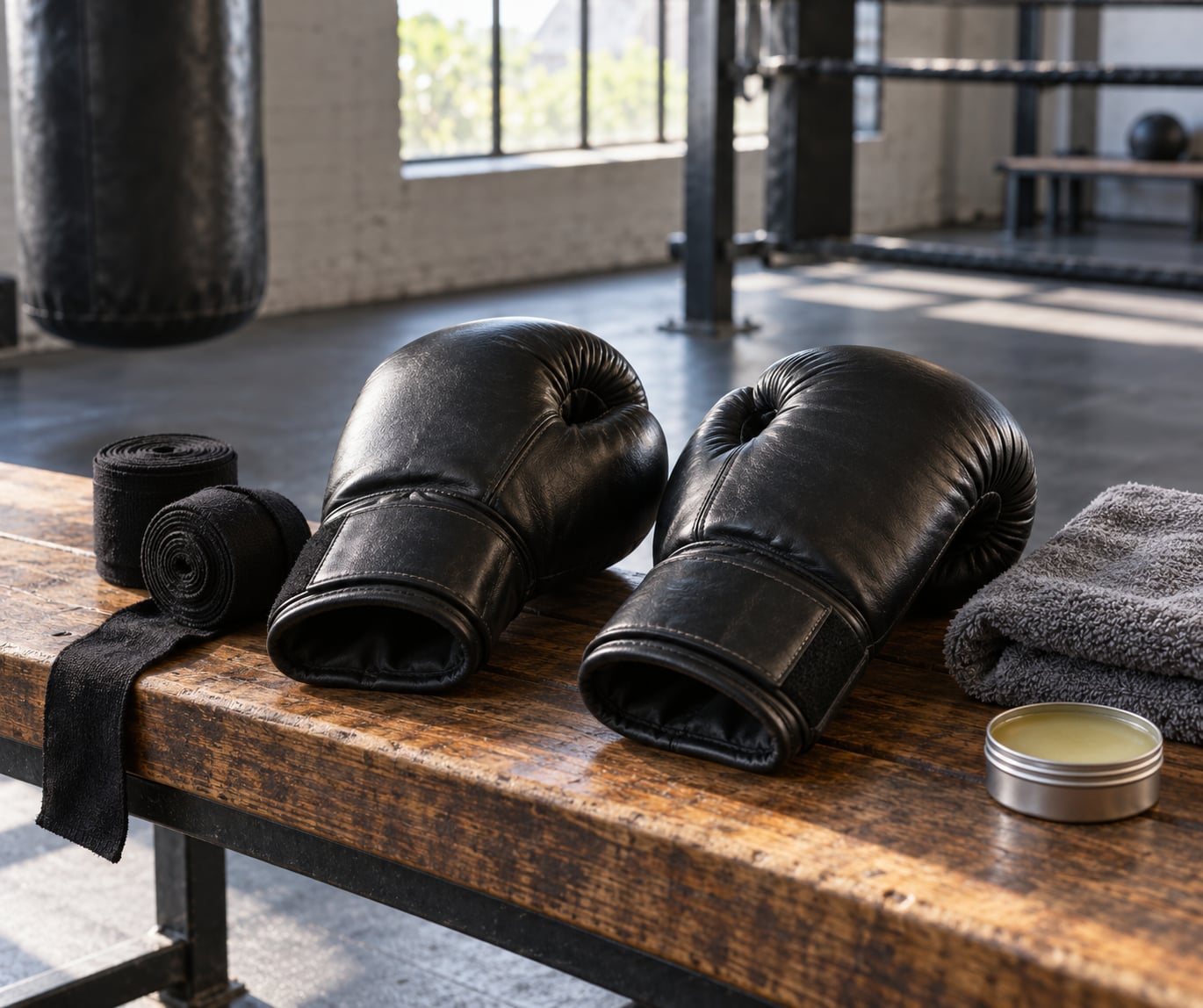
You need very little, which is part of why the good methods work. Bad methods need a hairdryer, a bucket, or a radiator. The good method needs these six things.
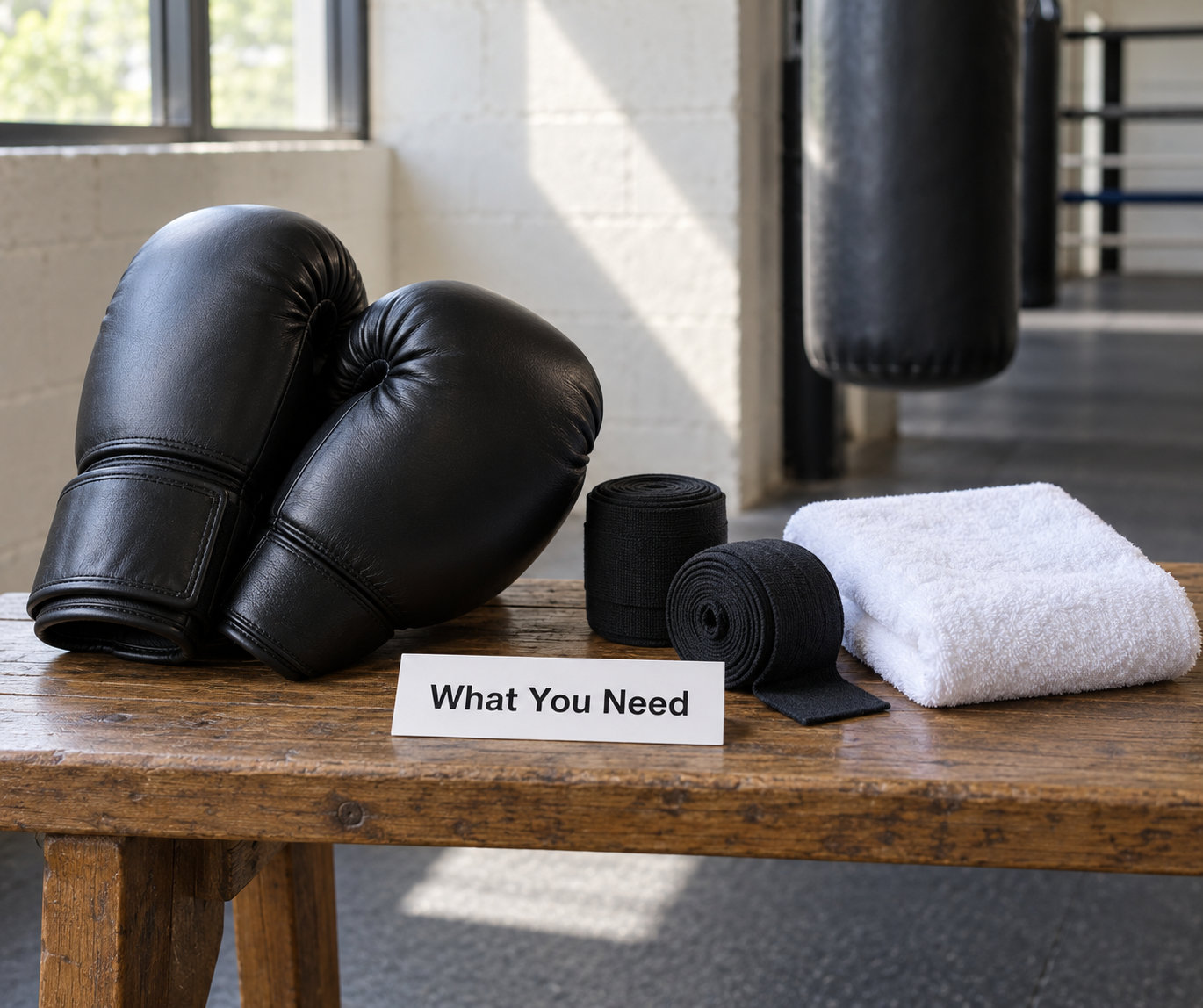
- The gloves, checked on arrival. Look over the shell, the stitching along the knuckle line and the wrist cuff before you ever wrap your hands. A glove with a lifted seam or a thumb that sits crooked will not improve with wear.
- Hand wraps in the right size. Semi-elastic wraps about 4.5 metres long stretch enough to pull the knuckles together without cutting off circulation. Gauze wraps work for bag work if that is all you have.
- A place to work. Open floor space for shadowboxing is enough for the first week. A heavy bag or a set of focus mitts comes later, once the glove holds its shape.
- A microfibre or soft cloth. You will use it after every single session to wipe the inside of the glove.
- Leather conditioner, if the shell is genuine leather. Skip it entirely on synthetic or microfibre gloves. A conditioner made for leather furniture is not the same thing as one made for gloves, so check the label.
- A ventilated drying spot. Somewhere shaded and room temperature, away from radiators, heaters and a car dashboard. A mesh laundry basket or an open gear bag works well.
None of this is specialised equipment. If you have wraps, a towel and somewhere to hang a glove, you can start tonight.
Step-by-Step: How to Break In Boxing Gloves the Safe Way
1. Check the Fit Before Training
Decide first whether your gloves are stiff or simply the wrong shape, because break-in only fixes the first problem. Put on your wraps, form a fist and slide the glove on. The thumb should sit in front of your thumb, not pinched against it, and the knuckle line should rest across the first two rows of knuckles rather than drifting toward your fingers.
Close your fist hard. If you cannot make a proper fist, the hand compartment is too small and no amount of training will change it. If the wrist cuff lets your hand bend toward the palm rather than staying straight, the support is wrong for your style, and a coach or fitter should look at it.
Symptoms that mean a bad fit rather than a break-in period: a thumb that is numb within minutes, a seam that digs in, a cuff that rotates so the patch ends up on the outside of your forearm, or numbness in the fingers after the session. Symptoms that usually settle: a snug feel across the back of the hand, a stiff shell, and mild knuckle soreness that fades within a few rounds.
2. Prepare the Gloves for Use
Take the gloves out of the bag and remove every scrap of packing material, including the paper at the bottom of the palm and any stiff cardboard insert. Wipe the lining with a damp cloth and let it dry fully. Run a finger along the stitching at the knuckle and around the thumb attachment, and press the padding down: a glove that feels lumpy or hollow is a manufacturing fault, and it is far easier to return in week one than in month three.
For genuine leather, work a very small amount of glove conditioner into the shell with a clean cloth, then leave it to absorb overnight. Thin layer, plenty of time, and buff the excess off. People on r/fightgear describe exactly this approach, applying a thin layer and giving the leather time before the next session. Skip conditioner on synthetic shells, and never work oil into the foam, because oil migrates and softens padding that is supposed to stay firm.
3. Start With Short Shadowboxing Sessions
Your first two or three sessions are shadowboxing only, and the point is movement, not impact. Do three or four rounds of three minutes with a minute of rest, moving around the room, throwing the jab and cross and working the guard.
Keep it at roughly half power. The glove needs to heat up and take the shape of your fist, and full-power bag work on day one just compresses the padding unevenly. A useful rule: if the session leaves your knuckles a little tender and nothing else, you did it right. If you are counting on your hands to get through the week, you went too hard.
4. Use Proper Hand Wraps Every Time
Wrap your hands properly for every session, including shadowboxing. Wraps absorb the sweat that would otherwise soak into the liner, they add a layer between the glove’s seams and your skin, and they give the hand compartment a consistent shape to mould to. A glove broken in over thin or badly wrapped hands fits differently than one broken in over proper wraps, and that difference shows up as hot spots later.
Pull the wrap snug across the knuckles, leave a thumb loop, and wind through the palm and around the wrist twice before closing the cuff on top. If your fingers go cold or tingly, it is wrapped too tight.
5. Let the Gloves Dry Between Sessions
Turn the gloves inside out as far as the cuff allows, open the wrist strap, and wipe the liner with a dry cloth. Then leave them to air-dry at room temperature, out of direct sunlight and away from any heat source. Do not put them in a closed gym bag while damp, because trapped moisture is what makes a liner stiff again and start to smell within days.
Drying is not a small part of breaking in. Moisture trapped in the padding keeps the foam heavy and the interior slow to change shape, so a glove that is never properly dried never really breaks in. If your gym has lockers or a car, take the gloves home with you and leave them loose overnight.
6. Build Up Gradually: How to Break In Boxing Gloves Without Rushing
From week two, add light bag work or pad work in three-round chunks, keeping most punches in the 50 to 60 percent range. Most people report the shell softening noticeably after 15 to 20 rounds of this kind of work, though r/fightgear users with stiff leather describe closer to 50 rounds before the difference was obvious, and one coach there put the full break-in for that style of glove at about two months.
If you train twice a day, a second pair makes the difference. A common piece of advice on r/fightgear is to do three or four rounds in the new gloves, then switch to the pair you have already broken in. It takes longer overall, and the gloves stay in rotation rather than wearing out in the first month.
You will know the break-in is done when the glove closes without a fight, your fist sits naturally in the hand compartment, the shell bends at the knuckle line without creasing, and a full session no longer leaves hot spots. If the gloves still pinch after 30 to 40 sessions, stop and treat it as a fit problem rather than a patience problem.
Common Mistakes
Almost every ruined pair of gloves I have seen was damaged by one of these. Each has a straight fix.
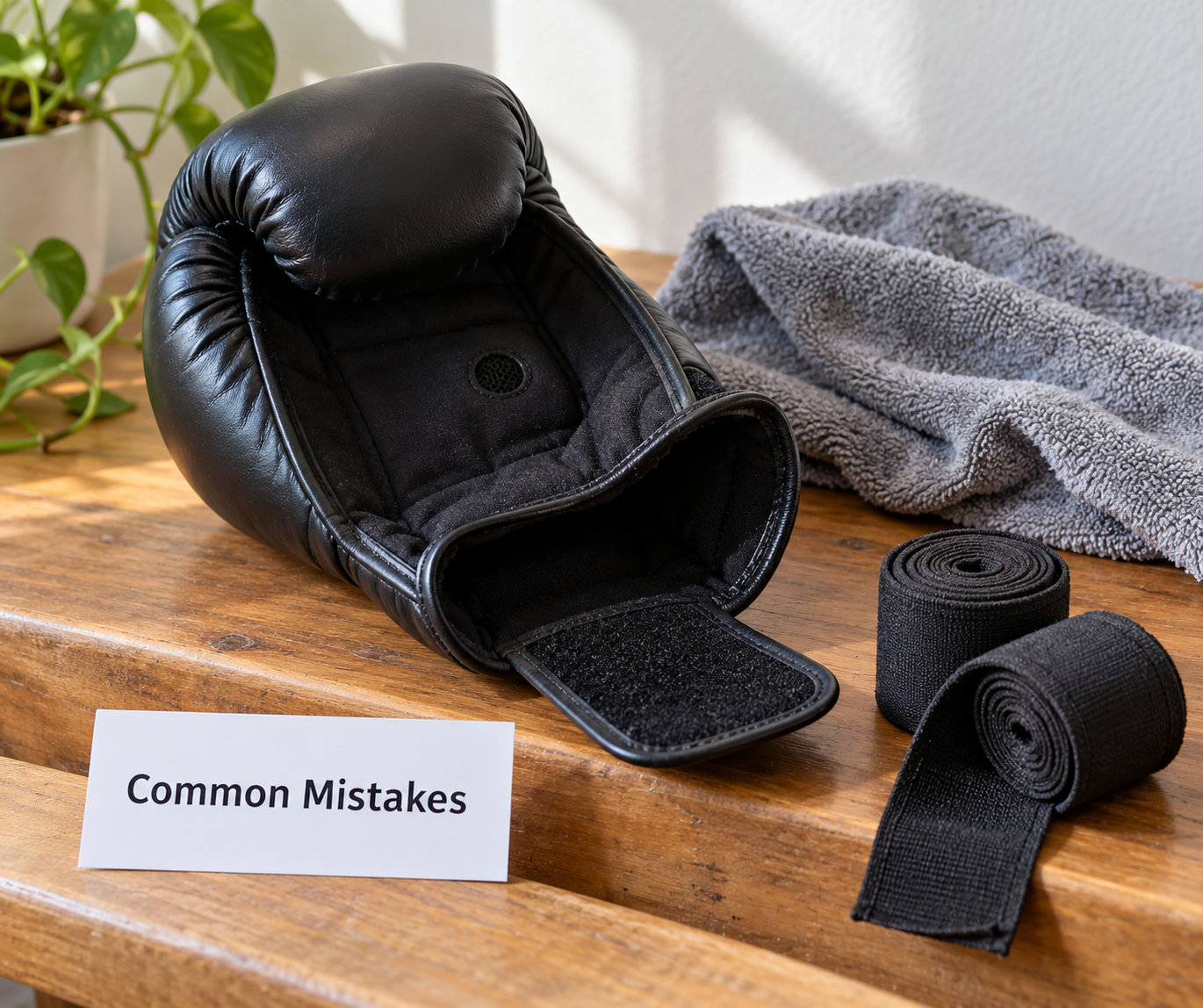
- Soaking them. Water gets into the foam, the adhesives fail, and the padding never recovers. Users on r/fightgear are near-unanimous on this, and none of the popular soaking methods survive contact with a real leather shell.
- Using heat to hurry things along. Hair dryers, radiators, tumble dryers, microwaves and a sunlit car dashboard all shrink and dry out leather and foam. Reddit fight gear threads have a clear consensus against microwaves, hair dryers, soaking and freezing, and they are right for once.
- Oiling synthetic gloves. If the shell is microfibre or synthetic PU, conditioner and oil do nothing useful and can make the surface slippery. Genuine leather is the only case where conditioning helps.
- Training hard on day one. Full power compresses the padding before it has formed around your hand, and hot spots in the first week are the reason people quit.
- Ignoring a rubbing spot. Blisters are not a rite of passage. Adjust the wrap, check the thumb position, and stop for the session if it keeps coming back.
- Wearing a glove with a lifted seam. That is a safety issue, not a comfort one. A thumb loop that cracks under a hard shot is a problem waiting to happen.
- Storing them damp in a closed bag. The liner stays stiff and starts to smell, which means the next session starts behind the last one.
Frequently Asked Questions
How long does it take to break in boxing gloves?
Most synthetic and microfibre gloves feel noticeably better after three to five workouts. Soft synthetic shells sometimes soften in under a week. Stiff full-grain leather takes much longer, and fighters report around 50 rounds before they notice a real difference, with some coaches suggesting closer to two months. Judge progress by comfort and hot spots rather than by the calendar.
Do boxing gloves really need to be broken in?
Yes, in the sense that new gloves will feel stiff whatever you do, so the real question is whether you shape them gradually or damage them trying to hurry. A proper break-in reduces blistering, keeps your wrist stacked and stops the shell from shifting on every punch. It cannot fix a glove that is the wrong size or shape, so check the fit first.
Can I use baby powder or another powder inside boxing gloves?
Powder reduces friction for a session or two, but it does not help a glove break in and it tends to cake into the liner and seams over time. Wipe your hands and the liner with a cloth instead, and air-dry the gloves properly. If you like using powder, use it on your hands, not inside the glove.
Should I wear hand wraps while breaking in new boxing gloves?
Always. Wraps absorb sweat so the liner stays dry, they add a thin layer that stops seams rubbing, and they give the hand compartment a consistent shape to mould to. Wrap snugly across the knuckles with a thumb loop and close the cuff on top. If your fingers tingle, you have pulled it too tight.
How can I soften leather boxing gloves at home?
Work a very small amount of glove conditioner into the leather with a clean cloth, leave it overnight to absorb, and buff off the excess. Then train in short, low-intensity sessions and dry the gloves between every one. Never use a hairdryer, radiator or microwave, since heat dries the leather out faster than any conditioner can fix.
Why do my new boxing gloves hurt my thumbs or wrists?
Thumb pain usually means the glove is the wrong size or the thumb strip sits too far forward, and no amount of break-in will correct that. Wrist discomfort usually means the cuff is too long or too soft for your style, letting the hand fold in. Try the next size up or a different model, and ask a coach or fitter to check the wrist stack before training in them again.
Start tonight, not this weekend. Wrap your hands, throw a few shadowboxing rounds at half power, wipe the liner afterwards and leave the gloves open to air-dry. Do that three sessions in a row before you touch a heavy bag, and you will skip the sore-knuckle fortnight that makes most beginners bin a perfectly good pair.