To build a boxer’s neck strength you load the neck in every direction with slow, controlled resistance and hold it there, then progress one variable at a time over weeks. Two sessions a week, ten to fifteen minutes each, is enough for most boxers starting out. No gym equipment required.
The neck is the only part of a fighter’s body taking punches all night, and it is usually the least trained. Strong neck muscles do not make punches land harder, but they do help a boxer brace through contact instead of letting the head snap loose.
Below is the progression I would hand a fighter in their first month: warm-up, isometric holds, light band work, position drills, then a weekly schedule. Read the safety section before you start.
Table of Contents
What You Need
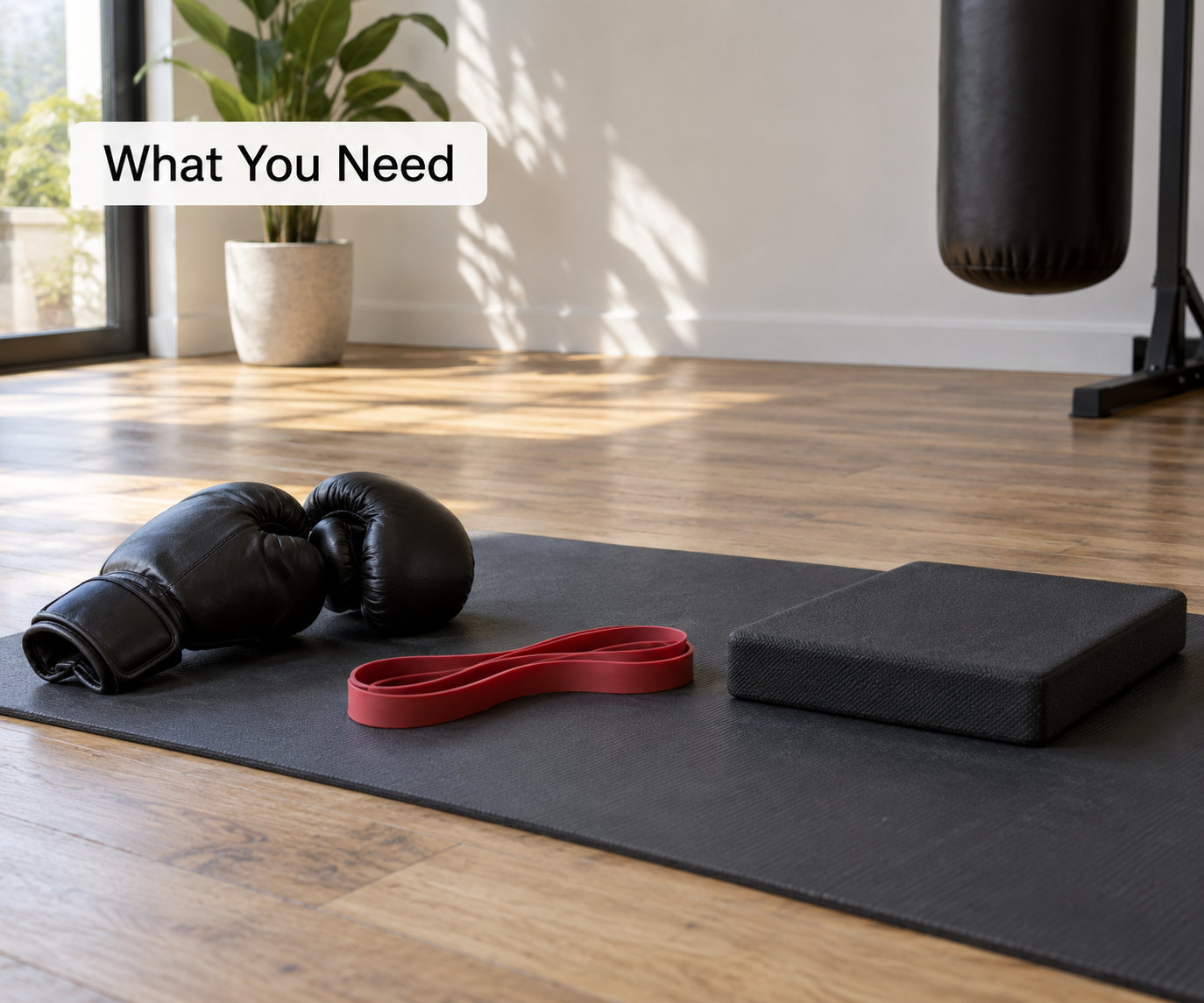
You need almost nothing. A flat, non-slip floor and about ten minutes are enough for the first three weeks of this plan.
- A training surface. A mat, carpet or padded floor. Never a hard concrete slab for neck extension work, because the skull meets the ground with very little give.
- Nothing else for the first month. Hand resistance covers all four directions and both diagonals.
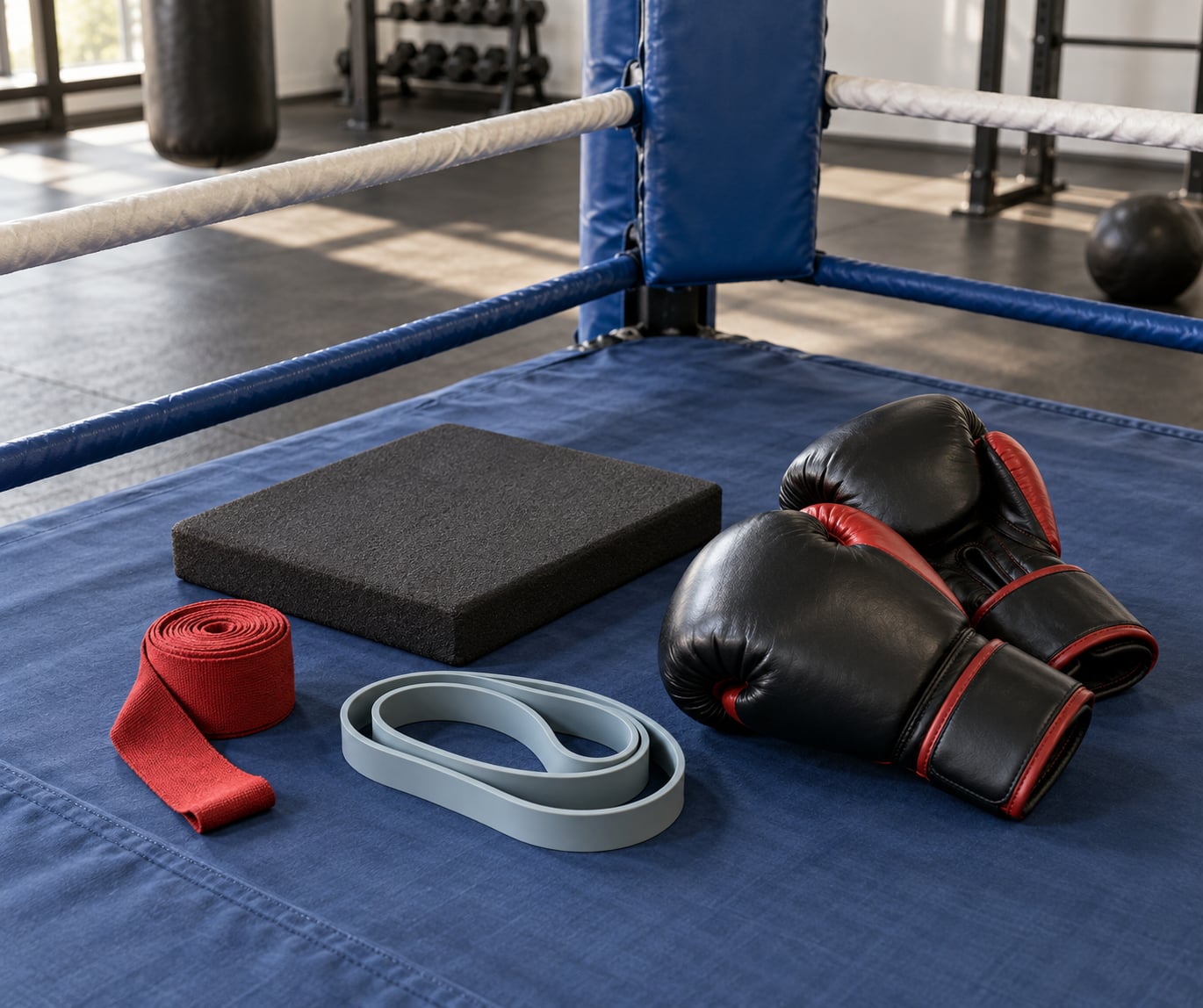
- A resistance band, later. A light loop or tube band. Pick the lightest tension you have and plan to work up through three or four of them over months, not weeks.
- A plate and a head pad, much later. Only once your isometric holds are solid and a coach has watched your form.
- A partner you trust. Useful for partner-resisted pushes. Both of you should be close in body weight, which is what coaches in r/Workingout and r/wrestling communities tend to point out.
Who should not start this unsupervised: anyone with a current or past neck injury, cervical disc or spinal stenosis diagnosis, recent concussion, or a history of dizziness or headaches when they hit the bag hard. Have a doctor or physiotherapist look at your neck first. General fitness information like this is not medical advice, and neck training is no substitute for learning to defend properly.
Step-by-Step: How to Build a Boxer’s Neck Strength
Prepare Your Neck and Posture
Warm up before you load anything. Spend two minutes on slow, pain-free neck circles, then some chin tucks and small nods.
The chin tuck is the single most useful drill in this guide because it trains the deep neck flexors, the small muscles at the front of the cervical spine that hold your head over your shoulders. Stand or sit tall, draw your chin straight back as if making a double chin, hold five seconds, release. Ten reps is plenty as a warm-up.
Finish the warm-up by learning the neutral position you will train in: ears over shoulders, shoulders over hips, eyes level, chin tucked a centimetre or two. That alignment is the target in every hold that follows. If your head is craned forward or your chin is poking out, the neck is already carrying load in a bad position and the exercise just reinforces it.
Practice Low-Intensity Isometric Holds
Press your head into your own hand in four directions and hold, without moving your neck at all. Forehead, back of the head, each side of the head, then the four diagonals.
Use about a third of your maximum effort on the first pass. That sounds far too easy and it is the point, because the aim is to feel the muscles switch on and hold position, not to overpower your hand. Breathe normally the whole time. Breath holding is the fastest way to make a hold feel harder than it is and to spike your blood pressure.
Here is the reference prescription for each movement:
- Chin tuck. No equipment, easy. Three sets of 10 with a five-second hold. Main target: the deep neck flexors.
- Four-way hand press. No equipment, easy. Three sets of 20 seconds in each direction. Main target: the cervical stabilisers in every plane.
- Band flexion and extension. Light loop band, moderate. Three sets of 12 slow reps. Main target: the front and back of the neck.
- Band lateral flexion. Light loop band, moderate. Three sets of 10 per side. Main target: upper traps and the side of the neck.
- Band rotation. Light loop band, moderate. Three sets of 10 per side in a small range. Main target: rotation control through the splenius.
- Shrugs. Dumbbell or plate, easy. Three sets of 12. Main target: the upper trapezius.
- Weighted plate curl. Head pad and plate, advanced. Three sets of 8 at a coach-approved load. Main target: the whole neck under axial load.
How do you know it worked? Your neck should feel like it did work, you should be able to hold neutral without thinking about it, and nothing should hurt. Track the two numbers that matter: seconds held at a fixed effort, and how many directions you can cover at that effort. When you can hold 30 seconds cleanly in all directions, progress.
That 30-second test is the honest benchmark most coaches use. Progress when the hold gets boring, not when it gets painful.
Add Controlled Band Resistance
Once hand holds feel easy, add a light band and move through the neck instead of holding still.
Hold a loop band at chin level and press your head forward into it slowly over two seconds, resist the return over two more. Same pattern for extension, each side, and rotation. Keep the range short — you are moving the head a few centimetres, not swinging it.
Bands let you reach a stretch you cannot reach by pushing against your own hand, which is why they matter for direction strength. Their other benefit is speed control: a band punishes a fast, jerky rep more than a dumbbell does.
Scale band tension the way strength coaches have for decades: a light band you can push for 12 slow reps is about 70 percent effort, a firmer one you manage for 6 to 7 reps is closer to 80 percent, and the hardest bands are for 3 to 5 reps. Start at the bottom end. A boxer who owns a stack of heavy bands and maxes them out on day one is behind, not ahead.
Use Controlled Neck and Head Position Drills
Neck strength only matters if it shows up in the ring, so connect it to the positions you actually fight from.
Shadowbox for three minutes and hold your chin tucked throughout. Most boxers drift forward with the chin the moment they tire, and forward head posture is both a scoring giveaway and a sign of a neck that cannot hold position. Add a partner drill: a coach presses light taps at your temples and forehead, and you hold your head still and keep your feet moving. That is perturbation resistance, and it is the skill behind staying upright in a clinch.
If you do no direct neck work at all, you will still build a solid neck by pulling heavy weights. Rows, deadlifts, shrugs, dips and pull-ups all load the neck through the upper back, and that is the route several experienced lifters describe. It is a slower path, but it works and it pairs naturally with a strength block.
How Often to Build a Boxer’s Neck Strength Each Week
Train the neck twice a week to start, on two non-consecutive days, and keep the session to ten to fifteen minutes. A third session is fine once the work is easy and technique is clean.
For a boxer training four to six days a week, the neck block sits at the end of a technical session. Plenty of amateurs finish every workout with neck work, and that habit works because it keeps the work small and repeatable. End of session also means your neck is already warm and you are not spending energy before you spar.
Change one thing at a time. When a hold improves, add seconds before you add load. When load improves, hold the same rep count. Never add sets, seconds and a thicker band in the same week, because then you cannot tell which change made your neck sore.
Week one through four: hand holds only, two sessions, 20 seconds per direction. Weeks five to eight: add the band work, three sessions if you want, 12 slow reps. Week nine onward: add weighted work only with a coach watching, and reduce volume during fight camp rather than increasing it.
Track Recovery and Know When to Stop
Mild muscle soreness for a day or two after a new movement is normal. Anything sharper, or anything that lasts longer than that, is your cue to back off.
Stop the set immediately and speak to a doctor or physiotherapist if you notice sharp or shooting pain, dizziness, ringing in the ears, numbness or tingling in an arm or hand, pain that travels down the shoulder or arm, blurred vision, or a headache that builds during the work. These are not things to train through, and no neck routine can promise you will never be hurt.
Three recovery habits help. Sleep, because neck tissue repairs when you sleep. Warm water on a tight upper trap, not on an acute injury. And the boring one: do your neck work on the same two days each week rather than whenever you remember, because irregular volume is a common source of that soreness nobody can explain.
That sore neck you get from burpees or push-ups is usually a head position problem, not a weak one. If your head drops toward the floor while your chest is low, you are loading the neck in a stretched position it was never meant to hold. Keeping your eyes forward and your chin tucked fixes most of it.
Common Mistakes
- Snapping the head. Fast reps recruit less and hurt more. Slow the rep until the muscle, not the momentum, is doing the work.
- Holding your breath. Breathe through the hold. It is the most common fault in every isometric set I have watched.
- Using maximum resistance from the start. Start at a third of max. Progress toward heavy work over months.
- Training through pain. Sharp pain, dizziness, tingling or radiating arm pain means stop and get a professional assessment, not another set.
- Adding volume too fast. The widely shared claim that a fighter built a 20 inch neck with 30 minutes of neck bridges a day, hundreds of reps, front and back, is not a template for anyone. Concentric, high-volume neck bridging is also where spinal compression concerns come from, so treat that volume with suspicion rather than chasing it.
- Shrugging to compensate. If your shoulders creep up during a hold, the upper traps are doing the work your neck should be doing. Reset the shoulders down and go again.
- Poking the chin out. A forward head position turns a neck exercise into a trap exercise. Tuck before you press.
- Neck bridges with no supervision. The bridge is a loaded spinal compression exercise. Beginners do hand holds and chin tucks first.
Frequently Asked Questions
Why do boxers strengthen their necks?
Boxers strengthen their necks so the head stays braced when a punch lands. A clean shot rotates and accelerates the skull inside the head, and a weak neck lets that motion carry through. Training the neck improves impact absorption, head stabilisation and posture, and it also lets a fighter keep the chin tucked instead of drifting forward when tired, which is better for defence as well as durability.
What did Mike Tyson do for his neck?
Tyson was famous for neck bridges, where his body weight loads the cervical spine in extension, often combined with push-ups, dips and other high-volume conditioning work. The bridge is the part most people remember, but the bridges only worked because they sat on top of a broader programme of heavy pulls, presses and conditioning. Bridge work carries real spinal compression load, so it belongs to advanced training.
How often did Mike Tyson train his neck?
The commonly reported figure from that era is neck work every day, with bridges and push-ups built into his normal training rather than bolted on as a separate session. That volume suited a fighter of his weight and background, and it was supervised. A modern recreational boxer should not copy it: twice a week with slow, controlled holds is a safer and better-balanced starting point.
Are neck bridges safe?
A neck bridge loads the cervical spine with body weight through the back of the neck, which is why spinal compression is the main concern. Many people train it in the wrong place, on hard flooring, or with too much body weight behind the neck. Hand-resisted isometric holds and chin tucks build the same stability with far less risk, so bridges belong at the advanced end of a progression.
How long should you hold a neck isometric?
Hold for 15 to 30 seconds at moderate effort, which is plenty to switch the deep neck flexors and the upper neck on without loading the spine heavily. Do three to five holds per direction, front, back, both sides and the diagonals. Progress when you can hold a clean 30 seconds in every direction without shrugging your shoulders, then add seconds before you add resistance.
Can I build a stronger neck for boxing with no equipment?
Yes, and it is where most boxers should start. Four-way hand-pressure holds, chin tucks, nods from a half squat with your hands braced on your knees, and slow head circles train the same stabilising muscles a harness would. None of it needs a plate or a band. Add equipment only once the bodyweight version feels easy and your alignment stays neutral.
Conclusion
Start tonight with no equipment at all. Sit tall, tuck the chin, press into your own hand in four directions for 20 seconds each, breathe, and repeat for three rounds. Do that twice a week for a month, add band work when the holds stop being hard, and keep heavy and bridge work for when a coach is watching. Neck strength comes from patient, boring consistency inside a balanced boxing programme, not from one extreme routine.