How to stretch after boxing training comes down to two parts: two to three minutes of easy movement to bring your heart rate down, then eight to ten gentle holds of 20 to 30 seconds each. The whole routine takes about ten minutes, needs no equipment, and works best when the stretches are comfortable rather than aggressive.
Boxing loads the shoulders, hips and calves harder than most people expect. Twenty minutes of rounds leaves those areas tight, and tightness is what makes the next session feel harder to warm up for. The cool-down is not about touching your toes. It is about finishing the session with a body that moves a little easier than the one that started it.
One honest note before you start. Stretching will not wipe out soreness, and on its own it does not prevent injury. It gradually improves the range of motion you use to pivot, slip and recover your guard, and it gives your nervous system a signal that the session is finished. That combination is worth ten minutes.
Table of Contents
- What You Need
- Step-by-Step: How to Stretch After Boxing Training
- 1. Start Light During Your How to Stretch After Boxing Training Cool-Down
- 2. Release Your Lower Legs and Feet
- 3. Stretch Your Hamstrings Without Bouncing
- 4. Open Your Hips and Glutes
- 5. Mobilize Your Hips and Spine
- 6. Stretch Your Quads and Adductors
- 7. Open Your Chest and Front Shoulders
- 8. Stretch Your Shoulders, Upper Back, and Arms
- 9. Relax Your Neck and Jaw
- 10. Finish Slowly and Rehydrate
- Common Mistakes
- Frequently Asked Questions
- Start Simple and Recover Well
What You Need
Almost nothing. That is the appeal of a post-boxing cool-down, because the hardest part is usually finding the energy for it, not gathering equipment.
- A flat, non-slippy surface. The ring canvas works, but a mat is better if the floor is smooth tile. Do not stretch in shoes.
- A wall or a sturdy chair. Both give you balance for standing calf and hamstring work, and the wall gives you a reference for the calf stretch.
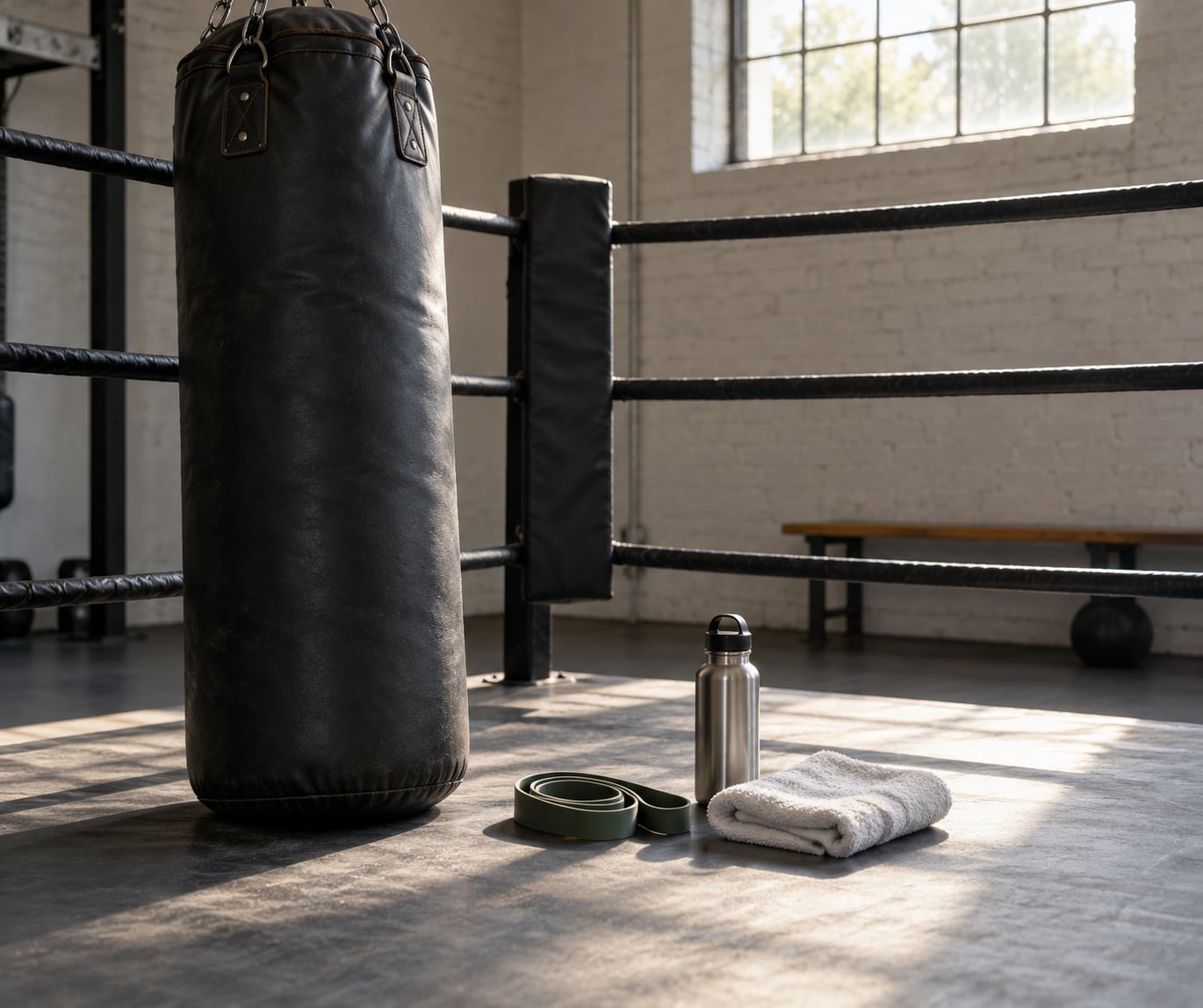
- Water. Drink during the cool-down according to thirst and how hard the session was, not because a rule says so.
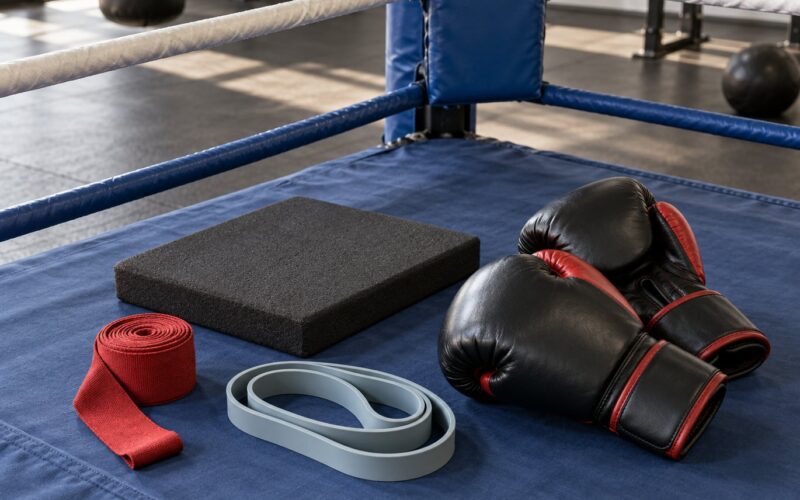
- An optional resistance band. Useful for opening the chest and shoulders if your hands are still taped. Skip it if you have not used one before.
- Your wraps and gloves, unwrapped and set aside. Part of unwinding is getting them off.
A stretching strap is not necessary. A towel looped around your foot works fine if you want a little help reaching your hamstrings, but plain hands are enough for every position below.
Step-by-Step: How to Stretch After Boxing Training
Work through these in order, moving from general movement to specific areas. The whole sequence should feel progressively easier, not like extra conditioning.
1. Start Light During Your How to Stretch After Boxing Training Cool-Down
Do not go straight from a hard round to a static stretch. Walk for two to three minutes, shake the arms and legs loose, and add easy arm circles and step-ups until breathing returns to a conversational pace.
The signal it is working: your heartbeat comes down and you stop sweating heavily. If you can still only say short sentences, keep moving and wait.
2. Release Your Lower Legs and Feet
Skipping, footwork and pushing off the canvas load the calves and ankles more than the bag work does. Face the wall, one foot back, both heels pushing down and forward, and hold 20 to 30 seconds.
Then bend that back knee and keep the heel down to reach the lower calf, another 20 to 30 seconds. Finish with seated ankle circles, ten slow rotations each way, which is the quickest way to take the sting out of tight feet after a hard round on the ropes.
3. Stretch Your Hamstrings Without Bouncing
Put one heel on a low step or the base of a wall with the leg straight, hinge forward from the hips a little, and hold 20 to 30 seconds. A seated version works too if your balance is not what it was.
Keep the spine comfortable rather than forcing your torso down to the floor. Bouncing at the end of a hold mostly stimulates the muscle without lengthening it, and your back feels the difference the next morning. Switch sides and hold the same length.
4. Open Your Hips and Glutes
Half-kneel with the front foot flat and the same knee as the back knee resting on a towel. Tuck the tail under slightly and ease the hips forward until you feel the front of the hip open, then hold 20 to 30 seconds.
For the glutes, sit down, cross one ankle over the opposite knee and sit tall, then fold forward a few inches. Stay upright if your balance is off after rounds, since the floor version requires no stability at all.
5. Mobilize Your Hips and Spine
Boxing rotates your spine hard during slips and wide steps. On hands and knees, take ten slow cat-cow movements, moving one vertebra at a time rather than swinging.
Add ten hip circles per side while lying on your back, then a few gentle trunk rotations with the knees bent. Keep the range comfortable and skip anything fast or forceful. This section is about restoring movement, not chasing depth.
6. Stretch Your Quads and Adductors
Stand tall, hold a wall for balance, bend one knee and draw the heel toward you until you feel the front of the thigh, and hold 20 to 30 seconds.
For the inner thighs, stand with the feet wider than the hips and shift your weight to one side while keeping both knees softly bent. Point the sensation at the muscles, not at the knee or hip joint. If you feel a pinch in either joint, back out of the position.
7. Open Your Chest and Front Shoulders
Stand in a doorway, place one forearm flat on the frame with the elbow at shoulder height, and step through gently until you feel the chest open. Hold 20 to 30 seconds, then repeat with the other arm.
Fighters spend hours reaching, guarding and punching, so this area rarely gets any release. Keep the ribs controlled instead of arching the lower back, because arching just moves the stretch into the spine.
8. Stretch Your Shoulders, Upper Back, and Arms
Pull one arm across the chest at shoulder height, tuck it under with the other hand, and hold 20 to 30 seconds per side. For the upper back, clasp your hands in front and round gently through the shoulder blades.
Finish the arms with a biceps stretch, palm up and elbow bent, and a forearm extension with the palm facing out. After heavy punching volume, be patient with these two. They often feel tightest two days later rather than immediately after, so keep the pressure light and the breathing slow.
9. Relax Your Neck and Jaw
Tilt one ear toward the shoulder without lifting the shoulder to meet it, and hold 15 to 20 seconds per side. Add a slow chin tuck, sliding the head straight back rather than down, for the muscles at the back of the neck.
Skip forceful neck circles. Most fighters carry jaw and neck tension from holding the chin tucked behind the guard, so slow tilts and gentle breathing do more here than circles ever will.
10. Finish Slowly and Rehydrate
Stand up, shake everything out and breathe normally for a couple of minutes before you leave the gym. Drink water according to thirst and the conditions of the session.
Everything you just did should have felt easier than the ten minutes before it. If the cool-down felt like more work, you probably moved too fast somewhere in the routine.
Common Mistakes
- Bouncing at the end of a hold. Move to a still hold instead and let time do the work. Twenty to 30 seconds of stillness beats ten seconds of bouncing every time.
- Forcing range of motion. If you are holding your breath or straining to get further, you are past the useful point. Ease off until breathing stays normal.
- Stretching through sharp pain. Muscle tension feels broad and dull. Sharp, local or shooting pain is a signal to stop that position entirely.
- Holding one side longer than the other. Match your sides every time. Boxing is symmetric, and an unbalanced cool-down trains you out of balance.
- Skipping the easy movement at the start. Two to three minutes of walking and easy circles are what make the static part comfortable instead of awkward.
- Treating stretching as a replacement for easy cooldown cardio. Five minutes of walking or jumping rope does things stretching cannot, especially on hard conditioning days.
Stop the routine and see a doctor or physiotherapist if a movement causes pain, numbness, dizziness, unusual swelling, or if tightness keeps returning within a day or two of every session. Fighters who pick up sparring or extra rounds after a routine that felt painful are the ones who end up out for weeks.
Frequently Asked Questions
When should I stretch after boxing training?
Start while you are still on the gym floor, ideally within about ten minutes of finishing your last round. Waiting an hour while you commute gives your body more time to cool down on its own, which is fine, but the easy movement at the start of the routine is what makes the holds more comfortable.
How long should a post-boxing stretching routine last?
Ten minutes is the sweet spot for most sessions: roughly two to three minutes of easy movement followed by eight to ten stretches held 20 to 30 seconds each on both sides. A five-minute version covering calves, hips, chest and shoulders is fine on a busy day. More than fifteen minutes rarely adds much once you have established a routine.
Can stretching prevent soreness after boxing?
Not reliably. Research reviews have found that stretching does not meaningfully reduce delayed onset muscle soreness, so a good cool-down will not stop you feeling your legs the next morning. What it does help with is range of motion, muscle tension and the transition out of training, which is why it is still worth doing.
Do I need a foam roller to stretch after boxing?
No. A foam roller can work on tight calves, quads and glutes after the stretches, but it is a complement rather than a requirement. If you use one, spend about thirty seconds per area and keep it away from joints and the lower back. Plenty of boxers get the full benefit from stretching alone.
Is it normal to feel muscle tension after a boxing cooldown?
Yes. Tension that feels broad, dull and evenly spread across a muscle is the expected result of a hard session. What is not normal is sharp or local pain, swelling, numbness, or a joint that feels hot or unstable. Those need a break and, if they persist, a professional assessment rather than more stretching.
Start Simple and Recover Well
Start with two to three minutes of comfortable walking and easy movement, hold each stretch still for 20 to 30 seconds, spend your time on the areas that actually feel tight, and stop the moment anything hurts. Do that on the days you are tired, and the full routine on the days you are not.
That is how to stretch after boxing training without turning recovery into another workout. The goal is an easier body on the way out of the gym, not maximum flexibility on a good day. Keep it simple, keep it consistent, and let the range come over weeks.