You toughen your hands for boxing by hitting them repeatedly and progressively — wraps, light technical bag rounds, knuckle push-ups, wrist and grip work — and letting the tissue adapt between sessions. Expect to spend most of your first two months on technique and light volume, not on trying to make your knuckles hard fast. Anyone can do the early stages at home, but a coach checking your punch is worth more than any gadget you can buy.
The internet is full of advice that will hurt you. Hitting steel bars, bricks and tree bark will toughen nothing worth having; it leaves knuckles permanently rough and joints calcified, and it is the reason some older fighters cannot close their hands comfortably. Everything below stays on the safe side of that line.
Table of Contents
What You Need
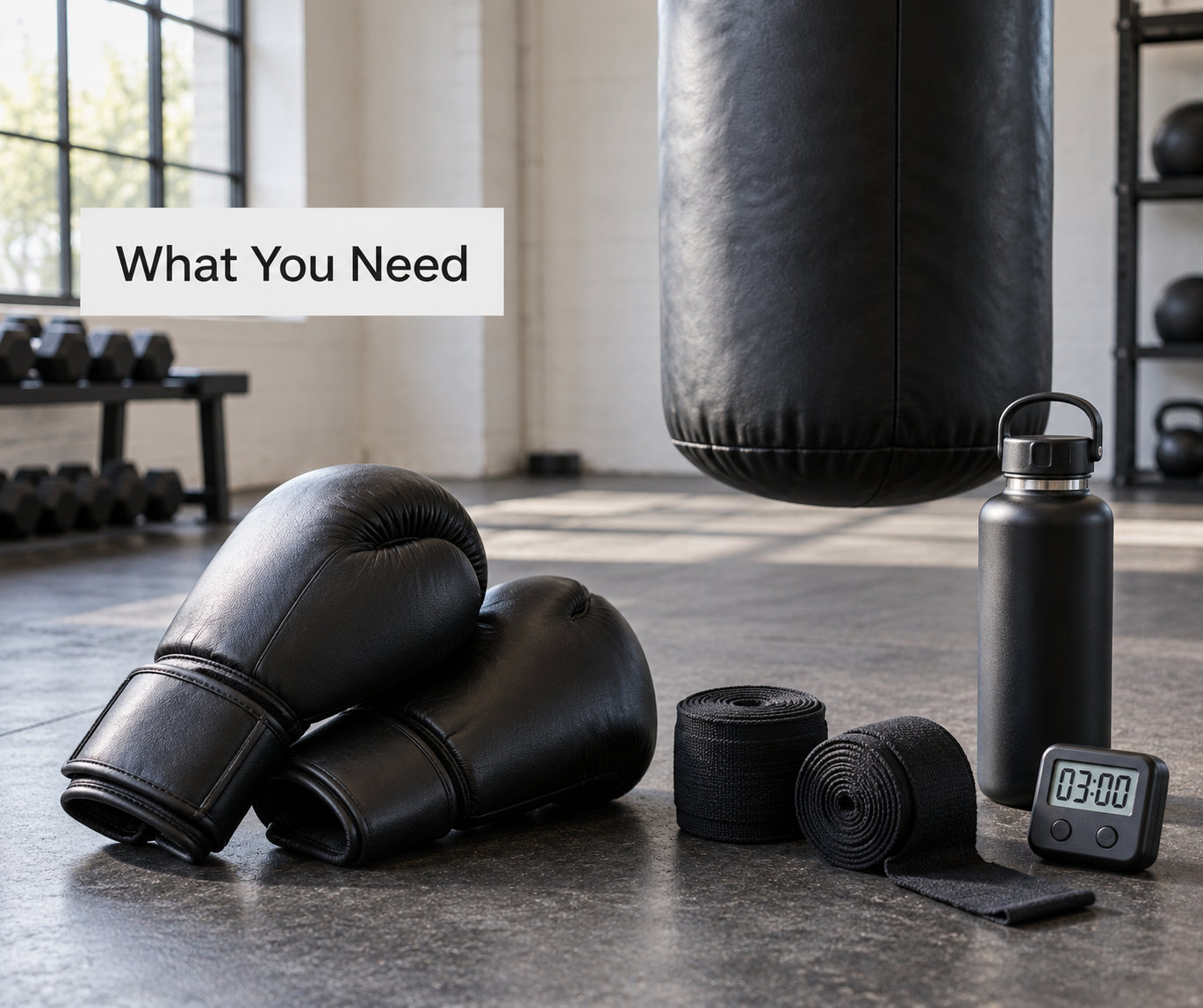
Hand toughness is built by controlled impact and good technique, not by deliberately beating your hands against hard objects. That principle decides everything in this list. Most beginners only need five things.
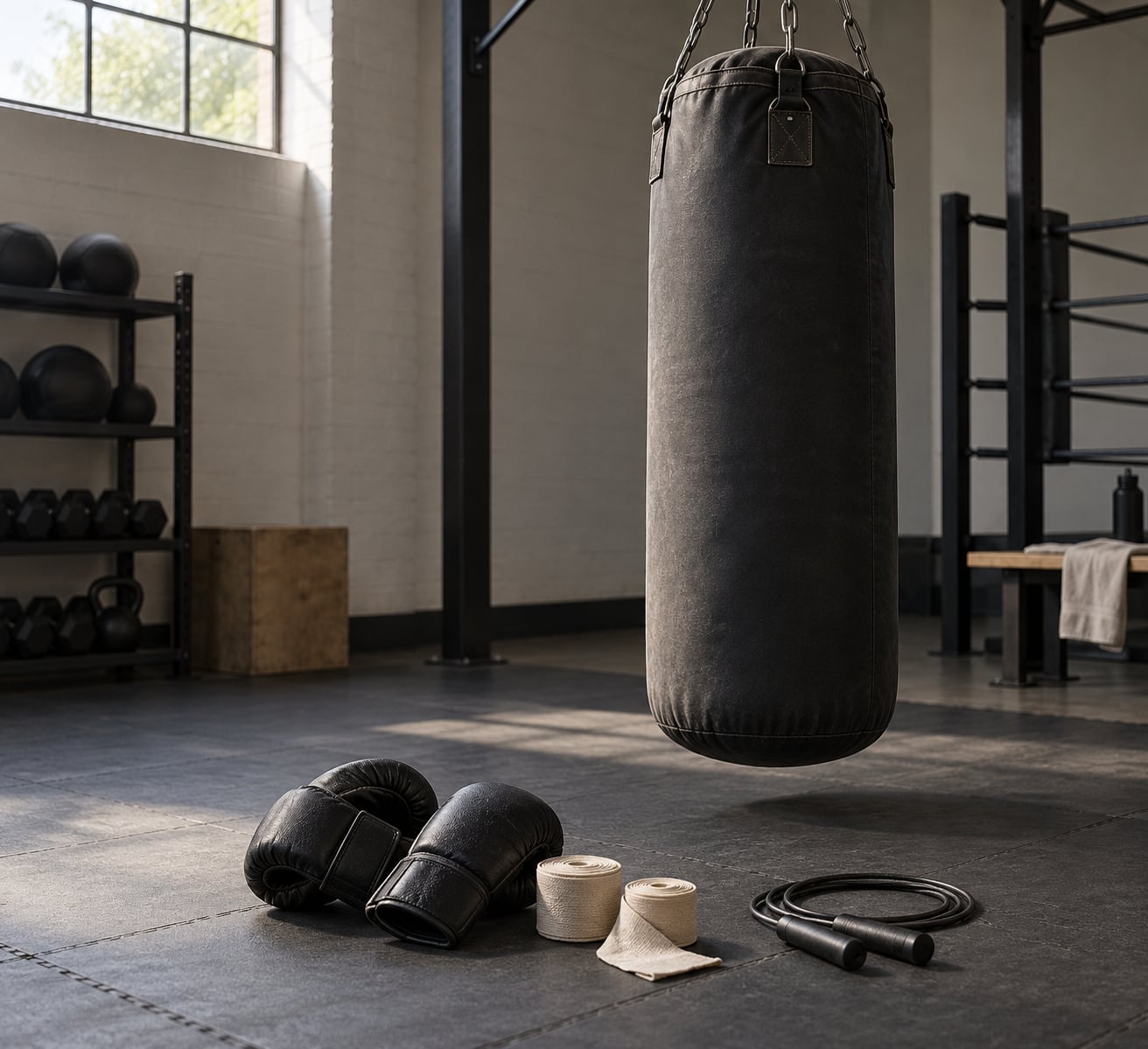
- Hand wraps. Buy two pairs minimum: one for bag work, one for sparring, and a spare in your gym bag. Wraps are the cheapest insurance against a sore, swollen knuckle, and they are what lets you add volume safely.
- Bag gloves sized for bag work. Sparring gloves are deliberately thin so you feel the bag. Bag gloves are padded to absorb the impact you are about to learn to take.
- A heavy bag with a canvas surface. Canvas is forgiving and predictable; leather and vinyl get harder as they age. If you are training at home and have no bag, step 2 below still works on a wall or a pad, just at lower volume.
- A timer and a towel. Rounds stop being guesses when they are measured. Most beginners quietly punch twenty times harder in round four because nobody was counting.
- A coach for one hour. A qualified coach watching five of your punches will fix more damage than a month of solo conditioning.
Optional extras once the basics are in place: a light dumbbell, a resistance band, and a bucket of dry rice or fine sand for grip work.
Step-by-Step
Step 1: Learn the Correct Technique With a Coach
Get your stance, fist alignment and impact control checked before you add any volume. Wrists, knuckles and forearms are all damaged by the same mistake — a punch that lands without the wrist and the small hand bones moving as one supported unit.
The cue that matters most is in r/amateur_boxing: keep the hands relaxed and squeeze only at the moment of impact. A tense hand transmits every shock straight into the wrist instead of absorbing it.
If you cannot get a coach, record yourself throwing a hundred slow jabs on camera and check that the knuckles land square, the wrist stays roughly straight, and the forearm is not rolling over on contact.
Step 2: Start With Light, Controlled Bag Work
Start with three rounds of three minutes on a bag, around 30 to 40 percent of what you think you can throw, focusing on technique. Stop the round while your form is still clean.
This is the difference most guides get wrong. Productive conditioning is repetition of clean technique at manageable intensity. Trying to toughen hands by hitting harder is just a faster route to bruising, and the pain teaches you nothing.
Track it week to week: round one should barely make your hands tired. If round three is heavier than round one, you are already past your useful volume for a first month.
Step 3: Build a Gradual Weekly Routine
A reasonable beginner week looks like two to three bag sessions plus one home conditioning session, with rest days between.
- Day 1 — Bag. Three 3-minute rounds, light, technical.
- Day 2 — Rest or gentle mobility. Wrist circles, slow shadowboxing, nothing that loads the knuckles.
- Day 3 — Home conditioning. Knuckle push-ups, wrist curls, reverse wrist curls, grip work.
- Day 4 — Bag. Add one round, or add a few pounds of pace. Only one variable.
- Day 5 — Rest.
- Day 6 — Bag. Longer rounds, still moderate intensity.
- Day 7 — Full rest.
Frequency and intensity should match your training age and how your hands recover, not a rule printed in a guide. Someone with three years of bag work can handle what would wreck a first-month beginner’s knuckles.
Step 4: Protect the Hands During Training
Wrap your hands properly for every bag session, keep the wraps snug across the knuckles and loose at the wrist so you can still rotate, and check the bag for hard spots or exposed filling before you start.
Soreness you can distinguish from injury has a location, and the location tells you what is wrong.
| Where it hurts | Likely cause | What to do |
|---|---|---|
| Index and middle knuckles | Normal adaptation to impact — tissue not yet conditioned | Reduce volume one session, keep training, ice after |
| Ring and pinky side of the hand | Wrist over-rotating on impact, usually a technique fault | Stop bag work, get a coach to fix the punch |
| Inside of the wrist | Wrist hyperextension or weak stabilisers | Pause bag work, add reverse wrist curls and slow controlled lowering |
| Sharp pain mid-session, or a crack followed by swelling | Possible fracture or sprain | Stop, get it assessed by a clinician |
| Tenderness lasting more than a few days | Overload, not adaptation | Rest the hands, return at half volume |
Never train through sharp pain, swelling, numbness or tenderness that persists. A dull ache that clears overnight is a normal part of building hands.
Step 5: Use Conditioning and Recovery Alongside Bag Work
Sleep, water and enough protein give the tissue a reason to repair itself between sessions. Food quality matters more than any supplement, and it matters on the days you are not training too.
Add wrist curls and reverse wrist curls with a light dumbbell — 8 to 12 reps, two or three sets, forearm braced on the thigh — plus finger extensions with a resistance band and slow fist clenches held five seconds at a time. Gentle forearm and wrist mobility, done warm, keeps the joint moving through range.
Conditioning supports your boxing. It does not replace it. Anyone with existing hand or wrist problems should get medical advice before starting.
Step 6: Progress Only When Symptoms Settle Normally
Change one variable at a time: round length, number of technical repetitions, or bag intensity. Never all three in the same week.
A rough timeline, based on what consistent beginners report: at two weeks your hands are noticeably sore during bag work but recover overnight. At two months you get through a session with mild soreness instead of pain, and light calluses start forming. At six months bag work barely registers, provided you trained consistently and progressively.
If symptoms get worse instead of settling, cut the volume back by half for a week. Progress is not a straight line, and pushing through the dip is how people end up with a hand they cannot punch with for months.
Common Mistakes
Nearly every hand problem I see traces back to one of four things, and none of them are about effort.
Training through sharp pain. Dull ache that clears overnight is adaptation. Sharp, localised, or lingering pain is a fault in the punch or an overload. The correction is to drop to half volume and get a coach to watch you throw.
Going too hard too soon. Newcomers want results this week. The tissue does not care. Keep the same intensity and lengthen the rounds instead — you can add duration without adding impact.
Hard-object striking. This is the one nobody should negotiate. Members of martialtalk.com described hands permanently rough, unable to heal fully, and arthritis and calcification years later. Senior black belts there said outright that extreme conditioning is not necessary and came from an era of far shorter lifespans.
No rest days. Conditioning happens between sessions, not during them. Most people who stall are training hands daily.
Two habits that protect you more than anything else in this article: keep at least one full rest day a week for the hands, and check technique before you increase anything.
Frequently Asked Questions
How long does it take to toughen your hands for boxing?
Most beginners notice change in two to three months of consistent training. At two weeks hands are noticeably sore during bag work but recover overnight. By two months, light calluses form and sessions finish with mild soreness instead of pain. Around six months, bag work barely registers. Anyone promising overnight calluses is selling something.
Is it normal for my knuckles to hurt after bag work?
Yes, for the first few weeks. A dull ache on the index and middle knuckles that clears overnight is normal adaptation. Pain on the ring or pinky side of the hand is different: that usually means the wrist is rotating on impact, which is a technique fault rather than a lack of toughness. Get it checked rather than pushing through it.
Should I hit a heavy bag without wraps when conditioning?
No. Wraps spread impact across the hand and protect the knuckles and wrist, which is what lets you add volume safely. Bare-knuckle bag work also encourages landing harder than you mean to. If your hands are already sore, wrapped bag work plus home conditioning will get you further than bare-knuckle rounds.
Do your wrists get stronger from boxing?
They can, but not on their own. The wrist stabilisers adapt to repeated controlled impact and to direct strength work such as wrist curls and reverse wrist curls with a light dumbbell, 8 to 12 reps for two or three sets. Pain on the inside of the wrist when punching usually points to hyperextension, which needs technique work and a rest, not more rounds.
When should hand pain in boxing stop being normal soreness?
Stop training and get the hand assessed if you feel sharp or localised pain, swelling, numbness, a crack followed by pain, or tenderness that lasts more than a few days. Those are not adaptation signs. The general rule is that normal soreness fades overnight and comes back no worse; anything that lingers or changes shape is telling you to stop and see a clinician.
How to Start Safely
Book one session with a qualified coach and get your punch checked before anything else. Then start three 3-minute rounds of light, technical bag work with wraps on, two or three times a week, and add wrist and grip work on the days you are not hitting the bag.
Change one thing at a time, keep a full rest day in the week, and judge progress by next week’s session rather than today’s soreness. If pain is sharp, swelling, or lasting more than a few days, stop training that hand and see a doctor.