To hit a speed bag well, you are not throwing harder, you are throwing on time. Stand about an arm’s length away, set the belly of the bag level with your chin, push it once and count the rebounds out loud as one, two, three, then strike it on the odd number, every time, with light contact and your hands staying in small circles. Two short sessions a day beats one long one, and a complete beginner can find that rhythm inside a couple of weeks.
The reason a speed bag behaves that way is mechanical. Every strike drives the bag into the rebound platform, and the platform throws it back. The bag needs three passes to complete a full cycle, so hitting on the first and third rebound gives you two strikes per cycle with a natural pause in between. Pros use five or more rebounds, which tightens the spacing and speeds everything up. You start at three.
What you are actually training is timing, hand-eye coordination, shoulder endurance and the habit of bringing your hands back to your face. Beginners on r/Boxing and r/amateur_boxing ask the same question every week, and the answer from almost every coach is the same: check the bag height before you blame yourself. Most bags are hung far too high, and that alone ruins the technique.
Table of Contents
What You Need
You need less than people expect. A small air-filled speed bag on a free-swinging rebound platform is the only piece of equipment that matters, and the platform has to be able to rotate in every direction, not just rock on one axis.
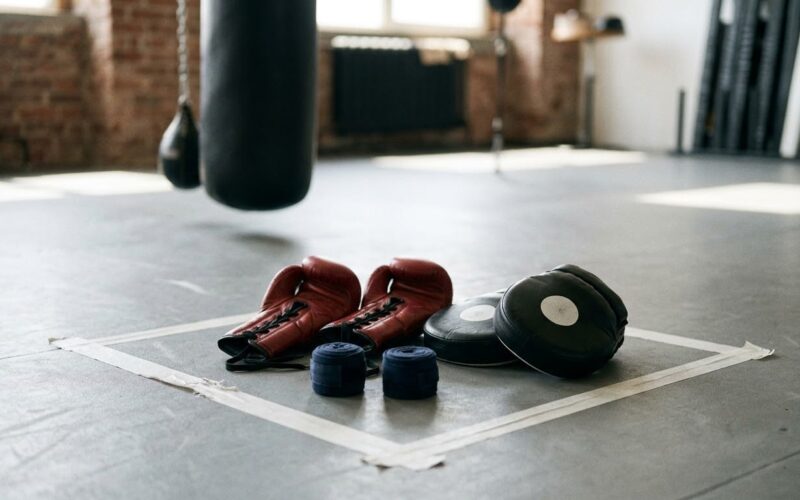
Hand wraps are the one thing I would not skip, even for your first ten minutes. A speed bag is thin leather and your fists land on it hundreds of times per session, so the knuckles take the punishment. Gloves work too, but a pair of light bag gloves changes how the bag feels and makes it harder to feel the rebound. Wraps let you keep contact feedback. Make sure the wrist stays neutral, straight in line with the forearm, never bent back.
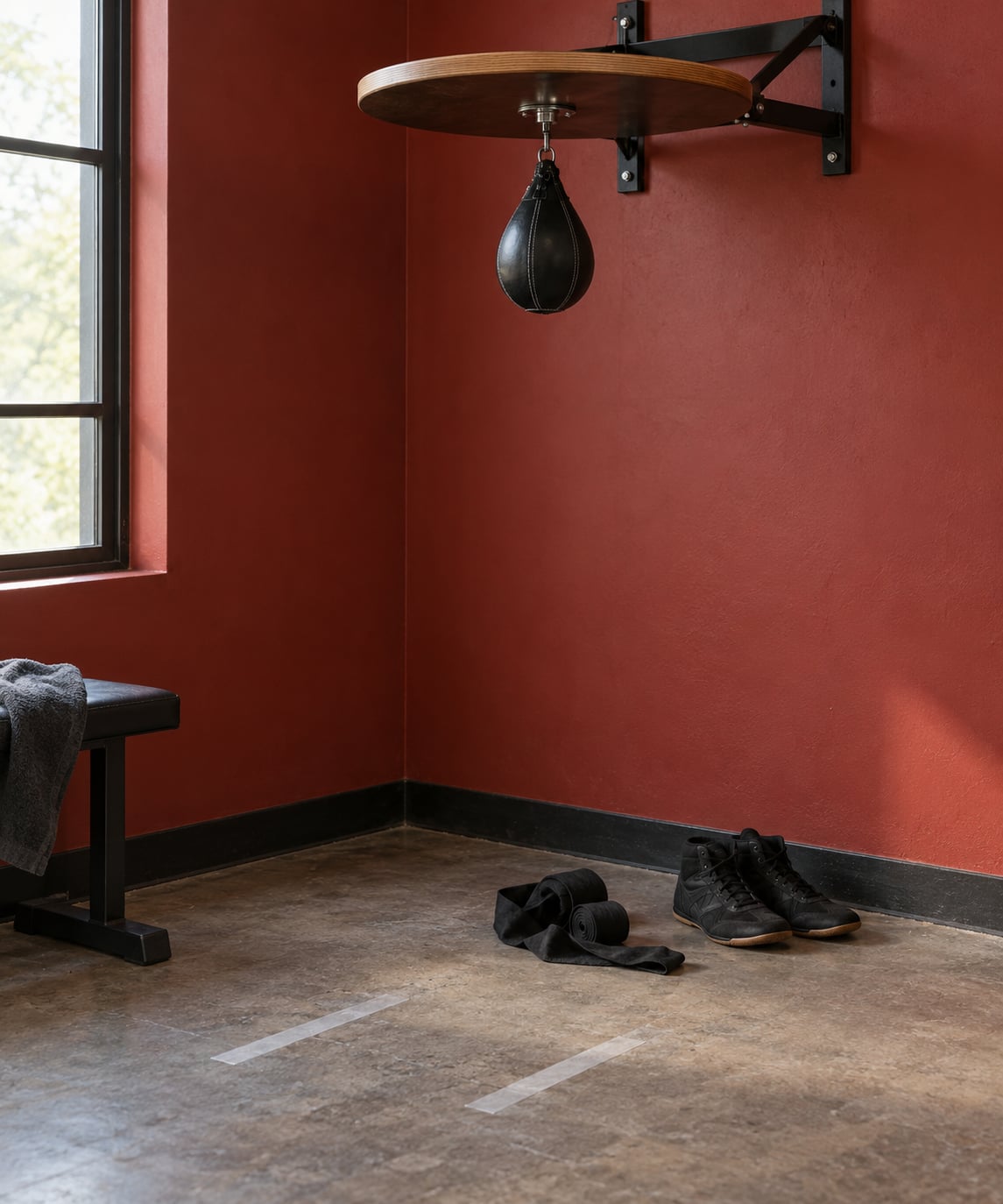
Wear something you can move in and shoes with a flat, grippy sole. Leave about six feet of clear floor in front of the platform so you can step back if the bag comes back faster than you expect. If nobody is around to correct you, two strips of tape on the floor marking where your feet belong are worth more than any piece of gadget.
Before the first punch, follow the manufacturer’s mounting instructions and check the platform is tight and the bag swings freely. Push it once with an open hand, stand back, and make sure it returns on a straight line toward your face and not out to one side.
Step-by-Step: How to Hit a Speed Bag in 7 Steps
Work through these in order. A beginner who builds accuracy and rhythm first will be faster in three months than one who chases power in the first week and spends those three months fixing bad habits. The seven skills stack, and each one only works if the one before it is solid.
1. Set Up With a Boxing Stance
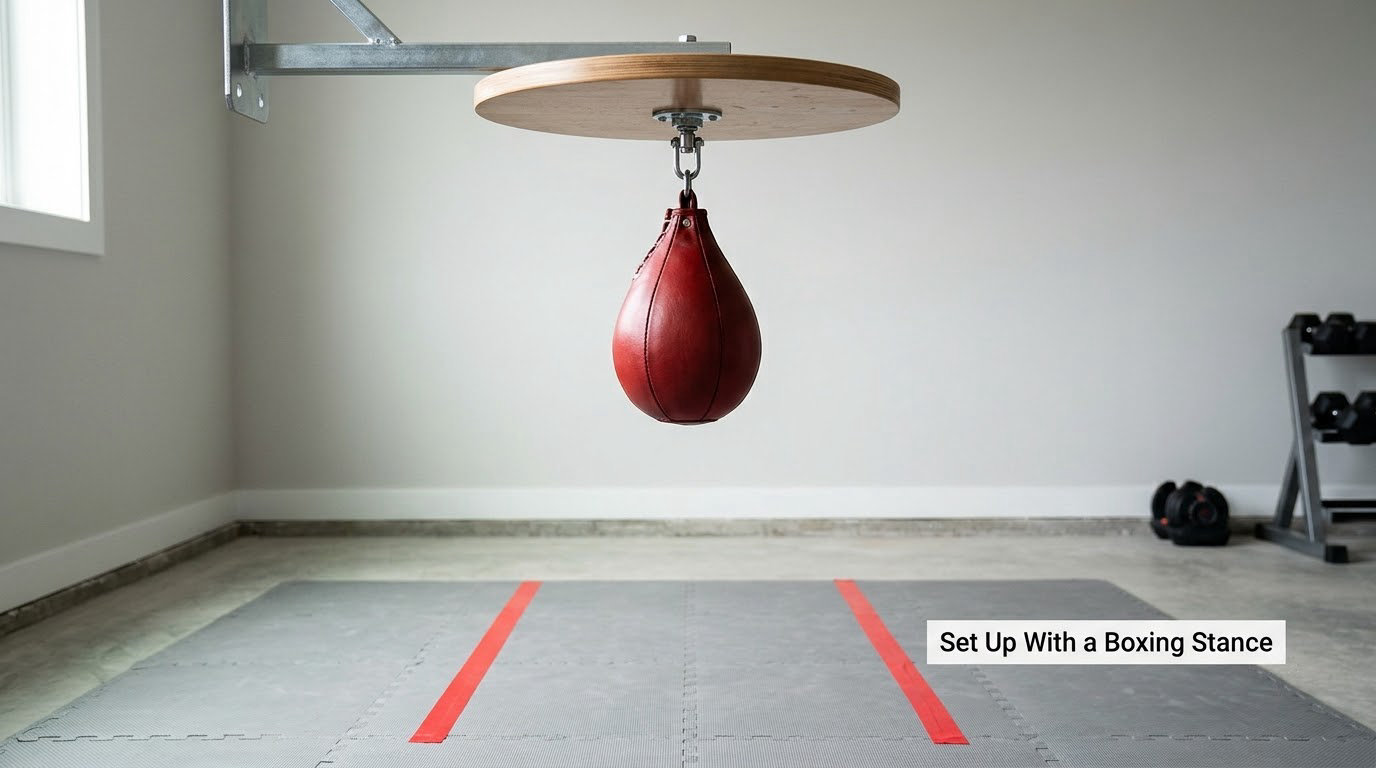
Stand with your feet slightly wider than shoulder width, in an orthodox stance if you are right-handed with your left foot forward. Keep your knees soft, your weight balanced between both feet, your chin tucked down behind your front shoulder, and your hands up near your face.
Balanced footing is what stops your upper body from being pulled away from the bag. If the bag tugs on one hand and drags your torso after it, you have already lost the drill before the first punch. Stand close enough that a straight punch fully extends without you reaching forward, and far enough that a returning bag never touches your face.
2. Learn the Basic Jab and Cross
Aim for the same spot on the bag every time, dead centre, where the leather is fattest. Two strikes matter at the start: the straight punch, which goes out and comes straight back, and the circle punch, which traces a small loop down and around before returning to guard.
Extend each punch without leaning, rotating the hips and shoulders rather than just throwing the arm. Then bring the hand all the way back to your face. Do not push the bag, do not pull it toward you, and do not let the other hand drift down. Keep the contact light and clean, because a punch that lands cleanly at half speed teaches you more than a wild swing that misses contact entirely.
3. Build a Steady Rhythm
Push the bag once and count the rebounds out loud: one, two, three. Strike it on the first and the third. The bag’s own slap is your metronome, and once you can hear that third rebound clearly, you can stop counting and just listen.
Jab, cross, jab, cross is enough for your first month. Breathe out on each punch rather than holding your breath, because a tight chest kills the small circles your hands need to keep moving. If you lose the beat, do not punch harder or faster to catch up, just let the bag come back and rejoin it on the next first rebound. Losing the rhythm is normal for the first several sessions and it stops on its own.
4. Add Hooks Without Leaning
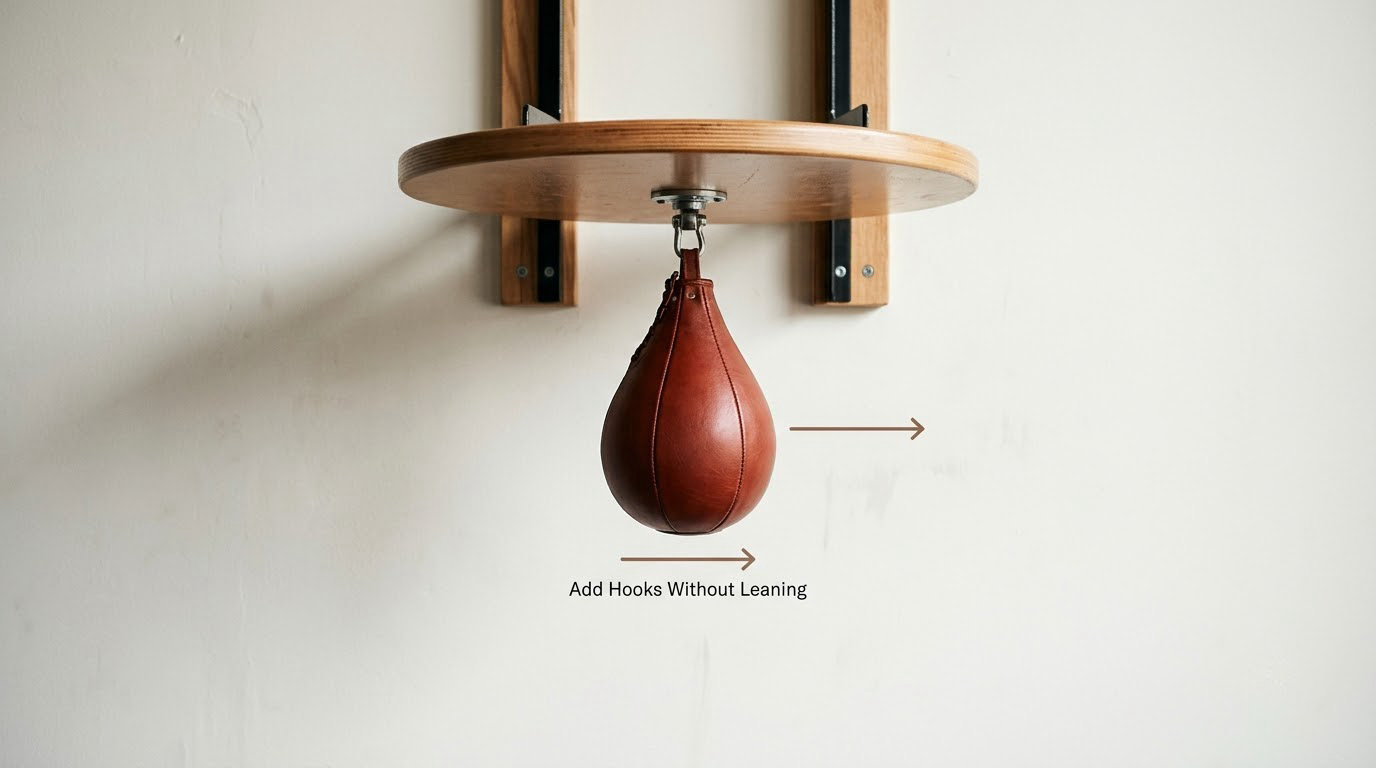
A hook is short and horizontal, not a wide swing across your own body. Keep the elbow in line with the wrist so the forearm stays under the punch instead of flaring out sideways, and let the hips turn while the feet stay planted.
Flared elbows are one of the most common beginner problems, and they show up quickly: your shoulders burn, your hands drop, and the rhythm falls apart. If your arms feel heavy early on, the hook is usually too wide. Shorten it.
5. Develop Footwork and Bag Movement
Once jab-cross holds for a full count of three, start taking small steps between combinations. Moving a foot changes the angle to the bag, controls the distance, and stops you from being a stationary target standing right in front of the rebound.
Keep the steps small and purposeful. Excessive stepping, reaching with your feet, or turning your back to the bag while you move all cost you control, and you end up chasing a bag that is now behind you. The bag should stay in front of your chest the entire time.
6. Increase Speed and Power Gradually
Speed comes from shortening the pauses, not from swinging harder. Power comes from a stable stance, hip rotation and using your legs and core, not from the arm. A punch thrown with the whole body behind it lands on the bag as a short, sharp report rather than a heavy thud, and that is the sound of efficient work.
Use a simple benchmark: hold clean rhythm for 30 seconds before you try to go faster. When your hands start dropping, your elbows flare or your feet stop moving in time, stop and rest for 30 seconds rather than grinding through bad repetitions. Fatigue is what turns good technique sloppy, and the fix is rest, not stubbornness.
7. How to Hit a Speed Bag With a Simple Combination
Put it together with jab, cross, jab, cross, then one controlled hook. Start at half speed and count three rebounds between every strike. Add one element at a time, not a long advanced combination on day one.
Film thirty seconds on your phone or ask a training partner to watch for the three things that matter: hands returning to the face, feet moving off the line, and the bag staying on a straight swing instead of spinning. If it spins sideways, you are hitting off-centre. Return to the dead-centre target and it will settle on its own.
Common Mistakes
Almost every problem I see in a first month traces back to one of these. Each one has a specific correction, and fixing the right one is faster than simply hitting more.
- Bag hung too high. The belly of the bag should sit level with your mouth or chin, so the bottom lands around nose height. Higher forces you to reach up, strains the shoulder and drops your guard.
- Standing too close or too far. Too close and the bag catches your face. Too far and you lose the fine control of the rebound. An arm’s length is the working distance.
- Hitting too hard. Hard punches knock the bag off its straight line and tire your shoulders fast. Light taps with the heel of the hand or the side of the fist build rhythm faster.
- Pulling the elbow away or flaring it out. It drains the arms and breaks the circle. Keep the elbow under the wrist and close to your ribs.
- Dropping the non-striking hand. Let it hang and your head is exposed and your rhythm collapses. Bring it straight back to your face every time.
- Leaning backward or forward. A heavy bag forces you to lean. A speed bag should never pull your torso off your stance at all.
- Gripping or holding the bag. The moment you hold it, it stops rebounding and the drill is over. Both hands stay up and off the bag.
- Stepping on the base or the platform. Stay clear of the mounting hardware and give the bag room to swing.
- Holding tension in the shoulders. Deliberately relax between punches. Speed bag work is a fine motor drill, not a strength hold.
- Breathing awkwardly. Exhale on every strike. Holding your breath for a long set is the fastest route to dropping your hands.
- Chasing speed before you have control. If you cannot hold 30 seconds of clean rhythm, you are not ready to go faster. Slow down and rebuild.
One more habit worth keeping: keep a small pad or notebook with you and note how long you held clean rhythm each session. Most beginners plateau because they have no idea whether they actually improved, and a number on a page is harder to argue with than a feeling.
If you can get to a gym, a coach watching two of your rounds is worth more than a month of solo work. A short video of the movement also does a lot, because the most common errors, especially a drifting hand or a spinning bag, are impossible to feel from the inside.
Frequently Asked Questions
What height should a speed bag be for a beginner?
Hang it so the fattest part, the belly, sits level with your mouth or chin, which puts the bottom of the bag around nose height. Any higher and you have to reach upward, which strains your shoulder and drops your guard within a few minutes. Too low and you punch down into the rebound. If you are shorter than the mount allows, raise the bag less and stand closer rather than stretching for it.
Do I need boxing gloves to use a speed bag?
Hand wraps matter more than gloves, and for most beginners they are enough. A speed bag is thin leather and the impact lands directly on your knuckles, so wrap your hands and keep the wrist straight in line with the forearm. Boxing gloves work if you prefer them, but a heavy pair dulls the feedback from the bag and makes it harder to feel a clean rebound.
How heavy should a beginner’s speed bag be?
Buy the lightest one you can find, ideally around 10 pounds, and a smaller bag gives you a quicker rebound, which is easier to read and easier to hit on the correct rebound. A heavy bag moves slowly and feels forgiving, which sounds helpful but makes it harder to develop real timing. Move up only once you can hold clean rhythm for a full 30 seconds.
How long should I train on a speed bag each day?
Two short sessions of 3 to 5 minutes beat one long one. The bag works your shoulders and forearms far faster than most people expect, and quality drops long before you feel tired. A practical structure is 3 minutes of work, 30 seconds of rest, repeated for four or five rounds, plus a warm-up and a cool-down. Stop while your form is still clean.
Should a beginner use a speed bag or a double-end bag?
Start on the speed bag, because it controls the return and lets you practise timing and rhythm without chasing a bag that never comes back to the same place. A double-end bag is excellent for hand-eye coordination and accuracy, but it responds to how hard you hit it, so beginners tend to punch too hard and lose the technique. Move to the double-end bag once the speed bag rhythm is reliable.
When should I ask a boxing coach to check my technique?
Ask early rather than late, because the habits you build in the first month tend to stick. A coach is most useful when your bag spins sideways, your hands drop after a minute, your shoulders burn early, or you have been working at the same pace for weeks with no measurable change. Even one short review of two rounds can fix something that a month of solo practice will not.
Conclusion
The whole method reduces to a few things. Check the setup, and if the belly of the bag is above your chin, lower it before you throw a single punch. Stand with your feet wider than your shoulders, weight balanced, hands at your face. Push the bag once, count one-two-three, and strike it on the first and third rebound with light contact, jab-cross, hands returning to guard.
Everything after that is addition. Hooks come when the rhythm holds, footwork comes when the hooks are short, and power comes from your hips and stance rather than from your arm. If you can hold 30 seconds of clean rhythm before you try to go faster, you are training the right thing. Keep it to two short sessions a day and check your progress against a number rather than a feeling. Updated for 2026.