Choosing hand wraps comes down to three things: enough length to cover both your knuckles and your wrist, the right amount of stretch for how you train, and a fit that feels secure without cutting off circulation. Most beginners buy a 120-inch pair because the number sounds manageable, then spend a month wishing they’d gone longer. Getting the choice right takes about five minutes of reading and saves you a lot of frustration in the ring.
Wraps are the cheapest insurance in boxing. They sit between your fist and the glove, spreading impact across the metacarpals instead of concentrating it on one knuckle, and they keep the wrist from folding backwards when you miss. The snag is that most wraps are sold in five or six sizes with almost no explanation, so you end up guessing. Here’s how to choose hand wraps without guessing.
Table of Contents
What You Need
Before you compare listings, work out what your training actually demands. Someone doing three heavy bag sessions a week has different needs from someone sparring twice a week, and a 16-year-old with small hands needs something different again. Ten minutes of honest self-assessment saves a bad purchase.
Five things drive almost every decision:
- Training purpose. Heavy bag and pad work calls for knuckle and wrist coverage. Sparring adds a need for stability. Competition rules may not allow cloth at all.
- Hand size. Wraps that are too wide for a narrow hand fold and bunch at the knuckles. Longer hands usually do fine with 180-inch wraps; small hands may prefer 120.
- Length. Measured in inches or centimetres, typically 108, 120, 180 or 210. Longer is not automatically better.
- Material and stretch. Cotton, cotton-polyester blends and semi-elastic Mexican-style fabric all behave differently once your hands get wet.
- Closure and care. Hook-and-loop tabs that hold through a long session, and a fabric you can actually wash and dry before it smells.
If your coach already recommends a specific type, take that as a starting point rather than a rule. Plenty of gyms have a house standard, and fighting that on day one is harder than adjusting later.
How to Choose Hand Wraps: Step-by-Step
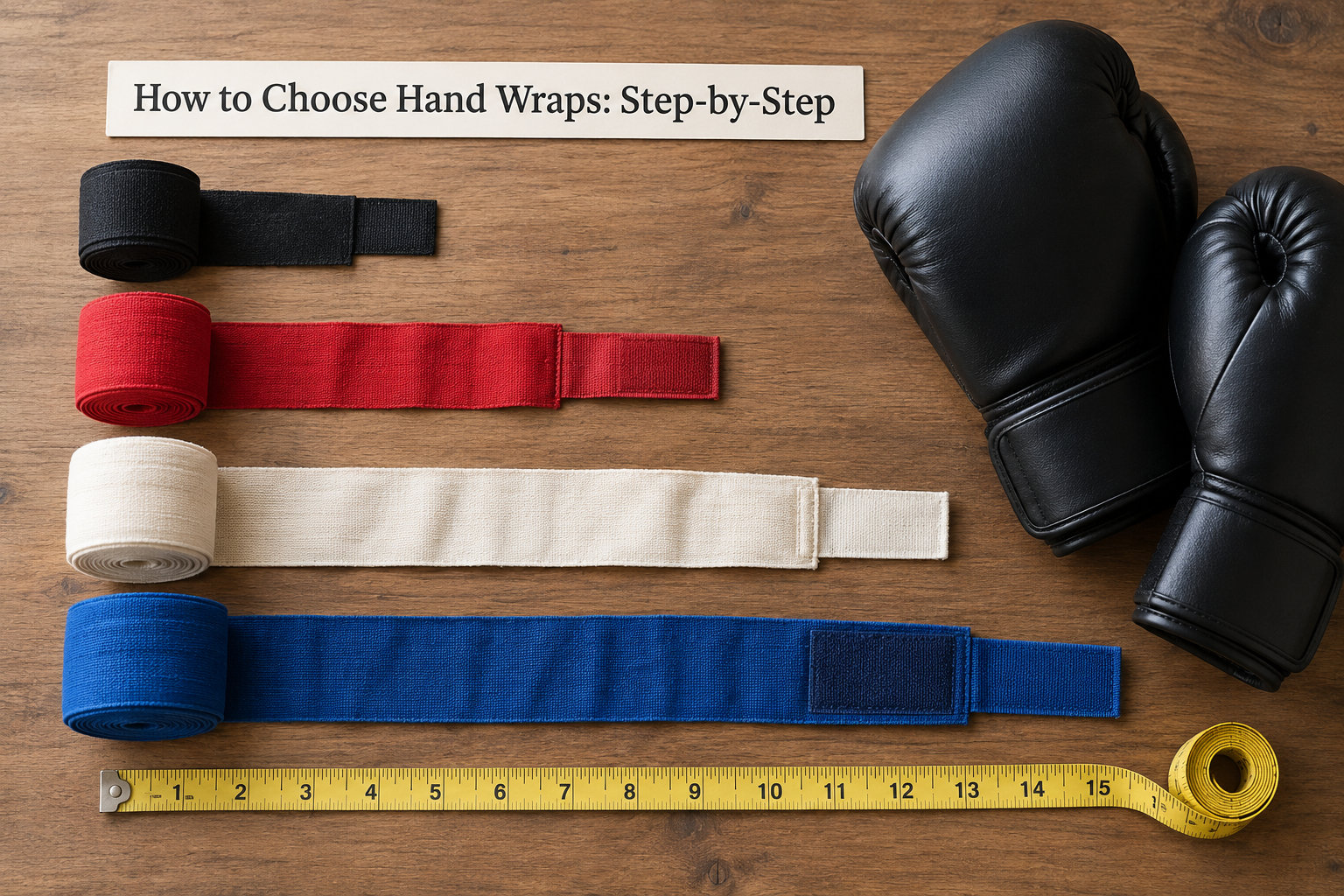
Choose the Right Wrap Type for Your Training
Start by picking the type that matches your sessions, then worry about length. Three categories cover almost everyone.
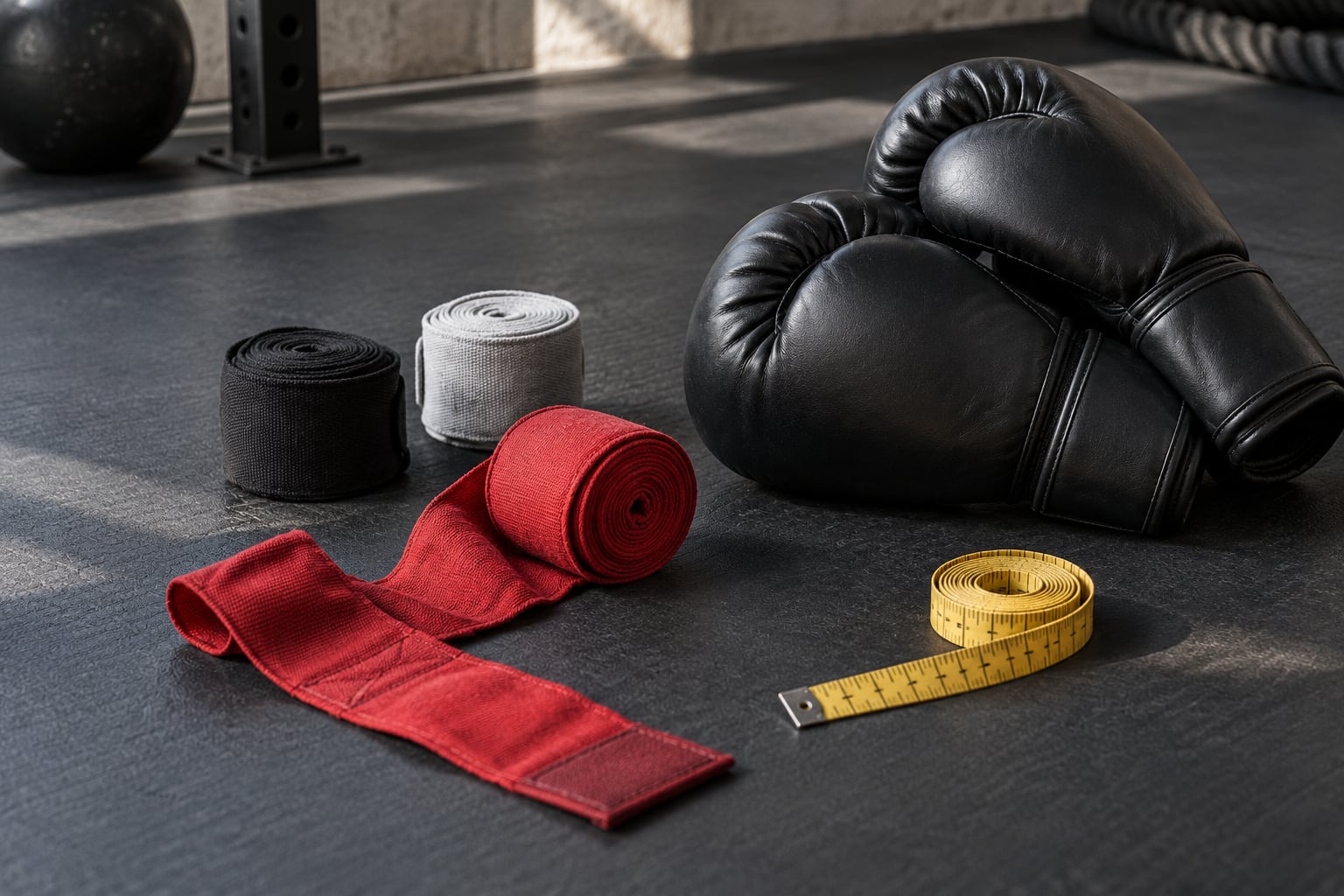
- Traditional non-stretch wraps are pure cotton. They hold a cast-like structure and feel very secure once you know the technique. The trade-off is speed: they take longer to put on and the technique has to be right.
- Semi-elastic “Mexican-style” wraps stretch across the palm and knuckles while the wrist section stays firm. They are the most common choice in gyms because they conform to the hand and are easier for beginners to apply correctly.
- Quick wraps use an integrated elastic or gel layer with hook-and-loop straps. They go on in seconds and suit travel or high-intensity cardio classes, but they give less wrist stability than a properly wrapped traditional wrap. Fighters on r/Fitness and r/fightgear generally treat them as a convenience tool rather than sparring gear.
If you hit a bag or pads most days, go semi-elastic. If you compete or your coach is strict about technique, go traditional non-stretch. If you train in short bursts away from a gym, quick wraps are a reasonable second pair.
Check the Length and Width
Length is the number shoppers fixate on, and it matters, but the coverage you actually need is knuckles plus wrist. A 120-inch wrap covers the knuckles and a light wrist pass. A 180-inch wrap adds the wrist revolutions and the X-pattern across the back of the hand that most coaches teach. A 210-inch wrap adds bulk and is worth considering for heavy bag power work or sparring, at the cost of more time per wrap-up.
Width matters just as much and gets ignored. Around 2 inches (5 cm) suits most adult hands. Wider wraps cover more knuckle surface but can feel clumsy on smaller hands and won’t sit flat. Narrower wraps on a broad hand leave gaps between the metacarpals.
The practical test: if the wrap lies flat along the side of your hand from knuckle to wrist without standing up on edge, the width is right. You can also measure the width of your palm across the knuckles and compare it to the fabric.
Consider the Material and Construction
Material decides how the wrap behaves once sweat arrives, and that changes how it should be applied.
- 100 percent cotton breathes well and handles heat honestly, but it absorbs water and loosens during a long session.
- Cotton-polyester blends dry faster and hold shape better while still letting moisture out. This is the sensible all-round choice for daily training.
- Semi-elastic blends stretch across the palm and pull snug without you fighting them. They conform to the hand, which is why most experienced fighters prefer them.
Read the construction notes, not just the fabric name. Look for reinforced stitching along the edges, since that’s where a wrap frays first, and for a thumb loop that holds position. Reviews on r/amateur_boxing keep circling the same failure point: hook-and-loop tabs that give out after a few months. If a brand doesn’t mention stitching anywhere, assume the seams are the weak link.
Look at Thumb Lock and Wrist Support
Wrapping technique is really a matter of three closures, and good wraps make all three easier. You want a loop or wrap that anchors the thumb so it can’t fold in on impact, an X-pattern across the back of the hand that pulls the metacarpals together, and a wrist pass that locks the whole thing in place.
Support should feel firm, not tight. The useful distinction is that a well-wrapped hand is snug and slightly compressed, while a tight one is squeezing. If you can’t get your fingers back to comfortable within a minute, the wrap is too tight. Fighters in r/martialarts often describe the same test: wrap, then make and hold a fist for a full minute. If your hand starts tingling, the wrist pass is too snug.
For anyone returning from a wrist sprain or a healed fracture, talk to a coach or a physiotherapist before changing technique on your own. Wrapping a weak wrist differently from a healthy one is exactly the kind of guesswork that turns a small issue into a long layoff.
Test the Fit Before You Buy
Even a well-described listing can’t tell you how a wrap feels, so plan a trial. Buy one pair first rather than a bulk pack, wear them for a few sessions, and check three things: full coverage of the knuckles with no exposed seam, a thumb that stays anchored through shadowboxing, and a wrist that stays put without cutting circulation.
If a pair fails on fit and it was a sizing mistake rather than a quality problem, exchanging or returning them is the sensible move, so check the return window before you train in them. If the fabric feels scratchy or you notice redness after a session, that’s a material problem, not a sizing one, and no amount of adjusting will fix it.
Finally, read the care label before you commit. Machine-washable and fast-drying wraps can be in rotation permanently. Anything you cannot wash without guessing will smell within weeks, and you will end up avoiding them.
Common Mistakes
Most wrap problems come down to one of these, and each has a simple fix.
- Buying the wrong length. Most beginners regret 120-inch wraps when they wanted full wrist coverage. Fix: pick 180 inches unless you have a specific reason for something shorter.
- Ignoring width. Wraps that stand up on edge or fold between the knuckles will never sit properly. Fix: match the width to your palm across the knuckles.
- Choosing wraps that stretch too much. Very stretchy fabric feels great dry and turns unpredictable when your hands get wet. Fix: semi-elastic is fine; fully elastic is not.
- Wrapping too tight. A wrist pass pulled hard enough to numb your hand is a circulation problem, not extra support. Fix: firm and snug, and check with a fist-hold test.
- Mixing wrap types carelessly. Quick wraps worn for years of sparring lose their shape and their wrist support. Fix: keep quick wraps for fast sessions and traditional wraps for the serious work.
- Skipping care. Wraps that are never washed, or dried in a damp bag, start to smell and can irritate skin. Fix: wash regularly and dry them flat and open.
- Assuming one size fits everyone. Two people training in the same gym can need completely different lengths. Fix: judge your own hand, not your training partner’s.
One habit worth building early: own more than one pair. Fighters commonly rotate three or four pairs so that each set can dry properly between sessions, and it’s the cheapest way to make wraps last. Damp wraps stored inside gloves are the real reason so many pairs get thrown out early.
Frequently Asked Questions
Should I get 120 or 180 inch hand wraps?
Most boxers should start with 180-inch (4.5 metre) wraps. They cover the knuckles, add wrist support and carry the X-pattern across the back of the hand that coaches teach. A 120-inch pair is shorter, wraps faster and suits smaller hands or light technical drills, but many fighters who start there wish they’d gone longer once they began hitting the bag hard.
What size boxing hand wraps should I get if I have small hands?
Start with length rather than width being the priority. For small hands, 120-inch wraps often sit more comfortably and are quicker to apply, while 180-inch wraps can leave surplus fabric around a narrow hand. Width matters too: around 2 inches (5 cm) is the standard, and anything wider tends to fold between the knuckles. If a wrap does not lie flat, it is the wrong size.
How tight should boxing hand wraps feel?
Firm and snug, never squeezing. A correctly wrapped hand feels compressed and stable, with no numbness, tingling or colour change in the fingers. A simple test: wrap your hands, make a fist and hold it for a full minute, then open your hand. If you need to shake your hand out to get the feeling back, the wrist pass is too tight and needs loosening.
How many pairs of hand wraps should I own?
Three pairs is a good minimum for anyone training several times a week, so each pair can dry out fully between sessions. Four or five makes rotation easier if you train daily or use different types for different work. More is not always better, because wraps that never fully dry start to break down faster and develop a smell.
How do I wash boxing hand wraps without them tangling?
Put them in a mesh laundry bag or pillowcase and wash them on a gentle cycle, then dry them flat with air circulation rather than in a tumble dryer. Heat damages elastic fibres and shrinks cotton. Never leave damp wraps rolled up inside your gloves. Most fighters on Reddit wash wraps in a mesh bag for exactly this reason.
Can you use cloth hand wraps in competition?
Usually not. Competitive boxing and most kickboxing and MMA rules generally specify gauze and tape rather than reusable cloth wraps, partly for hygiene reasons. Rules vary by governing body and by region, so check with your promoter or sanctioning body before a bout. Your cloth wraps still matter for every training session leading up to it.
Conclusion
Start with your training, not the numbers. Decide whether you need full traditional coverage, semi-elastic support or the speed of quick wraps, then check that the length covers your knuckles and wrist and that the width lies flat across your hand. Buy one pair, wear it for a few sessions, and confirm the fit feels firm rather than tight before you restock. That process is as current for 2026 as it ever was, and it costs you one afternoon instead of a season of sore knuckles.