Working out how to use focus mitts with a partner comes down to three habits: the holder angles the target to match the punch, both of you agree on calls before the round starts, and the puncher returns to guard after every exchange. Give it fifteen minutes and a clear patch of floor and you have a real session, not a clumsy one.
The pads themselves are called focus mitts, focus pads or punch mitts. Whoever wears them is the pad holder, sometimes called the pad man, and whoever throws the punches is the striker. One more piece of vocabulary: mitt work is pad work, and the pad holder’s half of it is a conditioning and coaching job of its own.
This is general training information, not medical or coaching advice. If you have a wrist, shoulder or rib injury, ask a doctor before you start, and check technique with a qualified coach the first few times.
Table of Contents
- What You Need Before Starting Focus Mitt Work
- Step-by-Step: How to Use Focus Mitts With a Partner
- Common Mistakes and How to Fix Them
- Frequently Asked Questions
- What is the purpose of focus mitts?
- What gloves should the puncher wear for focus mitt work?
- How close should the pad holder stand to the puncher?
- Should the pad holder call out every combination?
- How hard should the holder hold the mitts without hurting their hands?
- How long should a focus mitt session be, and does it replace bag work?
- Conclusion
What You Need Before Starting Focus Mitt Work
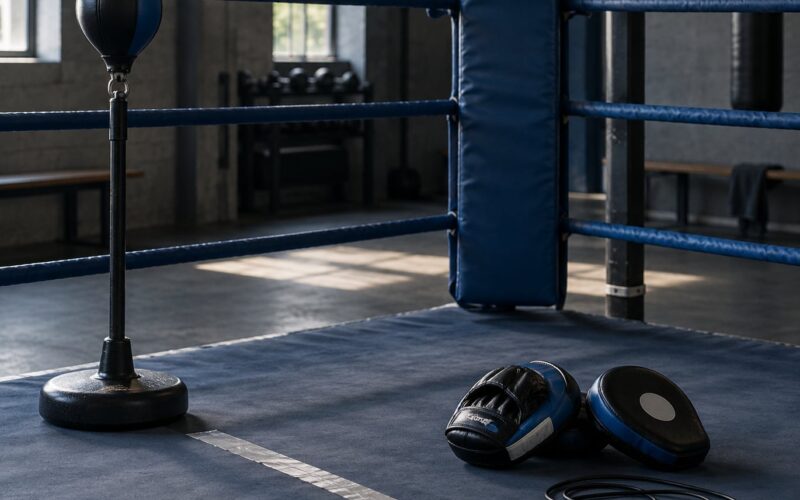
You need less gear than most people expect, and the only item that genuinely matters is a pair of mitts that fit the person wearing them. A mitt that is too big hides bad hand position; a mitt that is too small bounces the punch off the heel of the hand and irritates the wrist.
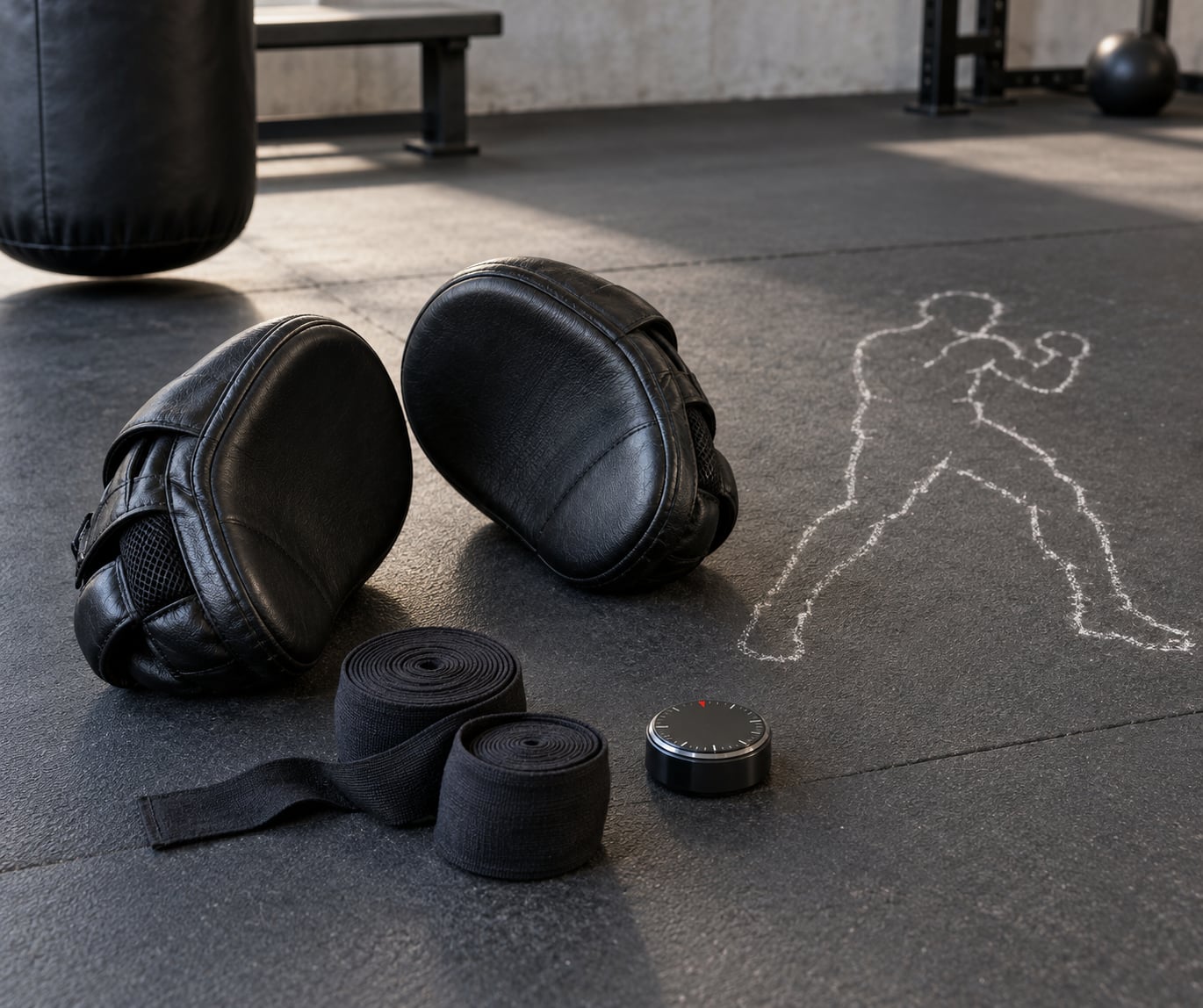
- Focus mitts sized for the holder. Look for a wrist strap, a curved striking face and padding thick enough to absorb full power without the mitt folding around the knuckle.
- Boxing gloves for the striker. Bag gloves work for a beginner partner session. Open-finger MMA-style gloves need sparring wraps to protect the knuckles.
- Hand wraps for both of you. The holder takes punches all session, and a wrap keeps stray shots from landing bare on the knuckles.
- A timer. Phone alarms beat counting rounds by memory, especially once you add footwork.
- Clear floor space. Six feet by six feet is enough for stationary catching. Circling needs more, and a ring is not required.
- Optional extras. A belly pad for knees and push kicks, and Thai pads when you want to add kicks, which focus mitts are not designed to catch.
Clothing matters more than it sounds. Both of you wear something on your feet with grip, and the holder skips a watch, bracelet or ring on the catching hand.
Step-by-Step: How to Use Focus Mitts With a Partner
1. Choose focus mitts that fit the person holding them
Match the mitt to the holder’s hand and to the goal of the session. A curved face with a firm wrist strap suits ordinary boxing mitt work, and a flat or lightly curved face suits bigger power punches because it gives a flatter surface to meet.
Size comes down to the holder’s hand and the striker’s fist. Gloves that spread the fingers too wide make hooks land on the edge of the mitt, while a small mitt catches power shots on the wrist and forearm with less support.
You know the fit is right when the puncher can land three hard straight punches without the mitt sliding or the holder feeling it in the wrist.
2. Check the space and agree on stopping signals
Clear the floor of shoes, bags and water bottles before anyone wraps their hands. Stand roughly an arm’s length apart with the mitt surface angled slightly inward, following the natural arc of a straight punch.
Warm up both people properly. Two minutes of arm circles, a few bodyweight squats, some hip rotation, then a minute of light shadowboxing for the puncher while the holder holds the mitts at the chest.
Agree on two words before you start: one for freeze, one for reset. Members of the r/boxingtips community who hold pads for beginners ask for this constantly, because new punchers throw the next punch early and a shouted stop is faster than an injury.
Also agree that the puncher drops their power when the holder’s hands are down. That one rule prevents most sore knuckles.
3. Set your stance and the distance between you
The holder stands with feet a little wider than shoulder width, knees soft, weight forward on the balls of the feet, and elbows tucked near the ribs. Elbows flared out like wings make the arms tire in about ninety seconds and give the puncher an easy target for body shots.
Keep the mitts at chest height between combinations, striking faces turned inward, so the puncher has to come to you. Outstretched arms waiting for the next punch take away all decision-making, and the striker stops thinking and just chases a target.
The puncher takes a normal boxing stance, hands up, feet slightly staggered for an orthodox boxer and mirrored for a southpaw, then finds a range where a straight punch lands fully extended without stepping in.
If the puncher can lean forward on their toes and hit you, you are too close. If they have to step back to land, you are too far away.
4. Learn clear mitt communication
Calls should be short, spoken before the punch, and agreed in advance. One common system numbers punches from one to eight, and a popular version of it on r/boxingtips runs like this for an orthodox boxer:
- Lead jab
- Rear cross
- Lead hook
- Rear hook
- Lead uppercut
- Rear uppercut
- Overhand right
- Backhand left
Southpaws usually reverse the numbering so their own power hand stays in their head. Either version works as long as both of you use the same one.
Pair the numbers with movement words. In means step in, out means step back, pivot means turn, freeze means hold the target, and steady means punch at half power while the puncher fixes a habit. Finish each block with a reset so you both return to the start position.
Call combos early and often when your partner is new. Move to targets without calls once the combinations are automatic, which is where real fight timing starts.
5. Start with basic punch technique
Present a target the puncher has to find, angle it to the punch, and meet it with light resistance. The mitt angle changes with the punch, which is the single detail beginners most often get wrong:
- Jab and cross: present the mitt straight on at about 90 degrees, tilted slightly inward.
- Lead and rear hook: turn the mitt to about 45 degrees so the striking face lines up with the hook’s arc.
- Uppercuts: hold the target lower at about 45 degrees, dropping it toward the chest and offering the bottom of the mitt.
Angling is not a fixed rule, it is a starting point that makes the puncher land on the target instead of hitting the edge. If a hook keeps skidding off, rotate the mitt until you feel the punch land flat.
The puncher keeps both hands up between punches, rotates the feet rather than reaching with the arm, and returns to a balanced stance every time. A flat-footed, wide stance looks stable on video and falls apart in the third round.
Success check: after twenty straight shots without a call, hands should still be at the chin. If they drift down to the chest, drop the speed and reset the guard.
6. Add footwork and defensive movement
Movement is what separates mitt work from hitting a static target. Call in and out to have the puncher step in and back on your command, then add pivot and circle so they work at an angle rather than standing square.
Slips and rolls get called between combinations, not during them. Say slip before the hook so the puncher moves their head out and back before the next target arrives, and say roll before the uppercut so the defender drops under it and comes back up level.
The holder moves too, and this is where most self-taught holders fall short. Step to the side between combinations rather than planting your feet, and keep the mitts travelling so the puncher learns to track a target instead of memorising a shape.
Never pull the target away as the punch lands. That throws the puncher off balance and trains a habit of over-committing, which is exactly the habit sparring punishes.
7. Build a structured partner session
A session with a shape beats an hour of random catching. Fifteen to twenty minutes is plenty for beginners.
- 2 minutes: warm up, arm circles, hips, then light shadowboxing.
- 3 minutes round one: stationary single punches, called one at a time, half power, with resets to guard.
- 3 minutes round two: simple combinations such as one-two, one-two-three, one-two-three-two, with a slip called after the cross.
- 3 minutes round three: movement and defensive work, in-out calls, a slip or roll before each combination, then two minutes of target work with no calls at all.
- 2 minutes: cool down, shake out the arms, roll the wrists, and compare notes on what felt sharp.
Raise difficulty one variable at a time. Speed first, then calls you have not announced, then defensive movement, then full power.
Stop a round when technique breaks down rather than pushing through it. Fatigue is when wrists drop and shoulders roll, and those are the two habits worth protecting.
If one of you is much more experienced, decide who leads before you start. The stronger boxer calls and the other person follows for the first block, then swap, so nobody gets stuck playing catcher for the whole session.
Common Mistakes and How to Fix Them
Mistake: mitts held too far out with flared elbows. Fix: pull the mitts toward the chest and bring the elbows in until they brush your ribs.
Mistake: mitts held up continuously. Fix: rest them at the chest between combinations so the puncher has to react instead of waiting.
Mistake: the wrist snapping back on impact. Fix: keep deliberate arm and wrist tension so the hand stays firm and lined up with the forearm.
Mistake: mitts placed too high and too far forward. Fix: drop the target toward shoulder height and pull it back toward the body, or you will take a cross on the face. Fighters have been warned about this repeatedly on r/boxingtips and r/MuayThai.
Mistake: punching without returning to guard. Fix: end every combination with a reset, and call the guard out loud when the hands drift.
Mistake: standing completely still for the whole session. Fix: step between combinations and keep the holder moving after the first round.
Mistake: training through fatigue into bad habits. Fix: drop the power or end the round when the technique goes.
Mistake: treating mitt work as sparring. Fix: keep it technical and call your combinations. If you want contact, put on sparring gloves and agree on what power is allowed.
Mistake: only ever drilling one-two. Fix: build a vocabulary. Write five combinations on a phone note and work through them in order so the last one is always the newest.
Frequently Asked Questions
What is the purpose of focus mitts?
Focus mitts are small curved pads worn on the hands and forearms so a training partner can catch punches safely. They build punch accuracy, hand speed, timing and defensive reactions, because the target moves, resists slightly and is called out rather than hanging still on a heavy bag. The holder also gets a conditioning and coaching workout of their own.
What gloves should the puncher wear for focus mitt work?
Any good boxing gloves work, and for a beginner partner session bag gloves are fine. Open-finger MMA-style gloves need wraps underneath to protect the knuckles. Whichever glove you choose, wrap the hands so the wrist is supported, and take the first round at about half power so the puncher gets technique right before the holder feels full impact.
How close should the pad holder stand to the puncher?
Start roughly an arm’s length apart, then adjust by feel. The holder keeps the mitts at chest height and the puncher works at a range where a straight punch lands fully extended without leaning forward. Move in when they cannot reach, move out when they are leaning on their toes. Holding a constant distance is more important than any single measurement.
Should the pad holder call out every combination?
Call combinations early, especially with a new partner, then stop calling as they become automatic. Unannounced targets force the puncher to read the holder, pick a reaction and keep their guard, which is the closest thing mitt work gets to sparring. A good mix is five minutes of called work followed by two or three minutes of target rounds with no calls at all.
How hard should the holder hold the mitts without hurting their hands?
Hold firm with a straight wrist and give light resistance, letting the puncher push into your hands rather than pulling the mitt away at impact. Drop the mitts to the chest between combinations instead of holding the arms out, which saves your shoulders. Wraps on the catching hand, a tight strap and dropping power on body shots all keep the knuckles and ribs out of trouble.
How long should a focus mitt session be, and does it replace bag work?
Fifteen to twenty minutes of good mitt work beats an hour of sloppy rounds, so plan three to five rounds of two or three minutes with a short warm-up and cool-down. Mitt work does not replace heavy bag or pad work, because it trains accuracy, timing and reactions rather than sustained output. Use it alongside bag rounds, usually before them as a warm-up or after them for technique.
Conclusion
Start this week with something small: pick a pair of focus mitts that fit your training partner, agree on two calls and a freeze word, and run one three-minute round of stationary straight punches at half power. Keep the mitts at the chest between combinations and let the puncher come to you.
Once the hands stay up and the calls make sense, add one-two and one-two-three, then slip or roll calls, then finish with a short no-call round. Doing it that way means you build a session you can both repeat, instead of a fun ten minutes that nobody learns from.