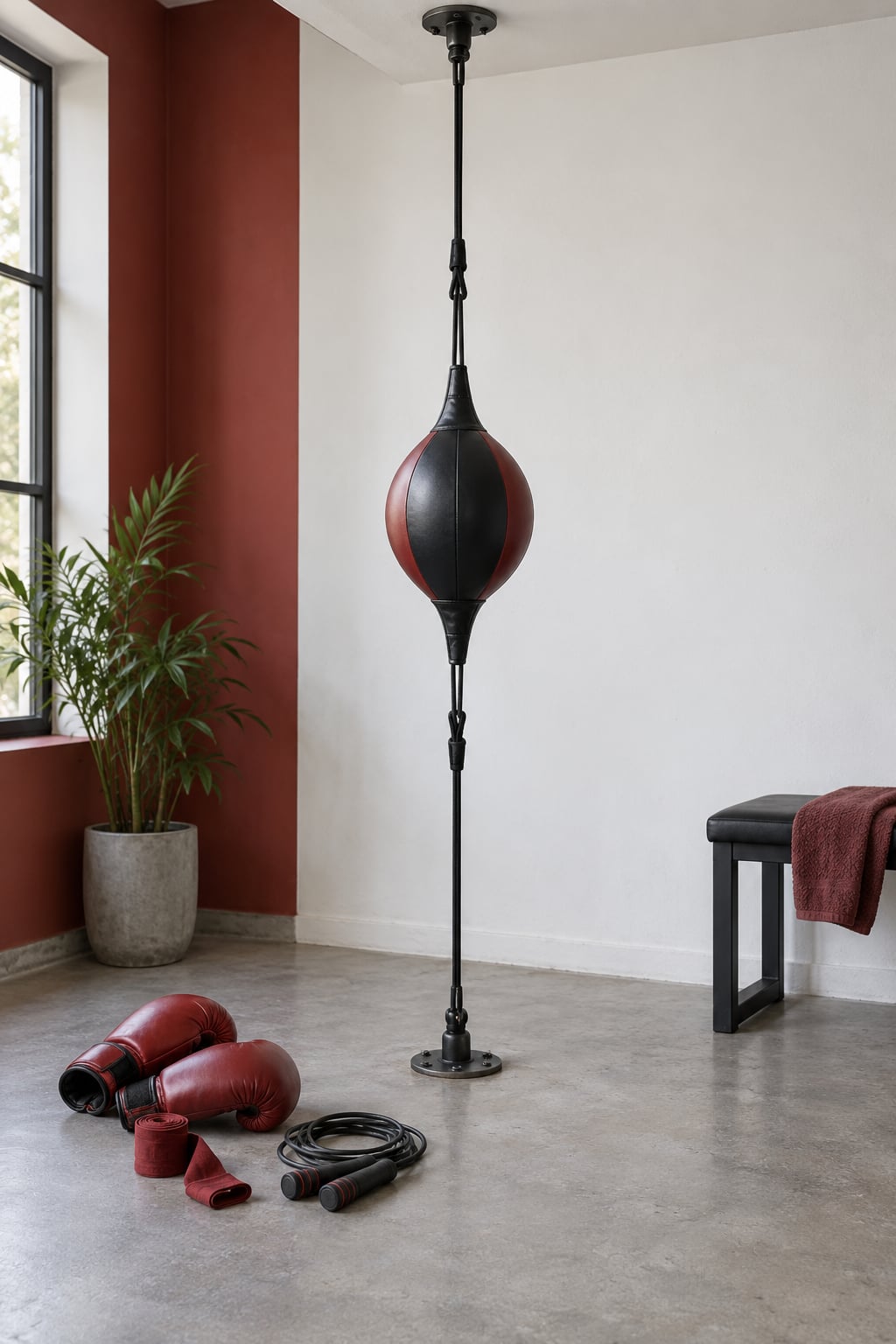
A double end bag is a small ball suspended between the ceiling and the floor on elastic shock cords, and that moving target is the whole point. Because it snaps back at you in directions you cannot predict, what a double end bag trains is the reactive half of boxing: timing, accuracy, hand-eye coordination, head movement, footwork, rhythm and defensive awareness, plus a serious cardiovascular load. It is not a strength tool, and it will not fix a crooked stance on its own.
I have watched the same thing happen in gyms over and over: a beginner gets a heavy bag, throws as hard as they can, feels good about it, and still has terrible timing in their first sparring round. The heavy bag never answers back. A double end bag does, and it is unforgiving about it.
Below is a plain breakdown of the skills, the body parts and the conditioning side of the work, plus how to set the bag up so you actually train instead of chasing it around your garage.
Table of Contents
- What a Double End Bag Trains: Quick Guide
- How a Double End Bag Differs from Other Heavy Bags
- Which Boxing Skills Does It Develop?
- What a Double End Bag Trains in the Body
- How to Use a Double End Bag Safely and Effectively
- How Bag Weight and Filling Change the Workout
- What a Good Double End Bag Session Looks Like
- Common Mistakes and How to Fix Them
- Can a Double End Bag Replace Partner Training or Sparring?
- Frequently Asked Questions
- Conclusion
What a Double End Bag Trains: Quick Guide
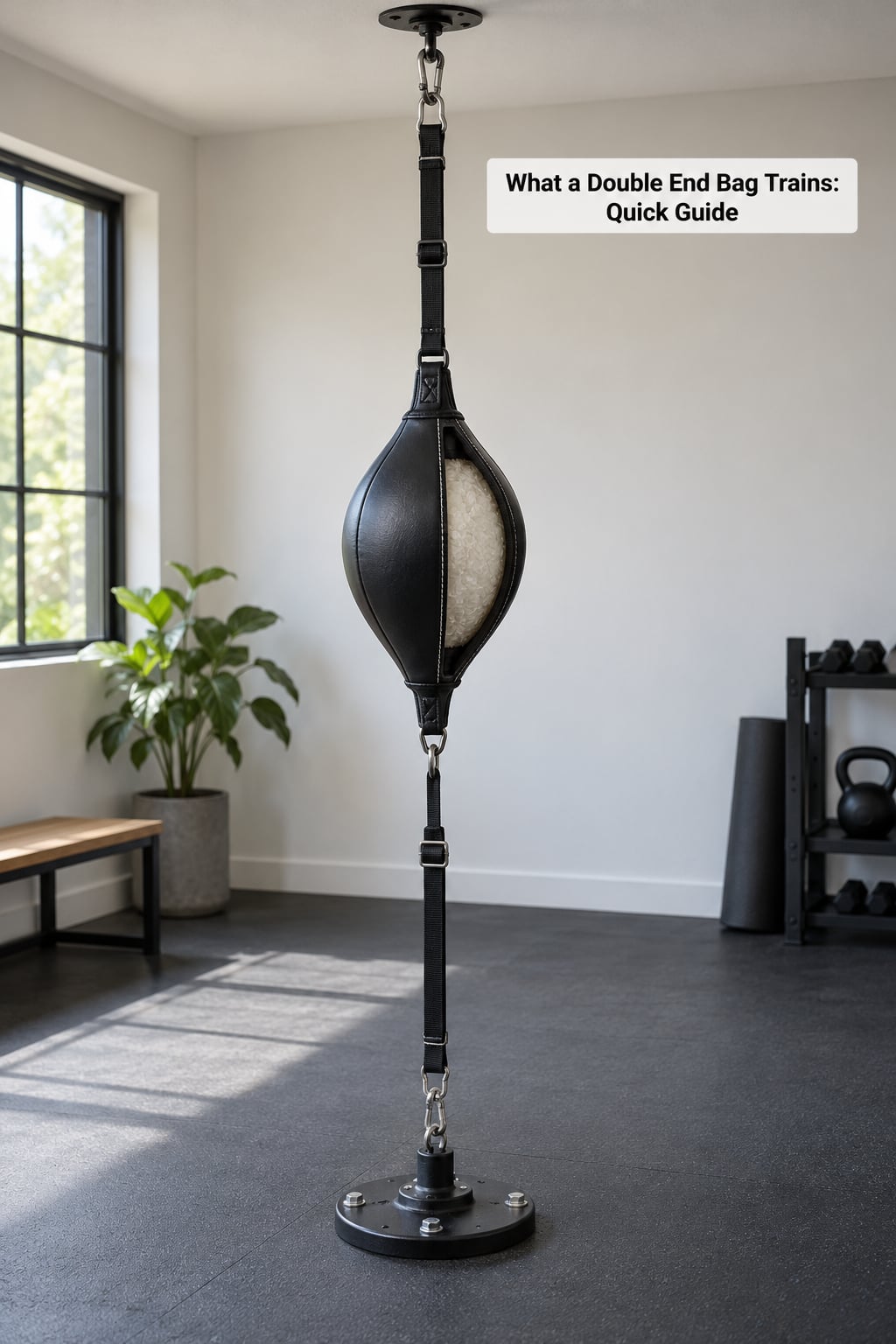
In short: what a double end bag trains is your ability to read a moving target and respond to it in time, with your feet, hips and hands working as one. It builds speed and accuracy far more than raw power, and the conditioning comes as a side effect of never getting to stand still.
| Training area | What it develops on a double end bag | How the bag forces it |
|---|---|---|
| Timing | Punching when the bag arrives rather than when you feel ready | You must meet the rebound, not follow it |
| Accuracy | Punch placement and micro-targeting on a small surface | Only a clean shot makes the bag behave |
| Hand-eye coordination | Tracking a target that changes speed and line mid-exchange | Constant visual correction every round |
| Reflexes and reaction time | Faster response to an unpredictable stimulus | Reactive training rather than static bag work |
| Defensive movement | Slipping, ducking and resetting after each punch | The bag swings back through your guard |
| Footwork and rhythm | Angle management, spacing and combination flow | Chasing the bag forces you to move your feet |
| Conditioning | Cardio, shoulder endurance, calves, trunk stability, grip | Short explosive bursts with no rest built in |
One warning before the details: it is a fitness tool, not medical advice. If you have shoulder, wrist, neck or back problems, or you feel pain or dizziness during a session, stop and talk to a doctor or a physiotherapist before going back to it.
How a Double End Bag Differs from Other Heavy Bags
The difference is mechanical. A heavy bag hangs from one point and swings as a single mass. A double end bag hangs from both ends on elastic cords, so the lower half whips upward and back down independently of the top, and both ends rebound toward you after impact.
That is why the same punch feels different on each. On a heavy bag you can load up and dump power into a stationary target. On a double end bag, hitting hard just sends the bag somewhere else, and you have to follow it.
| Bag | How it moves | Primary focus | Beginner friendly? |
|---|---|---|---|
| Double end bag | Both ends rebound fast, direction unpredictable | Timing, accuracy, hand speed, defence | Yes, with firm cords and controlled rounds |
| Heavy bag | Swings as one mass, slows and returns | Power, conditioning, technique at full extension | Yes, but it hides bad habits |
| Speed bag | Fixed platform, consistent rebound you set | Hand speed, rhythm, combination structure | Yes, best for rhythm work |
| Reflex ball | Small ball on a single cord, bounces freely | Reaction speed and hand-eye coordination | Yes, but a different skill entirely |
The reflex ball is worth calling out because people buy the wrong tool constantly. A reflex ball is a small ball on one cord that bounces around; it trains reaction and hand speed in a loose, unstructured way. A double end bag has a defined middle you strike on purpose, so it trains placement and combination timing as well. Forums keep asking for this distinction, and the short version is: reflex ball for raw reaction, double end bag for reaction with structure.
The heavy bag is the opposite tool, not a worse one. Boxers who train seriously usually own both: heavy bag for power and work capacity, double end bag for speed and accuracy. A popular framing from boxing forums is that the heavy bag builds the engine and the double end bag teaches you to steer.
Which Boxing Skills Does It Develop?
Timing and rhythm
This is the headline skill. The bag returns on its own schedule, and you have to meet it. Hit while it is still moving away and you will be chasing air; hit too late and it will be past you. Learning that window is the whole first month.
Accuracy and hand speed
A 4 to 7 inch target gives you nowhere to hide. A slightly off-centre punch misses or glances, and a glance sends the bag off line, so precision and speed reinforce each other rather than competing.
Defensive movement
Because the bag comes back through your space, you learn to slip, roll under and reset your guard without thinking about it. Experienced boxers on r/Boxing describe it as the piece of equipment that most improved their head movement and reaction, while repeating that nothing replaces sparring.
Footwork and ring awareness
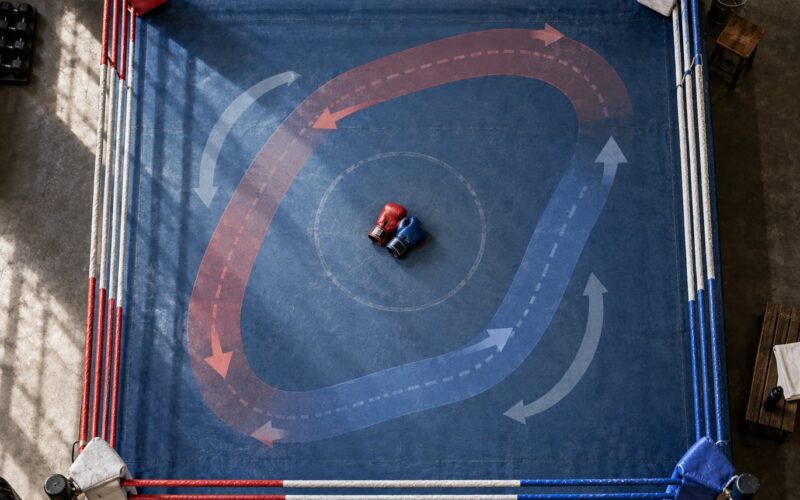
You cannot stand still and stay in range. Working angles, stepping off line and recovering your distance are all part of every round, even when nobody is throwing a punch at you.
Combination structure
Because you reset between bursts, you learn to build a combination and land it on the beat rather than in a panic. Amateur boxers on r/amateur_boxing describe it as the tool that made combination punching finally make sense.
What it does not develop on its own is technique correction, ring-calling under pressure, or reading an opponent’s intention. Those need a coach, pads or a partner.
The rhythm rule behind everything the bag trains
The rule most coaches give is rhythm first, speed second, power never. Power on this bag is not the goal; it is a side effect that shows up once your timing is clean. Beginners who skip that step usually decide the bag is useless, when the bag was simply telling them the truth.
What a Double End Bag Trains in the Body
Skill is only half the answer, and it is the half most articles leave out. What a double end bag trains physically is a full-body coordination pattern driven by short bursts, plus a conditioning load that sneaks up on people.
| Body region | Role in the movement | When it fires hardest |
|---|---|---|
| Legs and calves | Push off, reposition, absorb the bag’s return | Chase-and-reset footwork rounds |
| Hips | Rotate and transfer weight into the punch | Crosses and hooks, especially at full extension |
| Core and trunk | Stays braced while the bag pulls the arms around | Any round where you resist the rebound |
| Shoulders and upper back | Guard, recoil and repeated arm work | Long multi-punch rounds; soreness shows up here |
| Arms and forearms | Extension, retraction and impact absorption | High-volume speed rounds |
| Cardiovascular system | Sustained output in bursts with short recoveries | The whole session |
Beginners regularly report that their shoulders and calves are sore for a day or two after their first real session. That is a conditioning signal rather than an injury, as long as the soreness is dull and even on both sides.
It is a decent cardio session too, roughly comparable to other interval work, though it is not a substitute for a proper conditioning programme. It will not meaningfully raise your testosterone levels either, despite what gym threads sometimes claim.
How to Use a Double End Bag Safely and Effectively
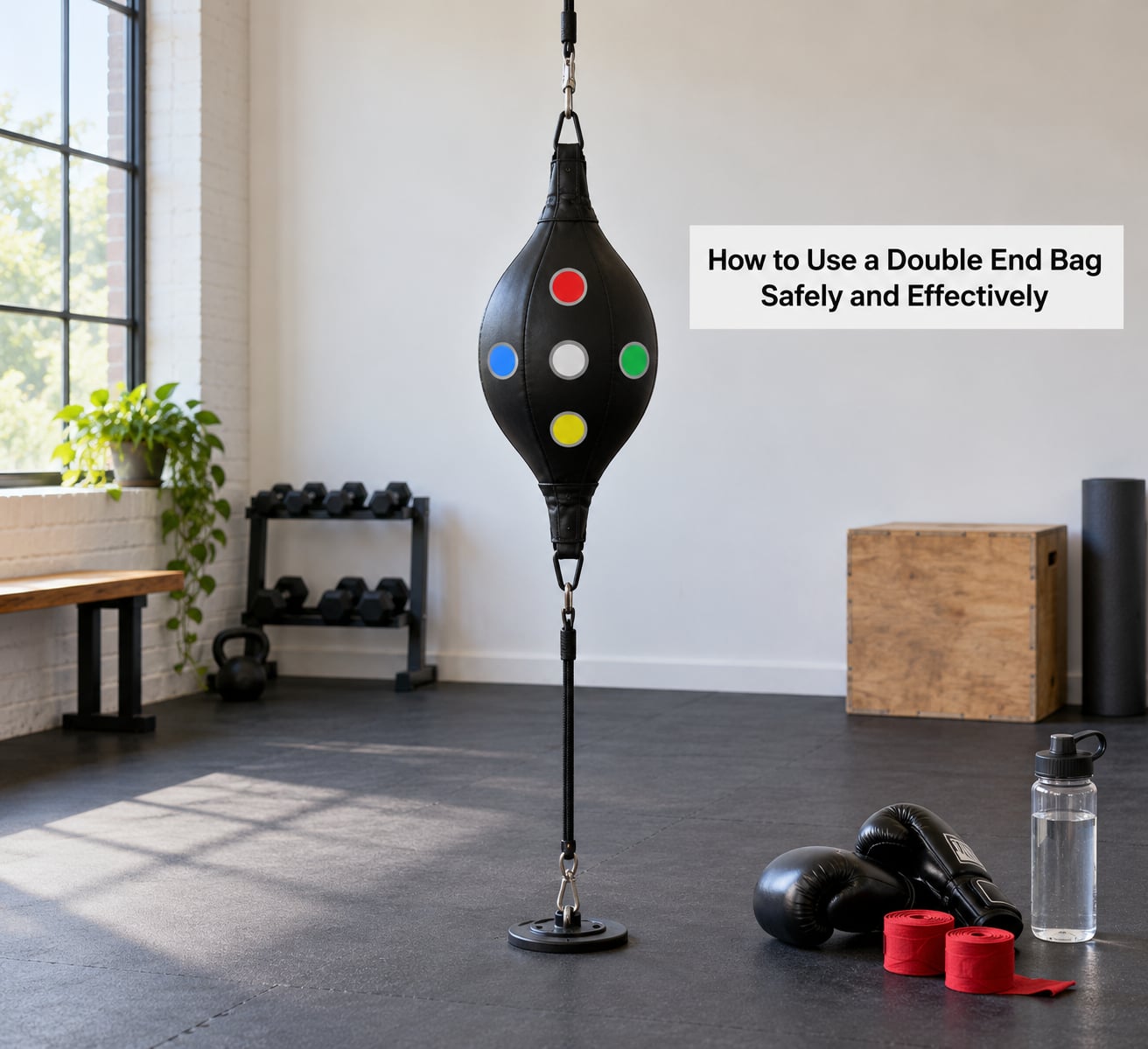
Set-up matters more than anything you do once the round starts, and home users in particular get this wrong. The sequence below is the one I would hand a beginner.
1. Mount it into structure, not drywall
The single biggest failure point reported on forums is a ceiling mount that is not attached to a joist or beam. Screw into solid framing, use the supplied plate and washers, and if you are not certain what is above the ceiling, get someone qualified to check it before you drill.
2. Hang it at chin height
The middle of the bag should sit around your chin when you are in your stance. Higher and you will punch downward and round your shoulders; lower and you will punch upward out of range.
3. Set the cords firm, not slack
Tension controls everything. Start firm so the rebound is quick and predictable enough to learn from, then loosen as your timing improves. Loose cords turn the bag into a lazy pendulum you can lean on, which teaches you nothing.
4. Clear the space and check the floor
You need roughly a body length of clearance in every direction, no furniture, no glass, and a flat non-slip surface. Mark the floor so you know where your feet belong.
5. Wrap your hands and pick your punches
Hands wrapped, gloves on if you are hitting hard, and a round of single jab before anything else. Wrist and knuckle soreness on this bag usually comes from punching a small hard target with flat, untapered force.
6. Work in bursts, then reset
Three to five punches, reset your stance, move, repeat. Resetting is not resting; it is the habit you want to build, because it is the habit sparring will demand.
7. Cool down and stop early if something is wrong
Two minutes of easy movement, some water, and stop if you feel pain, dizziness, ringing ears or anything sharp. Sharp wrist, shoulder or neck pain is not something to work through. Persistent pain means a doctor or physiotherapist, not another round.
How Bag Weight and Filling Change the Workout
There is no universal right weight, because the bag behaves differently at every size and fill level. What changes is how fast it rebounds, how stable it feels, and how much accuracy is required.
Small and firm bags, around 4 to 5 inches, punish sloppy technique and suit boxers with good timing who want speed and precision work. Mid-size bags around 7 inches are the most forgiving and are where most beginners should start. Larger bags near 9 inches rebound more slowly, feel more stable and are better for power-focused combination work and for people still learning distance.
Fill level matters as much as size. A loosely filled bag absorbs impact and swings wildly, which is harder work but harder to control. A tightly filled bag snaps back faster and demands better timing, so it punishes hesitation more. Start tighter and loosen as you progress, not the other way round.
Suspension height and cord length change the arc. A higher mount or longer cords produce a wide, lazy swing. A low mount with short cords produces a tight, fast whip that is harder to track. Your goal is a rebound you can see coming but not predict exactly.
What a Good Double End Bag Session Looks Like
Ten to fifteen focused minutes beats an hour of swinging. A clean session has four parts.
Warm-up, 3 minutes. Shadowboxing, skipping, light single jabs at half pace. You are looking for a raised heart rate and loose shoulders, not a workout.
Technical round, 3 x 2 minutes. One thing only. Beginners should stay on the jab, or jab-cross, for a full week before adding anything. Rest 60 seconds between rounds and do not rush the rest.
Movement round, 3 x 2 minutes. Add defence and footwork. Work a slip or roll after every exchange, change angle on every burst, and let the bag come back through your space instead of stepping away from it.
Cooldown, 2 minutes. Slow footwork, long exhales, then shake out the arms and shoulders.
Beginner examples: single jab, jab-cross at 60 percent power, then jab-cross-slip. Intermediate: jab-cross-hook-roll, moving between bursts. Advanced: free-flowing combinations on the rebound with an angle change after every burst, and finishing with a short burst at higher intent.
As a weekly pattern, two to four short sessions alongside your other boxing work is plenty for most people. Treat it as a skill session, not a conditioning prescription.
Common Mistakes and How to Fix Them
Leaning into the punch. If your head is over your front shoulder when you land, you are pushing the bag instead of punching it. Reset your feet and keep your chin behind your glove.
Chasing the bag. Running after it teaches nothing. If the rebound is too wild, the cords are too loose or the bag too light for your current level. Tighten it up and stay in range.
Punching beyond safe range. Overextending at a small target strains the shoulder and wrist. Step in first, then punch, then step back out.
Hitting with maximum power every punch. This is the most common beginner error and the reason many people quit the bag. Slow it down until the timing is clean, then add speed.
Ignoring footwork and defence. Standing square and static turns a reactive tool into a boring one. Step off line, slip after each exchange, reset your stance every time.
Choosing a bag that moves too much. If you can never track it, you cannot learn from it. Firm cords and a stable mount come before any other consideration.
Rushing progression. Most people need three to four sessions before timing starts to click. That is normal, not a sign you are bad at boxing.
Can a Double End Bag Replace Partner Training or Sparring?
No, and any coach who says otherwise is selling you something. A bag is excellent for technique, timing, speed, accuracy and conditioning, and it costs nothing in risk to train on.
What it cannot teach you is live timing under a genuine threat, controlled contact that respects your partner’s head, tactical response to someone who is reacting back, defensive responsibility when you actually have to protect yourself, or how tired you sound when you have nothing left. Those only happen with pads, a coach or a sparring partner.
The bag is homework. Do it, then go and spar.
Frequently Asked Questions
How heavy should a double end bag be when starting?
Start with a mid-size bag, roughly 7 inches, hung on firm cords, whatever its listed weight is. What matters more than weight is that the rebound is fast enough to react to but not so wild that you spend the round chasing it. Move to a smaller bag once your timing is clean, or a larger one if you are still focused on power and distance.
What muscles should I feel after using a double end bag?
Expect your shoulders, upper back, forearms and calves to feel worked, along with general cardiovascular fatigue. Those are the areas doing the most repeated work as you punch, guard and reset. Dull, even soreness on both sides is normal after a hard session. Sharp pain in a wrist, shoulder or neck is not normal, and you should stop and see a doctor or physiotherapist.
Should I use a double end bag for footwork?
Yes, and it is one of its underrated benefits. Because the bag rebounds through your space and drifts away from where you expect it, you have to step off line, change angle and reset your stance constantly to stay in range. The best rounds simply alternate short punch bursts with movement, so that chasing the bag trains positioning instead of just cardio.
How often should I train on a double end bag?
Two to four short sessions a week suits most people, kept to about 10 to 15 focused minutes each rather than long rounds. Two or three is a sensible start for a beginner, spaced with at least a day between so you can practise what you learned. Frequency matters far less than doing the same simple drill consistently until the timing feels natural.
Is a double end bag better than a traditional heavy bag?
Neither is better; they train different things and most serious boxers use both. A heavy bag is the better tool for power, structure and cardiovascular work, because the target is stable and you can commit fully. A double end bag is better for timing, accuracy, hand speed and defence, because the target moves. Pick based on your goal, or alternate between them in the same session.
Conclusion
What a double end bag trains is reactive boxing skill: timing, accuracy, hand-eye coordination, head movement, footwork, rhythm, defensive awareness and a strong conditioning base. What it does not train is power technique, ring reading or how to handle contact, and it cannot stand in for pads or sparring.
If you are starting out, mount it into a joist, hang it at chin height, set the cords firm, clear the floor, and do three two-minute rounds of single jabs this week. Nothing else needs to happen before you get real value out of it.