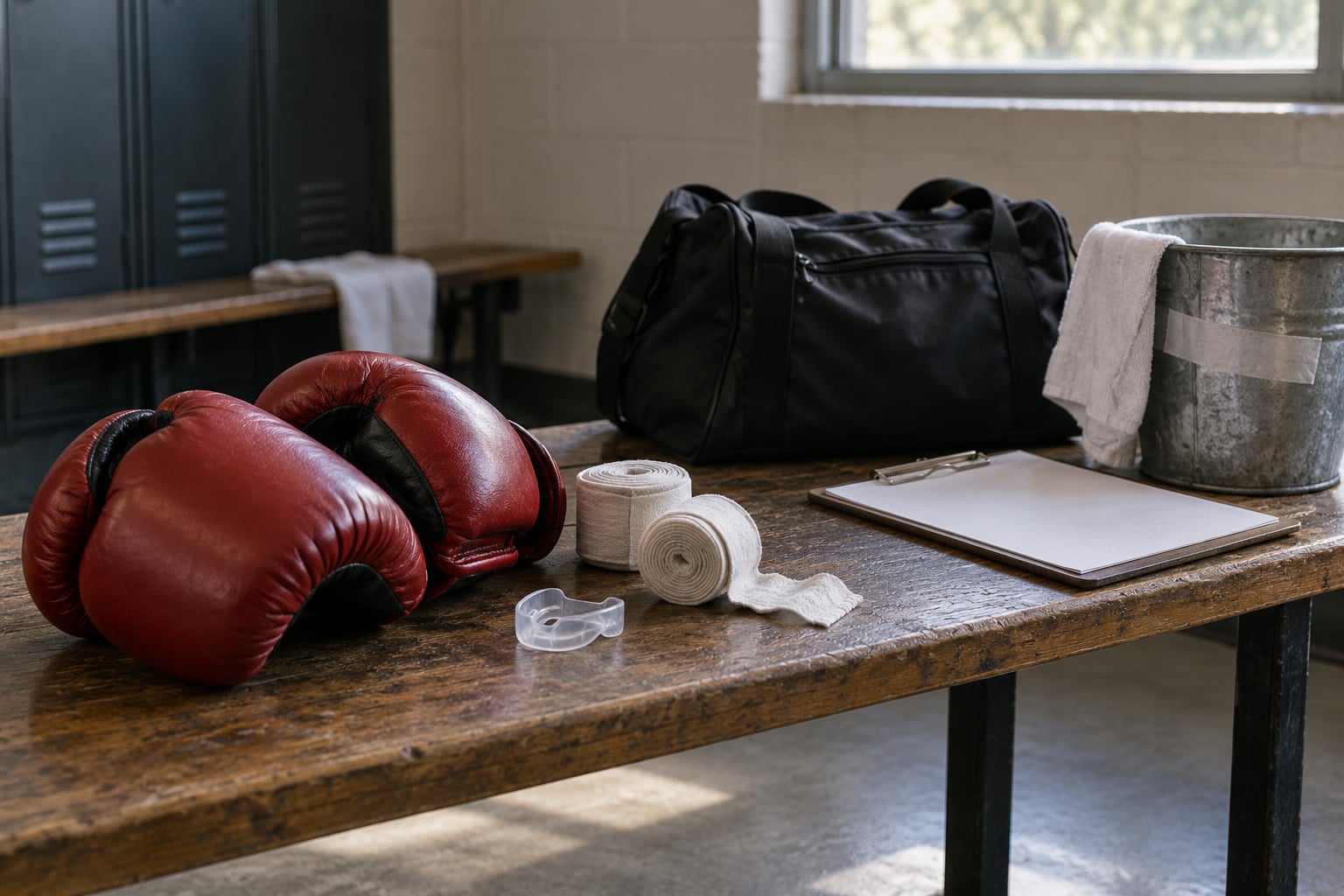
A boxing inspector is the commission official who works in the dressing room before every bout. What the inspector does in the dressing room comes down to four things: watch each fighter’s hands being wrapped, approve and mark those wraps so they can’t be altered later, check that the gloves issued are the right weight and in good condition, and confirm that only approved liquids and permitted equipment reach the corner.
None of that happens ringside. The referee takes over once the boxers arrive at the apron, which is why fans watching on television rarely see the part of fight night that actually starts the bout.
Updated for 2026. Rules vary by state commission and by country, so treat the specifics below as the shape of the process rather than a rulebook.
Table of Contents
- What the Inspector Does in the Boxing Dressing Room
- Why Do Boxing Inspectors Check the Dressing Room?
- What Equipment Does the Inspector Check?
- How Does the Inspection Process Work?
- What Happens If Something Does Not Meet the Rules?
- Can a Boxer or Coach Refuse the Inspector?
- What the Inspector Does Before the Fight Starts
- Key Terms and Authorities Involved
- Frequently Asked Questions
- What does the inspector do in the dressing room before a boxing fight?
- Are boxing gloves checked before every professional bout?
- What happens if a boxer’s wraps or gloves are not approved?
- Is the boxing inspector the same person as the referee?
- Can a boxer or coach challenge the inspector’s decision?
- What should a fighter do if equipment is damaged or missing?
- Conclusion
What the Inspector Does in the Boxing Dressing Room
The inspector is appointed by the state athletic commission or the governing body that sanctioned the event, not by the promoter or either fighter’s camp.
States structure the job differently. A commission may use a chief inspector overseeing the whole card, a corner inspector assigned to one fighter’s room, and a door warden controlling who walks in and out. Some states simply call the role an official. The title matters less than the function, which is the same everywhere: make sure the fighter who enters the ring is wearing equipment the rules allow.
Who the inspector is not
The most common confusion is between the inspector and the glove man, known in Britain as the whip. The whip picks the gloves out of the official supply and carries them to the corner. The inspector is the one who decides whether those gloves are legal.
The inspector also isn’t the second, the cutman, the trainer, the promoter’s matchmaker, or the commission supervisor sitting upstairs on a big show. Those are separate appointments, and the inspector answers to a different line of authority.
Why Do Boxing Inspectors Check the Dressing Room?
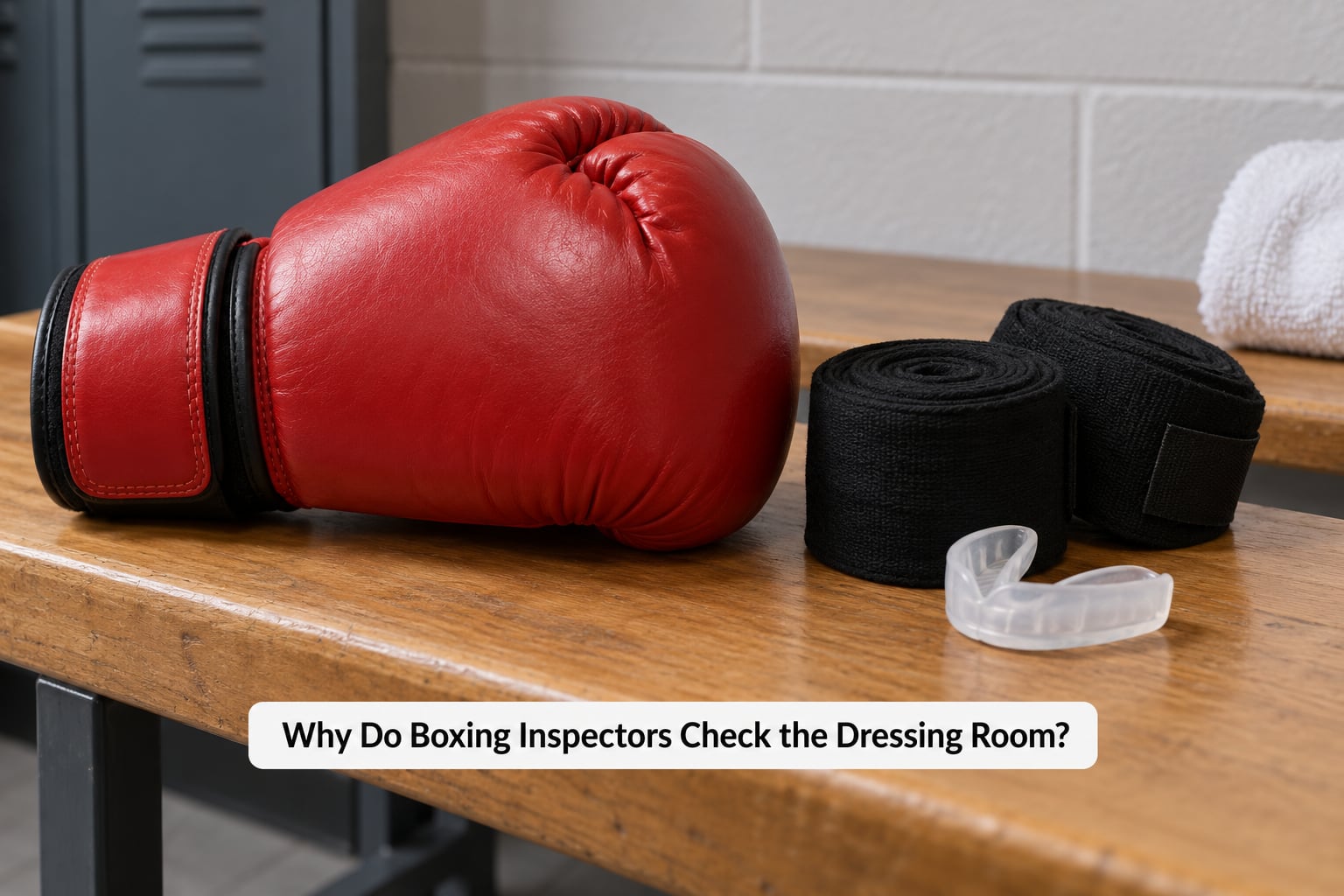
Because the dressing room is the last place a violation can still be fixed without hurting the fight. An illegal wrap taped across the knuckles, a pair of undersized gloves, a bottle that shouldn’t be in the corner, or a foreign substance worked into the tape all read as harmless from a distance. In a twelve-round fight they aren’t.
Four reasons sit behind the inspection:
- Fair competition. Gloves that aren’t the contracted weight change how a punch lands. So does a wrap that stiffens the hand.
- Fighter safety. Wrapped knuckles with no padding, or a glove with displaced padding, are how fractured hands happen. Nobody sees that coming from the ring apron.
- Rule compliance. Commission rules on gloves, wraps, trunks, footwear and advertising exist in writing. Someone has to apply them on the night.
- Resolving problems early. A dispute about shorts or glove colour is trivial at 6pm and a legal problem three hours later when the bout is sanctioned. The inspection is where it gets settled.
What Equipment Does the Inspector Check?
Hand wraps
This is the main event of the inspection. Wraps are applied in the room, in front of the inspector, and the gloves don’t go on until the inspector has seen the job and marked it.
What the inspector looks at:
- Gauze width and total yardage, which vary by commission and weight class.
- No tape or padding running across the knuckles.
- Surgical tape or zinc oxide plaster used properly, with no hidden lumps under the wrapping.
- Wraps applied dry. Wetting the wrap or adding any substance to it is a disqualifying problem in most states.
- Knotted laces, or a taped closure, positioned correctly at the back of the wrist.
Once approved, the inspector initials or otherwise marks the wrap. That signature is the point of the whole exercise: it lets anyone checking after the fight see whether the wrap changed between the dressing room and the final bell.
Some states go further and ask the fighter to sign their own wrap. That reads backwards at first, but it works as a second marker — if an opponent’s corner or an observer alleges the wrap was altered in the ring, both the inspector’s initials and the fighter’s own signature have to be explained.
Gloves
Fighters generally don’t supply their own gloves; the commission or promoter supplies them and the inspector checks them. The inspection covers:
- Weight matching the contracted weight class.
- Condition — no twisted, cracked or misshapen gloves, and no padding pushed out of shape.
- The thumb properly attached.
- Laces knotted or a Velcro closure taped, with no loose ends or debris inside.
- Tape in the corner’s colour where the rules require it, which is how the referee tells red from blue at a glance.
- The inspector’s wrap initial visible on the wrist tape, proving the wraps were approved before the gloves went on.
Everything else in the room
The inspector’s eye also covers the mouthpiece, which should be fitted and not damaged, and the groin protector, which is approved in the room rather than at ringside. Clothing is checked for length, colour and trim, and boots for the permitted amount of padding above the ankle.
Then there’s what the corner brought in. In some jurisdictions petroleum jelly is permitted in a sealed container with no other applicator, and nothing else with a medical or performance claim is allowed. Liquids are limited to water and an approved electrolyte drink, and where testing is in play the inspector keeps an eye on what a fighter drinks and when, because a post-bout sample has to line up with what went in.
How Does the Inspection Process Work?
Every promotion runs its own order, but the sequence looks like this most nights.
- Arrival and room access. The door warden checks credentials. Corners, seconds and cutmen come in; uncredentialed people don’t stay.
- Instructions. The inspector tells the room which gloves will be used, when the bell is, and where the fighter needs to be.
- Weigh-in supervision. For a title bout the inspector is often the one confirming the fighter made weight and appears on time.
- Physical and readiness check. Confirming the fighter is fit to compete and that required medical personnel are on site.
- Hand wrapping. The corner wraps in the inspector’s presence, with gloves still off.
- Wrap approval. The inspector examines the work, corrects or rejects it, then initials or signs the wrap.
- Glove issue. The official glove man supplies gloves; the inspector confirms they’re the contracted weight and type.
- Glove inspection and taping. Condition, thumb, closure and corner-coloured tape, plus the inspector’s initial carried across onto the wrist tape.
- Liquid and substance check. What the fighter has drunk, what the corner has applied, what’s sitting in the bucket.
- Warm-up observation. The inspector watches the fighter warm up and confirms nothing’s come loose since the wrap was signed.
- Final equipment check. Shorts, boots, mouthpiece and groin protector signed off before the fighter is released.
- Handover. The inspector passes the fighter to the referee, who verifies the glove initialing and the approved groin protector at the ring entrance.
What Happens If Something Does Not Meet the Rules?
The remedy depends on the rule and the commission. A wrap that has tape across the knuckles gets unwrapped and redone in front of the inspector, and the delay eats into the schedule. Glove padding that’s displaced is grounds for the gloves being swapped for a fresh pair rather than patched up.
What the inspector will not do is let a problem ride. On the night it can mean replacement equipment, a correction to a wrap or a garment, a reported concern to the commission, or a bout being held up while a supervisor is called in. Serious breaches can put the contestant in question before the bout starts.
Veteran officials describe the same thing from the other side of the table: on a 2016 BoxRec thread, inspectors pushed back on the idea that the job is a soft one, describing it as a lot of weigh-ins, licence checks, paperwork and arguing over details while carrying all the authority. That combination is why small procedural wins matter.
Can a Boxer or Coach Refuse the Inspector?
Cooperation is a condition of competing, not a courtesy. An argument doesn’t transfer authority to the fighter or to the promoter.
There is a legitimate process underneath the argument, and it’s worth knowing. In several jurisdictions a fighter can request that a second or manager be allowed to witness an opponent’s wrapping, and that request goes to the commission rather than being decided in the corridor. Disputes get logged, referred upward to a supervisor, and on bigger cards potentially to the commission itself. None of that requires the inspector to back down on the spot, and none of it happens if the only response is that the fight starts now.
If the ruling is genuinely disputed, the practical route is a calm, specific objection recorded at the time, then the formal appeal. A referee or inspector who feels physically threatened has formal protections and can suspend the bout, but that’s a safety valve, not a negotiation tactic.
What the Inspector Does Before the Fight Starts
After the equipment is signed off, the inspector’s job changes shape. It becomes keeping the room, the record and the handover straight.
Unresolved issues get documented rather than argued away. Anything the inspector flagged but couldn’t fix is written down and communicated to the referee, the commission representative and, where the rules require it, the supervisor. Exit routes and ambulance access get checked, because nobody should be fighting through a blocked corridor. On many cards the inspector also stays on until the final bout wraps up, holding the room until it’s cleared.
At the ring entrance the chain of custody completes itself. The referee confirms the gloves carry the wrap inspector’s initial and checks the approved groin protector in the ring. That moment is the reason for the initials: two different officials have looked at the same equipment, and the second check would fail if the first one hadn’t happened.
Key Terms and Authorities Involved
A few definitions, because most of the confusion in this area is vocabulary rather than procedure.
- Hand wrap — gauze and tape worn under the glove to support the hand and knuckles.
- Chief inspector — the senior inspector for an event, coordinating dressing-room activity with ringside and, on televised cards, the broadcast operation.
- Corner inspector — the inspector assigned to watch one fighter’s wrapping, gloves and warm-up.
- Door warden — the official who controls dressing-room access and who comes and goes.
- Supervisor or steward in charge — the senior official with authority over the event as a whole. In the UK system the steward in charge is the person who answers for every decision made on the night.
- Second — the trainer in a fighter’s corner, cutman excluded.
Boxing officials and what each one decides
| Official | Where they work | What they decide |
|---|---|---|
| Inspector (corner or chief) | Dressing room | Wraps, gloves, mouthpiece, groin protector, clothing, approved liquids, room access |
| Referee | In the ring | Fouls, warnings, standing eight counts, stopping or resuming the bout |
| Judge | Ringside | Scoring each round; the knockdown judge rules on a knockdown the referee missed |
| Timekeeper | Ringside | Runs the rounds, bell and clock, and keeps the timekeeper’s signal to the referee |
| Supervisor / steward in charge | Event-wide | Final authority on disputes and event conduct |
| Second and cutman | Dressing room and corner | Preparing the fighter; the cutman treats between rounds, the second decides on the stool |
Outside the US, the split is different again. British and Commonwealth promotions use a whip to hand out gloves and a supervisor to oversee shows, with inspectors attending all sanctioned events rather than only the headline ones. Rules that read as universal on a rule page can be state-specific, so anyone moving between cards with the same corner should ask about glove weight and wrap yardage before fight week, not on the night.
Frequently Asked Questions
What does the inspector do in the dressing room before a boxing fight?
The inspector watches both fighters’ hands being wrapped, approves the work, then initials or signs each wrap so any later tampering can be detected. After that they check the gloves for weight, type, condition and taping, verify the mouthpiece and approved groin protector, confirm what the corner has brought in and what the fighter has drunk, and finally hand the fighter over to the referee.
Are boxing gloves checked before every professional bout?
Yes. Gloves are issued from the commission or promoter supply rather than supplied by the fighter, and the inspector verifies the weight matches the contracted weight class before the gloves go on. The check also covers condition, padding, the attached thumb, the closure, and corner-coloured tape. In the ring the referee confirms the glove carries the inspector’s initial.
What happens if a boxer’s wraps or gloves are not approved?
Usually the wrap comes off and is redone in front of the inspector, or the gloves are exchanged for a compliant pair. The delay runs against the schedule. Anything unresolved is written up and passed to the referee and a supervisor, and in serious cases the contestant can be pulled before the bell. The exact remedy depends on the commission’s rules.
Is the boxing inspector the same person as the referee?
No, they are separate commission appointments with separate authority. The inspector controls equipment and dressing-room procedure before the fight; the referee controls the contest once it starts, including fouls and stopping it. The referee does check the inspector’s handiwork at ring entry, verifying the glove initialing and the approved groin protector, but that is a confirmation, not a handover of duties.
Can a boxer or coach challenge the inspector’s decision?
Cooperation with the inspection is required, and arguing does not shift authority. There is a formal route though: in several jurisdictions a fighter may request permission to have a second or manager witness an opponent’s wrapping, and the request goes to the commission. Disputes are logged, referred to a supervisor and, on larger cards, escalated further, but the process runs alongside the bout rather than stopping it.
What should a fighter do if equipment is damaged or missing?
Raise it with the inspector immediately, before the wrap is signed and while the gloves are still in the room, because after the initial the equipment is treated as approved. Say what is wrong with it specifically. If the item cannot be replaced at the venue, the decision about whether the bout goes ahead belongs to the supervisor or commission representative, not to the corner.
Conclusion
What the inspector does in the dressing room is verify equipment and clear it for the bell: wraps watched and signed, gloves checked for weight and condition, mouthpiece and groin protector approved, corner supplies and liquids screened, and the room handed over to the referee with a clean record.
If you want one thing to remember, it’s the initial on the wrap. It’s the only piece of the inspection that keeps working after the fight is over, and it’s the reason the rest of the process matters.