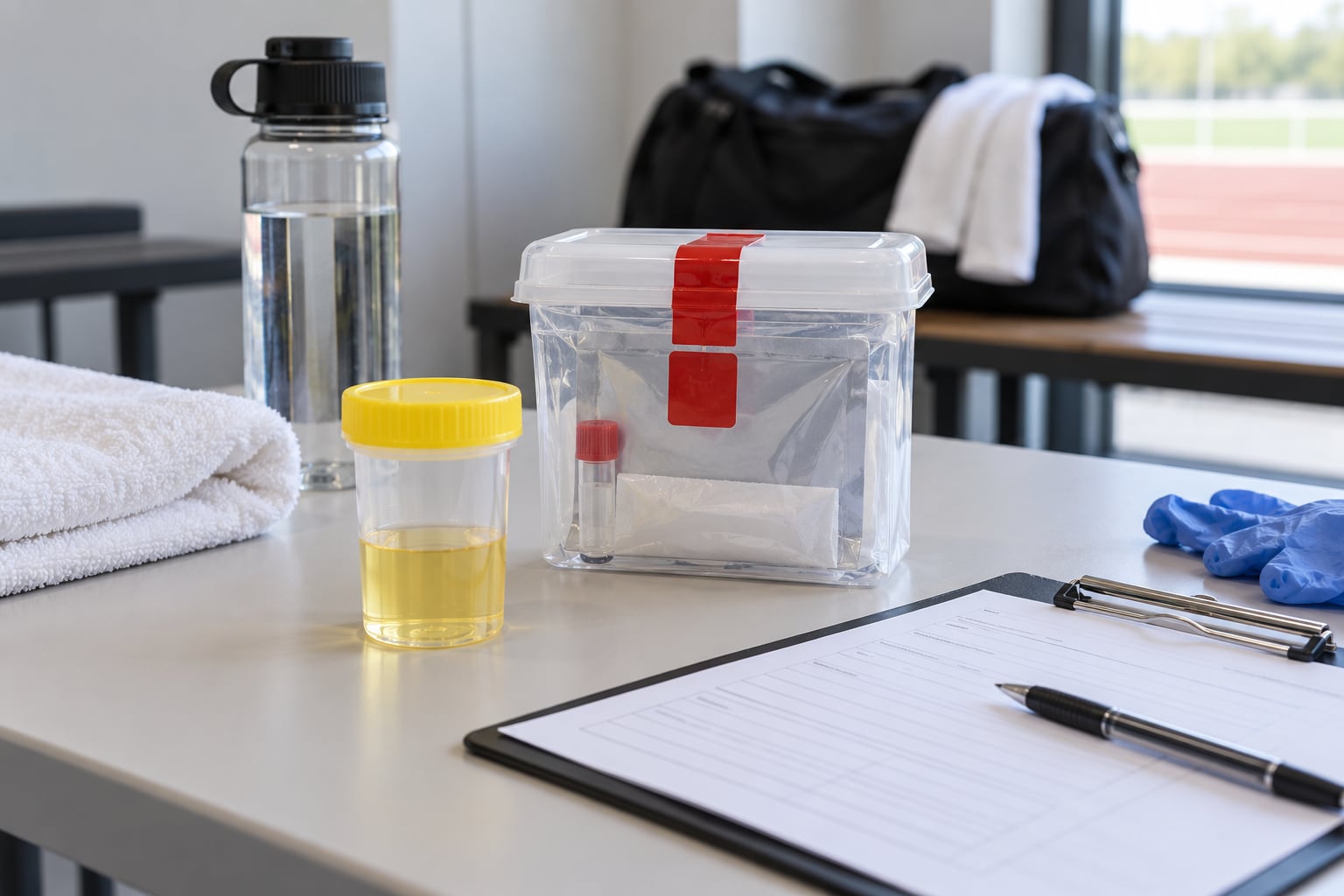
If you have ever read a headline about a boxer testing positive and wondered what actually happened behind it, here is the short version: what VADA testing involves is a documented, supervised collection of urine and blood samples, sealed in front of you, sent to an independent laboratory, and split into two parts so any result can be re-analysed. The Voluntary Anti-Doping Association has been the gold standard for drug testing in boxing since 2012, and its contract is something a fighter, a promoter or a sanctioning body signs rather than something a commission imposes.
The rest of this guide walks the process end to end: who gets tested, what happens at the door, how a sample reaches the lab, what comes back, and what a boxer can do about it. Rules and terminology change, so treat this as a general explainer, not legal or medical advice.
Table of Contents
- What Does VADA Testing Involve?
- Who VADA Can Test and Why
- How the VADA Testing Process Works
- What Happens During a VADA Urine or Blood Test
- What VADA Tests Look For
- What Happens After the Sample Is Collected
- How VADA Results Are Reported and Reviewed
- What an Athlete Can Do If the Result Is Positive
- Medication, Supplements, and VADA Testing Safety
- Frequently Asked Questions
- Can VADA test a boxer at any time?
- How much notice is an athlete given for a VADA test?
- Does a positive VADA result mean an athlete was guilty of doping?
- Can an athlete request testing of a split sample?
- What should a boxer do before taking medication or supplements?
- How long can a VADA test result take to be finalized?
- Conclusion
What Does VADA Testing Involve?
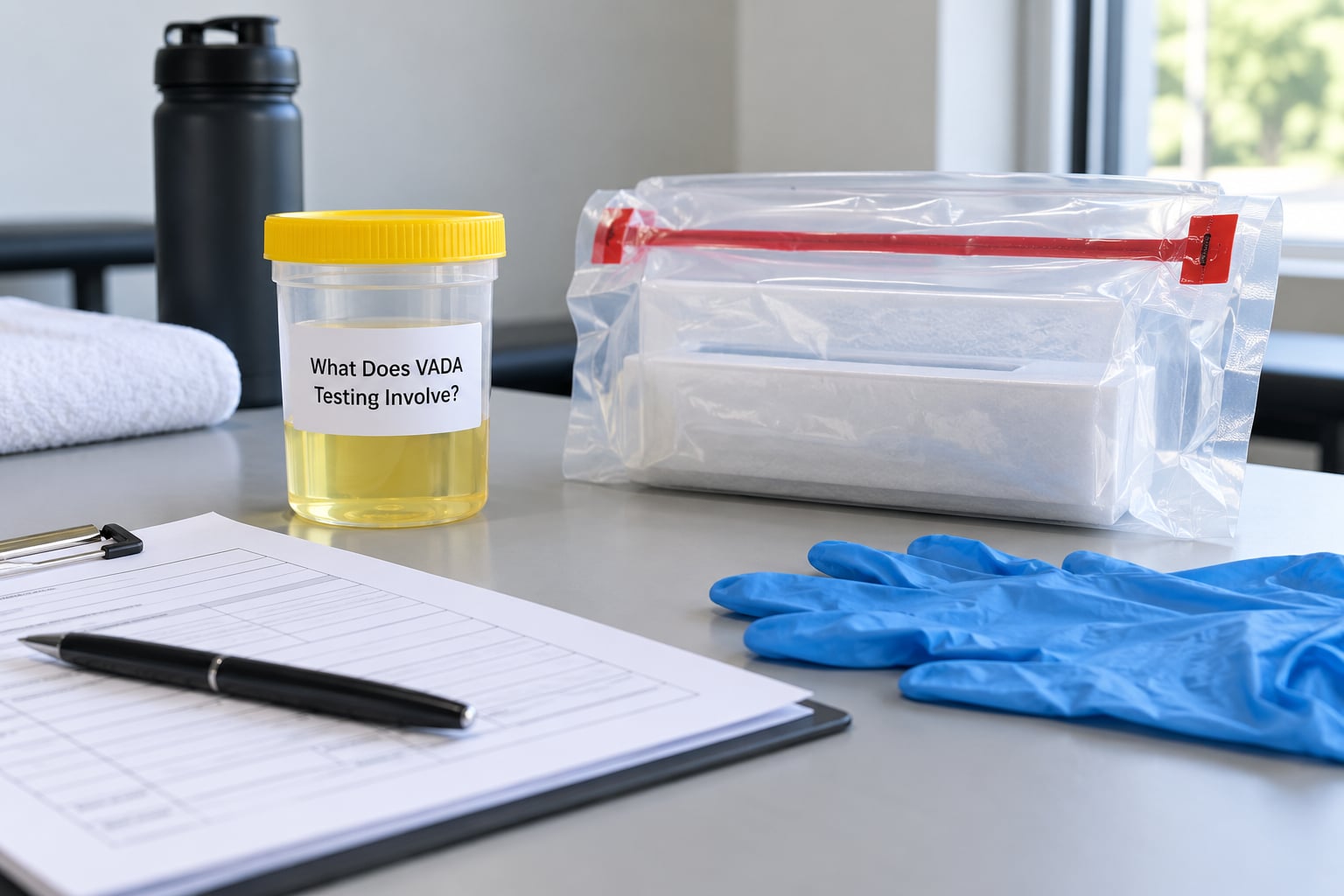
VADA testing involves five stages: selecting an athlete, notifying them, collecting a supervised sample, analysing it at a laboratory, and managing the result. The programme covers both in-competition testing around a bout and out-of-competition testing during training, and it works from blood, urine and, where applicable, previously stored samples.
The “voluntary” part is often misread. VADA has no power to test anyone. It runs testing only for athletes who are contractually enrolled, either through a direct agreement with a fighter or promoter or through a sanctioning body’s programme. The World Boxing Council runs its Clean Boxing Program through VADA, and commission-level testing happens separately.
Margaret Goodman, who founded and runs the organisation, has argued publicly that randomness and thoroughness matter more than sheer frequency. That is the philosophy behind the standard VADA contract, which usually covers a window of weeks around a bout rather than every day of the year.
Who VADA Can Test and Why
Nobody is tested by accident. An athlete has to fall into an eligible group first, and there are two ways that happens.
Random selection. Within the enrolled pool, VADA draws names without regard to fight date, opponent or reputation. You can be selected during camp, during a rest week, or weeks after your last bout.
Targeted testing. Selection can also be specific, based on risk indicators rather than chance. Previous findings, testing history, weight-cut patterns and intelligence from other anti-doping bodies all feed that decision.
Eligibility itself comes from the contract. Under the WBC Clean Boxing Program, that has included reigning world champions, boxers ranked in the organisation’s top 15, and boxers challenging for a title by ruling of the council. Individual fighters can also enrol on their own, which some champions do at their own expense for the credibility it buys them.
The distinction fans care about most is between a standard VADA contract and year-round coverage. A standard contract typically opens a testing window around a bout, often about eight weeks before fight night, and location sharing applies during that period. Year-round coverage, marketed as VADA 365, keeps the athlete available continuously. As one Reddit thread in r/Boxing put it plainly, signing up means you share your location for the window and accept that a doping officer can show up.
How the VADA Testing Process Works
The sequence rarely changes. Seven steps cover almost every case.
- Enrolment. A fighter, promoter or sanctioning body signs a testing agreement naming the athlete and defining the testing period.
- Location registration. The athlete provides a current address and keeps it updated, along with travel details for the testing window.
- Selection and notification. VADA selects the athlete and a certified doping officer contacts them, either to arrange a visit or with short notice for an unannounced one.
- Identity check. The officer verifies who the athlete is and confirms the collection is happening at an approved location.
- Sample collection. Blood and urine are taken under observation, with the urine sample collected in private but fully observed.
- Sealing and chain of custody. Each sample is sealed in the athlete’s presence, coded so the laboratory cannot easily tell whose it is, and documented through every handover.
- Laboratory analysis and reporting. Samples go to a WADA-accredited laboratory, which reports back through VADA under strict confidentiality.
Transport is part of the same chain. Nobody outside the process handles the kit without signing for it, and any break in the paperwork is grounds for the sample to be treated as invalid.
What Happens During a VADA Urine or Blood Test
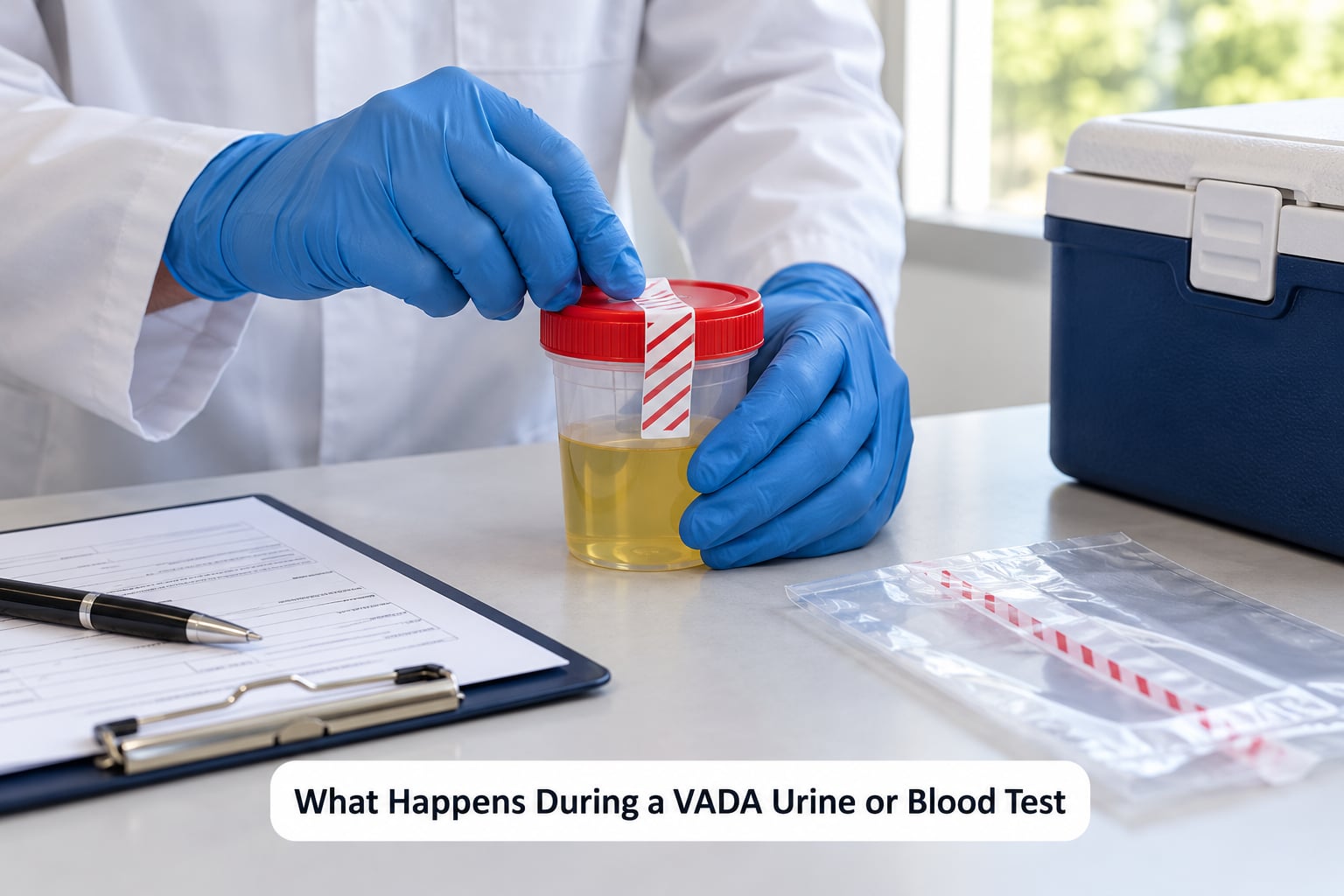
The practical part takes under half an hour in most cases. You produce photo identification, the officer confirms the session is legitimate, and you are given a private room for the urine sample with the door able to close while an observer watches through a gap in accordance with the rules.
Hydration is your responsibility up to that point, and it matters. Someone who has been cutting weight may find it genuinely difficult to produce a sample, and doping officers are allowed to wait and to provide fluid. They cannot force it, which is exactly why fighters are told to drink sensibly through the final days of a weight cut.
For blood, the draw is routine and quick, usually from an arm vein. Once the samples exist, the officer and the athlete together check that every container is labelled, sealed and initialled. That check is the moment to speak up if anything looks wrong, because once the kit is sealed, disputing it later is far harder.
You also have rights during the session. You can ask questions about the procedure, request clarification of anything you do not understand, and have a representative or observer present where the applicable rules allow it. A boxer who did not understand why a sample was being taken should raise it at the table, not three months later.
What VADA Tests Look For
VADA screens for roughly 200 substances drawn from the World Anti-Doping Agency’s prohibited list, and the list is updated annually so anything named in it changes over time. The classes that matter most to boxers are well known.
- Anabolic agents. Steroids, SARMs and related compounds, including testosterone and its metabolites.
- Stimulants. Amphetamines, cocaine and similar substances. VADA applies a broader at-all-times scope to a substantial group of stimulants than WADA does in-competition, which is a frequent source of cases.
- Beta-2 agonists. Clenbuterol is the famous one, and contamination from poorly sourced meat is a documented route.
- Diuretics and masking agents. Including agents used to hide a substance from detection.
- Growth hormone and peptides. Human growth hormone and related growth-promoting factors.
- Methods. Infusion of anything not on the permitted list, and attempts to interfere with the testing process itself.
Two cautions on how this is read. A negative result does not prove you took no medication, because timing and detection windows vary by substance and by person. And a positive result does not prove intent, because contamination and prescription errors are documented causes of findings.
| Sample type | Typical window | What it is good for | Common limits |
|---|---|---|---|
| Urine | Wider | Broad screening across many substance classes; standard for most routine collections | Detects a substance only after it has been cleared from the body |
| Blood | Narrower | Detects recent use, including substances that leave urine quickly | Shorter detection window; more invasive collection |
| Stored sample | Retrospective | Analysis of earlier samples during result review or investigation | Only exists if a sample was collected and retained in the first place |
What Happens After the Sample Is Collected
The sample’s journey is documented end to end, and that documentation is the reason a result can be defended later. The sealed kit leaves the collection point in a tamper-evident transport container, arrives at the laboratory with its paperwork intact, and is logged on receipt.
The laboratory first runs screening tests across the prohibited list. Anything that looks like it might be present is retested with a more specific method before any conclusion is drawn, because screening alone is not reliable enough to accuse an athlete of anything.
A confirmed finding comes back as an adverse analytical finding, and at that point the sample matters. The A sample is the one that produced the result. The B sample is the sealed portion held for re-analysis, which exists so an athlete can have the finding independently confirmed rather than relying on a single laboratory run. Ryan Garcia was given ten days after the April 2024 ostarine finding to request analysis of his B sample, which is the usual window.
An atypical finding is different again. It is a result that looks unusual but does not clearly breach the rules, and it triggers a review rather than automatic sanctions.
How VADA Results Are Reported and Reviewed
Results go to VADA under confidentiality, not straight to the public. The sequence from there runs through initial review, athlete notification, a provisional suspension where applicable, a hearing and a final decision.
The provisional suspension is applied promptly once a violation is established rather than waiting for a hearing. The hearing is where the athlete puts their case, and an independent review or appeal route exists under the applicable rules.
One point is regularly misunderstood: an adverse finding does not automatically change a fight result. A bout that already happened usually stands, and enforcement of the sanction runs through the body that administers the programme, which is why enforcement has sometimes felt inconsistent to fans. Whether a result stands is also a matter for the commission and, in a disputed case, the courts.
What an Athlete Can Do If the Result Is Positive
The response is procedural, and the first weeks matter more than the first emotions.
- Get the laboratory documentation. Request the full report, the substance identified and the concentration reported.
- Establish what was actually taken. Work with a doctor or pharmacist on every medication, supplement and contaminated-meat exposure in the weeks before the test.
- Check whether a permitted-use route exists. A therapeutic use authorisation or exemption may apply under the relevant rules.
- Decide on B-sample analysis. The request has a short deadline, so it cannot wait while lawyers gather documents.
- Prepare the case properly. Representation and a written submission are standard, and amateur fighters rarely have either ready.
Talk to a qualified lawyer and your doctor rather than to a forum. Nothing in this section is individual legal or medical advice, and the rules that govern your case may be a commission’s rules rather than VADA’s.
Medication, Supplements, and VADA Testing Safety
Most positives that never turn out to be deliberate doping start as a pill or a tub of powder. That makes the practical part of anti-doping less glamorous than the policy arguments and considerably more useful.
Check every medication before you take it, including anything a doctor prescribes for a cold, a headache or a cut in camp. Check every supplement before the camp starts, not the week of the test, and understand that a product’s own testing certificate covers only what that certificate tested for on that batch. Keep any authorisation, exemption or prescription paperwork you obtain where you can produce it on request.
Before competing, confirm your current obligations directly with the relevant authority, whether that is VADA, your sanctioning body or your national anti-doping agency. Rules and prohibited lists are updated, and a rule that applied at your last bout may not apply at the next one.
Frequently Asked Questions
Can VADA test a boxer at any time?
Only during a period your testing contract covers. VADA has no authority to test anyone who is not enrolled, so an athlete outside a contract window cannot be selected. Inside the window, testing can be in-competition around a bout or out-of-competition during training, and selection is either random or targeted based on risk indicators. Year-round coverage keeps that availability continuous rather than tying it to a single bout.
How much notice is an athlete given for a VADA test?
It varies. Some visits are scheduled, and an unannounced visit can come with short notice or none at all, which is the entire point of random selection. What the athlete must do is keep a registered address current and stay available for the length of the testing window. Raising a concern about the procedure at the table is always better than trying to raise it afterwards.
Does a positive VADA result mean an athlete was guilty of doping?
No. A positive result is an analytical finding, not a verdict. It starts a process that includes notification, a provisional suspension where applicable, a hearing and a decision, and the athlete can contest it, including through re-analysis of the sealed B sample. Contamination and prescription errors are documented causes of findings. Whether a violation is established is decided through that process, not by the test result alone.
Can an athlete request testing of a split sample?
Yes. Samples are split into an A portion that produces the result and a sealed B portion held for re-analysis. An athlete may request that the B sample be sent for analysis, which gives an independent laboratory the chance to confirm the finding. The request carries a short deadline, typically around ten days from notification, so it cannot be left until a case has been prepared. Ryan Garcia had that window in 2024.
What should a boxer do before taking medication or supplements?
Check the ingredient before you take it, not after. Ask your doctor or pharmacist whether anything on the label appears on the current prohibited list, and check with your anti-doping organisation or national agency if you are unsure. Keep authorisation or exemption paperwork you obtain. Remember that a supplement’s own testing certificate covers only what was tested in that batch, and that contaminated meat has caused documented positives.
How long can a VADA test result take to be finalized?
Screening and confirmatory laboratory analysis usually takes days to a few weeks, but finalisation can take considerably longer once result management begins. Notification, a provisional suspension where applicable, any B-sample re-analysis and a hearing each add time. Fans often see an analytical finding reported weeks before anything is decided, which is why an early headline rarely tells the whole story of a case.
Conclusion
What VADA testing involves, in the end, is paperwork done properly. A supervised collection, a sealed kit, an unbroken chain of custody, independent laboratory analysis, and a result the athlete is entitled to challenge. That structure is what separates a meaningful test from a ceremonial one, and it is the reason a clean result carries weight in a sport where many fans assume nothing is checked.
Before your next bout, verify your current obligations with the relevant anti-doping authority rather than relying on what applied last time, and check anything you plan to put in your body before it goes in. Those two habits account for more of the sport’s testing problems than any policy debate.