To clean boxing gloves, wipe the shell with a damp cloth and a little mild soap, disinfect the lining with a diluted vinegar or alcohol solution, deodorize with baking soda, and air-dry them completely before you store them. Ten minutes after every session handles the daily grime; a deeper clean every few weeks deals with what builds up over a training block. Skip the washing machine and the gloves stay intact for years.
The smell is not the sweat itself. Sweat is mostly water and salts and barely smells. What smells is the bacteria and fungi that move off your hands onto the lining, feed on the trapped moisture, and release the odor you notice when you pull your hands out. That warm, dark, wet pocket inside the glove is close to ideal for them, and a glove that sits damp in a gym bag between sessions doubles down on it.
Regular cleaning protects more than your nose. Grime and salt left on leather dry it out and lead to cracking at the seams, and repeated soaking breaks down the glue holding the foam padding to the shell. Fighters on r/fightgear have described leather that started splitting at the thumb years before the padding gave out, and the same community reports the padding bubbling well before the shell looked worn.
Table of Contents
What You Need to Clean Boxing Gloves
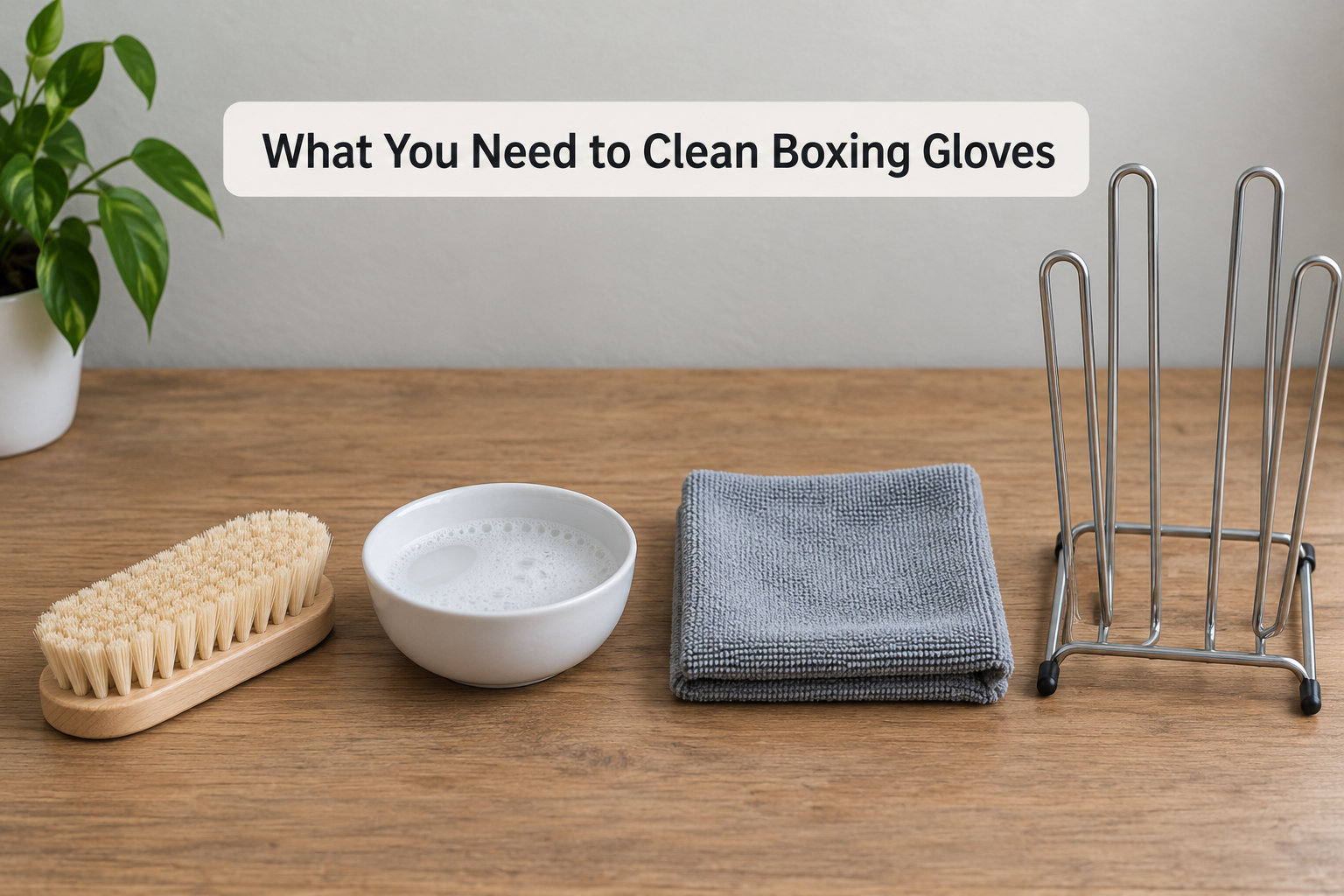
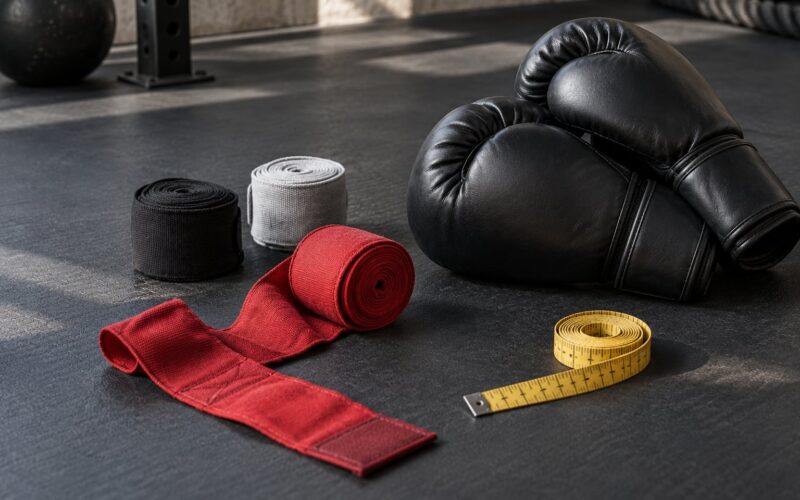
The supply list is short and most of it is already in your kitchen drawer.
- A soft-bristled brush or an old toothbrush for seams and curves
- Mild soap diluted in cool or lukewarm water
- A clean microfiber cloth or soft sponge
- Baking soda for persistent odor
- White vinegar for disinfecting the lining
- A ventilated shelf, rack, or open locker door for drying
- Newspaper or plain paper towels for soaking up moisture
What to keep away from the gloves matters as much as what you use. Harsh detergent, bleach, and ammonia-based household cleaners dry out and discolor leather and can bleach a synthetic shell. Undiluted alcohol and vinegar belong on the lining only, in small amounts, because leather drinks them in and then cracks. Skip the tumble dryer, the radiator, the hair dryer, and long spells in direct sun.
On frequency, fighters tend to be split between too little and far too much. A wipe-down after each session plus a proper clean every two to four weeks covers almost everyone.
Step-by-Step
Check the Care Label Before You Clean Boxing Gloves
Start at the wrist. The tag tells you the shell material and whether the gloves can be surface-washed at all, and some brands specify a cleaner for the lining only.
Then empty them. Pull out any removable insole or glove liner, unlace the wrist strap before you pull the gloves off rather than yanking them, and shake the pair upside down over the mat to drop out dried chalk, grit and lint. If the manufacturer says the gloves need professional cleaning or should be kept dry, that instruction beats everything else on this page.
Brush Away Surface Dirt
Work a soft brush over the outside in short strokes: the thumb, the knuckle curve, the wrist strap and along the stitching where dirt collects. Most of what looks like permanent grime comes off at this stage.
You know it worked when the cloth that follows comes away nearly clean. If you are scrubbing hard enough to see colour on the brush, you are working on leather or synthetic that needs gentler hands. Skip the stiff household brush, which scuffs the finish and dulls the leather permanently.
Wipe the Gloves With Mild Soap
Mix cool or lukewarm water with a small amount of mild dish soap or liquid hand soap. Dip a clean cloth, wring it out well, and wipe the exterior in sections.
Keep the sponge barely damp. Never pour water over the cuff and never put the padding under a tap, because the foam takes on water faster than it gives it back. Test leather first on an inside seam where nobody will see the mark. On synthetic or PU shells, wipe and move on; the surface needs a clean, not a soak.
Treat Odor With Baking Soda
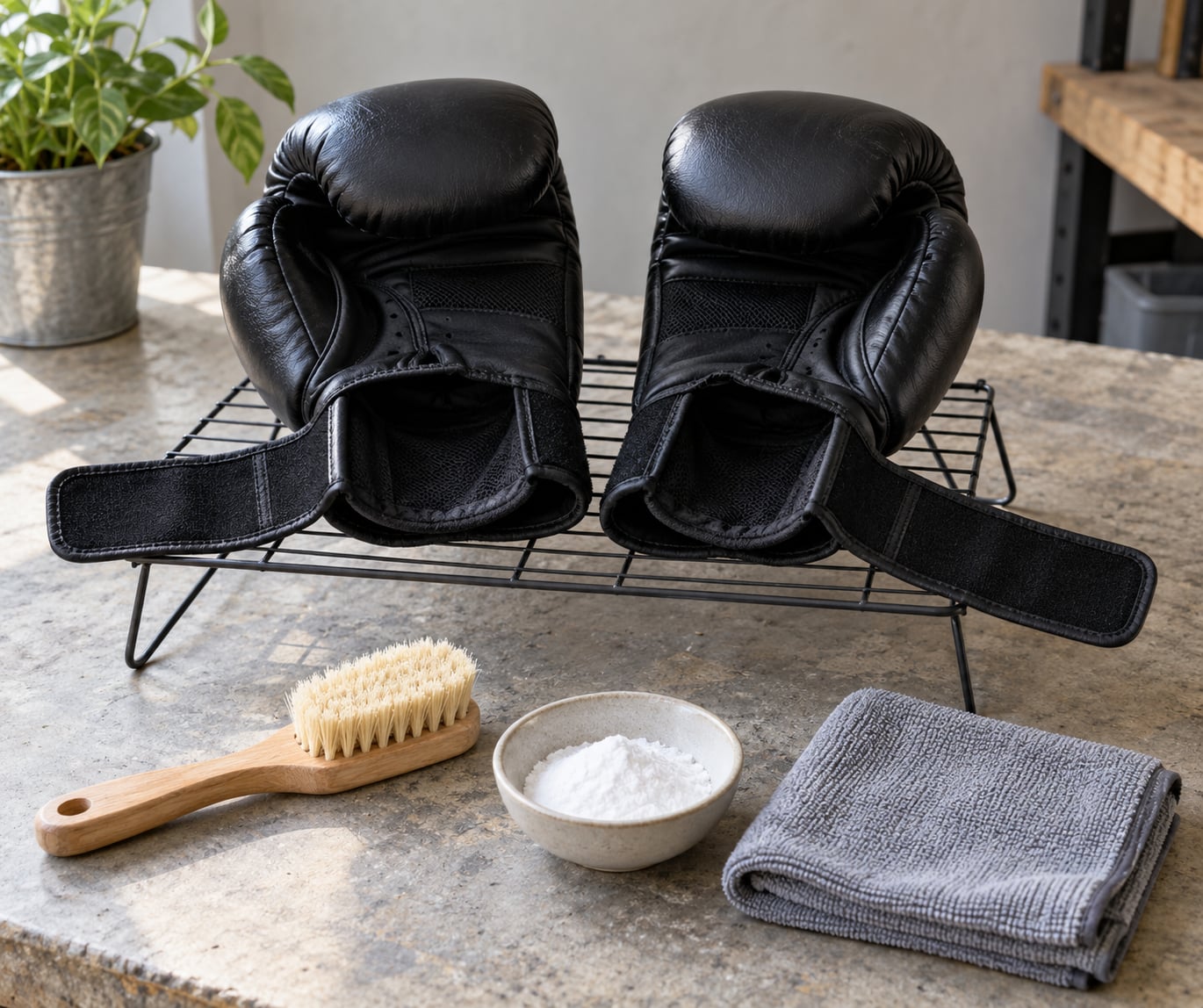
Baking soda absorbs odor, and it is useful on gloves that hold a smell after every session. Lay the gloves palm-up, scatter a light coating of baking soda inside, leave it for a few hours or overnight, then tip out the powder and shake the glove hard over a bin.
What it will not do is kill bacteria, so it works as the second half of a job, not the whole of it. Disinfect with one part white vinegar to two parts water or one part isopropyl alcohol to three parts water: dampen a cloth, wipe the lining, and leave it to air. Skip it if the lining is flocked or trimmed, since moisture can lift flock and adhesive. Follow with an airing overnight and the smell is usually gone by morning.
Dry the Gloves Thoroughly
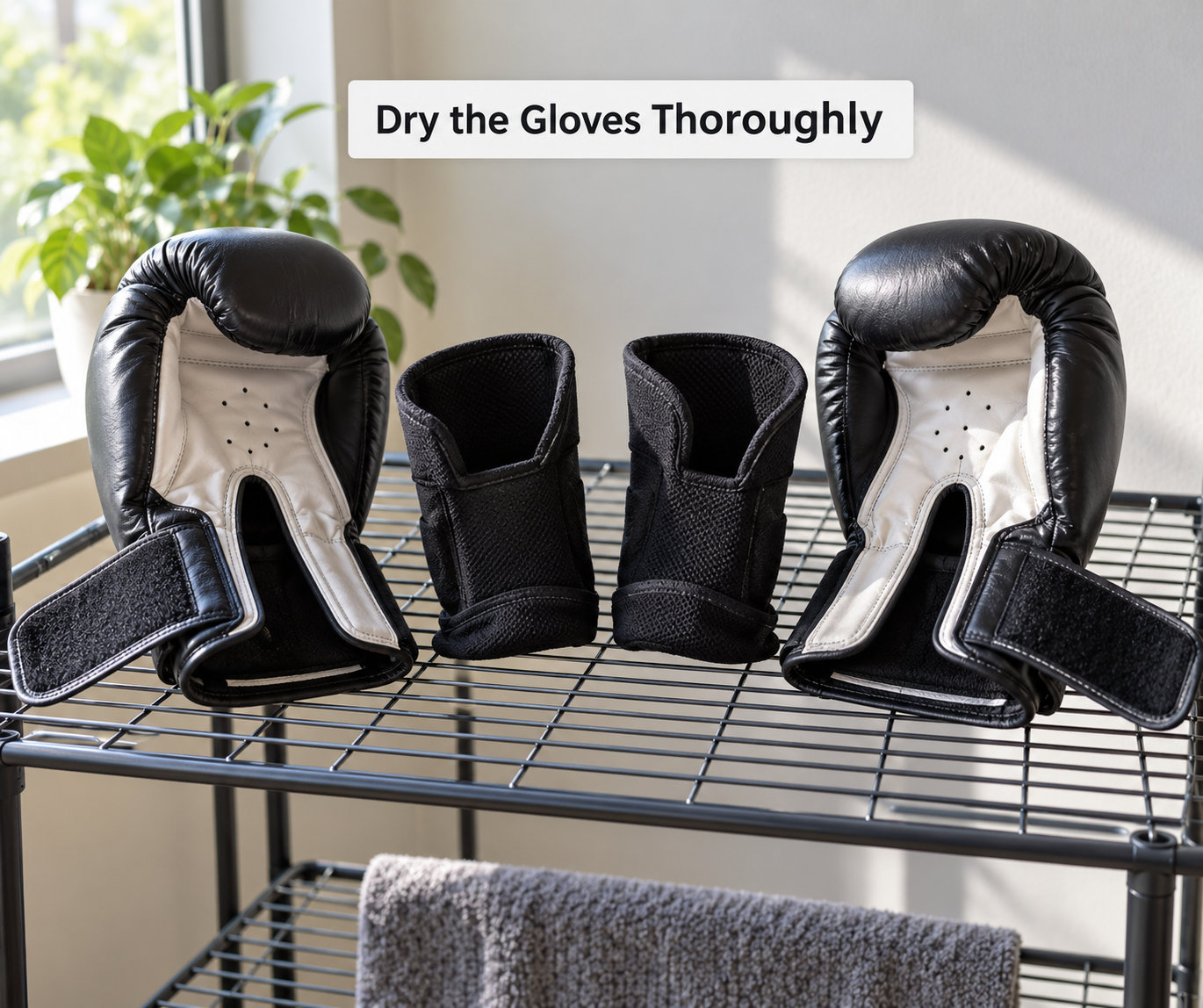
Drying is the step that decides whether your gloves survive. Open the cuffs wide, pull the finger sections apart, remove any insoles or liners and let them dry separately, then set the shells palm-down on a rack so air moves through the padding instead of around it.
Room-temperature airflow does the work: a standing fan, an open window with a breeze, a boot dryer on cool air. Wedge crumpled newspaper or paper towels inside to pull moisture out and swap them after an hour. Go wrong here and the results are predictable. One fighter reported machine-washing a pair, failing to get the water back out, and a 20-minute cold hair dryer not saving them. Radiators, tumble dryers, and hours of direct sun dry the leather faster than the foam, and the shell cracks while the padding is still wet inside.
Store the Gloves in a Breathable Place
Storage only matters when the gloves are dry. A ventilated shelf, an open locker, or a breathable cotton pouch beats a sealed plastic bag or a zipped gym bag every time, because trapped moisture with no escape is what breeds mildew.
Keep them away from radiators, hot car boots, and cupboards sitting in direct afternoon sun. If you are storing gloves through the off-season, clean them fully first, leave the liners out, and check them every few weeks for a musty smell or dark speckling along the lining.
Common Mistakes That Wreck Boxing Gloves
Nearly every ruined pair I’ve seen traced back to one of these five.
- Soaking the gloves. The fix is a damp cloth, never water poured into the cuff. If the padding is already soft and heavy, that water is the reason.
- Harsh chemicals. Bleach, ammonia, and undiluted alcohol strip oils from leather and leave it brittle. Use diluted solutions and keep alcohol off the shell.
- Heat drying. A tumble dryer or radiator gets the leather crisp and cracked while moisture stays trapped in the foam. Room-temperature airflow only.
- Storing them damp. Wet gloves in a closed bag go mouldy. If they are not bone-dry before you leave the gym, they will smell worse than if you had done nothing.
- Expecting one session to fix deep odor. Years of soaked lining take weeks to clear. A month of post-session airing usually does more than a single aggressive scrub, and aggressive scrubbing does lasting damage.
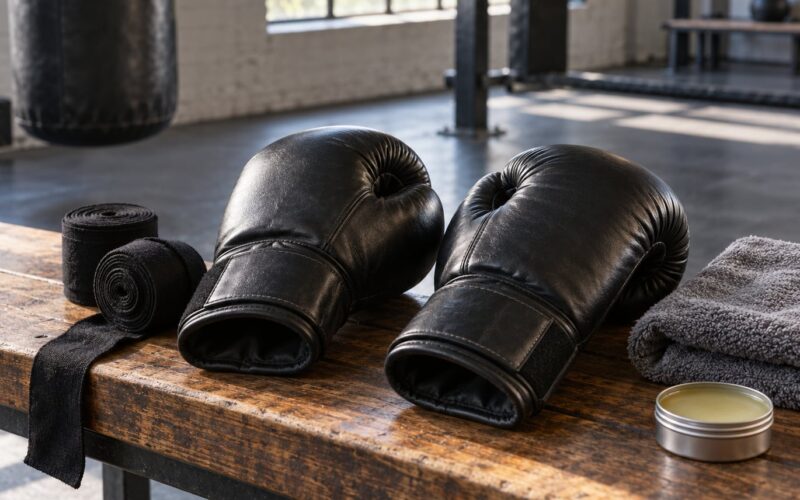
A workable schedule looks like this: wipe and air after every session, brush and wipe the shell weekly, disinfect the lining and add baking soda every two to four weeks, and condition leather every three to four months. Long-time fighters name Tarrago, Leather Honey, and Boxing Hand Grenade as conditioners they trust, and the interval they all use is a few months rather than every wash, because leather that gets conditioned too often goes slick.
Hand wraps deserve their own routine, since the community treats them as the main source of what ends up in the glove. Wash them in a mesh laundry bag, hang them over the rail to dry rather than folding them damp, and never wear a wrap twice.
If the lining shows black speckling or a musty smell that survives a clean and a long airing, treat it as mildew: dry the gloves fully, then wipe the lining with a solution of one part vinegar to two parts water and let them dry uncovered. Deep mould in foam that has been damp for months usually means replacing the gloves.
Frequently Asked Questions
Can you put boxing gloves in the washing machine?
No. The agitation soaks the foam padding, and padding that has taken on water can take days to give it back, which leads to bubbling padding and a heavy glove. It can also shrink leather or warp a synthetic shell. Wipe the outside with a damp cloth and mild soap, disinfect the lining by hand, and air-dry instead. Anyone who has already tried it and ended up with waterlogged gloves should let them dry open for a week or two rather than reaching for heat.
Can I spray Lysol inside my boxing gloves?
It kills bacteria, which is the useful half of the job, but it does not remove sweat or the smell itself, and most aerosol products leave a residue on flocked linings. A damp cloth with one part white vinegar to two parts water, or one part isopropyl alcohol to three parts water, works just as well and leaves less behind. Spray the cloth rather than the glove, use a light touch, and air-dry fully.
Can you use Clorox wipes inside boxing gloves?
Once in a while, on a synthetic glove, a damp disinfecting wipe is fine. As a routine it is too harsh: the bleach and solvents dry out leather, can fade and stiffen a PU lining, and repeated use leaves the shell brittle. If your gloves are leather, stick to diluted vinegar or alcohol on the lining and a mild soap on the shell. When in doubt, the gentler option is the one that keeps the padding and stitching intact.
What is the best way to remove smell from boxing gloves?
Drying plus deodorizing beats scrubbing. After every session, remove the liners, wipe the lining with a cloth dampened with one part vinegar to two parts water, coat the inside lightly with baking soda, and leave the gloves open overnight on a rack. Deep odor usually needs two to four weeks of that, not one session. If a smell survives a full week of airing and baking soda, the lining has bacteria settled into the foam and the gloves may be finished.
How do you get rid of smelly hands from boxing gloves?
The smell comes off the lining and transfers to your palms as you pull out, so the fix is at the source. Wipe the inside of the glove with a damp cloth before you take your hands out, and let the gloves air with the cuffs open so the lining dries between sessions. Using fresh hand wraps every session keeps sweat out of the glove in the first place. Washing your hands with soap after training removes what has already transferred.
How often should you clean boxing gloves?
Wipe and air them after every session, brush and wipe the shell about once a week, and give the lining a disinfecting treatment with baking soda every two to four weeks. Trainers working four to seven times a week should shorten that to weekly, since more sessions means more sweat reaching the same lining. Casual fighters training once or twice a week get away with a monthly deep clean. Condition leather gloves every three to four months rather than every wash.
Conclusion
Start with the four things that take five minutes: pull the liners or insoles out, brush off the debris, wipe the shell with a damp cloth and mild soap, and leave the gloves open on a rack until they are completely dry. Do that after every session and the odor problem mostly solves itself, the leather stays supple, and the padding keeps its shock absorption far longer than most people expect.