To pick boxing trunks that fit, measure your waist at the navel and your hips at the widest point, match both numbers against the brand’s size chart, then pick a length and waistband that suit how you train. Finish by moving in them: squat, sprawl, kick and shadowbox for three minutes. A pair that passes all of that stays put and never digs in.
Fit matters more here than in almost any other piece of kit. Trunks that ride up pull your stance together, trunks that pinch at the waistband steal your breath on every exhale, and loose hems swing into your hands while you’re throwing them. None of it is dramatic, all of it adds up over a twelve-round night.
The trouble is that sizing labels lie about as often as shoe sizes do. A medium from one maker can sit like a large from another, so your own measurements are the only reliable starting point.
Table of Contents
- What You Need
- Step-by-Step: How to Pick Boxing Trunks That Fit
- Common Mistakes
- Frequently Asked Questions
- How do I pick a size when two brands measure differently?
- Should I wear compression shorts under my boxing trunks?
- How do I adjust if my size changes between seasons?
- What should I test before a competition bout?
- How do I care for trunks so the waistband keeps its stretch?
- Can I wear MMA shorts for boxing?
What You Need
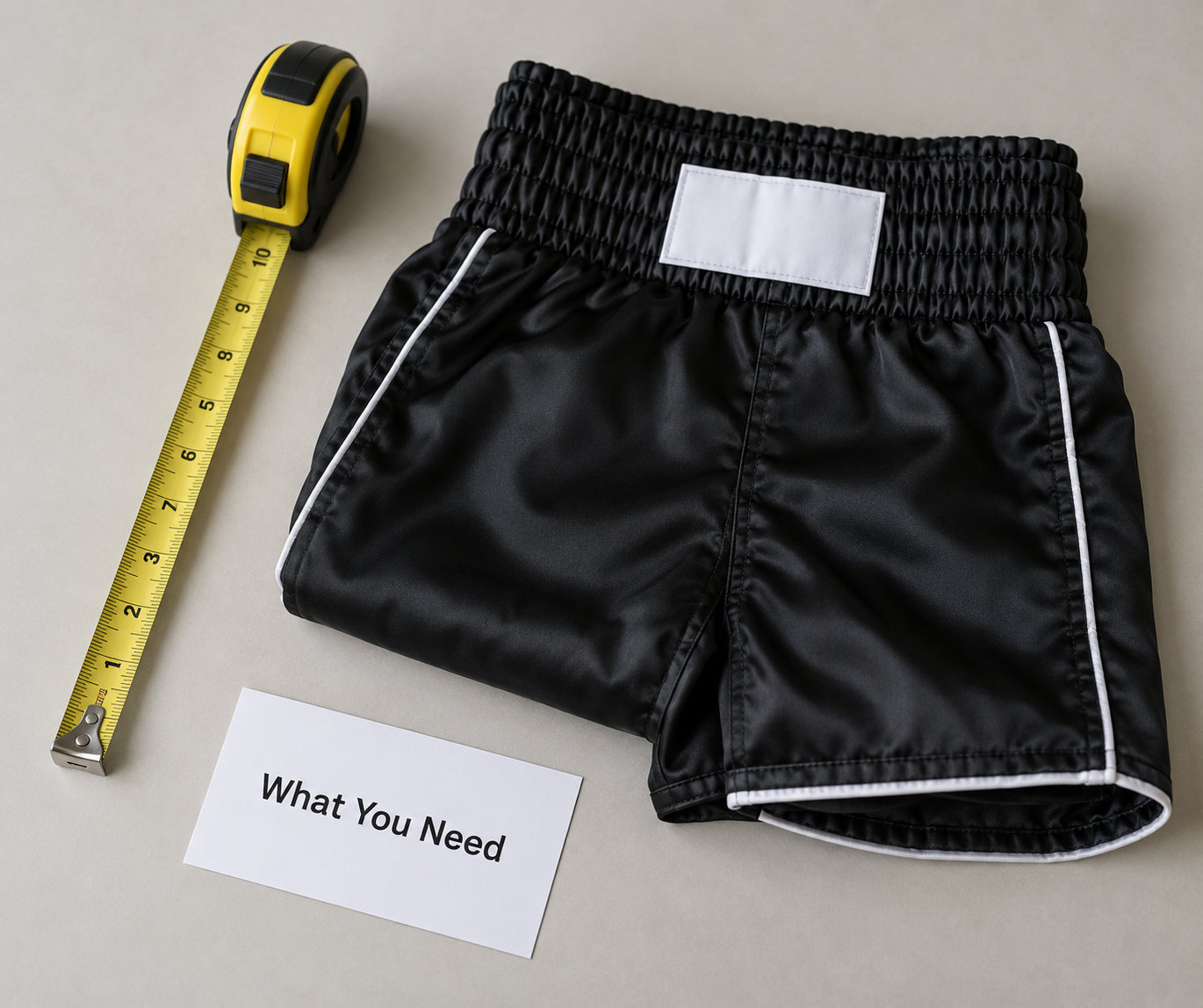
Gather four things before you look at a single pair, and the whole process takes about five minutes.
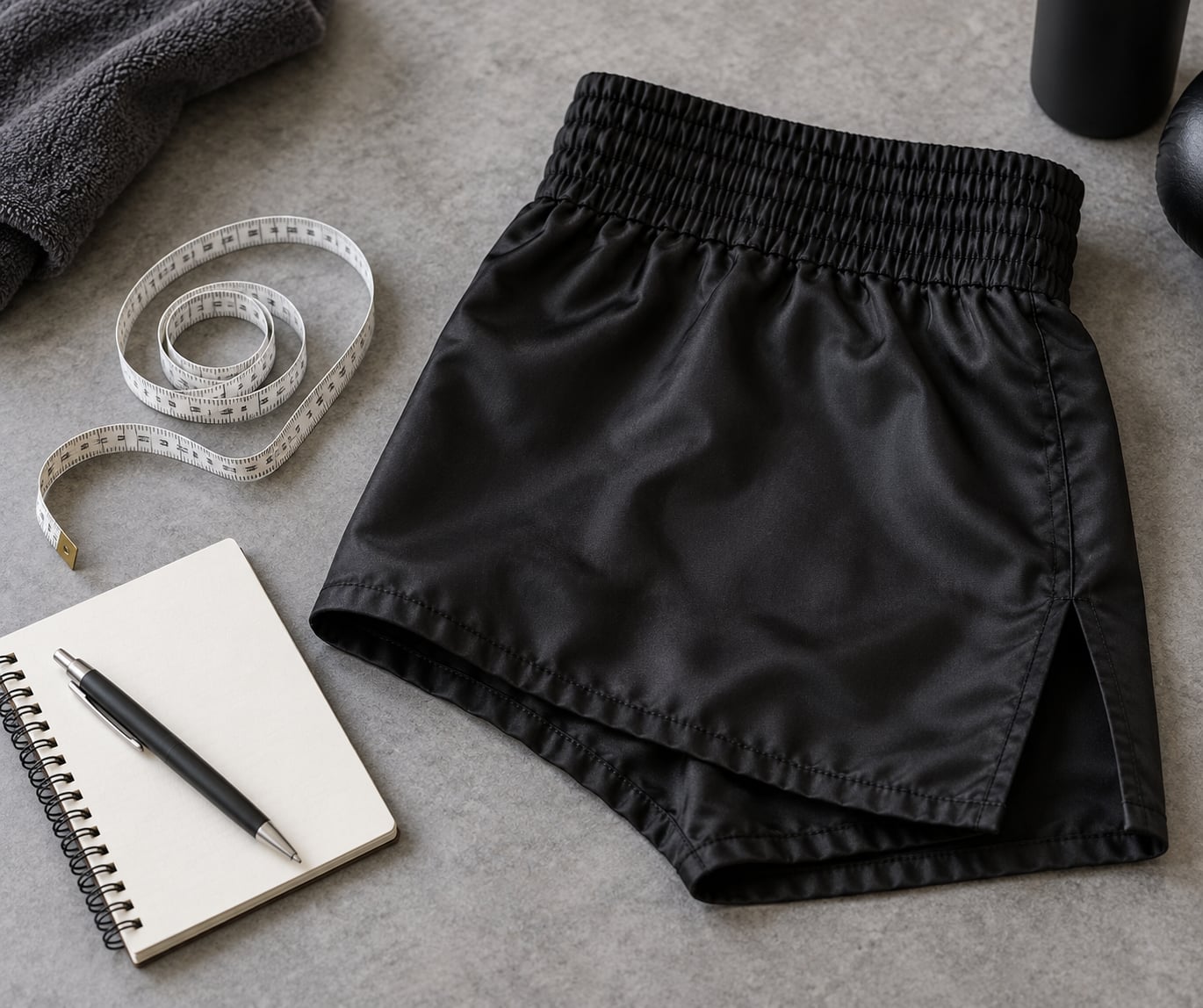
- A soft measuring tape that does not stretch. The metal retractable kind works but you have to read it while holding the tape, which makes small errors easy.
- A pair of your own shorts that already fit well — ideally fight shorts you train in. Laying them flat gives you a leg-width reference you can compare against the product photos.
- Your usual waist number written down. Measure it in the morning, before training and before meals, and take the smaller of two readings.
- The size chart or product information for the trunks in front of you. Chart numbers in centimetres are worth converting if you think in inches, since rounding in a size chart is common.
That is it. No tools beyond the tape, and nothing you have to buy before you start.
Step-by-Step: How to Pick Boxing Trunks That Fit
Measure Your Waist and Hips Correctly
Measure your natural waist at the navel, where your body actually narrows rather than where you would cinch a belt. Keep the tape level all the way round and pull it firm without compressing. You should be able to slide one finger under it at the front; tighter than that and the number understates your size.
Then measure your hips at the widest point, usually 8 to 10 centimetres below the natural waist. Stand with your feet together and relax, because a stance with your weight on one leg throws the tape off.
Write both numbers down and measure once more. If the two readings differ by more than a centimetre, use the larger one.
You know the step worked when the chart measurement for your size falls between your waist and hip figures, with a centimetre or two of room on the waist side. Charts that list only one number are telling you about the waist, so a hip measurement wider than that is your cue to size up.
Choose the Right Trunk Length
Boxing trunks come in three broad lengths, and the honest answer is that mid-thigh suits most people. It covers the thigh without bunching, and it is the length most competition rulebooks assume when they talk about shorts reaching no lower than the knee area.
Shorter, above-knee cuts free up the leg for high kicks and footwork, and they are common in kickboxing and MMA-influenced training. Longer, near-knee cuts read as traditional ring wear but they gather at the knee when you drop into a deep stance.
To measure a pair before you commit, lay it flat and measure from the crotch seam to the hem. Compare that inseam to your own, and add a few centimetres if you squat low or spend a lot of time on the floor.
You know the step worked when the hem stays clear of your knee at the bottom of a squat and does not touch your inner thigh when you kick.
Check the Waistband and Rise: How to Pick Boxing Trunks That Stay Put
Four closure systems cover most of the market. Elastic-only is the softest and easiest to pull on, but it stretches over a long session and a waistband that has lost its recovery will not hold. Drawstring or drawcord gives you a range of adjustment and works well when the cord is routed through an internal channel and finished with a knot rather than a plastic toggle that digs in.
Hook-and-loop closures are the most adjustable of the three, let you set the tension once and leave it, and keep the waistband flat across the front. Hybrid systems combine hook-and-loop with an internal drawcord, and they are the most secure option for hard sparring and for anyone fighting from a wider stance.
Rise is the part most people skip. Check the front rise for coverage when you stand naturally, then check the back rise in a squat. If the fabric pulls toward the crotch seam or the waistband rides up at the back, the rise is too shallow or the size is too small.
You know the step worked when you can put two fingers between the waistband and your stomach at the navel, then exhale fully and still breathe without the band pressing in.
A flat waistband beats a rolled or double-folded seam, which is the single most common cause of the red mark many fighters complain about after a long session.
Test Comfort and Movement
Standing still tells you almost nothing. Try the pair through five movements, in this order, and keep them on for the whole sequence.
- Shadowbox for three minutes without stopping. Watch where the hem sits as your hands move.
- Deep squat, hold it for ten seconds with heels down, then repeat with the legs wide.
- Sprawl flat and hold, which is the test that catches shallow rises and thin fabric.
- Ten high kicks each side, slow and controlled, watching whether the fabric catches on the leg or the waistband rides.
- Footwork and a short burst, the way you move between rounds.
You know the step worked when your hips open without the fabric resisting, the hem clears the thigh, and the waistband has not moved more than about a centimetre from where it started.
Signs you went too big: the crotch sags, fabric bunches at the front, and the hem swings away from the thigh on kicks. Signs you went too small: you hold your breath, seams pull white across the seat, and the waistband creeps up during movement.
Consider Fabric, Construction and Care
Woven polyester or a polyester-nylon blend with a small percentage of elastane is the standard for good reason: it is abrasion-resistant, holds shape through sweat, and dries faster than cotton. Cotton feels nice when you put it on and heavy by round four.
Look for a gusseted crotch, the diamond-shaped insert that lets the seam open with your hips instead of straining against them. Check that the side slits are cut into the side seam, since a slit finished at the hem tears from the bottom. Seams at the crotch, the slit ends and the waistband should feel doubled and firmly stitched rather than thin.
For sparring and anything with body contact, a smooth, slightly textured outer face matters more than price. Anything that catches or abrades is a bad time.
Care is where fit is won or lost. Wash trunks cold, skip the fabric softener, and air dry them flat or hang them. Softener coats the elastane and dulls its recovery, and a hot tumble dry does the same faster. A waistband that has gone floppy usually started as a care problem months earlier.
Common Mistakes
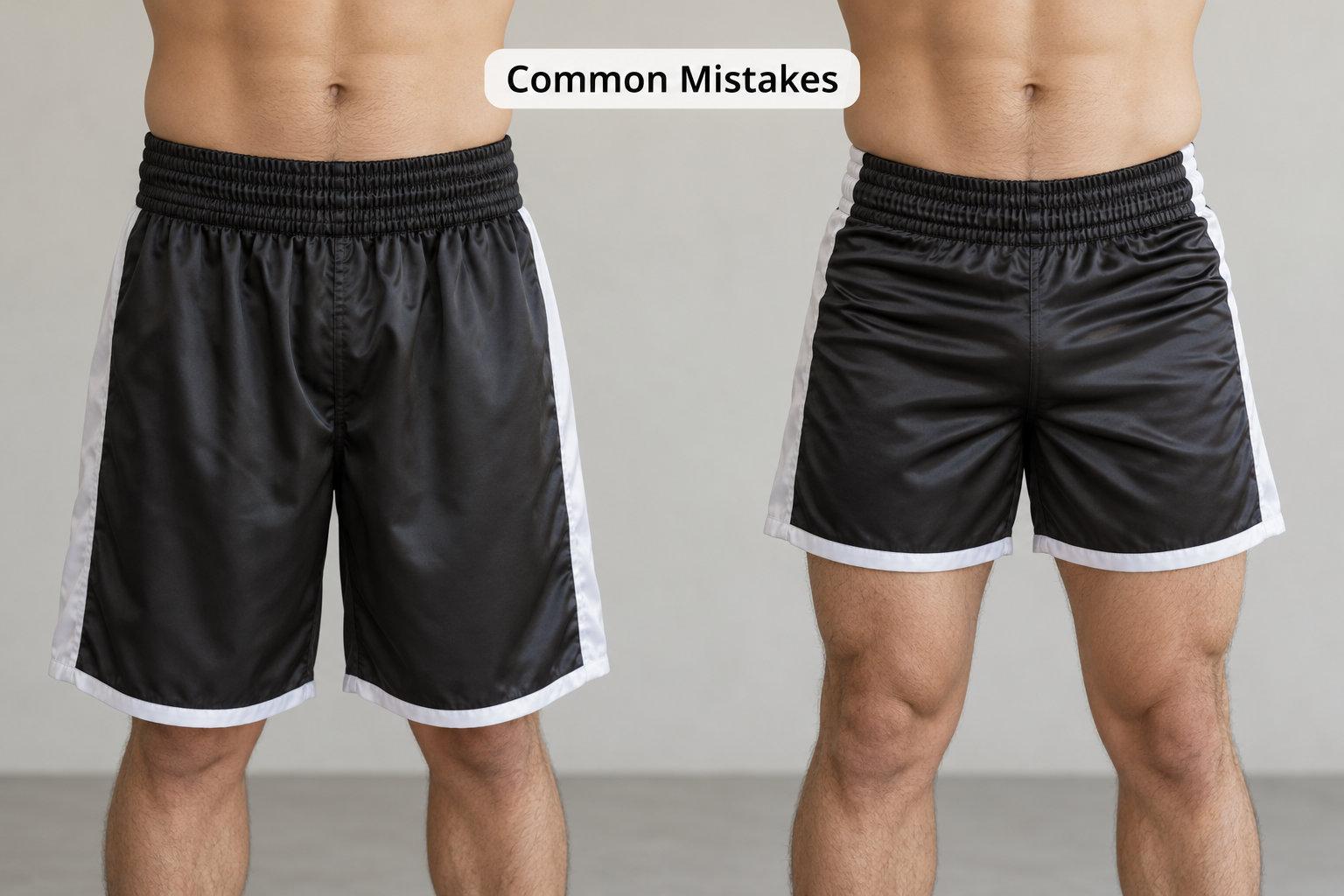
Most bad fits come from skipping a step rather than from buying a bad pair.
Sizing by the label. S, M and L describe nothing consistent across makers. Fix: ignore the label on the tag, use the chart, and if two brands disagree between them, trust the one whose waist measurement is closest to yours.
Buying a size down for a relaxed feel. Trunks do not drape the way everyday shorts do. A baggy pair changes your footwork and swings on every kick. Fix: size normally and get comfort from fabric stretch and a gusseted crotch instead.
Going too tight and calling it competition fit. A firm fit is fine, but a waistband that limits a full exhale costs you stamina over twelve rounds. Fix: two fingers at the navel as your ceiling.
Treating every waistband the same. Elastic feels the best in the first ten minutes and least at the end of a long session. Fix: if you spar hard or fight, go hybrid or hook-and-loop. For bag and pad work, elastic or drawcord is plenty.
Ignoring length and rise. The hem and the back rise are decided by the cut, not the size, so no size swap fixes them. Fix: check inseam and squat in the pair before buying.
Judging fit while standing still. Fix: do the full five-movement test. It takes three minutes and catches everything a static try-on misses.
One more worth naming: many fighters wear compression shorts underneath. If you plan to, test the combination, because a second layer changes both the waist tension and the seam feel, and it is worth knowing before the night of a bout.
Frequently Asked Questions
How do I pick a size when two brands measure differently?
Compare the chart waist measurement to your own, not the label, and pick whichever brand lists a number within a centimetre of your waist. If a chart gives only one figure, treat it as the waist. Hip measurement only matters if it falls between that brand’s sizes, in which case take the larger one. When in doubt, order the size that lets you put two fingers in at the navel.
Should I wear compression shorts under my boxing trunks?
Plenty of fighters do, and it can reduce chafing on long sessions. Test the two layers together before you rely on them, because a compression layer changes the waist tension and adds a seam you will feel when you crouch. Buy the trunks slightly less snug if you plan to wear a layer underneath. Sparring sessions are where the extra layer earns its place.
How do I adjust if my size changes between seasons?
Re-measure, and do it the same way each time: morning, relaxed, tape firm, two readings. A change of a centimetre or two is normal and usually needs no change of size. A bigger shift means moving up a size, but check inseam and rise on the larger pair too, since cuts differ between sizes. Keep the smaller pair for off-season training if the waistband still recovers.
What should I test before a competition bout?
Check the competition rules for your governing body first, since pocket, hardware and length rules differ between amateur and professional boxing. Then wear the exact pair, with any under-layer, through a full hard session a week or two before the bout. Do the squat, sprawl, kick and three-minute shadowbox test. A pair that stays put that day will stay put on fight night.
How do I care for trunks so the waistband keeps its stretch?
Wash cold and skip the fabric softener, which coats the elastane and dulls its recovery. Air dry rather than tumble drying, and never iron the waistband. Rinse after hard sessions instead of leaving sweat in the fabric overnight. If you notice the band creeping up during movement, replace the pair; recovery does not come back once it is gone.
Can I wear MMA shorts for boxing?
You can train in them, but check the rise and the hem first. MMA board shorts often run shorter with wide leg openings, which is fine for kicking and grappling but leaves less coverage for ring work. For competition, use trunks that meet your governing body’s rules on length and construction. For everyday bag and pad work, a well-fitting pair of MMA shorts is perfectly serviceable.
If you only do one thing today, measure your waist and hips and write the numbers down. Everything after that is a five-minute check: match the chart, confirm the length and rise in a squat, then run the squat, sprawl, kick and shadowbox test before the trunks leave the house.