Clinching is legal in boxing, but only as a working tie-up, not a hold. A boxer who wants to know how to clinch legally in boxing has to understand three things: which grips the rules permit, what the referee counts as effective offense, and how to release the position the instant the break is called. Get those right and the clinch becomes one of the most useful weapons in the sport.
The confusion is understandable. On a good night you see fighters tie up for thirty seconds and land twenty clean shots. On a bad night you see a fighter wrapped around his opponent’s neck with his thumbs dug in, waiting for the referee to rescue both of them. Same sport, same glove size, opposite results.
Rules also change with the room you are in. Professional commissions and amateur federations do not write the same book, and individual referees interpret the book they have differently. That inconsistency is the single biggest source of beginner frustration, and it is the thing this guide tries to clear up.
Table of Contents
What You Need
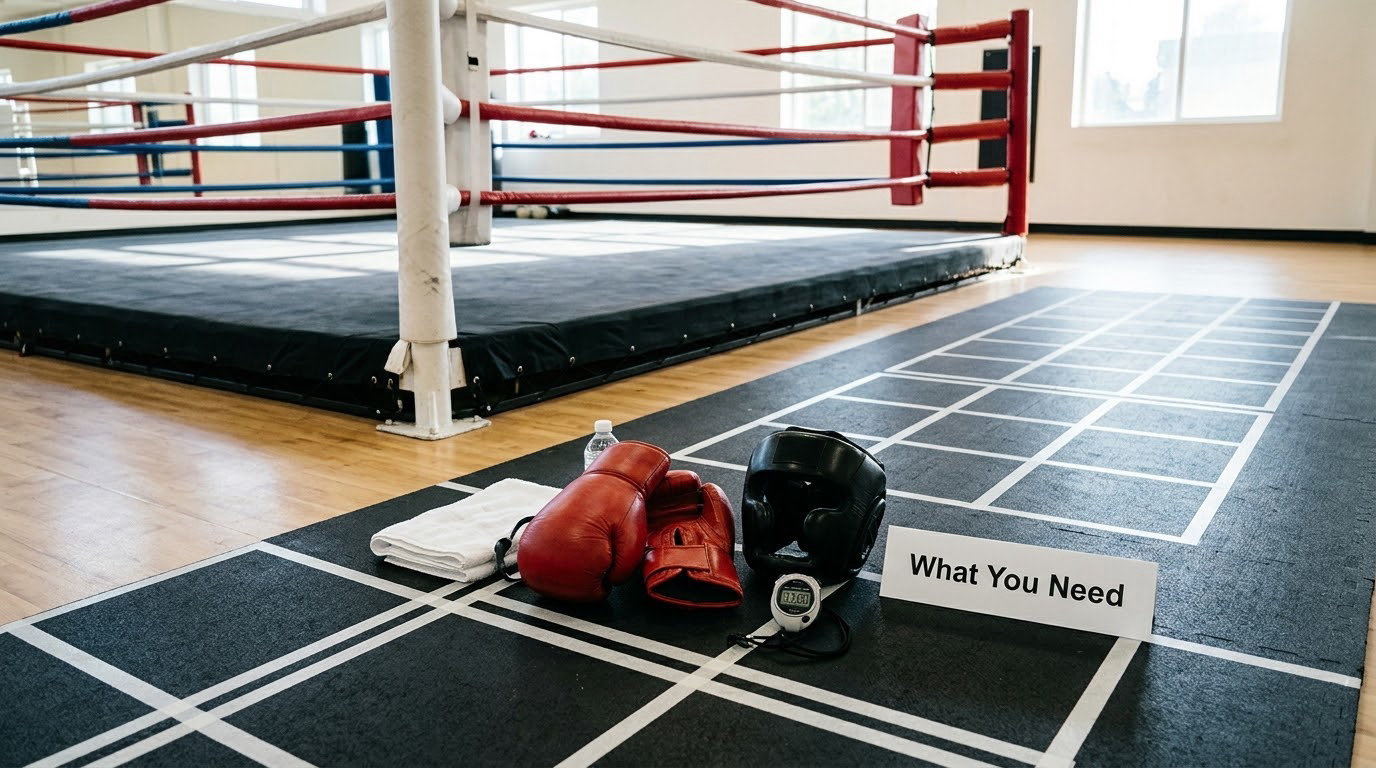
Before you touch a clinch drill, sort out the gear and the ground rules. Everything below is cheap, and nothing on the list is optional.
- Boxing gloves sized for the contact you plan. Sparring gloves for full-contact work, heavier bag gloves for shadow and position work. Lacing matters more than people think; wrap your wrists properly so a hard frame on the shoulder does not roll the joint.
- Headgear for drills and amateur sparring. Not mandatory everywhere, but the clinch is where head position gets tested hardest, and a headgear absorbs the mistakes that normally end a session.
- A stable surface with a wall or ring rope nearby. The clinch is where a boxer learns to fall safely. Practise how to break your own balance and take a controlled step down rather than waiting to find out live.
- A coach or a partner who knows the limits. The single biggest cause of wasted sessions is drilling a clinch that the trainer would have broken in the first three seconds. Have someone call the break out loud so you learn the timing.
- Hand wraps and a mouthguard. Non-negotiable, and cheap enough that there is no excuse.
- The name of the ruleset you train under. Ask which commission or amateur federation your gym fights under. The answers differ, and you cannot practise something the referee will not allow.
One safety note belongs at the top. A referee can stop a fight at any moment when a boxer is unable to defend themselves, and being stuck in a bad clinch, or being on the wrong end of a shoulder-to-shoulder collision, is one of those situations. Nobody wins an argument with a referee’s decision to end a bout, and nobody at your gym wants that conversation.
Step-by-Step: How to Clinch Legally in Boxing
Step 1: Learn the Rules Before You Clinch Legally
A legal boxing clinch is a close-range tie-up in which a boxer uses only the arms and hands, through an underhook, overhook, or collar tie, to control the opponent’s head and upper body while staying upright and throwing short punches. No grappling, no throwing, no knees, no twisting the head behind the neck.
That definition matters more than any technique detail, because the referee is not looking for a specific grip. The referee is looking for work. Professional commission scoring asks for effective offense, and holding someone in place without landing anything is not offense. Amateur federations use similar language, with the added burden of a count that a fighter cannot control.
Three things reliably bring the referee in:
- Holding without striking. The clinch runs while one or both boxers are actively working at close range. A tie-up where neither man throws a punch gets broken.
- Turning the fight into a grapple. A body lock that starts to lift, a knee, or any attempt to take the opponent down is a foul in boxing, in every ruleset.
- Not responding to a break. When the referee breaks the clinch, hands come off immediately. Holding on after the command is one of the quickest ways to lose a round.
Then there is discretion. On the r/amateur_boxing subreddit, the recurring complaint is not that referees break clinches, it is that one referee breaks them instantly while another lets the same position run for many seconds. A referee instructor posting publicly has made the same point, noting that some break too early and rob both fighters of scoring opportunities while others let clinches drag out.
You cannot control that part. What you can control is being the fighter who is obviously working. A boxer who lands two or three short shots the moment he is tied up is easy to let continue. A boxer who is quietly leaning on his opponent is easy to break.
Step 2: Control Distance Before Entering
Most illegal clinches begin long before anybody grabs anything. They begin with a fighter walking forward into a punch with both hands low and his weight drifting onto his front foot. That is an invitation, and the counter will usually arrive before the clinch does.
Manage the distance instead of leaping for it. Two things make the entry much cleaner:
- A level change. Drop your level as you come in, which lifts your inside shoulder toward the opponent’s chest and forces his hands to adjust to a new angle.
- Shoulder placement over hands. Lead with your shoulder rather than reaching with your arms. Hands that arrive second are easier for the referee to read as grabbing.
Keep your head out of the centre line while you enter. Walk in tall and your opponent can meet you with a short right hand over the top, which is the single most common way a clinch entry fails.
Enter from an angle rather than straight on. Cutting the corner means the opponent’s jab travels past your ear instead of through your guard, and it gives you a natural exit route if the referee waves you off.
Step 3: Establish a Safe Clinch Position
There are three grips worth learning, and they serve different purposes.
- Underhook. Your arm goes under the opponent’s arm and around the shoulder blade. It is the strongest connection for controlling a taller fighter’s jab and the most common grip in the sport.
- Overhook. Your arm goes over the top of the opponent’s shoulder and around the neck. Stronger for keeping a brawler’s head down and landing upper-body shots, but it is the grip most likely to draw a break if it turns into a squeeze.
- Collar tie. Your hand or forearm rests on the back of the opponent’s neck or shoulder, with no wrap. The most obviously legal-looking grip, and the one that gives you the cleanest line to your own short punches.
A frame sits alongside all three. A frame is a forearm placed against the opponent’s shoulder or sternum, creating space rather than grip. It keeps you from being walked backwards and it gives you a route out.
What you must avoid is anything that clamps, twists, or locks. Wrapping the arm fully around the neck, pulling the head down and around, or gripping behind the neck all read as a hold rather than a clinch, and they are the actions boxers get broken up for most often.
When you get an underhook you do not want, there is a counter. Practitioners on the BoxingForum24 clinch thread describe keeping your elbow tight to their underhook and wrapping your hand over their elbow, which lets you take the grip back without a wrestling exchange. That is the standard answer, and it works because it uses only the arms.
Keep your balance. The clinch is a fight to stay on your feet, and a boxer who loads all his weight onto the opponent’s chest ends up leaning on a referee to break him apart.
Step 4: Work Inside at Close Range
A clinch that scores is a clinch that punches. Once you have position, the punches are short by definition, which means they come from the smallest range in the sport and have nowhere to go.
What lands from a legal clinch:
- Short hooks and uppercuts to the body, which travel a few inches and rarely need much power.
- Short straight shots when you have straightened the opponent’s posture.
- A move of the head between shots, because you are close enough that their fist cannot reach you until it has already landed.
- Elbows, with a caveat. Many sanctioning bodies permit elbow use in the clinch; others restrict it, and some amateur rulebooks are stricter than the professional rule for the same sanctioning body. Know which rule set you are fighting under before you throw one. If you are unsure, keep the elbow tight and use it as a tool to build a position rather than as a strike.
What does not: anything with the legs. Knees are a foul in boxing. So is the low kick, which is legal in the ring but ends the fight, ends your career, and is checked at the weigh-in.
The rhythm that keeps a clinch alive is simple: short punch, move the head, short punch, adjust the grip. Fighters who get separated quickly are usually the ones who pause after landing and give the referee a reason to intervene.
One honest point about scoring. Clutching at an opponent without landing anything is not an effective offense, and both commissions and amateur federations score on what you land rather than on how long you control the tie-up. Practise the clinch as a scoring position, not as a place to rest.
Step 5: Release, Reset, or Re-enter Cleanly
The clinch is a recurring position, not a terminal one. How you leave it matters more than most beginners realise.
- Hands come off immediately. The moment the referee moves in, release everything. This is not a judgement call.
- Step back into a stance. Do not walk backwards with your hands low while still facing the clinch. Reset your guard first, then your feet.
- Do not re-grab straight away. Reaching in again the instant the referee lets go looks like you ignored the command, and it is one of the fastest ways to pick up a foul. Box for a few seconds first.
- Re-enter only from a position. When you do come back in, come from an angle with your head off the centre line, the same as the first entry.
If you are the one on the receiving end of a bad clinch and you want out, the exits follow a similar order. Frame on the nearest shoulder to create space. Push off the collar rather than pulling at the arms. Step out on the diagonal, which changes the angle faster than an opponent can re-establish the hold. And take the break the referee gives you; fighting the referee costs you the round regardless of whether you escaped.
Common Mistakes
These are the errors that show up in every amateur gym, and most of them have a simple correction.
- Holding around the neck. It looks like control, and the referee sees a hold. Use an underhook or a collar tie instead, with your forearm on the shoulder blade rather than across the throat.
- Pushing the opponent’s head down and around. Turning the neck is both a foul risk and a genuine injury risk. Control the head by position, not by rotation.
- Wrapping the arms. A wrapped arm is indistinguishable from a body lock in a split second. Keep the arm free and the connection visible.
- Standing still and leaning. If you cannot describe what you did in the last two seconds, the referee can. Add short punches or give up the position.
- Throwing elbows without checking the rule set. Allowed in many pro bouts, restricted in several amateur rulesets. Ask your referee before the bout, not after.
- Ignoring the referee’s commands. A break command is not a suggestion. Obey it instantly, and separate yourself cleanly.
- Rushing the entry. Charging with a stiff posture hands over a free counter punch. Level change, angle, then connect.
- Trying to wrestle. If your gym has a wrestling program, that is a different sport and a different set of rules. Boxing permits none of it.
A useful test before you spar: describe your clinch out loud in one sentence, using the words underhook, overhook or collar tie, plus what you plan to land. If the sentence needs the word hold, you are about to get broken up.
Tips for Practising the Clinch Safely
Most boxing gyms have no wrestling mat and no clinch curriculum, so build the skill in stages rather than trying to wrestle on hard canvas. This drill ladder works in any gym.
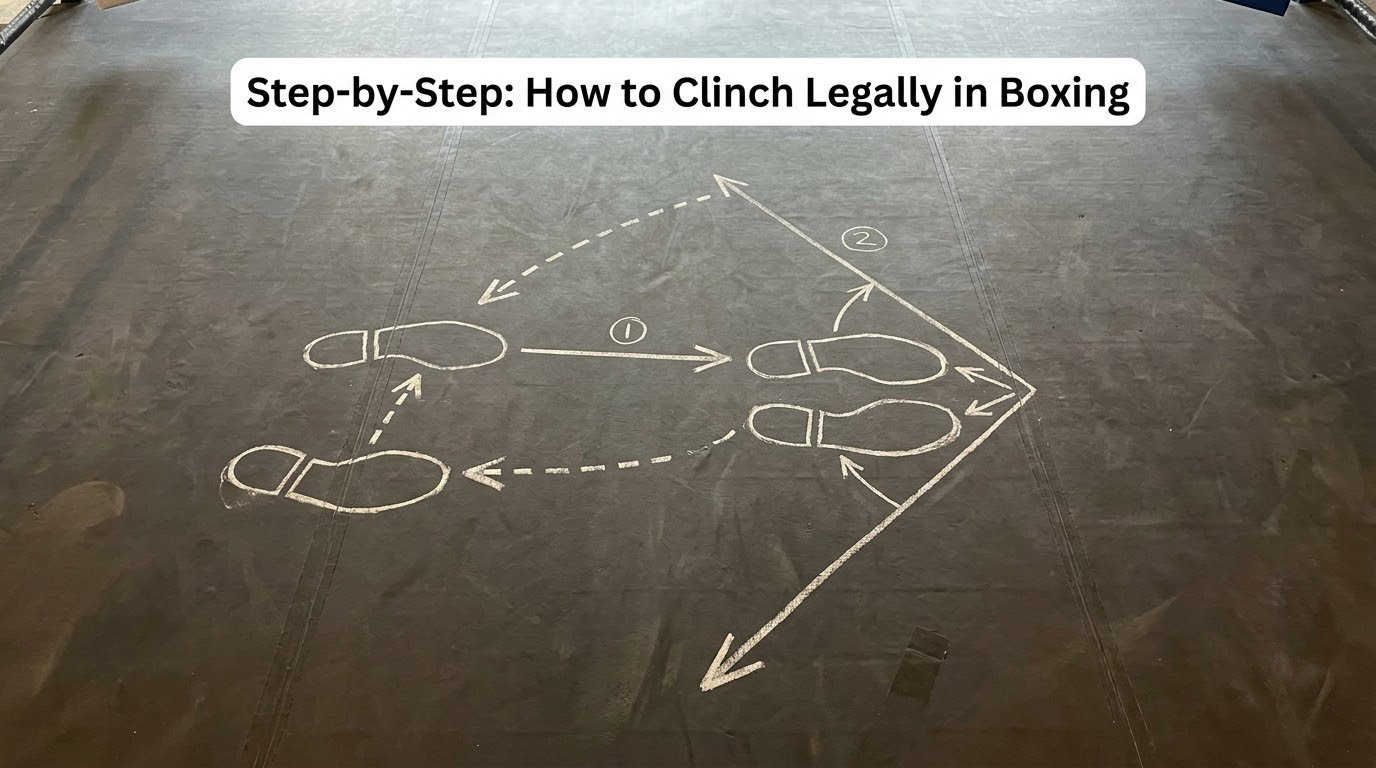
- Footwork only, no resistance. Walk the entry pattern across the floor without a partner. Entry angle, level change, stop position. Do fifty repetitions on each side until the feet arrive before the thought does.
- Grip shapes against a wall or rope. Practise the underhook, overhook and collar tie in slow motion, checking that your own breathing stays normal. If you cannot breathe, you are clamping.
- Referee call drills. Have your partner shout break at unpredictable moments. Release, step back, reset your stance, and re-enter. This trains the response, which is the part beginners are worst at.
- Short punch combinations from position. From a collar tie, work body hook, move the head, uppercut. Ten slow repetitions each side, no power, correct angle first.
- Escape and re-entry. Deliberately get tied up, then drill the exit and the re-entry. Practising only the attack teaches you a half position.
- Live, controlled rounds. Light contact, one clinch per round, referee calling the break. Only move up to full speed once the releases are automatic.
Two coaching habits pay off more than any single drill. Have your coach call the break before you expect it, and review the round afterwards asking one question: did you land anything? If the answer is no, the position was not working, regardless of how much control you had.
On style matchups, the clinch pays off most against pressure fighters, because chest-to-chest pressure requires distance, and against taller out-boxers, because it removes the jab. Against a taller opponent, the underhook is the tool that stops the long right hand. Against a brawler, control the head position with a collar tie and keep moving the head between shots.
Frequently Asked Questions
Is it legal to clinch in boxing?
Yes. Clinching is permitted in both professional and amateur boxing, provided it is a working tie-up using only the arms and hands. You may use an underhook, overhook or collar tie to control the head and upper body while staying upright. You may also land short legal punches from the position, and in many professional rule sets, controlled elbows. A clinch becomes a foul when it turns into holding without offense, grappling, a knee, a throw, or a grip that clamps or twists the head.
What makes a clinch illegal in boxing?
A clinch becomes illegal when it stops being a tie-up and becomes a hold or a grapple. The usual triggers are holding the opponent around the neck without punching, wrapping the arms into a body lock, pushing or twisting the head down and around, using the knees, attempting a throw, and failing to release immediately when the referee breaks you apart. Referees also break clinches where neither boxer is landing anything, because commission and federation scoring asks for effective offense.
Can you score punches while clinching?
You can, and a clinch without punches is not worth entering. Short hooks, uppercuts and straight shots to the body travel only a few inches from the clinch position, which is why they are among the highest-percentage punches in boxing. Scoring systems ask for effective offense rather than control time, so the tie-up only counts for you while you are landing or clearly trying to land. Elbows are scored in many professional bouts but are restricted under some amateur rulesets, so check before you throw one.
Should you use your elbows when clinching?
It depends entirely on the rules you are fighting under. Many professional sanctioning bodies allow controlled elbow use in the clinch, while several amateur federations restrict or limit it. Check your rulebook or ask the referee before the bout begins, because the answer changes with the commission. If you are unsure, keep your elbow tight against the ribs and use it as a tool for building position rather than as a strike, which is both safer and defensible either way.
What should you do when the referee breaks the clinch?
Release immediately, put your hands back up, and step away into your stance. Do not reach in again straight away, because a second clinch attempt right after the command reads as ignoring the referee and is an easy way to lose a round. Reset your guard before your feet, then box for a few seconds. When you do re-enter, come from an angle with your head off the centre line, the same as your first entry.
How can beginners practise clinching safely?
Build the skill in stages. Start with footwork only, walking the entry pattern with no partner and no resistance. Then practise grip shapes against a wall, checking that your breathing stays normal. Next, have a partner call breaks at unpredictable moments so you rehearse the release. Add short punch combinations from a collar tie, drill escaping the position as well as entering it, and only move to live controlled rounds once releasing is automatic. Headgear and a coach present make the early stages much safer.
Conclusion
Start with the rules, not the technique. Ask your coach which commission or federation you fight under, learn what that rule set permits, and understand that the referee is judging work rather than grips. Then drill the entry footwork against no resistance, practise an underhook and a collar tie until you can hold them without clamping your own breathing, and rehearse releasing the moment the break is called. Add short punches at close range only once the position is automatic.
That sequence will keep you out of trouble with the referee and inside the rules. Learn where the line sits, respect it every single time, and how to clinch legally in boxing stops being a question.